Physical Address
304 North Cardinal St.
Dorchester Center, MA 02124
Physical Address
304 North Cardinal St.
Dorchester Center, MA 02124
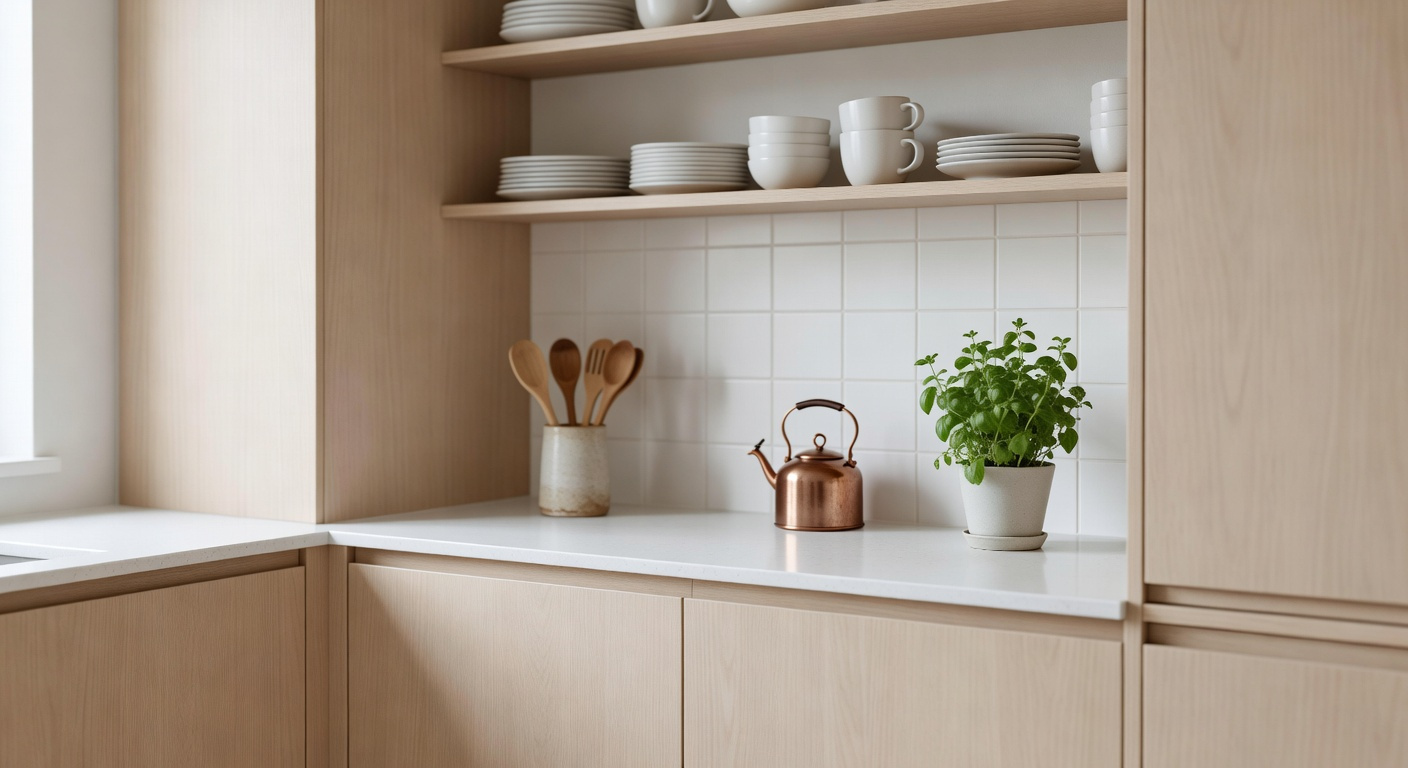
Transform your compact apartment kitchen decor into a luxurious Nordic sanctuary. Discover expert hacks for maximizing space, light, and material integrity.
Most people view a compact apartment kitchen as a regrettable sacrifice. Common belief suggests that limited square footage inherently restricts creativity and comfort. This guide challenges that notion. We explore how to elevate your apartment kitchen decor from a compromise into a statement. Specifically, we focus on transforming these spaces for homeowners who prioritize material integrity and sophisticated curation over sheer size. This perspective embraces the inherent coziness and warmth that tight parameters can foster.
History, in fact, reveals a refreshing perspective on these spatial constraints. In 1926, the Frankfurt Kitchen proved that compact design actually increases domestic efficiency. By mimicking railway dining cars, architects demonstrated that smaller spaces save significant time and energy. Furthermore, the forced proximity of the “work triangle” allows for fluid movement during cooking. A small footprint forces us to become careful editors rather than passive consumers. This mental shift turns a cramped room into a zone of concentrated ergonomics. Indeed, constraints often yield the most sustainable and human-centric design solutions.
This guide explores the “Small Space Advantage” through the lens of warm minimalism. We will examine how to transform limitations into opportunities for functionality and beauty. First, we uncover the power of vertical mastery to increase storage capacity. Next, we discuss using reflective surfaces to reduce cognitive load. Finally, we learn to curate “dopamine decor” for emotional impact without visual clutter.
Many view limited square footage as a hindrance. However, Nordic design reframes this constraint as an invitation to intimacy. Specifically, we apply the Swedish principle of *Lagom*, meaning “just the right amount.” In a compact kitchen, this concept acts as a physical filter against clutter. Consequently, you must make deliberate choices about every object. Every item earns its place, fostering a rhythm of effortless efficiency. Therefore, the space feels curated rather than crowded.
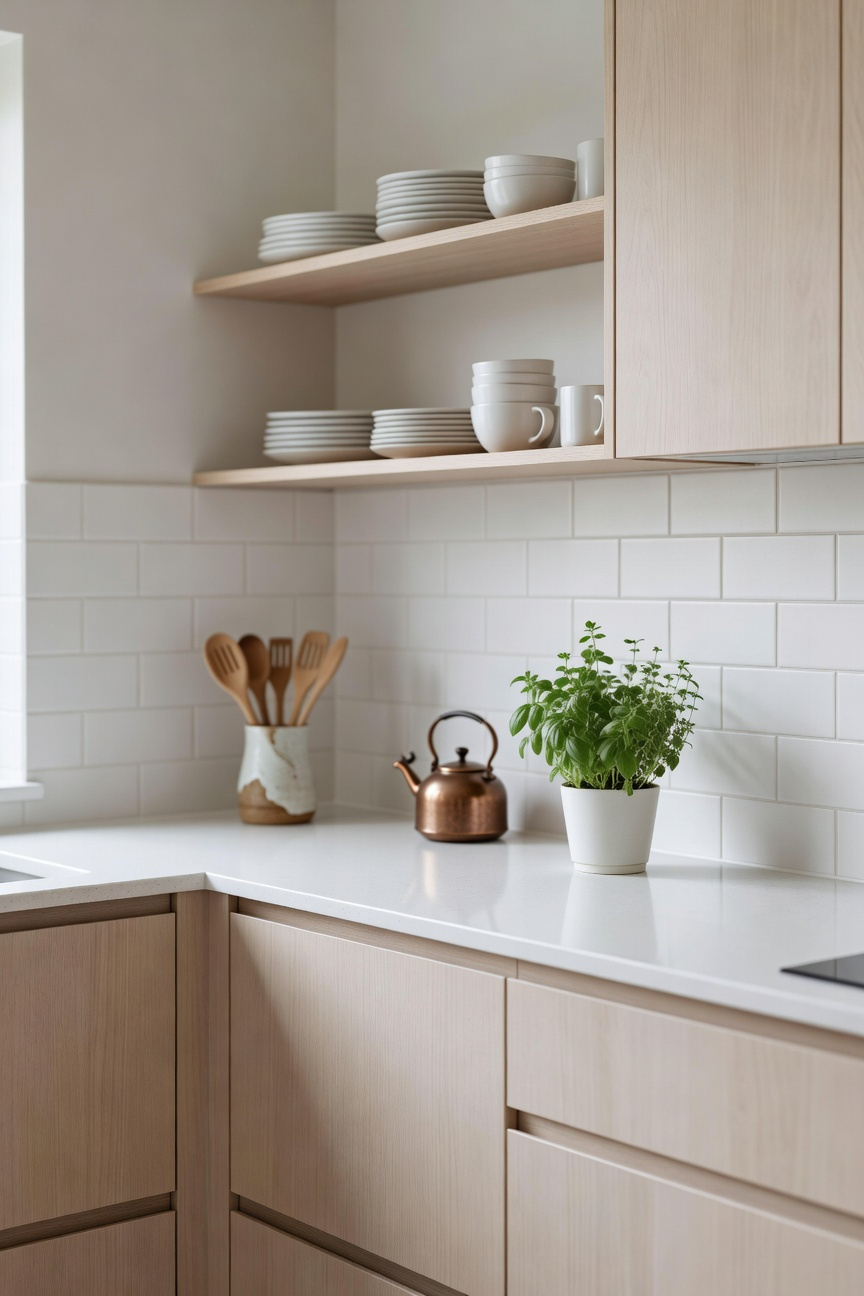
The famous Scandinavian palette is a practical necessity, not just a trend. Technically, this relies on the “Albedo Effect.” High-albedo surfaces, such as matte white cabinetry, reflect light rather than absorb it. Thus, the kitchen functions as a light collector. This maximizes brightness even during dark winters. By strategically using these reflective tones, you engineer a sense of openness.
Finally, we must address “visual noise.” In small spaces, mismatched elements quickly become overwhelming. Therefore, functionalism dictates clean lines. For instance, concealing appliances behind panels allows the eye to glide smoothly across the room. Yet, minimalism should never feel sterile. We introduce “honest materials” like warm birch or oak to ground the design. These natural elements add organic texture. Ultimately, your kitchen becomes a place of focused, quiet beauty.
True luxury is often misunderstood as an abundance of square footage. However, genuine elegance actually stems from rigorous curation. A compact footprint allows for a concentrated investment in material integrity. Instead of stretching a budget thin, you can select exquisite, sustainable materials. For example, incorporate a slab of rare Carrara marble or unlacquered brass hardware. These natural elements possess living finishes that develop a rich patina over time. Consequently, the kitchen offers sensory depth that synthetic alternatives cannot replicate.
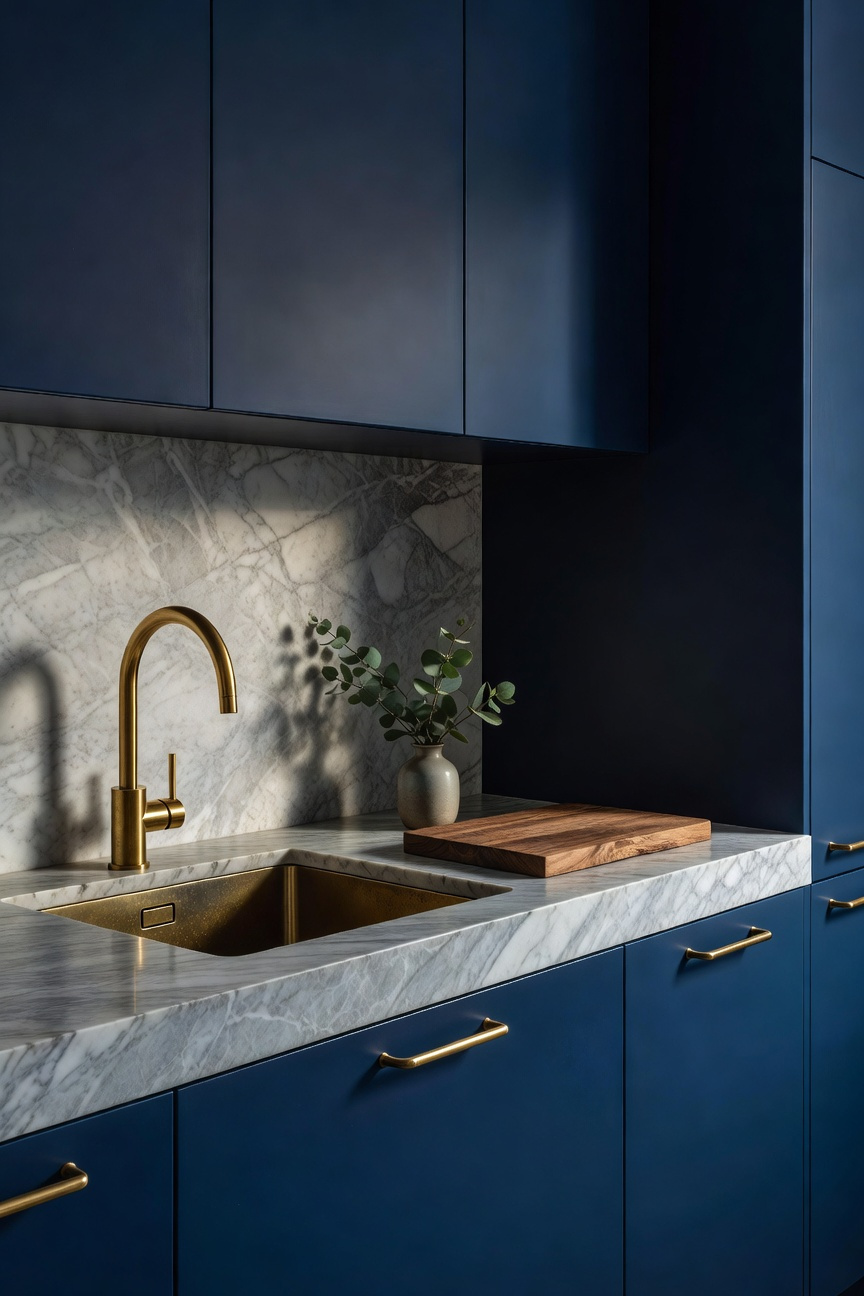
Furthermore, high-end design relies heavily on concealment. Bespoke joinery should extend floor-to-ceiling to utilize every cubic inch. Integrated appliances disappear behind custom panels, creating a seamless appearance. As a result, the eye rests easily without the distraction of visual noise. Moreover, hidden outlets inside cabinets keep countertops clear for essential tasks.
Finally, lighting transforms these tangible elements into an experience. Layered lighting schemes sculpt the room and highlight warm wood textures. Additionally, reflective surfaces like mirrored backsplashes create an illusion of expansiveness. Ultimately, a curated kitchen prioritizes intimacy and tactile comfort over empty vastness.
In Scandinavia, light is treated as structural, not just decorative. Fundamentally, this approach is a practical adaptation to long, dark winters. Consequently, interior spaces must actively compensate for limited daylight to support psychological well-being. In an apartment kitchen, this often means leaving windows unadorned to capture every available ray. Thus, the room feels calm and expansive, even within a compact footprint.
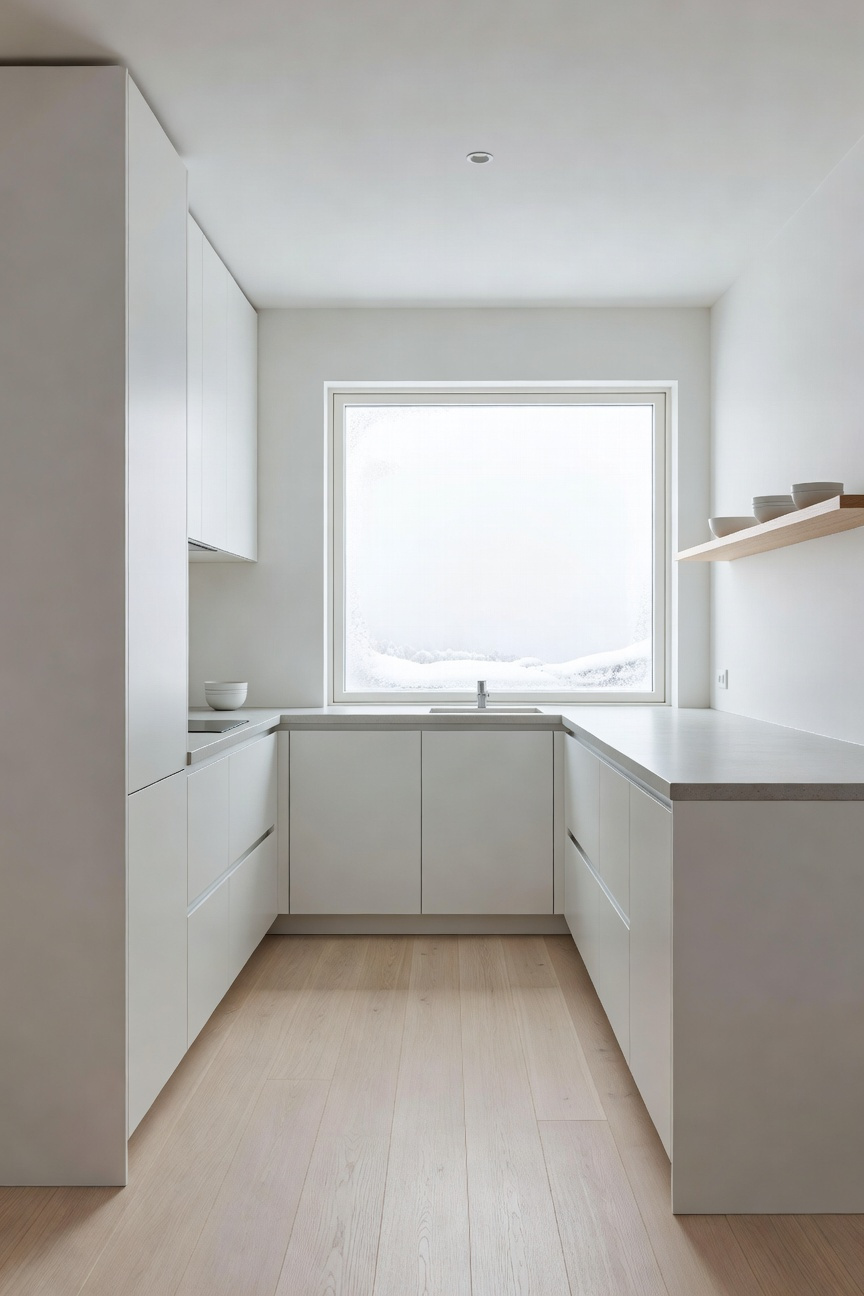
To maximize this effect, we engineer surfaces to amplify brightness. Specifically, white and pale neutral colors reflect light efficiently. However, a purely white room can feel sterile. Therefore, we layer in natural, pale woods like Birch or Ash for flooring. These materials reflect light while introducing organic warmth. Additionally, open shelving aids visual flow. This makes small areas feel significantly larger.
Eventually, daylight fades. This requires a shift to artificial illumination. Here, the goal is creating a “layered glow” rather than using harsh overhead beams. For example, conceal LEDs under cabinets for focused task lighting. Simultaneously, use soft pendant lights to create a pool of ambient warmth. Notably, Nordic designers prefer a warm white temperature around 3000 Kelvin. This specific hue replicates candlelight, fostering *hygge*.
White-on-white kitchens are a staple for maximizing light in small apartments. However, achieving this look without creating a sterile atmosphere requires nuance. The secret lies in selecting the right undertones. Specifically, avoid stark, cool whites in north-facing rooms. Instead, opt for creamy off-whites with subtle hints of beige or yellow. These warmer hues reflect a soft, welcoming glow. Therefore, the space feels expansive yet undeniably cozy.
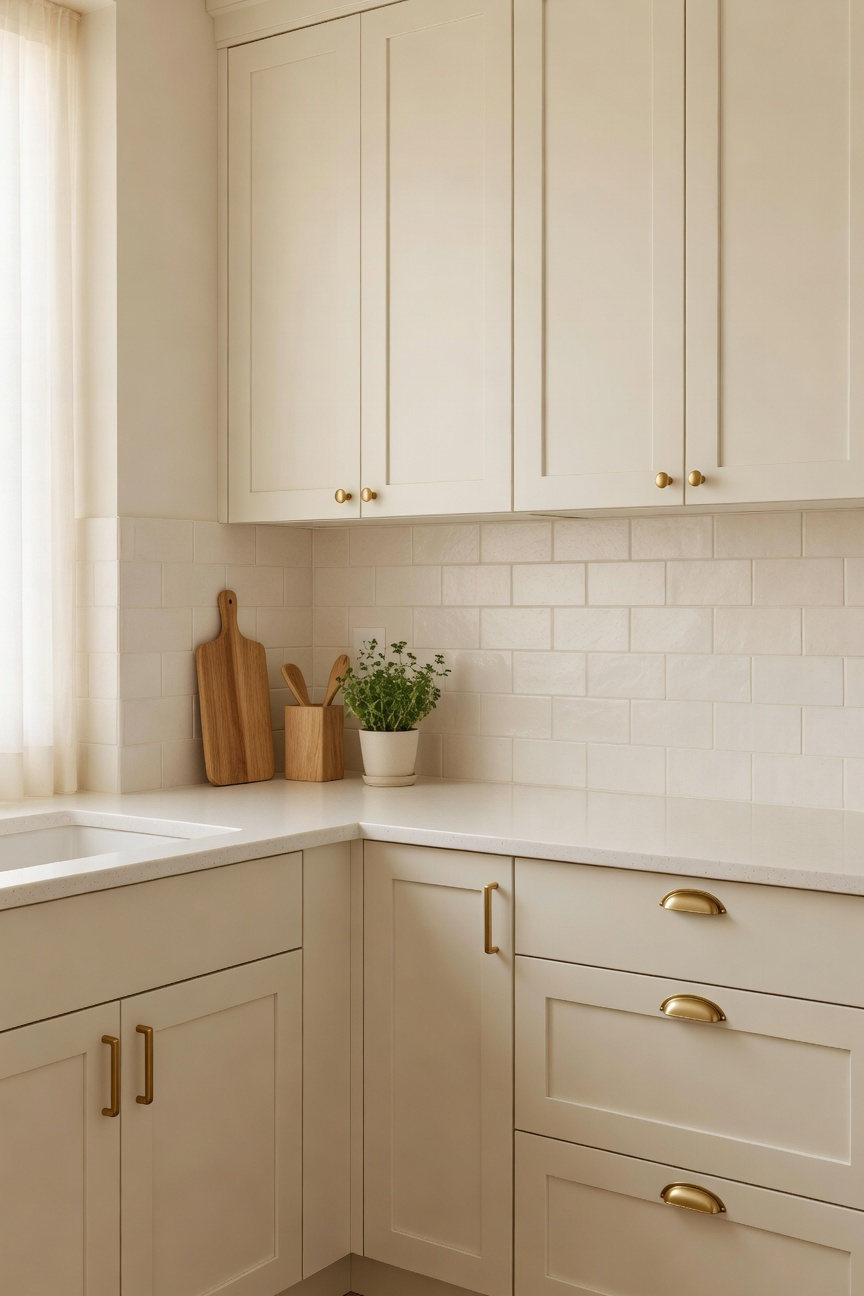
Depth in a monochromatic room comes from texture. Since color contrast is absent, you must vary finishes to create interest. For instance, pair matte cabinetry with a glossy, handcrafted Zellige tile backsplash. This juxtaposition catches the light unevenly. As a result, the room gains quiet character. Additionally, architectural details like shaker-style cabinets add necessary shadows. This prevents walls from becoming flat, featureless blocks.
Finally, anchor the airy palette with organic elements. Natural wood introduces a “honey stain” that warms the room instantly. Similarly, warm metallic hardware acts like jewelry for the space. In fact, unlacquered brass pulls exude sophistication without adding visual bulk. Ultimately, these layers transform a simple white kitchen into a breathable sanctuary.
In Scandinavian design, managing light is an act of engineering. Sheer fabrics like voile or fine linen actively diffuse direct sunlight rather than blocking it. This scattering process eliminates harsh shadows. It creates a desirable soft-focus effect throughout the room. Consequently, the kitchen bathes in a warm, inviting glow. This visual trick pushes the eye outward. It makes small apartments feel significantly larger. Moreover, functionality remains paramount. Diffused light reduces glare on countertops, improving visibility for tasks.
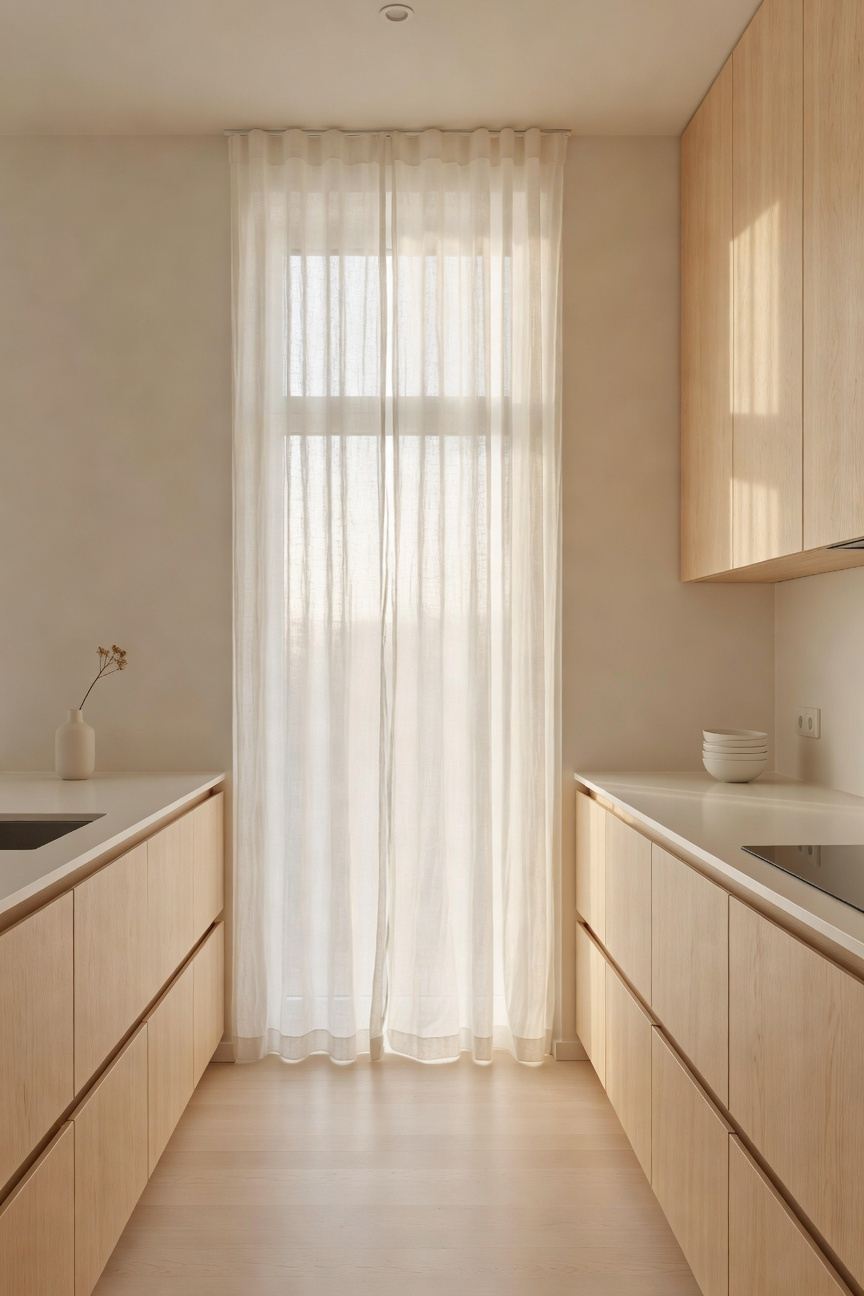
City living often requires balancing illumination with privacy. Therefore, strategic choices like classic cafe curtains become essential tools. By covering only the lower window, you block street views while flooding the ceiling with daylight. Alternatively, modern top-down shades offer similar flexibility. Yet, a crucial trade-off exists regarding nighttime privacy. Since translucent fabrics become transparent after dark, consider layering opaque roller blinds for evening use.
Finally, material selection dictates longevity in a kitchen. Because steam and grease are inevitable, durability is key. For example, some modern translucent shades use fiberglass reinforced plastic for easy cleaning. Additionally, selecting semi-sheer weaves offers vital UV protection. Ultimately, this creates a shield that prevents your wooden cabinetry from fading.
Architects have long used reflection to manipulate spatial perception. The Hall of Mirrors at Versailles famously dissolved boundaries to amplify light. Today, we apply this grand concept to compact living spaces. However, effective implementation requires distinguishing between pure mirrors and gloss tiles.
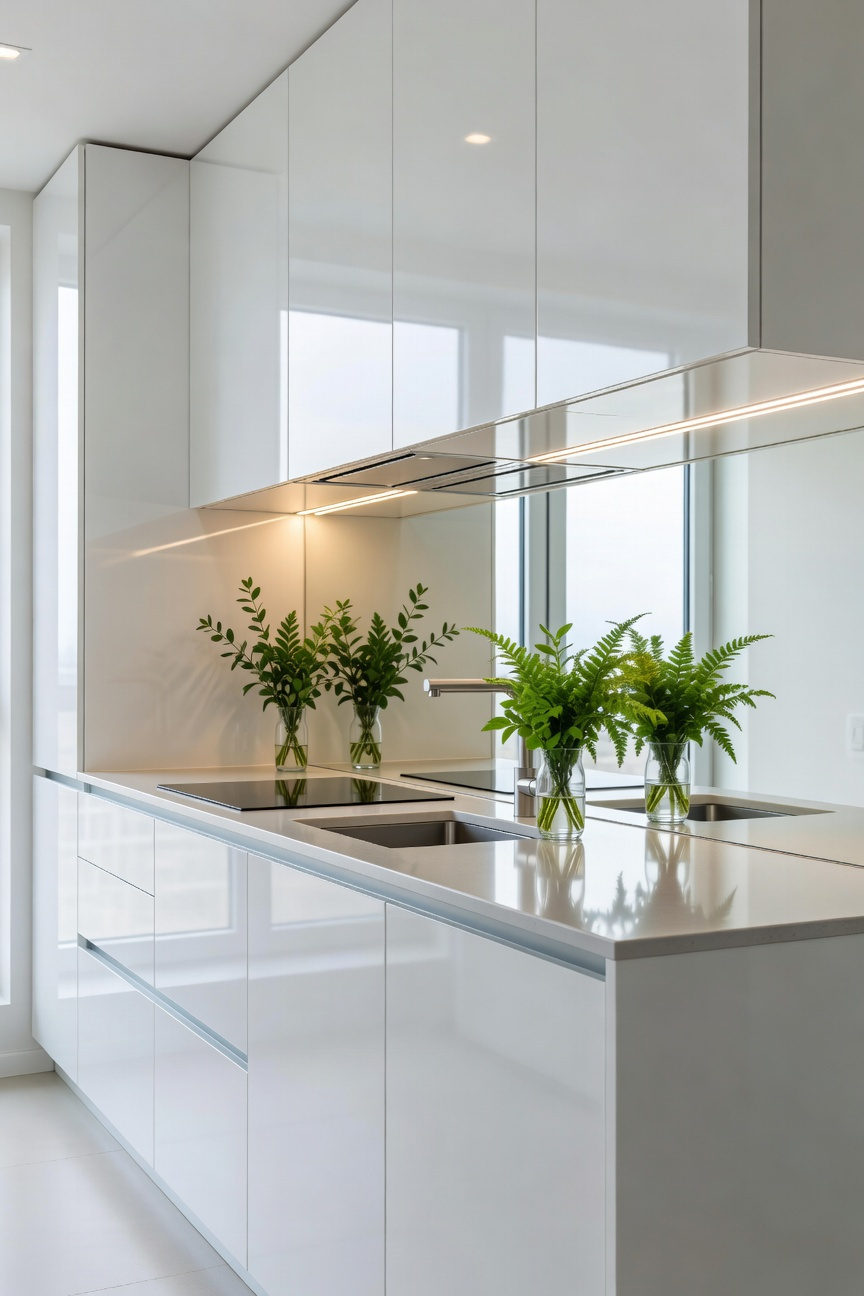
Mirrors offer “specular reflection” with intense gloss values. Therefore, a mirrored backsplash functions as a powerful optical device. It visually doubles the depth of your counter by reflecting the room. Consequently, the kitchen feels immediately expansive rather than enclosed.
In contrast, gloss tiles offer a softer, refractive approach. These ceramic surfaces feature a “liquid glass” glaze that diffuses light gently. Thus, they brighten dark corners without creating distracting reflections. Furthermore, using large-format gloss tiles is a vital choice. This reduces visible grout lines, ensuring the wall appears as one seamless plane. Ultimately, these techniques actively reduce feelings of confinement.
In a small apartment kitchen, clutter acts as visual noise. It creates low-level stress and chaos. Therefore, leaving one counter completely empty functions as a crucial “visual pause.” This deliberate emptiness offers a rare sense of luxury. In fact, an expanse of clear material visually expands the room. The space feels curated rather than contained.
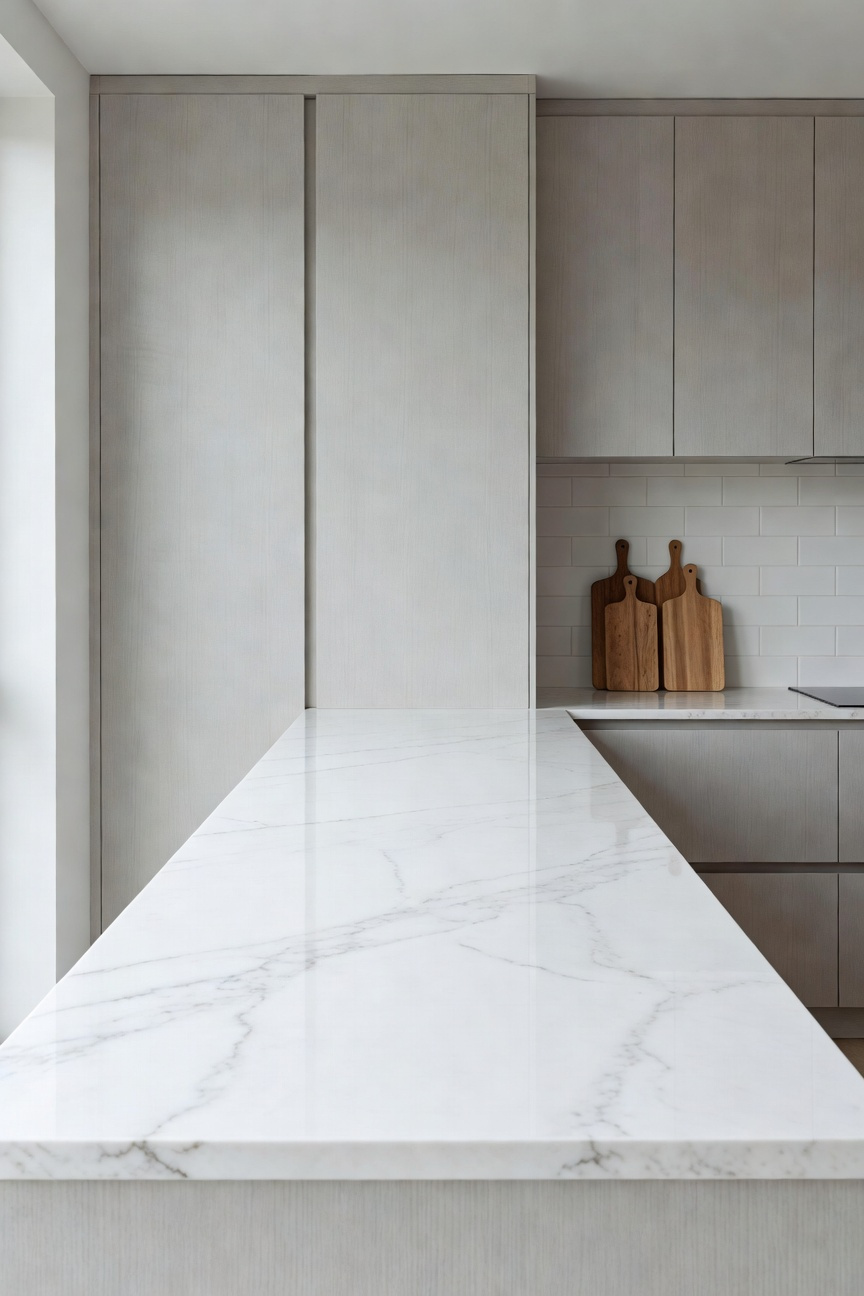
Beyond aesthetics, this shifts the room’s function. It creates a “frictionless prep zone.” Usually, cooking involves the frustration of clearing a space first. However, a permanently clear surface supports immediate action. Therefore, meal preparation becomes a seamless flow. To achieve this, re-home everyday items like toasters into drawers. This approach is key to mindful kitchen countertop decor ideas.
This approach aligns deeply with the Japanese concept of *Ma*. *Ma* defines empty space not as nothingness, but as a meaningful pause. It is active emptiness where light and rhythm can exist. Consequently, the clear counter becomes an intentional design element. It provides balance to the surrounding activity. Finally, this turns a mundane cooking area into a peaceful sanctuary.
Modern apartments often feel like geometric cages of glass and steel. Introducing natural materials is not just aesthetic, but essential. This design approach relies on biophilia, our need to connect with nature. Materials like rift-cut veneer or honed stone act as emotional anchors. Unlike uniform synthetic surfaces, these organic elements age beautifully. Consequently, the darkening grain of wood offers a sense of calm.
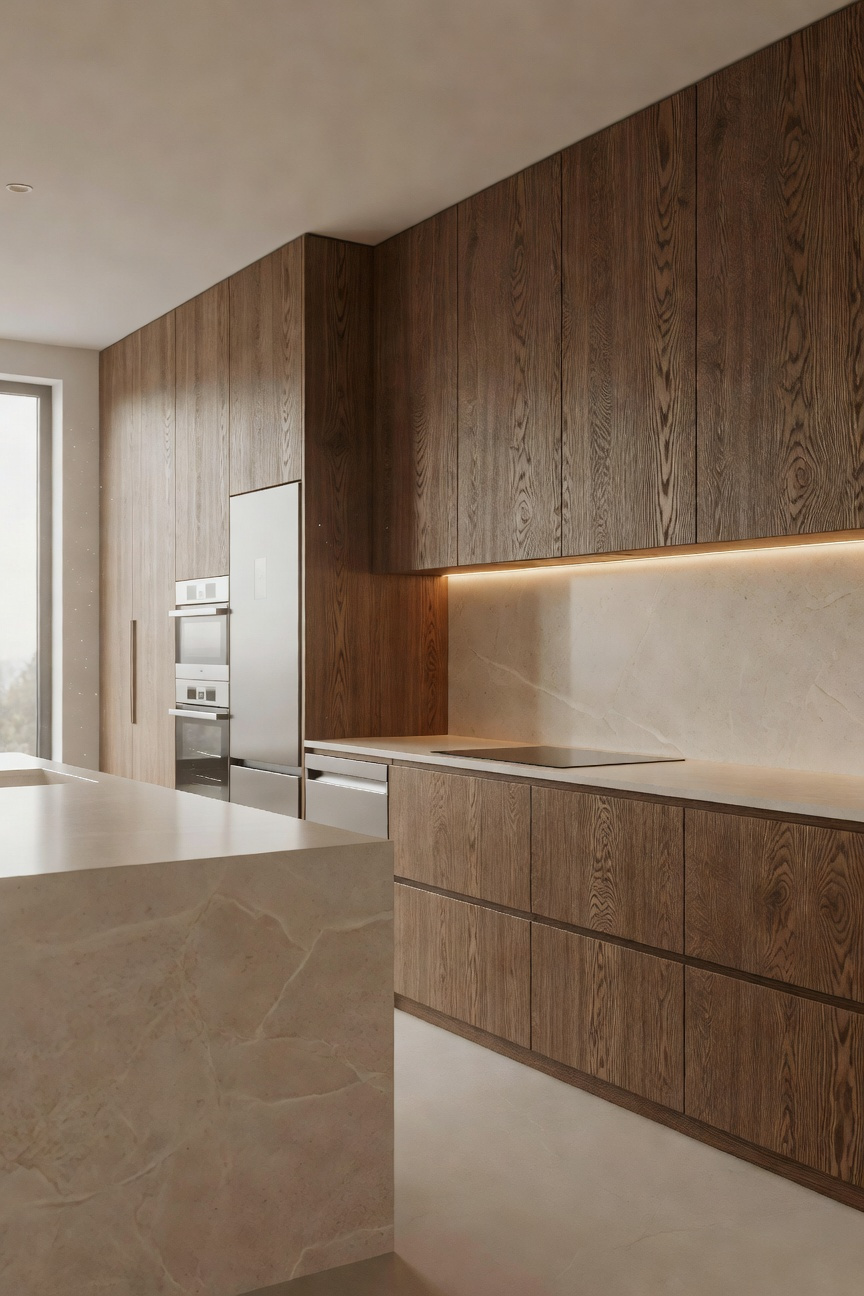
Historically, the kitchen centered around a stone or clay hearth. It was the warm nucleus of the home. Today, we recall this ancestral role through deliberate texture choices. For instance, solid wood cabinetry invites a primal sense of gathering. This design pivots away from sterile, utilitarian surfaces. It transforms the space into a true sanctuary.
However, small apartment kitchens require practical decisions. Here, the debate lies between romantic warmth and durability. Butcher block introduces incomparable texture and charm. Yet, it demands consistent oiling. Conversely, engineered stone offers superior resistance to heat. Fortunately, modern textured quartz can now mimic the depth of sandstone. Ultimately, choosing between them determines whether your kitchen prioritizes organic storytelling or resilient practicality.
The “Light Wood Principle” creates a foundation for minimalist kitchens. This design concept relies on high light-reflectance values, known as albedo. Unlike dark hardwoods that absorb illumination, pale timbers reflect light across the room. Consequently, materials like Ash or White Oak prevent a compact space from feeling heavy. Instead, they maximize natural light to create an airy atmosphere.
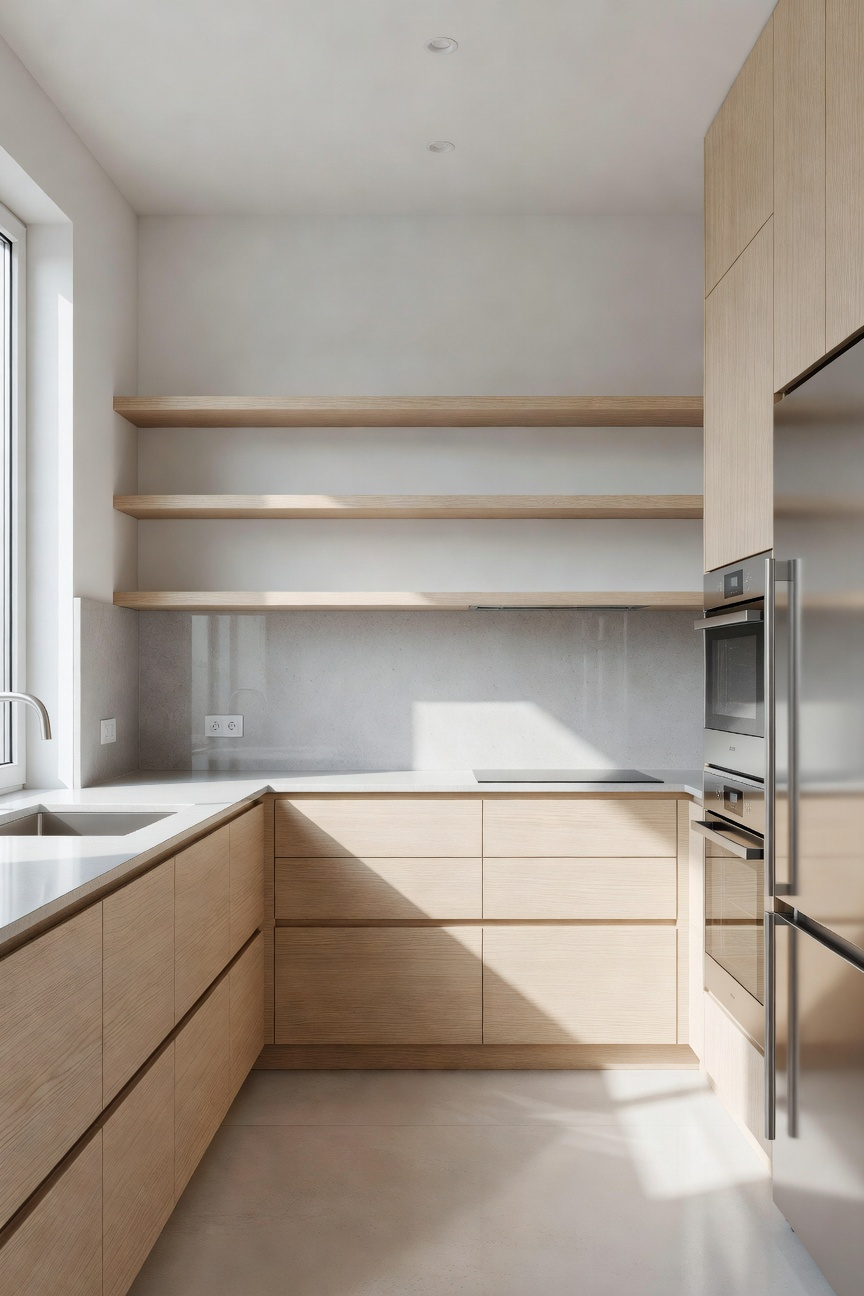
This aesthetic stems from a deep Scandinavian necessity. To combat long, dark winters, Nordic design mandates brightness. However, brightness should never equate to sterility. Indeed, incorporating natural, unpainted wood introduces a vital biophilic connection. This organic warmth grounds the space. It offers a serene backdrop that feels livable rather than stark.
Choosing the specific wood species allows for nuanced control. White Oak offers a pronounced, linear grain that adds depth. It is highly durable and brings a sophisticated feel to cabinetry. Alternatively, Ash provides distinct, straight lines often favored for modern interiors. Finally, White Birch offers a subtle grain for a quieter surface. Ultimately, light timbers ensure your kitchen remains timeless and visually expansive.
Moving away from high-gloss surfaces shifts the kitchen’s atmosphere. Specifically, honed stone and matte ceramics prioritize a grounded sensory experience. Unlike polished granite, these finishes absorb light rather than reflecting it. This diffusion creates a softer visual impact. Furthermore, the texture offers a distinctive “velvety feel” that invites touch. This tactile sophistication aligns with the “luxury of restraint.” For more inspiration, see our guide on jaw-dropping contemporary kitchen decorating ideas. A matte counter makes a kitchen feel like a comfortable living space.
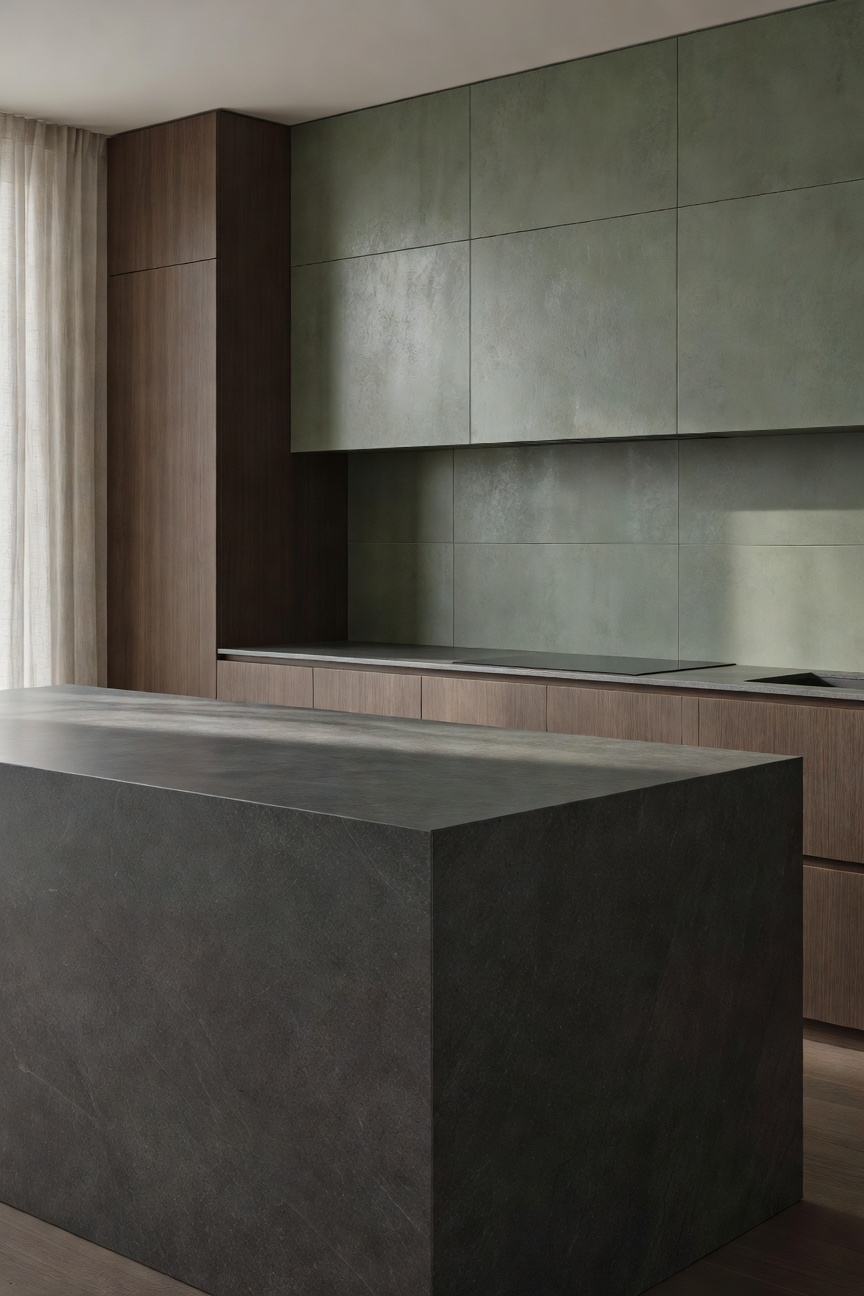
Practically, low-sheen surfaces hide minor imperfections well. However, selecting the right material requires understanding trade-offs. Honed natural marble creates a beautiful patina but is susceptible to staining. Therefore, it requires regular sealing. Conversely, modern matte porcelain offers this elegance with superior durability. Such man-made options resist stains without the maintenance demands of stone. Ultimately, choosing matte creates a calm, lived-in warmth essential for Scandinavian living.
Apartment kitchens are frequently defined by hard lines. Therefore, washed linen offers a necessary tactile counterpoint to steel and granite. Specifically, the “stonewashed” process physically relaxes the flax fiber. Consequently, the fabric gains an irregular, sensual hand-feel. Instead of looking sterile, a linen runner drapes naturally over sharp edges. This adds immediate warmth.
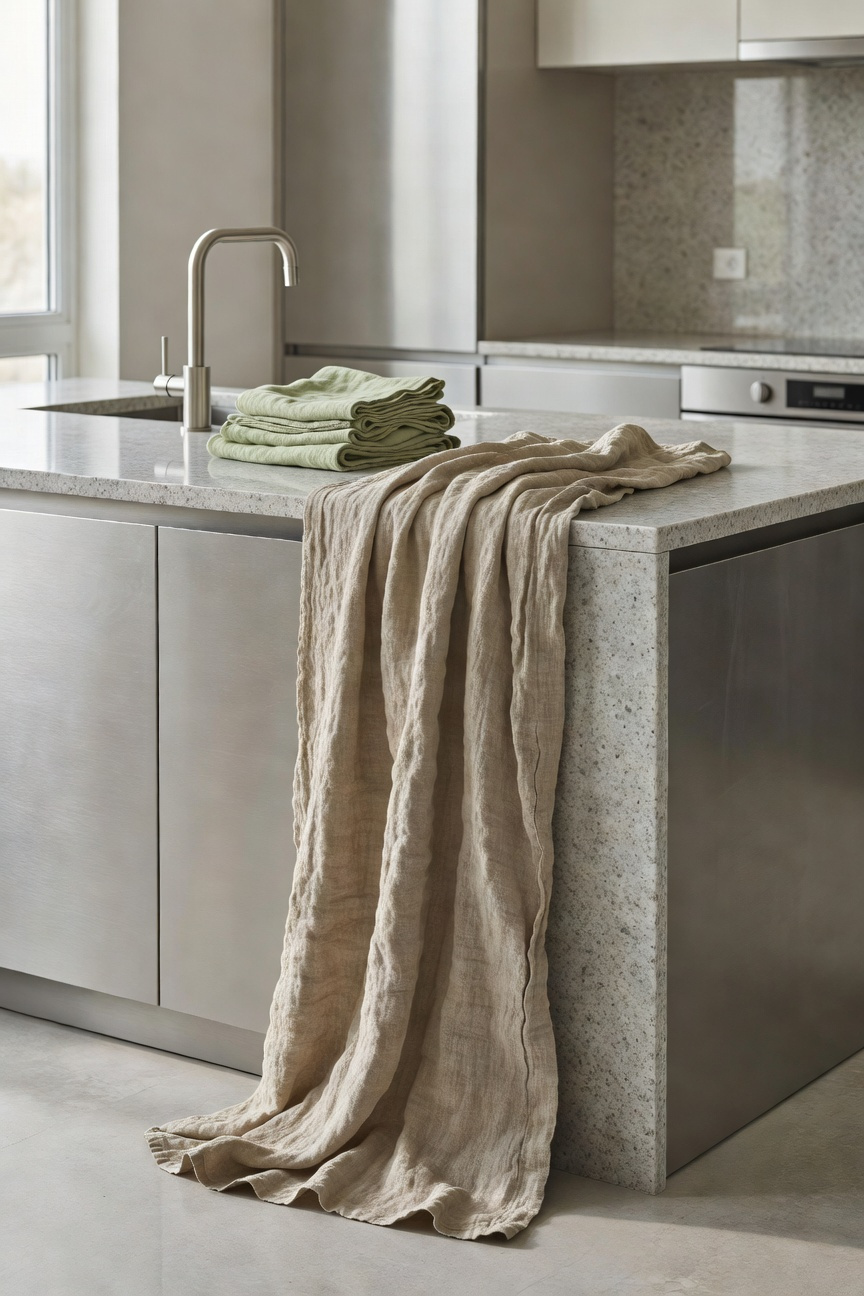
This material champions a low-maintenance philosophy. In fact, the characteristic wrinkle is considered an aesthetic charm. Thus, you never need to iron these pieces. Rather, they provide a “lived-in” atmosphere that feels authentic.
Beyond aesthetics, washed linen serves as a functional workhorse. Surprisingly, it absorbs moisture rapidly yet dries faster than cotton. This rapid drying cycle effectively prevents musty odors in small spaces. Moreover, the fibers are strong and lint-free. Therefore, they remain the superior choice for drying delicate glassware. Ultimately, these textiles soften with every wash, becoming more luxurious over time.
Bringing nature indoors requires the right vessel. Unglazed terracotta offers superior technical benefits for kitchen gardening. The clay is inherently porous. Consequently, it allows air and moisture to move freely through the walls. This breathability facilitates evaporative cooling. Therefore, it protects delicate roots from overheating in sun-drenched windows. Furthermore, the material actively wicks excess moisture from the soil. This creates the ideal environment for rosemary, basil, and thyme. Over time, the pots develop a weathered patina, adding rustic character.
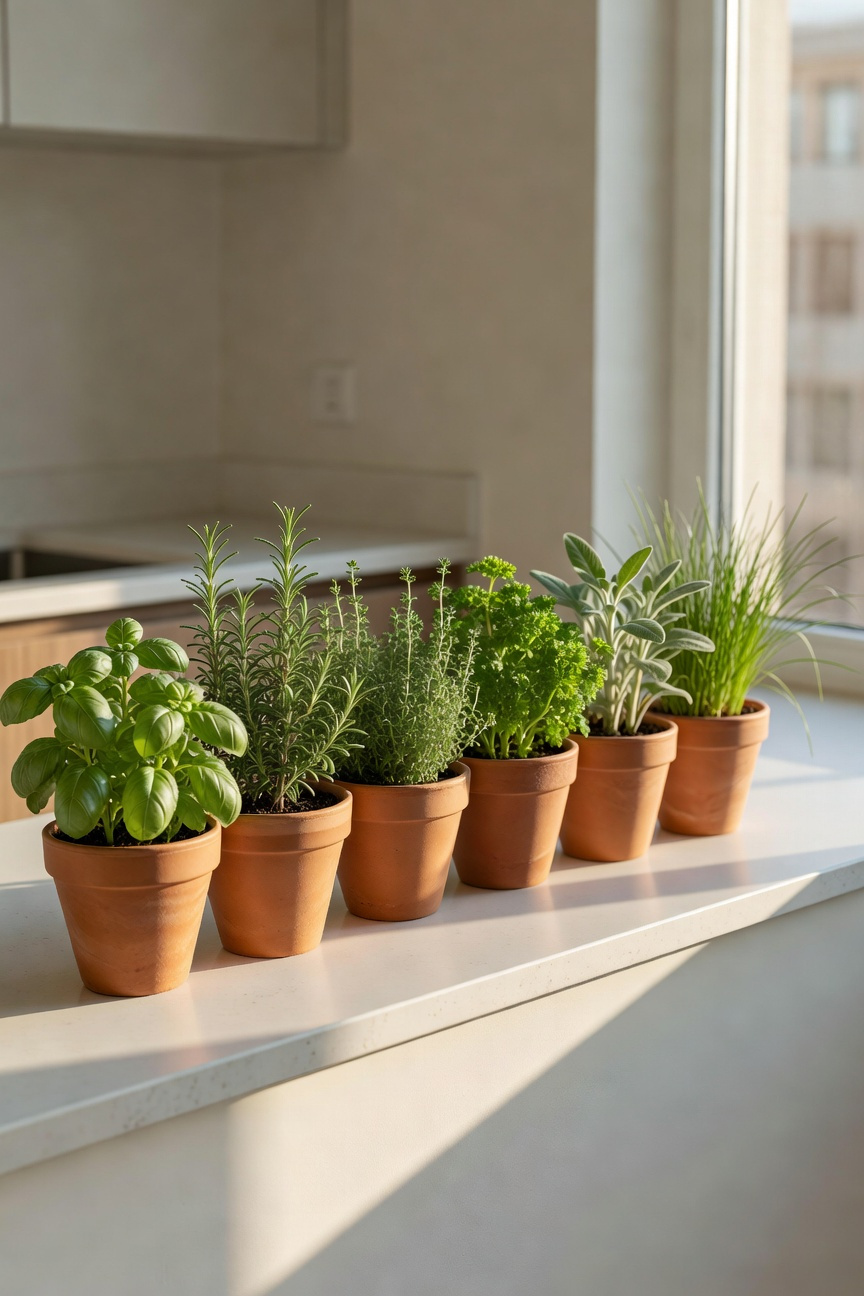
Beyond horticulture, uniformity creates visual calm. Using identical pots transforms scattered plants into a cohesive design installation. Visually, the warm earth tones contrast beautifully with sleek stainless steel. This repetition creates a gentle rhythm within the kitchen. As a result, the eye focuses on the vibrant greens of the herbs.
Functionally, this setup supports a “micro mise en place.” Fresh ingredients are available during meal preparation. Additionally, the sensory experience is profound. Brushing past the leaves releases aromatic oils instantly. Ultimately, tending to this living decor offers a tactile moment of mindfulness.
Modern apartment kitchens often rely heavily on cool materials. Stainless steel appliances and white cabinetry create a sleek foundation. However, this aesthetic can feel flat. Therefore, introducing a “thermal counterpoint” is essential. Brushed brass or copper hardware acts as a perfect warming agent. These golden-hued metals bring natural richness to a gray space. In fact, a simple brass handle can make a stark kitchen appear to glow.
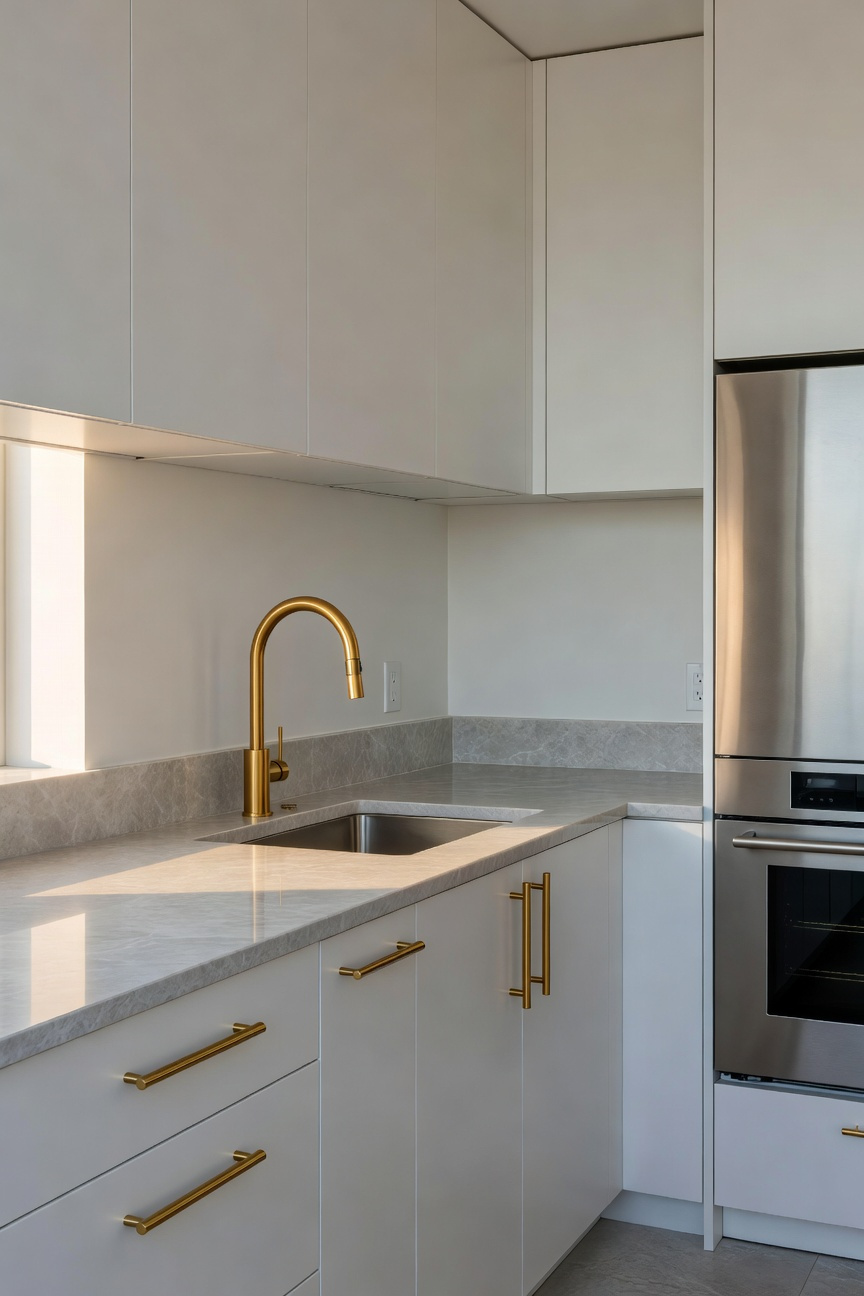
Fortunately, this strategy requires minimal commitment. For renters, hardware is the easiest place to experiment. Rather than replacing large fixtures, focus on the details. Ideally, maintain stainless steel as the dominant metal. Then, treat the warm brass as a curated accent. To achieve a balanced look, repeat this accent in at least three spots. For example, coordinate cabinet knobs with a small light fixture.
Furthermore, the finish of the metal dictates the mood. Opt for brushed or satin finishes over polished brass. This choice ensures the look remains sophisticated. Additionally, unlacquered copper offers a “living finish.” Over time, it develops a unique patina. Ultimately, this adds a sense of history to a modern home.
The Swedish philosophy of *Lagom* offers a perfect blueprint for efficient apartment living. Pronounced *lah-gome*, this concept translates to “not too much, not too little—just right.” Modern *Lagom* design prioritizes equity and shared function. It represents a “Golden Mean” between stark minimalism and cluttered maximalism.
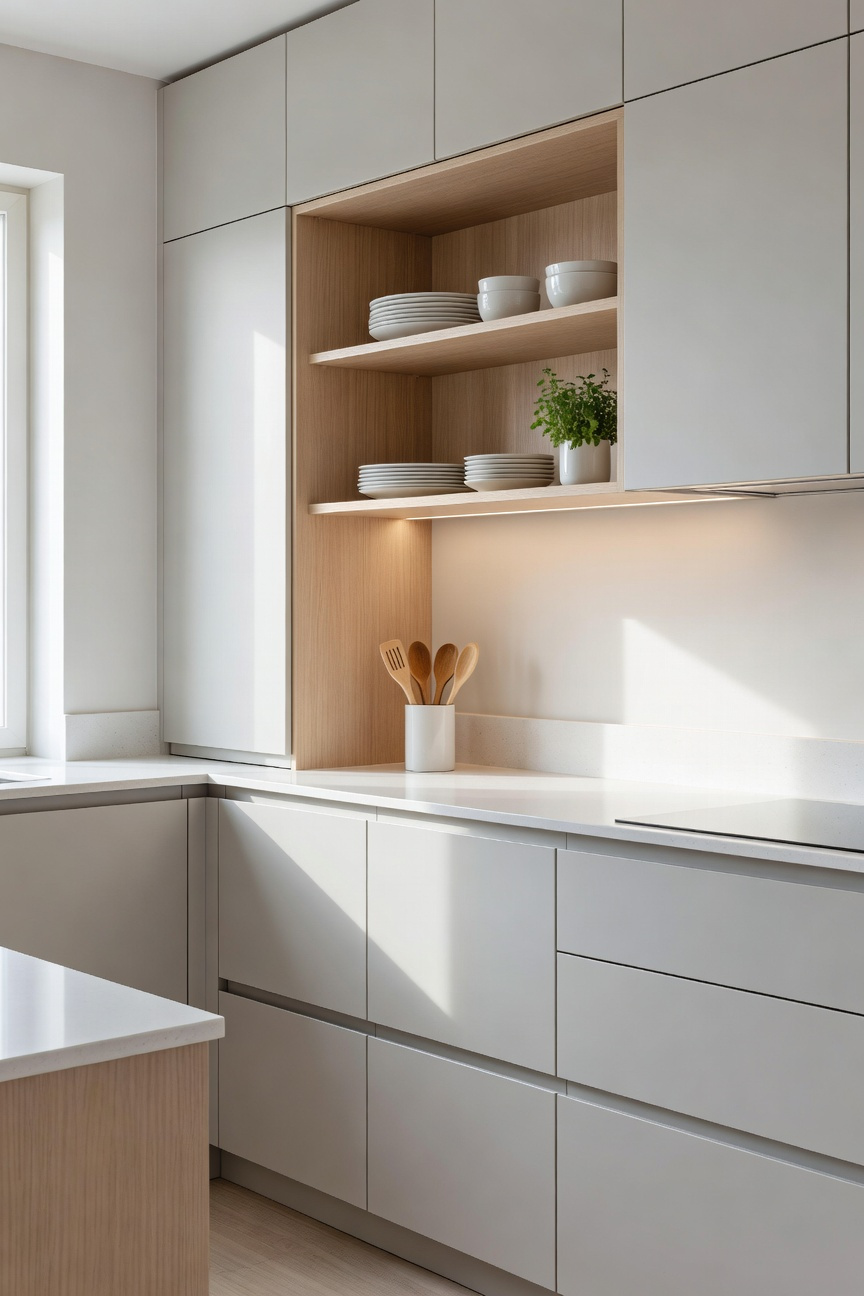
In practice, this philosophy champions purposeful design. Therefore, invest in durable, high-quality tools rather than quantity. Specifically, maintain a strict “one in, one out” rule to keep limited counter space clear. Furthermore, utilize built-in storage to hide necessary but unsightly objects. Conversely, select a few curated items, such as a handmade pitcher, for display. This strategic balance adds character without creating chaos.
To avoid the sterility often associated with minimalism, focus on materiality. For instance, build a foundation on soft neutrals like white and linen. These hues foster tranquility. Additionally, introduce tactile warmth through natural wood cabinetry. Finally, because light is a functional necessity, maximize illumination. Ultimately, *Lagom* ensures your kitchen remains intensely functional yet deeply comfortable.
Open shelving serves a vital purpose in compact kitchens beyond mere storage. By removing bulky upper cabinetry, you eliminate visual weight from the walls. Consequently, the kitchen feels significantly airier. However, maintaining this openness requires treating shelves as deliberate art. The goal is to transform utilitarian necessities into a curated “still life.”
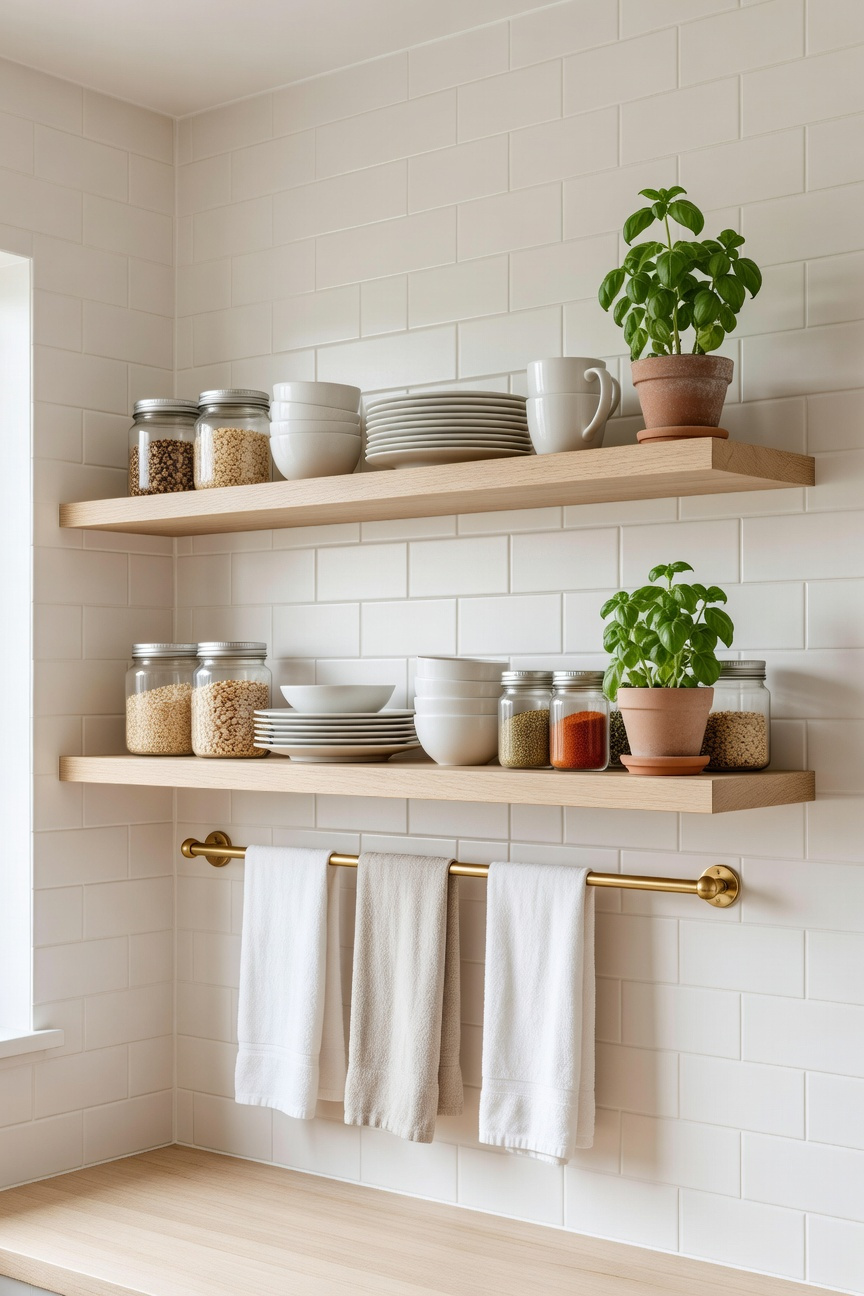
To achieve a cohesive display, exercise strict editorial control. Limit your arrangement to a palette of three or four colors. For a warm minimalist look, combine matte white stoneware with wood and glass. This restraint unifies disparate objects. Furthermore, prioritize functionality by placing frequently used items at eye-level.
Styling involves applying classic artistic principles. For instance, use the “Rule of Odds” by clustering items in groups of three. Arrange these clusters in soft triangles to guide the eye. Additionally, create depth by layering flat objects behind stacks of bowls. Finally, introduce texture to prevent sterility. A vintage copper kettle adds sensory warmth. Ultimately, this curation elevates humble kitchenware.
In compact living, clutter is psychological. The cacophony of mismatched food packaging creates discordant “visual noise.” Consequently, the brain processes this as stress. To combat this, we utilize the strategy of “visual silence” through unified decanting. By transferring dry goods into identical vessels, you instantly quiet the room.
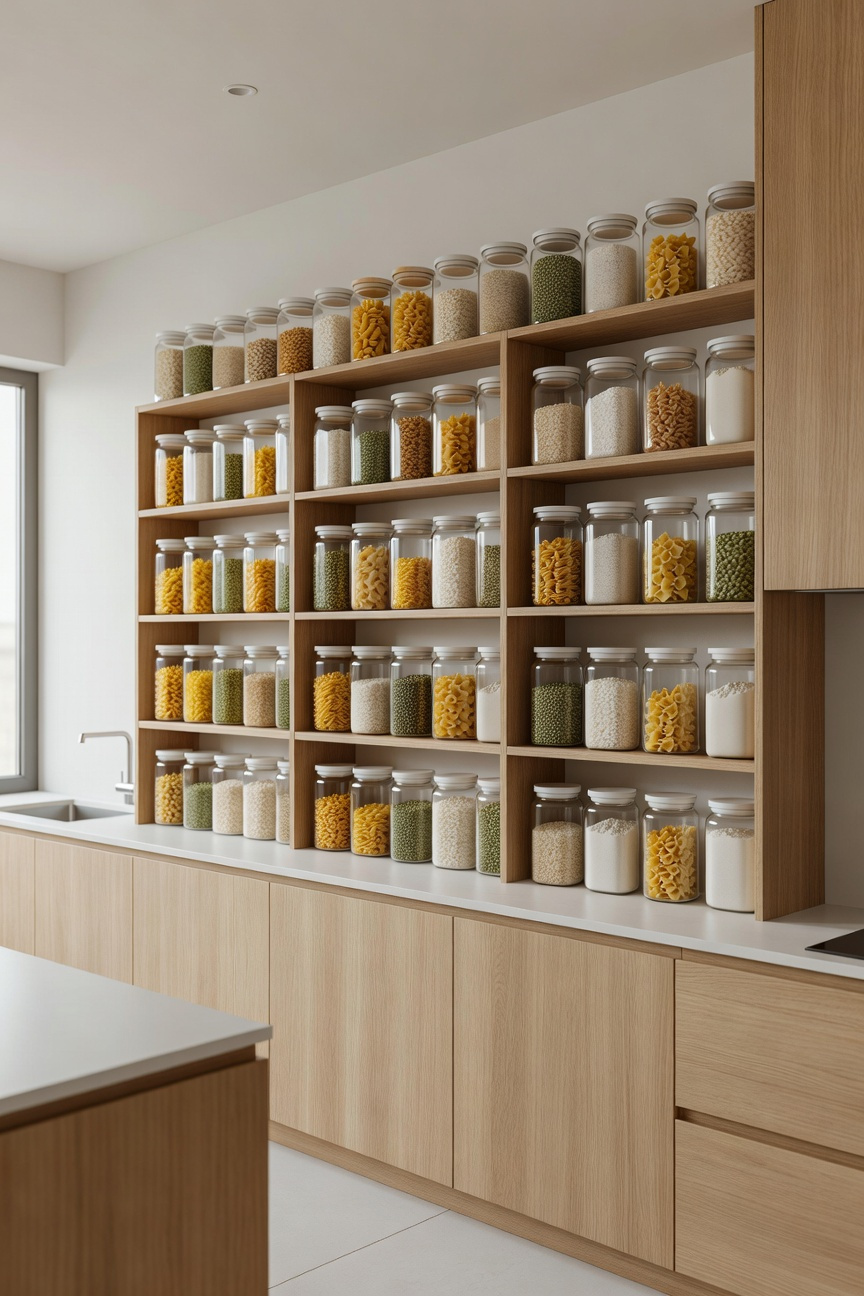
Functionally, decanting maximizes every cubic inch. Square glass containers eliminate the air gaps found in commercial boxes. Furthermore, removing cardboard is crucial for hygiene. Paper fibers can attract pests, whereas glass offers a secure barrier. Conversely, airtight seals preserve the integrity of your ingredients.
Aesthetically, this aligns with *Ma*, or intentional negative space. By stripping away branding, simple ingredients transform into decor. The amber of lentils or the white of rice provides natural warmth. Moreover, clear glass allows for instant inventory recognition. Therefore, you reduce food waste. Ultimately, choosing borosilicate glass adds sustainability. Thus, everyday storage becomes a feature of quiet luxury.
In Scandinavian design, we value space that allows a room to breathe. Therefore, drop-leaf tables and rolling carts are essential tools for apartments. They elegantly solve the conflict between open flow and daily utility.
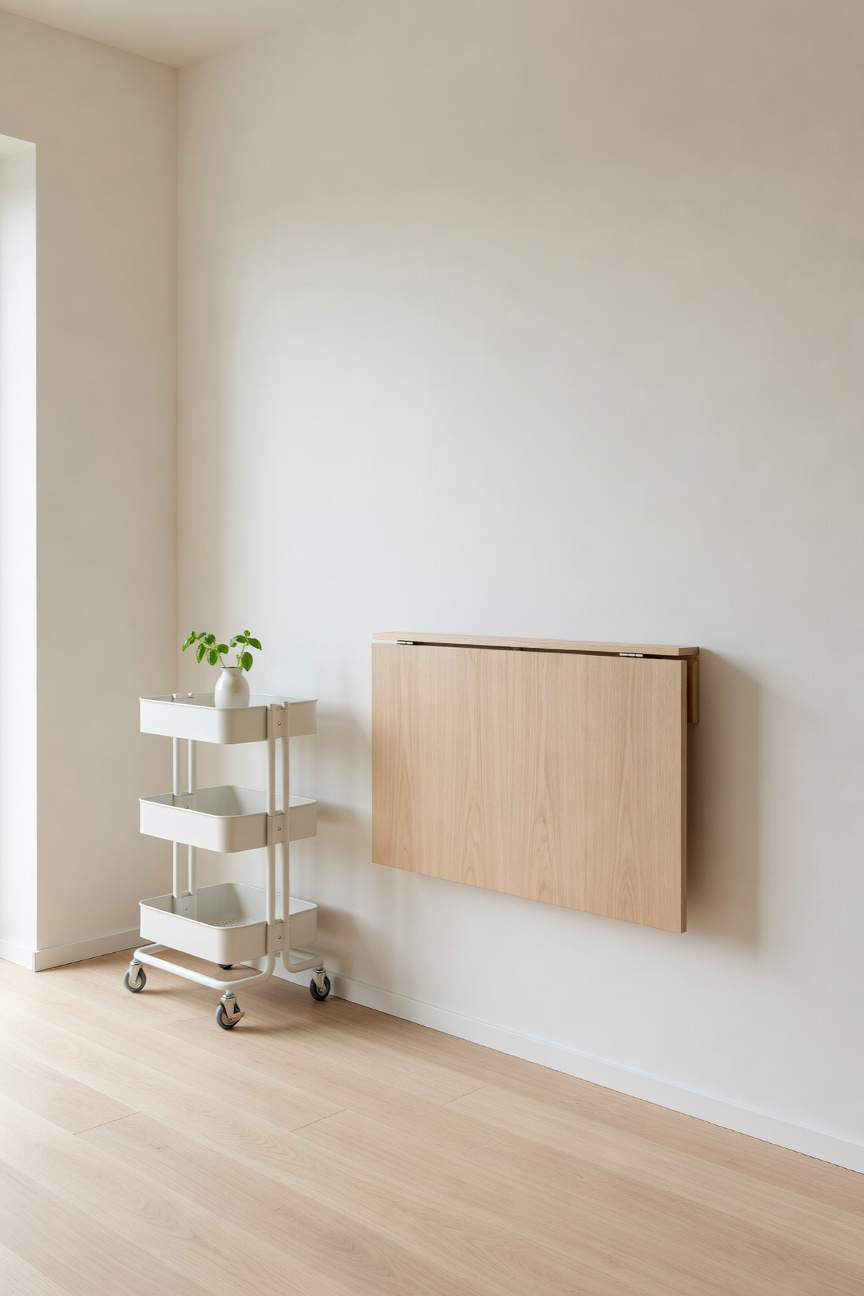
Historically, the drop-leaf design evolved to reduce physical footprints. Today, it offers relief through clever concealment. Modern wall-mounted versions function as sleek panels until needed. Then, they transform into sturdy surfaces for dining or work. This mechanism allows you to reclaim floor space instantly. Consequently, the room feels larger when the table is folded away.
Meanwhile, the rolling cart brings professional efficiency home. These units act as dynamic, mobile workspaces. Moreover, material choices help elevate the aesthetic. For instance, a butcher block top provides a warm prep surface. Alternatively, stainless steel adds a clean, industrial edge. Because they utilize wheels, these carts shift roles seamlessly. You might use one as a baking station, then roll it elsewhere for serving. This mobility grants you total control over your environment.
True functionality feels timeless rather than trendy. The vertical rail system descends directly from European Functionalist design. It prioritizes movement and flow within limited footage.
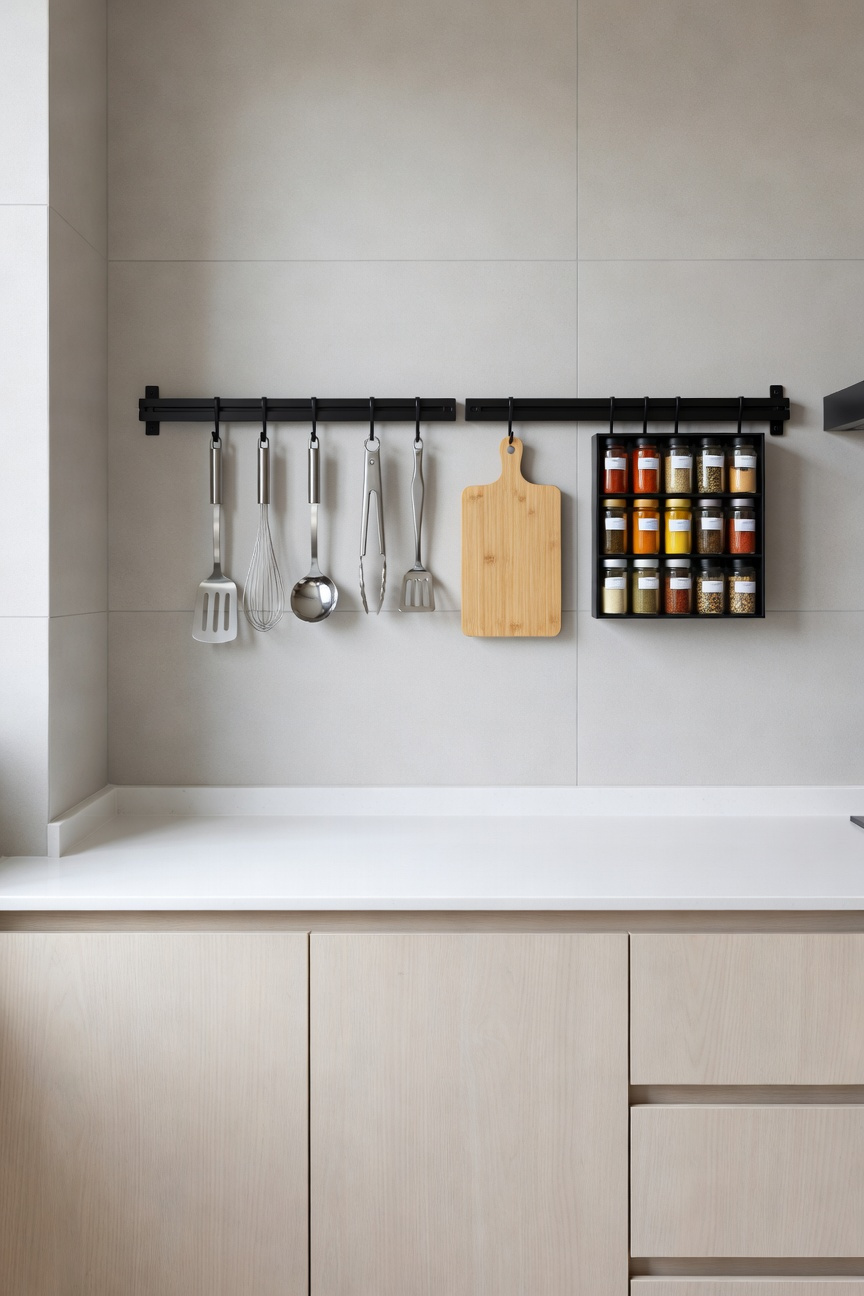
In a compact apartment, counter space is luxury. Utilizing the backsplash maximizes vertical real estate significantly. This embraces the “Open Kitchen” philosophy, allowing you to showcase kitchen wall decor ideas that transform any space. Instead of hiding tools in dark drawers, you display them intentionally. Thus, everyday utensils transform into decorative objects.
Material choice plays a crucial role. High-quality stainless steel or solid brass adds industrial elegance. Furthermore, lifting items off the countertop creates an uninterrupted visual plane. Surprisingly, this simple shift reduces visual noise. Additionally, the system offers complete modularity. You might install a short rail for prep tools near the cutting board. Alternatively, place a spice rack within reach of the range. Ultimately, essential tools remain accessible within a single motion.
Hygge is not merely a fleeting trend. Rather, it acts as a cultural mechanism for wellbeing. It creates a shield against the harsh outside world. In an apartment kitchen, this transforms a utilitarian room into a sanctuary.
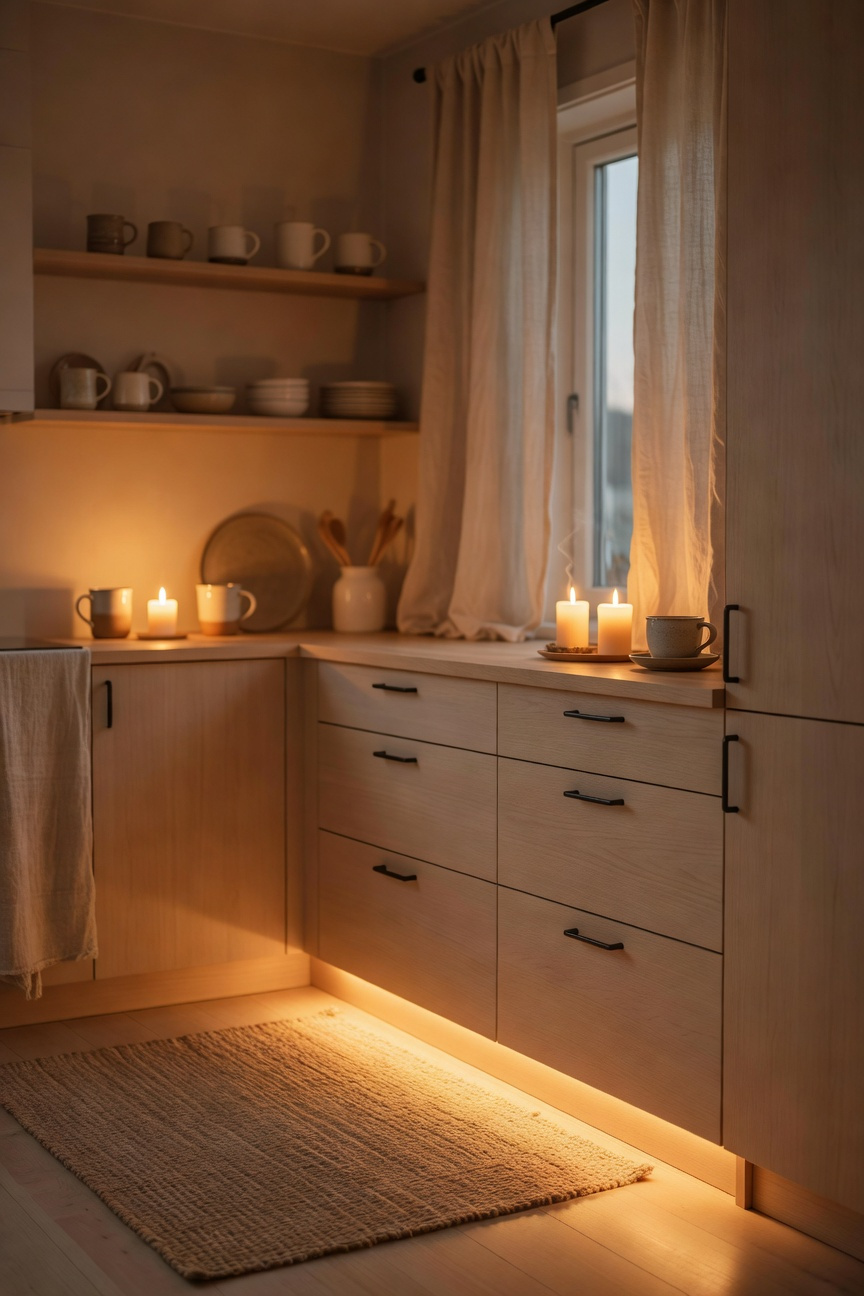
Lighting is the anchor of this atmosphere. Strictly avoid harsh, sterile overhead beams. Instead, emulate the “primal glow” of firelight. For example, select warm-toned bulbs around 2700K. Furthermore, layer these sources to avoid shadows. Use under-cabinet strips to create cozy pools of light. Additionally, the flicker of candles induces peace.
Beyond lighting, consider the tactile experience. A hygge kitchen rejects the perfection of a showroom. Therefore, embrace “visible utility.” Keep a worn wooden cutting board on the counter. Showcasing handmade ceramic mugs adds warmth. These natural materials add organic life to the space. To soften hard surfaces, introduce washable runner rugs. Finally, design the layout to foster connection. Even in small apartments, a single stool invites a friend to linger.
In Scandinavian culture, coffee is far more than a caffeine fix. It represents *fika*, a ritualistic pause for connection. Creating a dedicated station transforms a routine into a necessary mental reset. This physical boundary creates distance from daily work tasks.
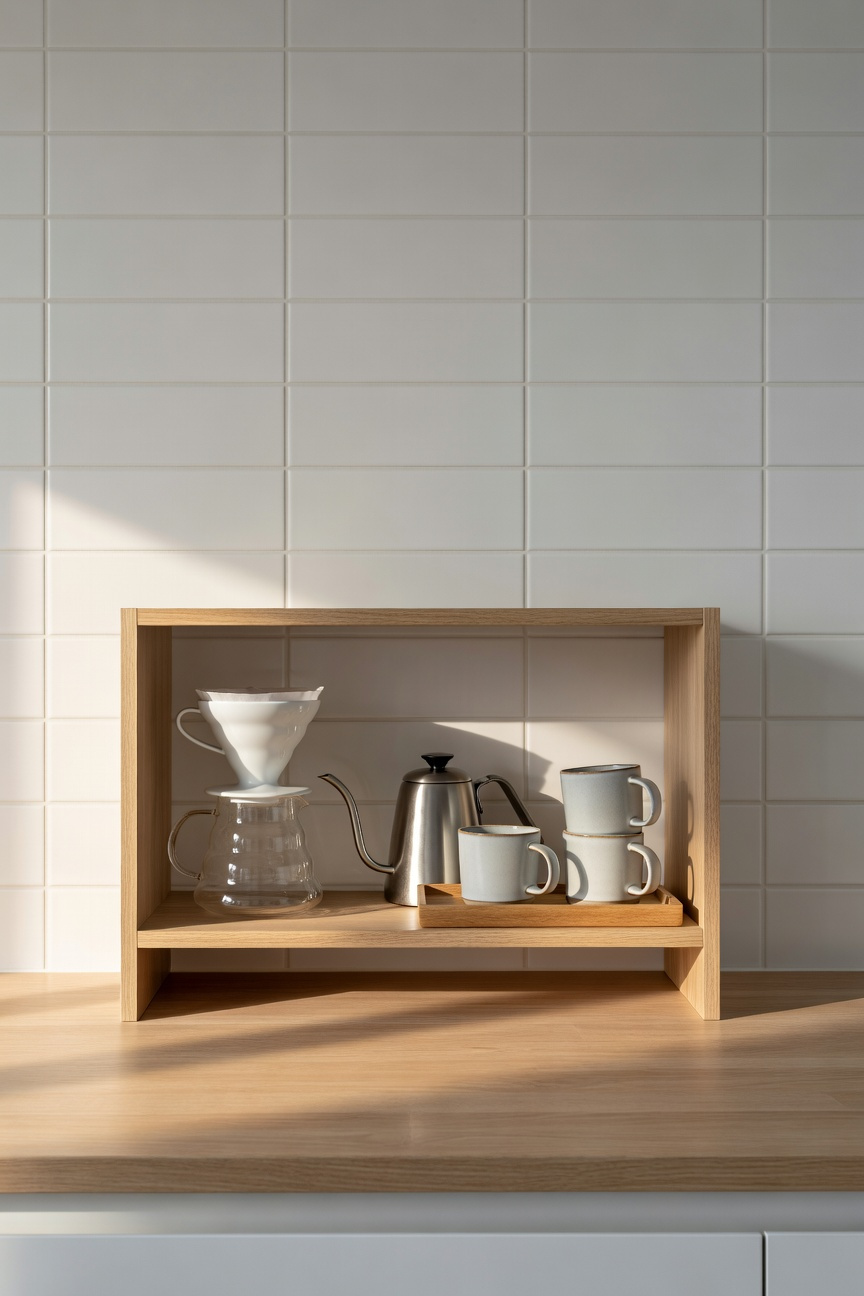
For apartment living, space is premium. Therefore, many utilize the “coffee closet” concept. This setup involves a narrow cabinet concealed by pocket doors. Inside, pull-out trays allow heavy machines to slide forward. Then, the equipment tucks away, keeping the kitchen uncluttered.
Alternatively, if counter space is limited, vertical storage becomes essential. Wall-mounted pegboards can display mugs, transforming dead space into functional art. Furthermore, placing appliances on a single tray visually groups items. This provides a clean containment zone for spills. Aesthetically, the goal is a calming atmosphere. Stick to a neutral palette of whites or pale grays. To avoid coldness, incorporate organic materials like wooden shelves. Finally, soft LED lighting ensures the station feels inviting, even on dark mornings.
Effective kitchen lighting requires a strategic contrast in color temperature. This balance allows a single space to serve two functions. For food preparation, clarity is paramount. Therefore, task lighting under cabinets should fall within the cool-neutral range of 3500K to 4000K. This mimics natural midday light, enhancing concentration. Additionally, a high Color Rendering Index (CRI) of 90+ ensures accuracy.
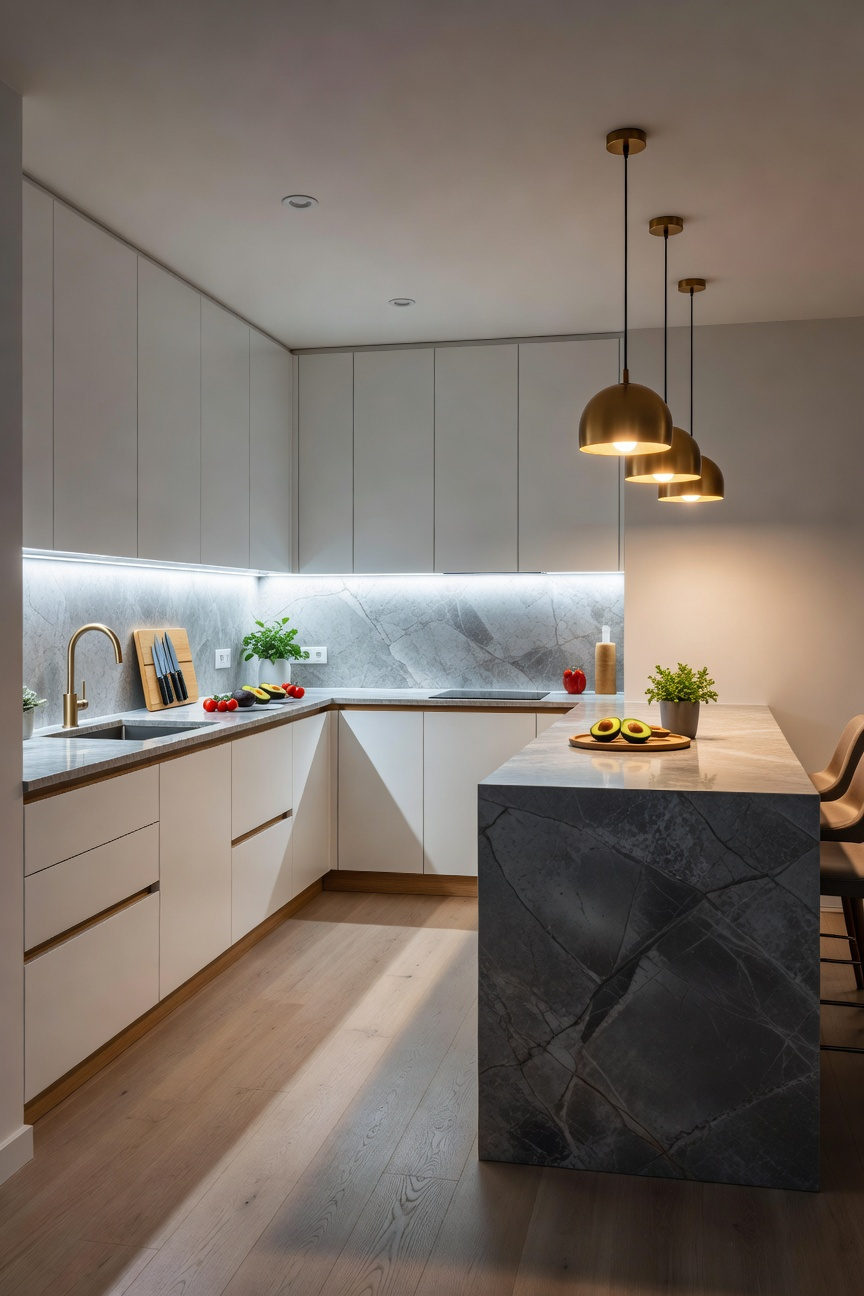
Conversely, the ambient layer sets the emotional tone. Overhead fixtures should emit a warmer glow, roughly 2700K. This softer light promotes relaxation. In compact apartments, this separation creates depth. Single overhead sources often cast harsh shadows. Thus, under-cabinet lighting becomes non-negotiable. It lifts shadows from the workspace, making the room feel larger.
However, the true secret lies in independent control. Every layer must operate on its own dimmer switch. This separation allows for seamless transitions. You can shift instantly from a bright “Chef Scene” to a dim “Cocktail Scene.” Ultimately, tunable smart bulbs can automate this flow, aligning your home with your circadian rhythm.
Modern life is dominated by smooth, cold screens. Therefore, we crave tactile grounding within our homes. The kitchen benefits immensely from this sensory anchor. Hand-thrown ceramics intentionally retain traces of their creation. Faint throwing rings often ripple across interior walls. Consequently, these imperfections connect you to the maker’s hand. This offers a sense of history that mass-produced kitchenware lacks.
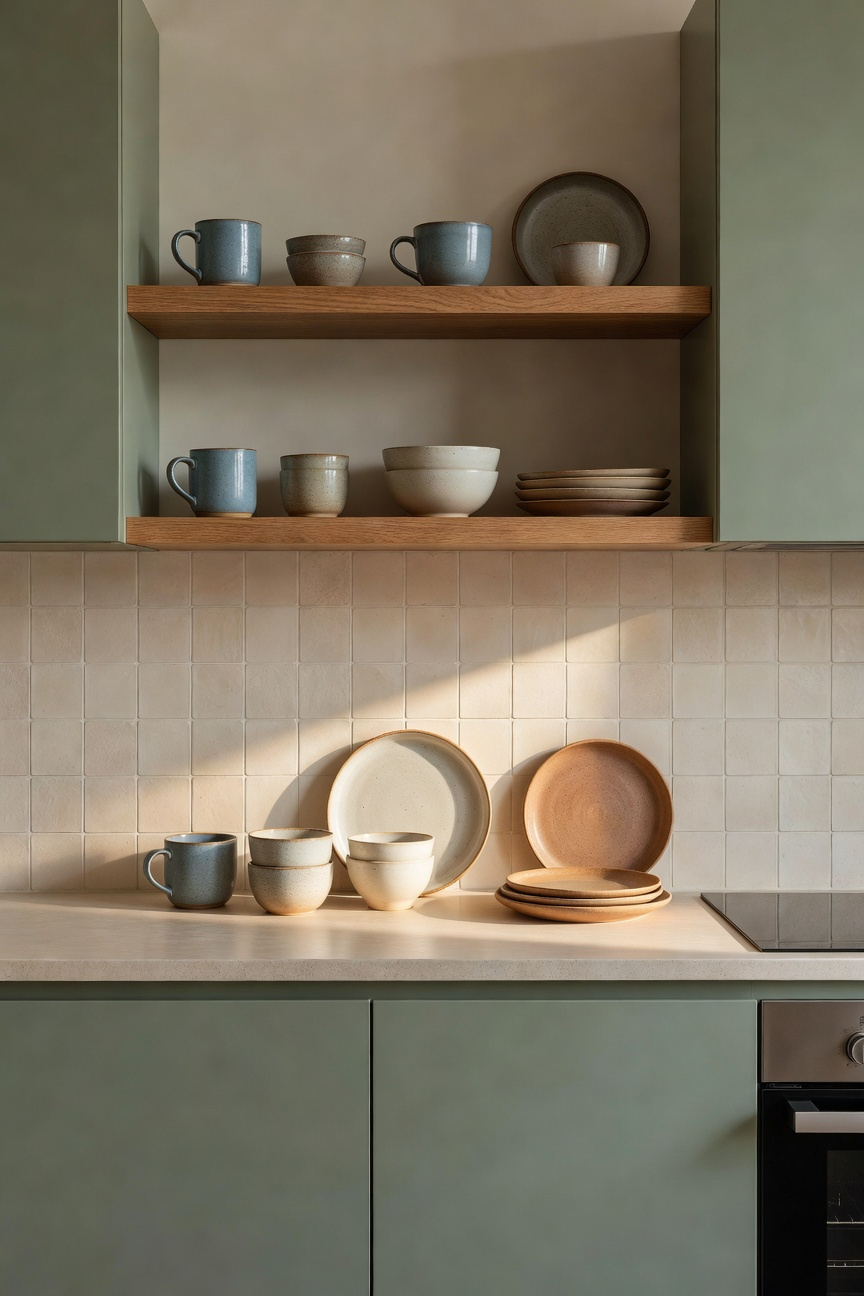
Unlike slick porcelain, sensory ceramics invite exploration. Artisans often utilize matte glazes to create appealing friction. Furthermore, many pieces feature unglazed bases. This contrast between gritty clay and smooth glaze offers complex feedback. Additionally, stoneware possesses physical heft. This weight communicates durability. Moreover, thick clay retains heat, warming your hands during coffee rituals.
In compact apartments, every square inch must work hard. Thus, these items serve as functional art. A simple salt cellar becomes a sculptural centerpiece. By placing these pieces on open shelving, you encourage interaction. Ultimately, displaying textured objects combats sterility. This approach introduces Wabi-Sabi into your daily routine.
True Scandinavian design always honors the natural light cycle. The changing quality of sunlight demands a responsive strategy. Winter light often appears blue and diffuse. Therefore, employ an inverse color temperature strategy. Counteract the chill with warm hues like terracotta or rich ochre. These earthy tones act as a filter against the cold exterior. Conversely, summer brings intense brightness. Consequently, shifting to cool tones like sage green creates a refreshing atmosphere.
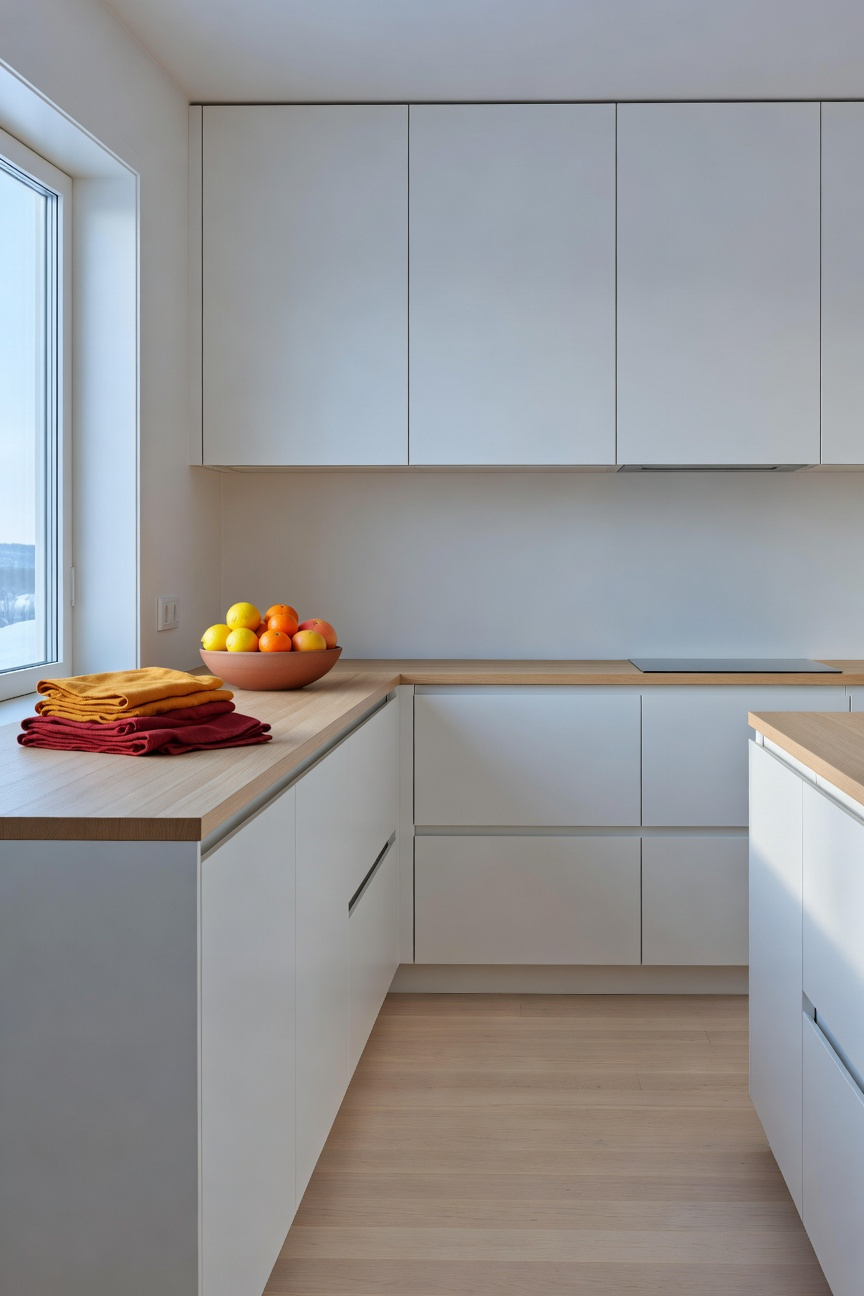
Beyond color, the tactile weight of materials shapes your experience. During brighter months, prioritize breathable fabrics. Crisp linen or open-weave cotton catch the light. However, as days shorten, the home requires anchorage. Thus, rotate in heavier textures like flannel or wool blends. This layering effect visually constructs a cozy refuge.
Ultimately, this rotation serves a vital psychological function. Swapping small accents introduces novelty and combats visual fatigue in compact spaces. As a result, your kitchen remains vibrant and attuned to nature’s rhythm.
The kitchen table is the home’s emotional center. Consequently, even compact apartments must prioritize this setting for connection. Fostering conversation in tight quarters requires strategic geometry. We must move beyond the functional “Work Triangle.” Instead, we embrace a “Social Triangle,” ensuring guests interact seamlessly.
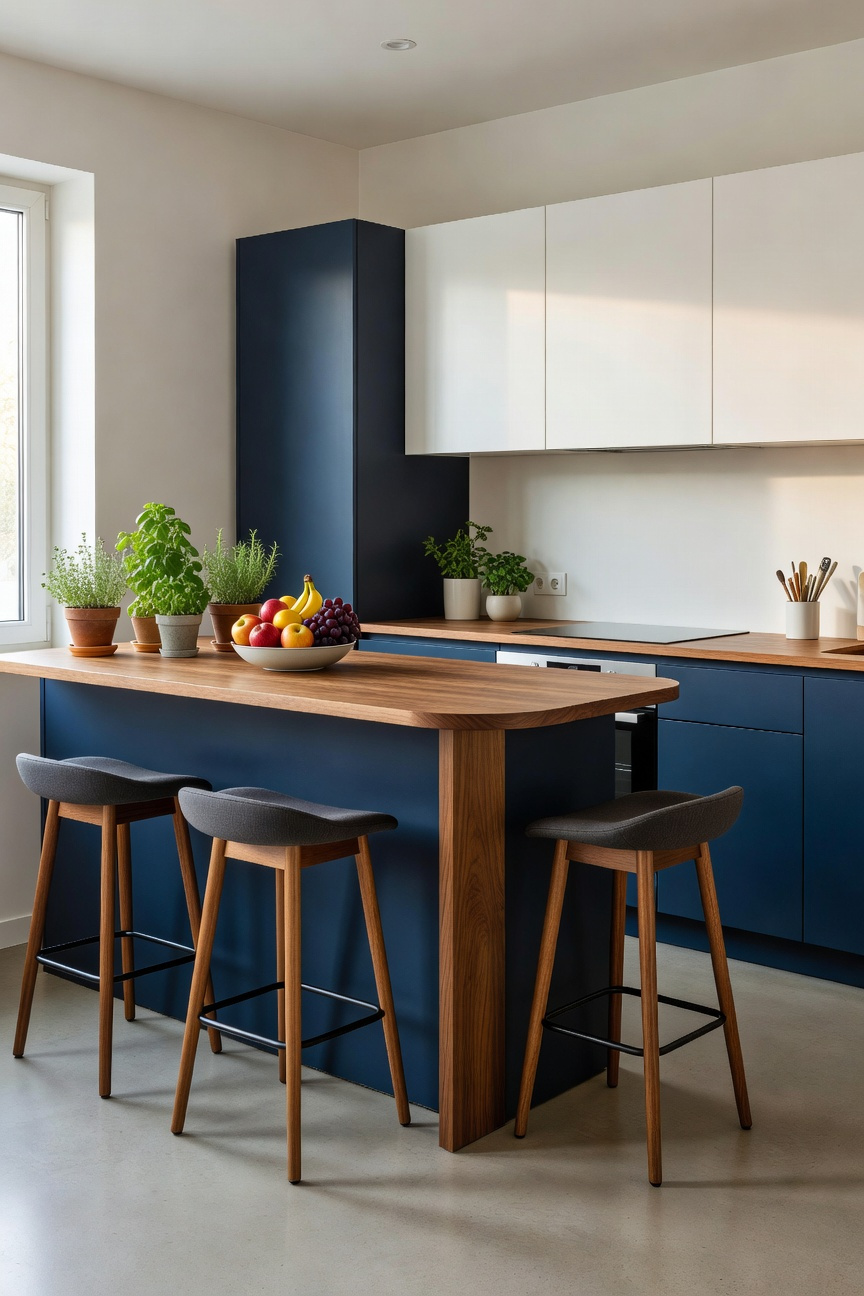
To achieve this, avoid rigid, straight lines against walls. Curved or L-shaped banquettes utilize dead space effectively. Furthermore, these shapes direct people inward, fostering eye contact. This arrangement mimics the “conversational shape” of gatherings. Additionally, psychological comfort relies on sensory details. Therefore, choose warm wood finishes to encourage lingering.
Technically, functionality must balance with this comfort. For example, pairing a built-in banquette with a pedestal table eliminates obstructing legs. Thus, movement remains easy. Alternatively, a round bistro table softens sharp corners. Even low-profile, stackable chairs can preserve visual openness. Ultimately, thoughtful design transforms a small corner into a democratic space for dialogue. By adopting Lagom and engineering light, you ensure your apartment kitchen decor is a luxurious reflection of intentional living.
Achieving luxury in a small kitchen relies on curation and material investment rather than square footage. Focus on high-quality, authentic materials like honed stone, rift-cut wood veneer, and living finishes like unlacquered brass hardware. Integrate appliances and use seamless, floor-to-ceiling cabinetry to create a clean, bespoke look that emphasizes material integrity and reduces visual clutter.
High-albedo surfaces are essential for maximizing the perceived size of a small kitchen. Matte white, creamy off-whites, and pale neutrals (like light gray or linen) reflect available light deeply into the space, creating an airy, expansive effect. Use these light colors on cabinetry and walls, contrasting them only subtly with natural wood or warm metallic accents to prevent the room from feeling sterile.
The best strategy for limited counter space is the principle of “visual silence,” guided by *Lagom*. Leave the majority of the counter empty to create a psychological “visual pause.” For essential decor, prioritize functional items that also serve as art—such as a single row of uniform terracotta pots holding culinary herbs, or a curated stack of hand-thrown ceramics on a simple wooden cutting board. Utilize vertical rail systems or concealed storage for everyday tools to maintain clear horizontal surfaces.


