Physical Address
304 North Cardinal St.
Dorchester Center, MA 02124
Physical Address
304 North Cardinal St.
Dorchester Center, MA 02124
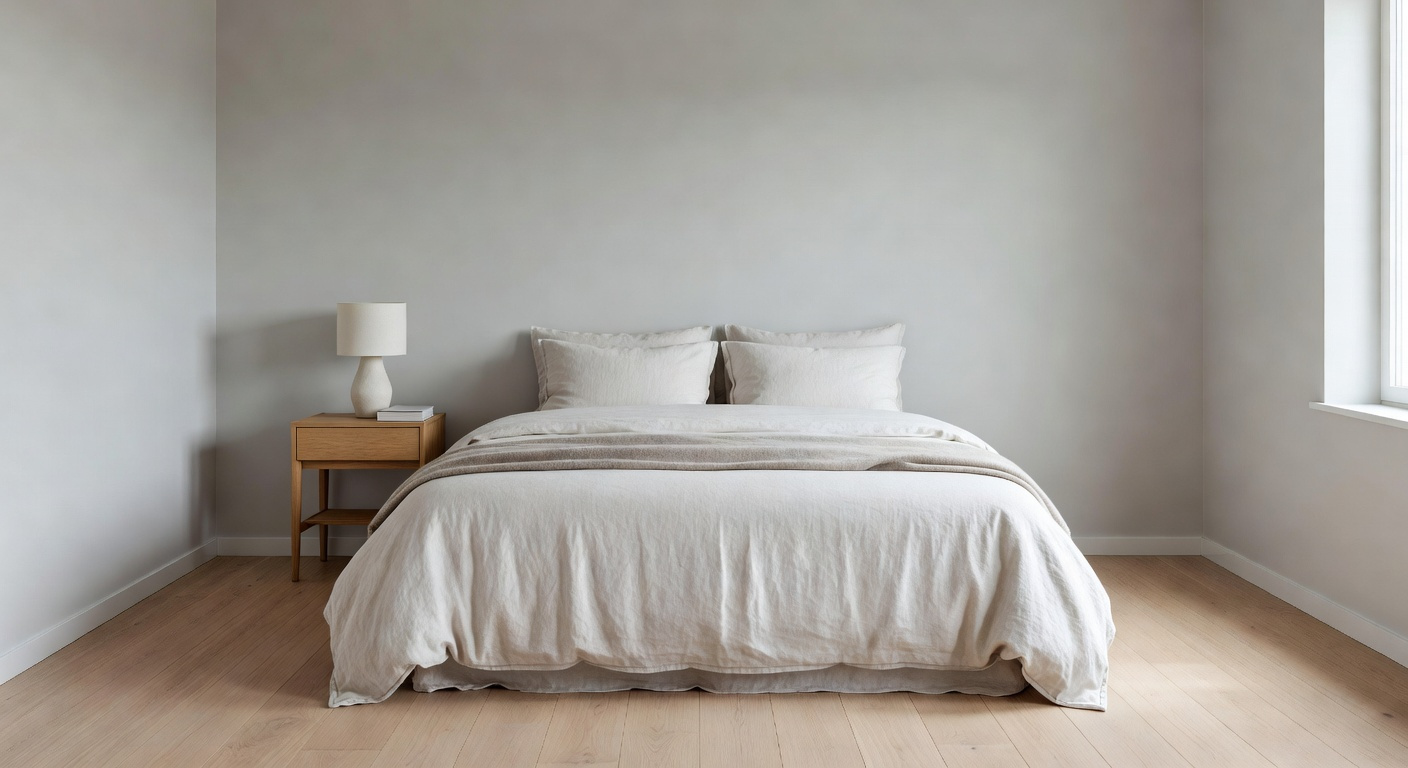
Ready for a luxurious transformation? Explore 15 expert-vetted bedroom makeover ideas rooted in Biophilic and Circadian design. Achieve ultimate rest with Decorswag.
Many people assume a bedroom serves a purely functional purpose. However, for discerning homeowners, achieving true rest requires intentional design. We often view the space as merely a location for unconsciousness, yet luxury defines the actual quality of our rest. Too often, our sleeping quarters double as chaotic storage spaces or makeshift offices. This clutter acts as a silent saboteur to mental peace. This guide reveals the foundational principles for executing exceptional bedroom makeover ideas that prioritize biological and psychological well-being.
Creating a true sanctuary requires a fundamental shift in perspective. The Nordic concept of *Hygge* offers a powerful alternative to modern chaos. Indeed, this philosophy prioritizes a mood of intimacy, safety, and well-being. It shifts the focus from a bed for a body to an environment for the soul. True comfort comes from a feeling of protection, not high prices. The difference lies not in budget, but in deliberate design choices. Instead of accumulation, we must focus on eliminating distraction.
This guide reveals how to cultivate that essential sense of sanctuary. We explore the “Sanctuary Shift” through tactile security and warm, soft lighting. We examine how to create a “Hyggekrog,” or cozy corner, for decompression. We also address investing in high-quality, breathable foundations over mere decoration. By prioritizing natural materials, you signal safety to your central nervous system. This approach transforms your room into a technology-free cocoon. Thus, you will finally bridge the gap between simply sleeping and truly resting.
To truly transform your bedroom, start with the Swedish concept of *Lagom*. Effectively, this philosophy advocates for “just the right amount,” acting as the “Goldilocks Principle” of design. Unlike stark minimalism, *Lagom* avoids creating sterile or empty environments. Instead, it seeks a state of perfect equilibrium. Historically, the term refers to a communal sense of fairness and restraint. Applying this to your space requires a mindset of conscious moderation.
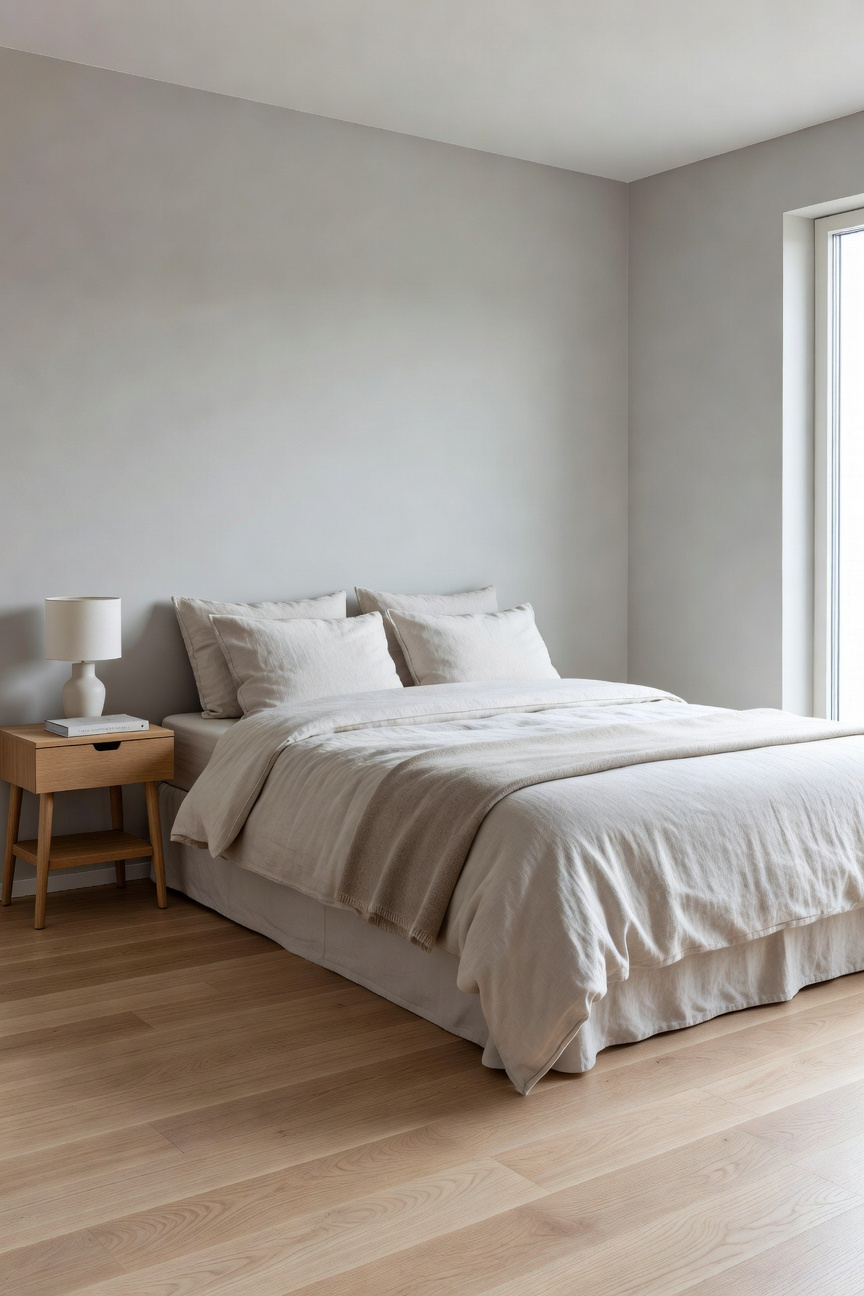
Specifically, you must embrace the mandate of functional efficiency. Look at your room and retain only what genuinely serves a purpose or provides comfort. In fact, you should rigorously remove novelty items that create visual clutter. This subtraction acts as a sensory reset for the room. A decluttered space directly supports a restorative mental state. Since sleep helps declutter the mind, your environment must reflect that same peace. Removing the unnecessary lays a sustainable, calming foundation for future comfort.
Ideally, treat the bedroom as a product designed solely for rest. German industrial designer Dieter Rams famously coined the phrase, “Less, but better.” This philosophy shifts our focus from decoration to functional editing. It asks if an item truly aids the room’s primary purpose. Anything that does not directly enhance sleep is merely visual noise.
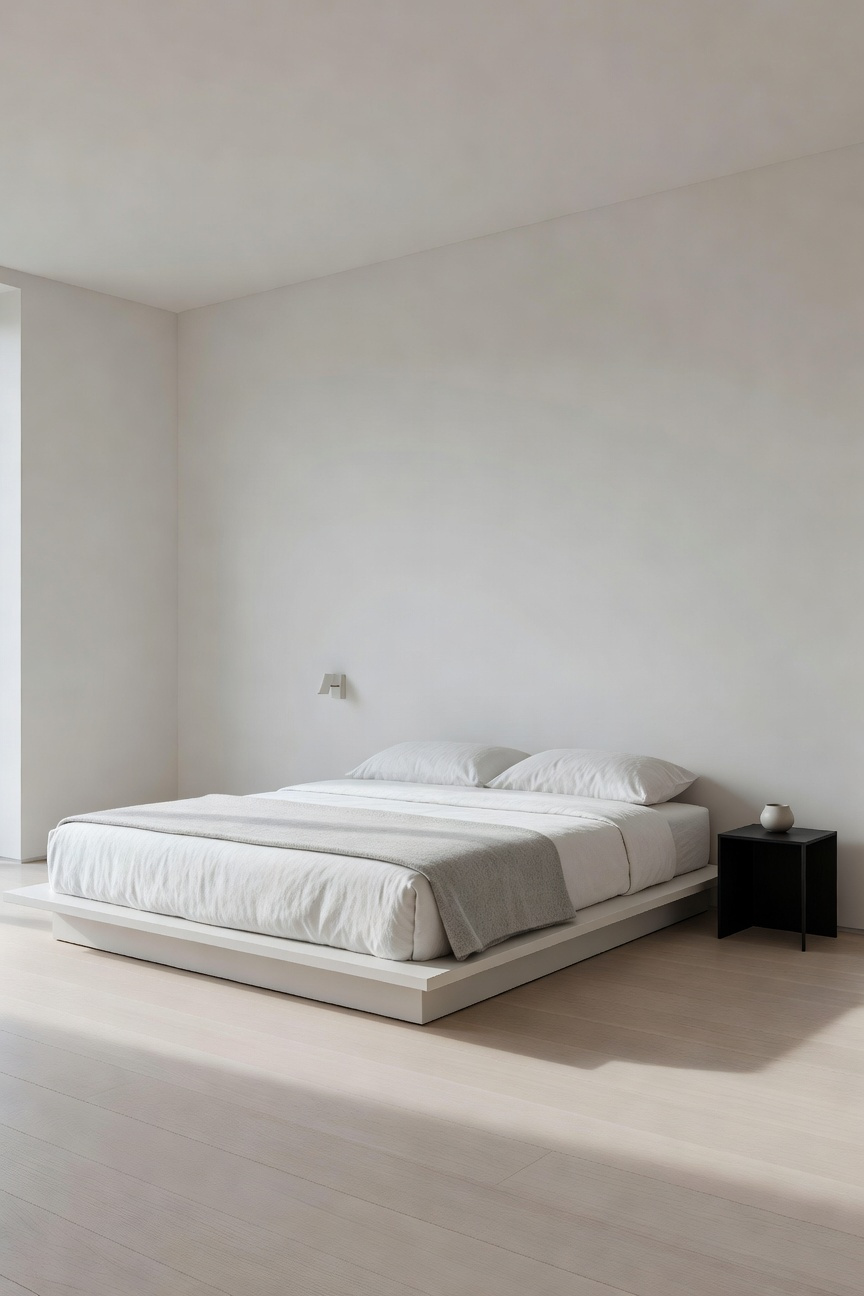
Removing this noise is a biological imperative. Every object in your line of sight requires a tiny bit of mental processing. In fact, research links visual clutter directly to elevated cortisol, the body’s stress hormone. A busy room creates a background cognitive load that prevents the brain from powering down. Simplifying the space creates a necessary “low-demand zone” for your nervous system.
Practically, this audit begins with the nightstand. Since it is the last visual field before sleep, it must be calm. Clear away mail, trinkets, and excess cosmetics. Instead, curate only essentials, like a high-quality lamp or a single book. Replace chaotic gallery walls with one calming statement piece. Swap complex patterns for monochromatic textures to maintain warmth. For example, introduce a slub linen duvet or a natural wood frame to add depth. By reducing visual input, you significantly amplify tranquility.
True luxury is often defined by what you choose to leave out. Your brain requires a “visual deep breath” to signal safety and rest. Cluttered environments maintain low-grade stress, making it difficult to decompress fully. Therefore, treating negative space as an asset creates an atmosphere of intentionality. Just as silence defines music, empty corners define a room’s character.
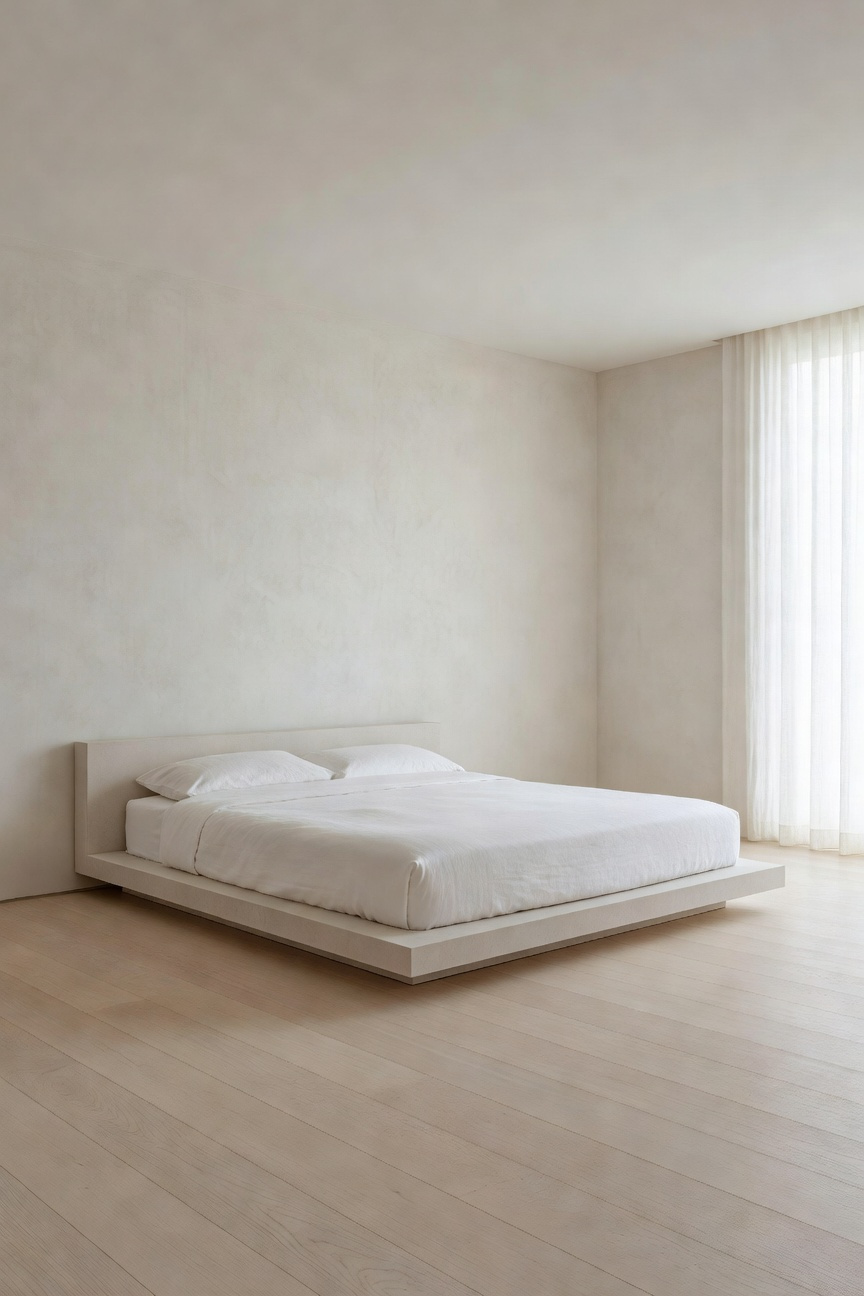
High-end interiors utilize this “un-design” to signal confidence and exclusivity. Without the competition of clutter, a single linen duvet becomes a masterpiece. This restraint highlights the craftsmanship of your furniture and natural materials. Effectively, you are preventing decision fatigue by removing unnecessary visual stimuli. The void becomes a functional sanctuary for mental clarity and peaceful slumber.
The most critical adjustment involves the bed’s placement. Design principles favor the “Command Position.” In this layout, you position the bed diagonally across from the door. You gain a clear view of the entrance without direct alignment. This arrangement satisfies a primal need for security. You feel protected rather than exposed, allowing for deeper relaxation.
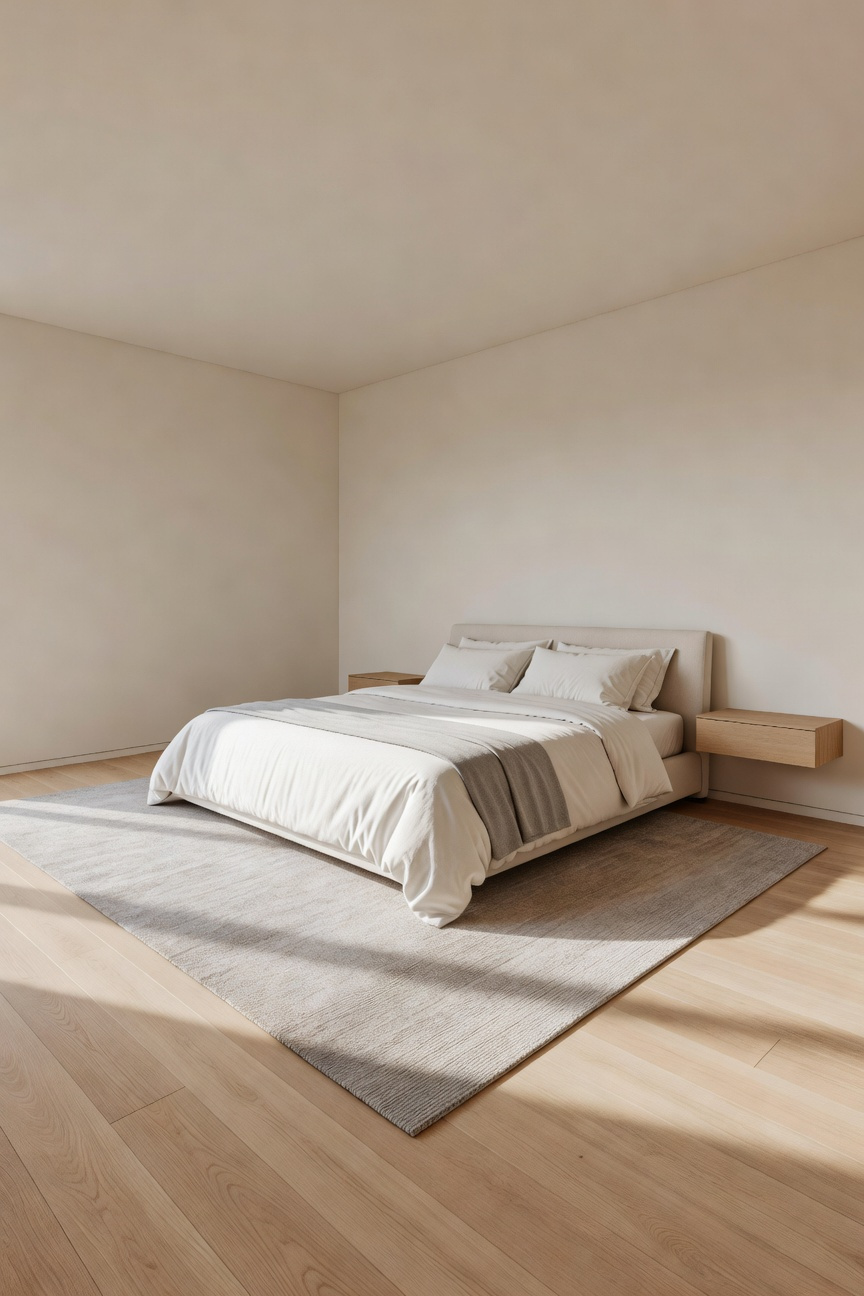
However, placement alone is insufficient without proper spacing. Functionally, you must maintain a clear pathway around the bed. Experts recommend a minimum clearance of 24 to 30 inches. Without this space, movement becomes awkward and restricted. This open flow prevents the “stagnation” of energy caused by clutter. Indeed, a room that breathes physically allows the mind to rest.
Additionally, consider the shape of your furniture. In Feng Shui, sharp corners pointing at the bed are called “poison arrows.” These angular edges can create subtle subconscious stress. Try to soften these angles with textiles or plants. Alternatively, simply angle the furniture away from the sleeper. Finally, establish harmony through symmetry. For instance, matching nightstands create a sense of equilibrium. A balanced room encourages restorative sleep.
The “Nordic Envelope” is more than a visual choice; it is a psychological necessity. Historically, this design strategy emerged to combat long, dark Scandinavian winters. Therefore, the primary goal is maximizing limited natural light. To achieve this, we create a reflective canvas using sophisticated neutrals. Strictly avoid clinical, stark whites. Instead, choose warm whites with subtle yellow or beige undertones. These hues counteract cool northern light, ensuring the bedroom feels cozy.
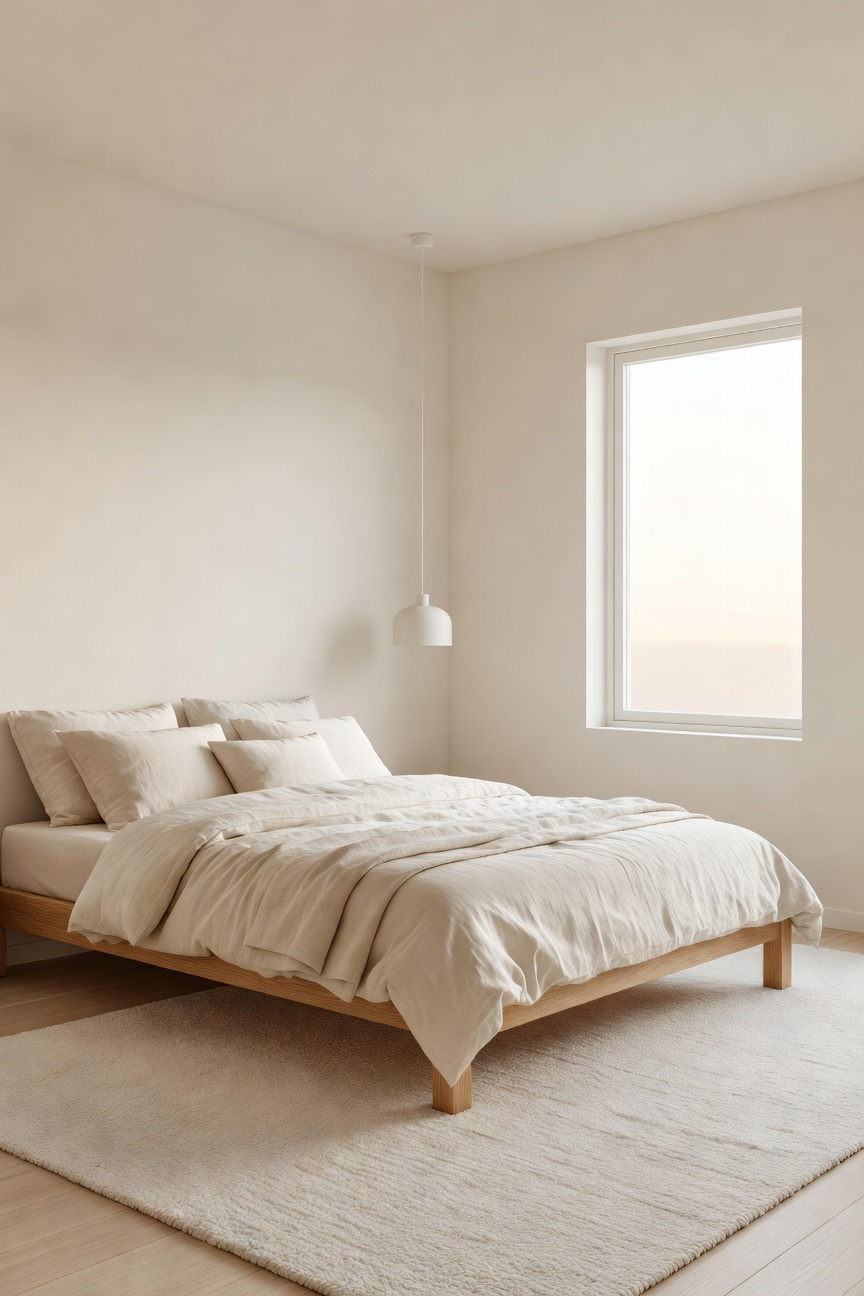
Texture plays a crucial role in managing luminosity. Prioritize matte finishes over high-gloss surfaces. Matte walls diffuse light softly, mimicking the gentle quality of cloud-filtered sunshine. Conversely, glossy surfaces create harsh glare that disrupts the calming atmosphere. Similarly, incorporate untreated light woods like birch or oak. These natural materials maintain high reflectance while adding organic warmth.
Finally, ground this airy envelope with strategic contrast. A single black accent can anchor the space effectively. In design terms, this *kontrast* actually makes the surrounding neutrals appear brighter. This balance creates a bright, restorative haven for rest.
For years, minimalist design heavily favored stark, gallery-white walls to create a sense of space. However, recent insights into sleep hygiene significantly challenge this austere aesthetic. Bright white paint possesses a high Light Reflectance Value (LRV), often reflecting nearly all available light. Unfortunately, this intensity signals “daytime” to the brain, maintaining alertness when you should be winding down. Many crisp whites contain blue undertones that actively suppress melatonin, the body’s essential sleep hormone.
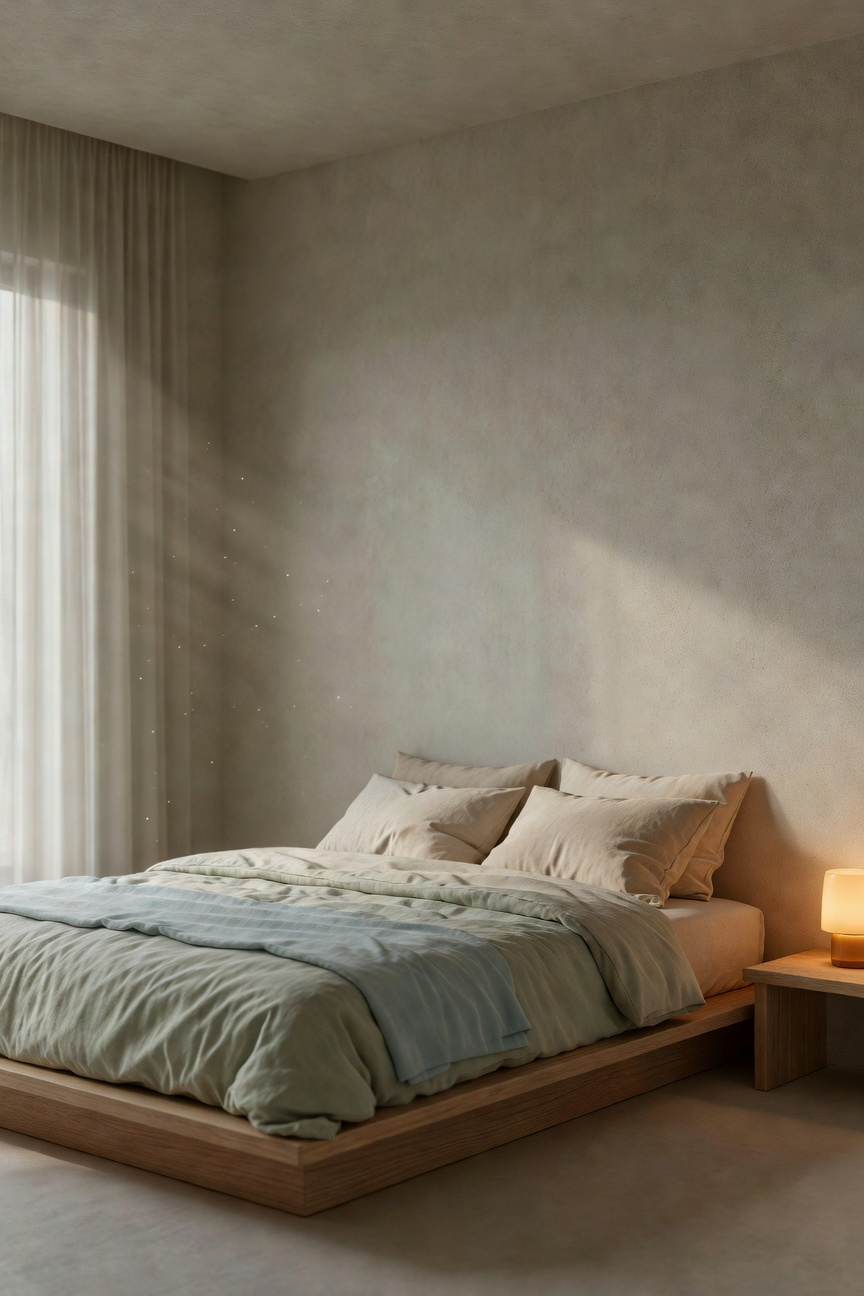
Therefore, current design principles are shifting toward the “Circadian Palette.” This approach prioritizes desaturated, nuanced neutrals that function as a psychological reset button. By lowering the LRV to a softer range, these walls absorb more light at dusk. The room feels like a protective cocoon rather than a sterile clinic.
At the center of this shift is ‘Greige.’ Ideally, this blends the warmth of beige with the modernity of gray to avoid sterility. Similarly, ‘Stone’ hues incorporate subtle green or brown undertones to ground the space. In fact, this connects the interior to nature, lowering heart rates through biophilic design principles. Finally, ‘Morning Mist’ introduces a watery, restorative element. This muted blue-gray evokes the tranquility of the ocean or sky at dawn. Choosing these complex tones transforms the bedroom from a cold box into a restorative sanctuary.
To truly embrace Scandinavian design, look beyond furniture and master the art of illumination. The transition to 2700K ambient lighting constitutes the absolute foundation of a calming bedroom. This specific color temperature is not chosen arbitrarily. Rather, it scientifically mimics humanity’s oldest, most comforting light sources: the dying sunset and flickering firelight.
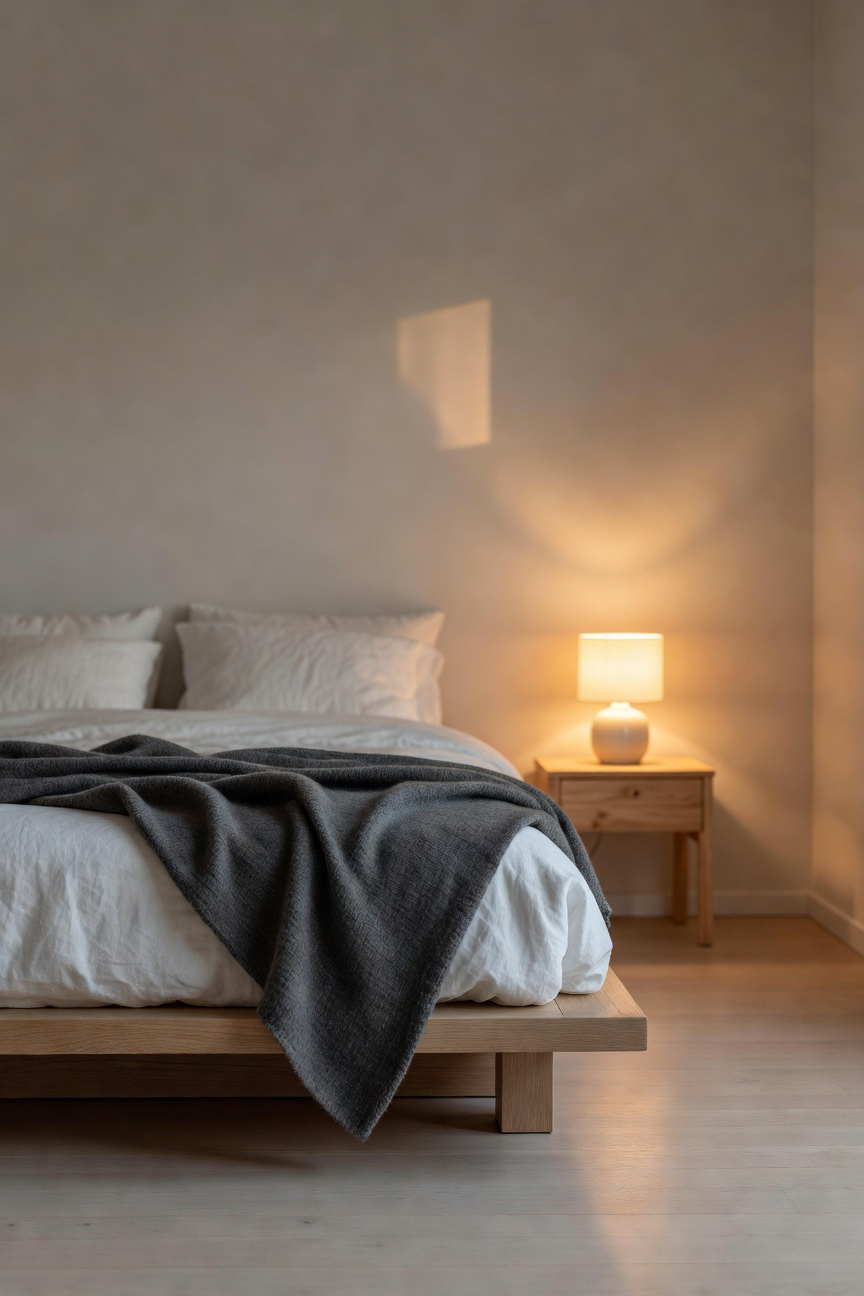
In the philosophy of *Hygge*, we constantly seek the primal warmth of candlelight. Since candles naturally burn around 1800K, a 2700K bulb offers the closest practical electrical equivalent. This “warm white” light casts a soft, yellowish-orange tint throughout the room. It instantly softens hard architectural edges and enhances the natural grain of wood furniture.
Furthermore, this switch actively supports your body’s circadian rhythms. Cooler lights, generally those above 3000K, contain higher concentrations of blue light that suppress melatonin production. Conversely, warm 2700K bulbs attenuate this suppression, effectively signaling your brain that it is time to wind down. The lighting becomes a physiological tool for better sleep hygiene.
Crucially, distinguish between “soft white” (3000K) and true warm white. While 3000K is crisp and clean for a home office, it acts against the cozy atmosphere required for rest. Instead, strict adherence to 2700K ensures intimacy. For an even deeper effect, you might consider 2200K “amber” bulbs in small accent lamps. Low-Kelvin light transforms a functional room into a restorative, inviting sanctuary. For more suggestions on achieving a truly restorative space, consider these cozy relaxing bedroom ideas.
Historically, the central pendant fixture symbolized technological luxury. However, in modern bedrooms, this “Big Light” often feels sterile and cold. It casts unflattering, sharp shadows that ruin a restful atmosphere. Therefore, we should adopt the cinematic principle of three-point lighting instead. This technique uses shadow-play to create warmth and dimension.
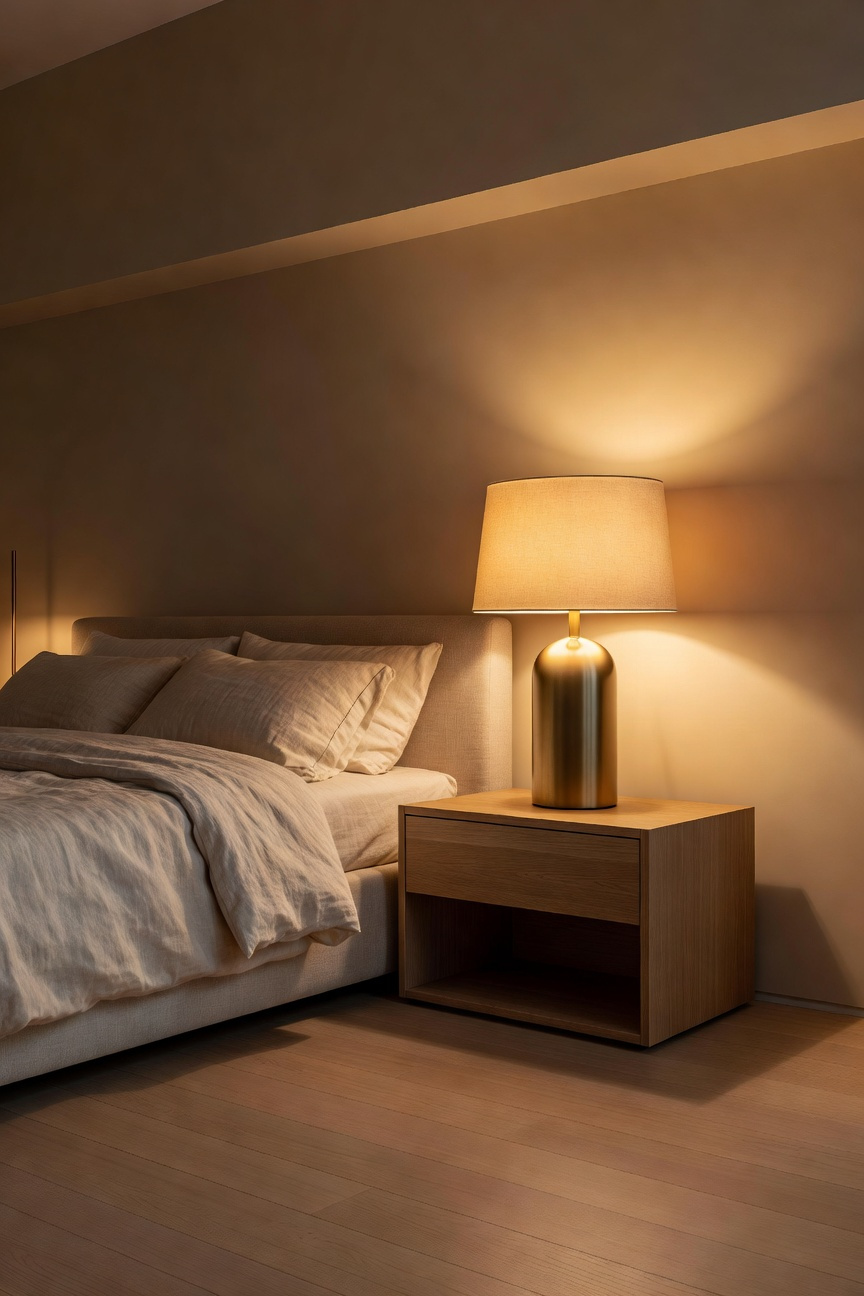
First, establish your Key Light with a prominent bedside lamp. This serves as your primary source for reading. Next, add a Fill Light to soften any harsh edges. Utilize diffused floor lamps or upward-facing sconces to bounce soft light. Finally, incorporate a hidden Backlight. For instance, tuck low-profile LED strips behind a headboard to add professional depth.
Biologically, this layered approach supports your natural circadian rhythm. Unlike harsh overhead beams, low-level light mimics a fading sunset. It triggers melatonin production to help you unwind. To master this “scattered glow,” select bulbs in the Warm White range (2700K-3000K). Ensure you install dimmer switches on every source. This flexibility allows you to transition the room from functional brightness to a cozy, candlelight-like haze.
Light dictates our internal rhythm more than any other element in the home. Specifically, morning exposure triggers cortisol and serotonin for energy. Conversely, total darkness is essential at night to sustain melatonin production. Therefore, your bedroom window treatments must master both extremes to ensure deep rest.
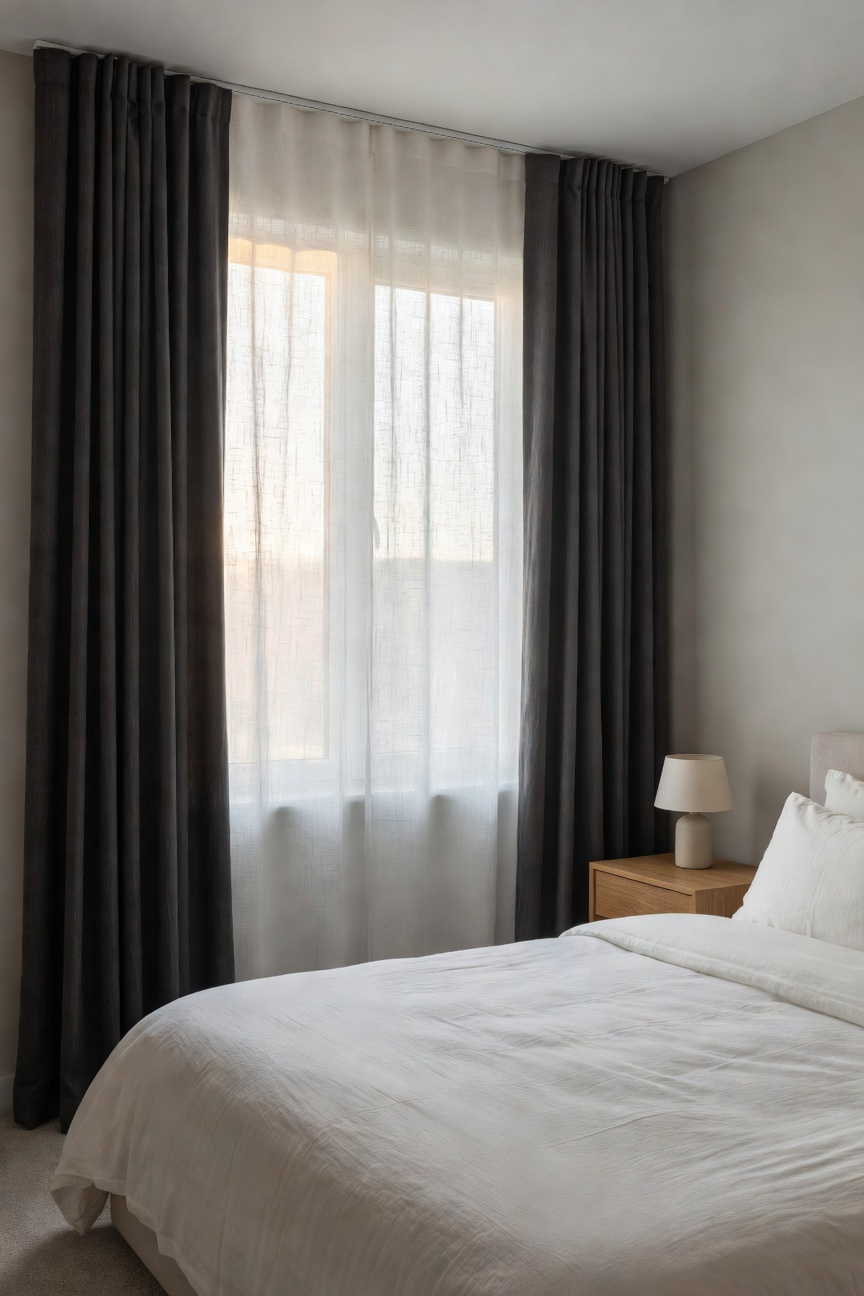
The most effective solution is a “day-night” layered system. Typically, this involves two distinct fabrics housed on a single headrail. First, utilize a sheer layer for the daytime. Choose a material with a 3% to 5% openness factor. This filters harsh glare while maintaining a vital visual connection to the outdoors. The weave brings a soft, natural texture to the room without blocking the sun.
Second, employ an opaque blackout layer for restorative sleep. Interestingly, the concept of “blackout” originated during WWII for civil defense. Today, however, it serves a crucial wellness function by eliminating light pollution. Yet, high-quality fabric alone is often insufficient. Light leakage around the edges can still disrupt deep sleep cycles. To prevent this “halo effect,” consider side channels or oversized drapes. These architectural details ensure a true, undisturbed dark environment.
Finally, consider motorized options for a gentle, natural awakening. Programmable shades can simulate a sunrise, gradually easing you into the day. Thus, you align your modern home with your biological clock.
Materiality transcends mere visual appeal in a bedroom design. Fundamentally, it is an exercise in haptic perception. The textures you interact with directly shape your emotional state. Lush materials, such as velvet or chunky knits, are vital. In fact, these soft elements often stimulate the release of oxytocin. This hormone promotes feelings of safety, attachment, and deep calm. Conversely, excessive hard surfaces introduce “tactile dissonance.” A room dominated by glossy finishes might feel stimulating rather than restful.

Beyond psychology, texture serves a crucial functional role. Notably, matte textures like linen or unpolished wood absorb light effectively. As a result, the space feels visually softer and significantly warmer. Furthermore, porous materials act as an essential acoustic layer. Heavy drapes, upholstered headboards, and wool rugs dampen ambient noise. Thus, they create a quiet, “cocooned” environment necessary for uninterrupted sleep.
Finally, expert design requires layering these materials with philosophical intent. The Danish concept of *Hygge* emphasizes accumulation of layered softness for warmth. Alternatively, a *Japandi* aesthetic prioritizes raw, natural integrity. For instance, unpolished wood grain provides a grounding, honest contrast. Ultimately, whether through soft layers or organic surfaces, the goal is a serene, restorative experience.
Integrating raw, unfinished timber creates a profound sense of grounding within a bedroom. This approach aligns with Biophilic principles by connecting interiors to the natural world. Consequently, the bedroom becomes a restorative sanctuary rather than just a sleeping area. Beyond aesthetics, raw wood engages multiple senses simultaneously. The tactile texture invites you to slow down and touch the grain. Furthermore, the subtle, earthy scent of timber brings the calming presence of nature indoors.
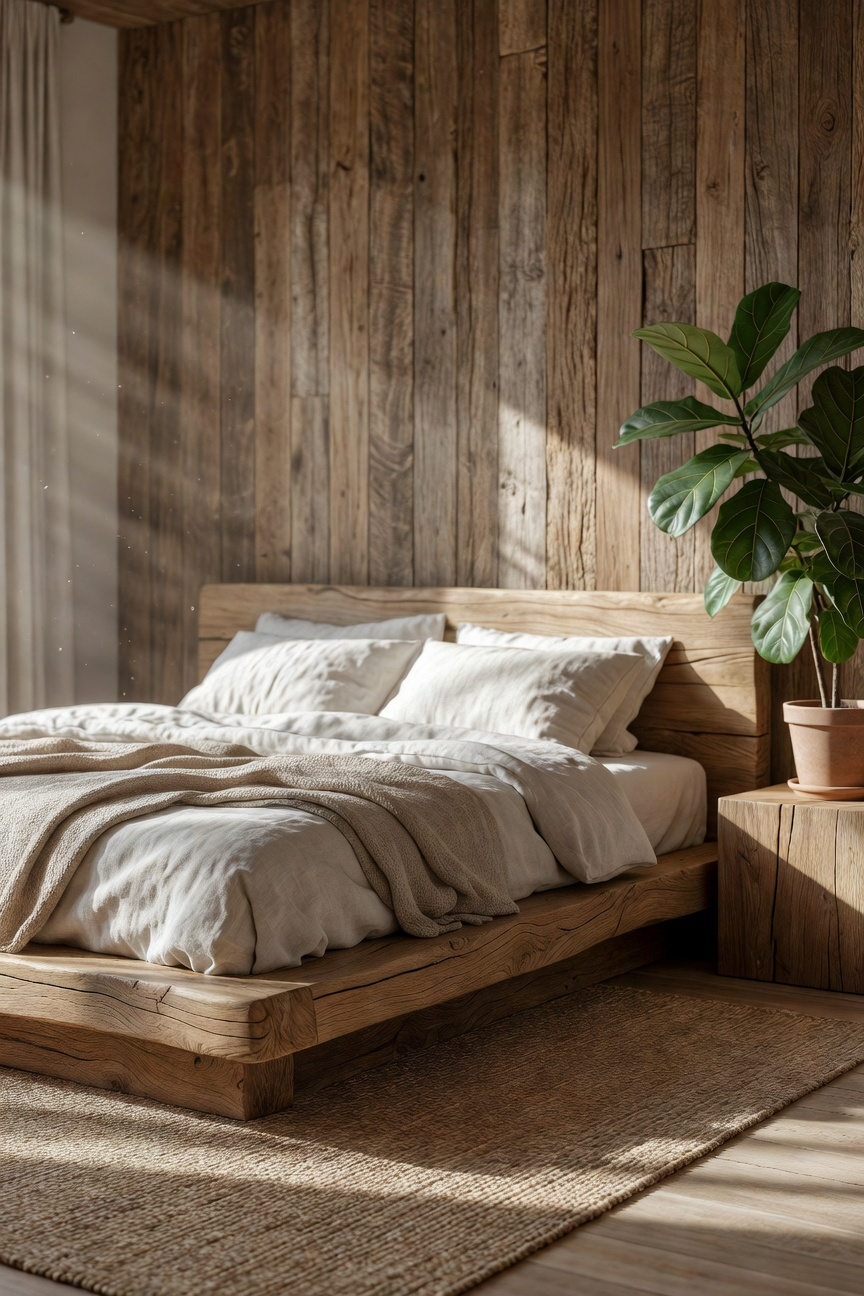
To maximize this effect, choose matte-oiled finishes over glossy varnishes. Glossy surfaces tend to reflect harsh artificial light. Conversely, matte surfaces absorb and diffuse light, reducing glare. They create a soft, velvety visual texture that promotes relaxation. Additionally, clear oil highlights the wood’s natural imperfections instead of hiding them. Knots and grain patterns become celebrated features of the design.
Technically, oil finishes penetrate deep into the wood fibers. This allows the material to breathe and interact with the environment. As a result, the furniture develops a richer character and patina over time. Designers often refer to this evolving quality as a “living finish.” Moreover, these surfaces offer superior repairability compared to sealed, plastic-like lacquers. If a scratch occurs, you simply sand and re-oil that specific spot to blend it in. Raw wood transforms a sleep space into a warm, grounded retreat that ages beautifully.
True luxury often lies in materials that improve with time. Historically, linen has served as a symbol of purity and status for over 5,000 years. Its true value in a modern Scandinavian bedroom is its exceptional durability. Unlike synthetic fabrics that degrade quickly, flax fibers are naturally strong and resilient. Consequently, quality linen becomes softer and more tactile with every wash. It functions as a future heirloom rather than a temporary trend. The signature wrinkled aesthetic adds a layer of effortless, lived-in elegance to the space.
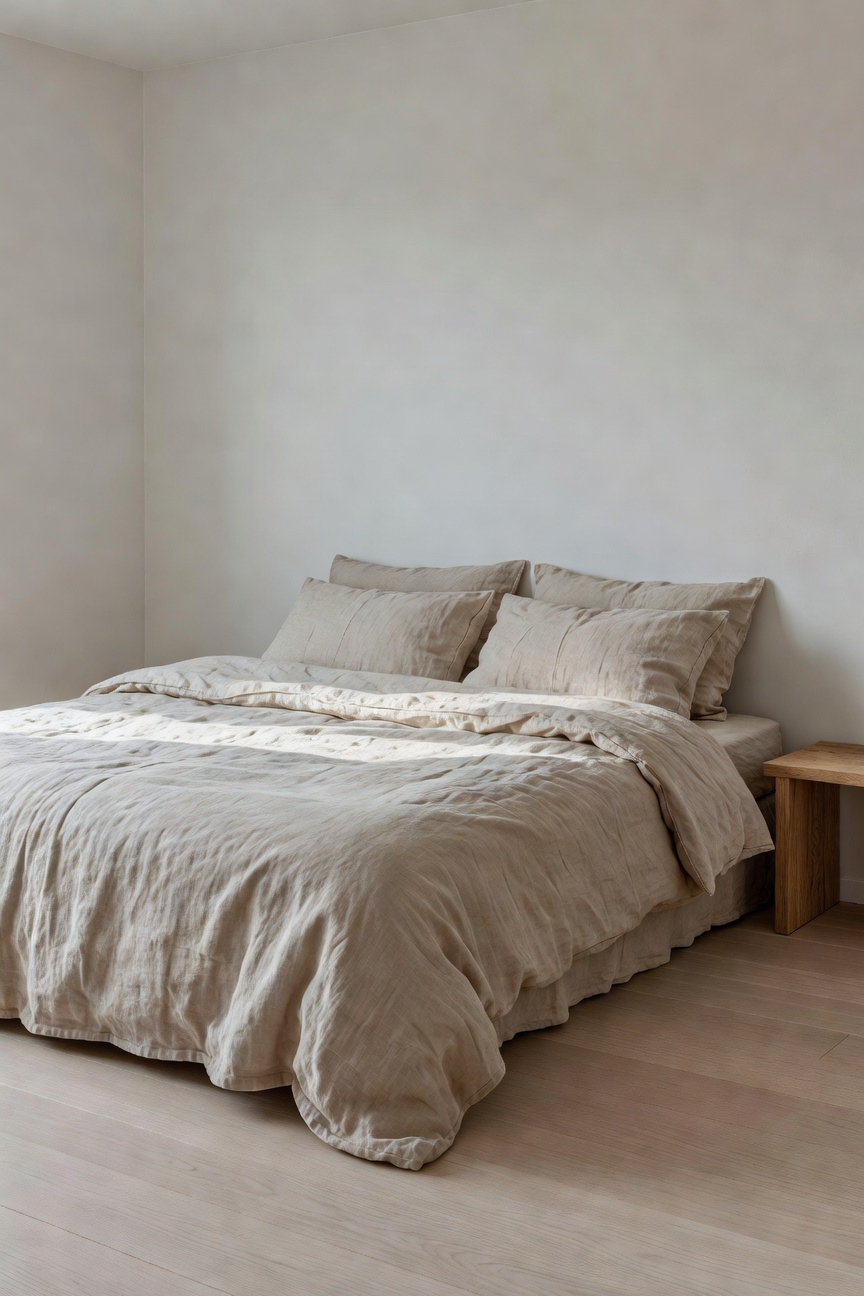
Beyond aesthetics, linen offers unmatched technical performance. It creates a consistent microclimate for restorative sleep. The hollow flax fibers allow for superior airflow compared to dense cotton. Therefore, the fabric is exceptionally breathable and thermoregulatory. During warm nights, the fibers expand to release heat and circulate air. Conversely, they contract in cooler temperatures to insulate the sleeper. In fact, linen can absorb significant moisture without feeling damp. It keeps the body dry and comfortable year-round.
Finally, prioritizing organic standards is crucial for long-term health. Because the bedroom is a sanctuary, the materials touching your skin must be pure. Ideally, look for GOTS or OEKO-TEX certifications. These labels guarantee the bedding is free from harmful toxins and industrial pesticides. Additionally, organic linen is naturally hypoallergenic and resistant to dust mites. This investment supports both deep sleep and a cleaner, non-toxic environment.
Creating a serene sanctuary relies heavily on reducing visual noise. Busy prints often feel subconsciously chaotic in a sleep space. Instead, prioritize texture to anchor the senses through tactile depth. Natural materials act as a calming influence, grounding the room’s atmosphere.
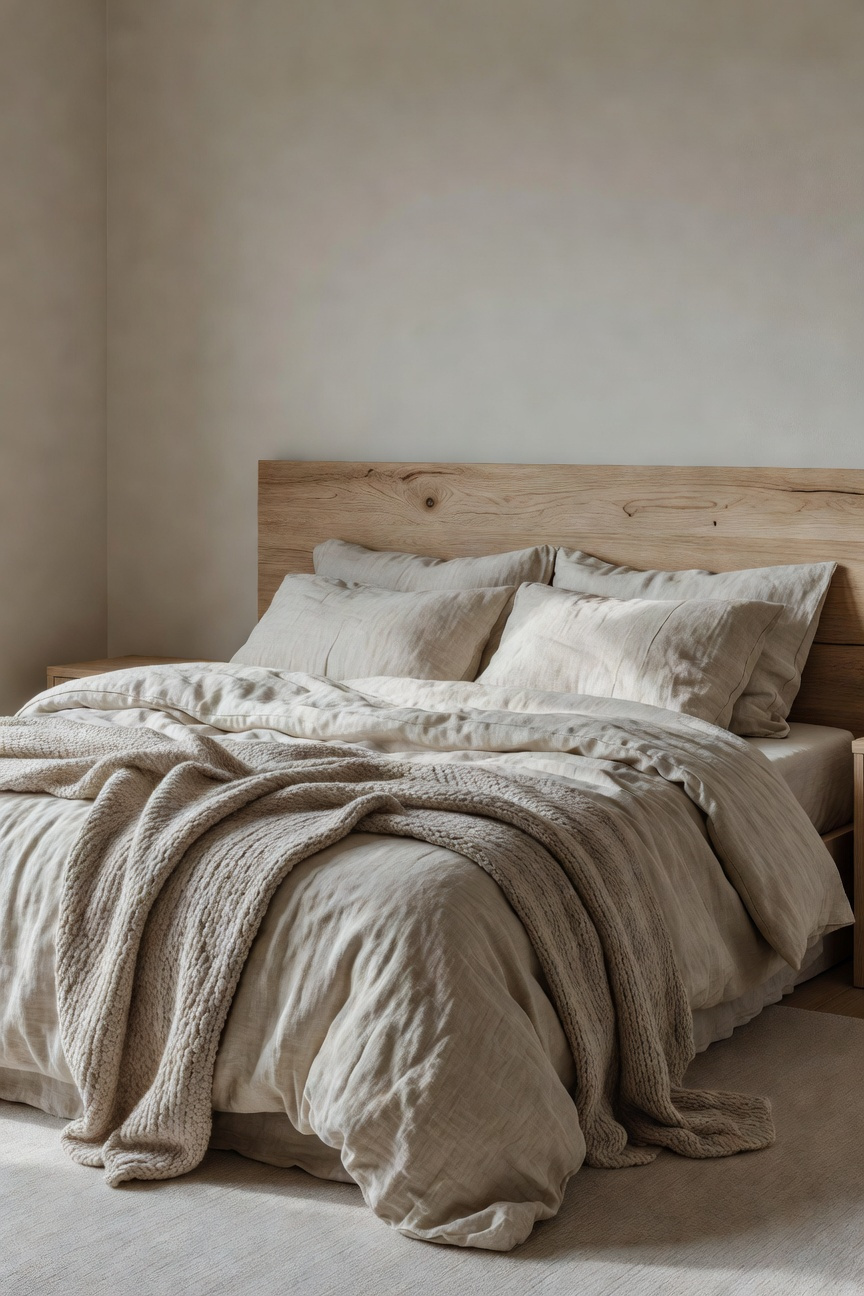
For instance, linen offers a relaxed, rumpled aesthetic perfect for organic minimalism. Its natural “slubs” create an imperfect surface that celebrates durability. Alternatively, the weave structure itself dictates the design mood. Sateen reflects light, adding a sophisticated, polished sheen similar to silk. Conversely, percale absorbs light. This creates a crisp, matte finish that feels airy and simple.
Furthermore, wood elements provide essential hard contrast to these soft textiles. However, the finish must highlight the grain rather than cover it. Wire-brushed techniques physically remove soft wood to expose the harder grain. This results in a rustic, highly tactile surface that hides wear. Similarly, cerused finishes on oak or ash highlight natural lines with contrasting pigments. You achieve graphic visual interest without relying on applied artificial prints.
Finally, incorporate chunky knits to manipulate light and shadow. High-relief patterns, like cable knits, create deep shadows within the fabric. Even a monochrome room retains significant visual depth. This shadow play prevents the space from appearing flat or sterile. Prioritizing texture over pattern creates a bedroom that feels as inviting as it looks.
Modern bedrooms often rely on clean, rigid geometry to establish order. However, a room dominated by sleek surfaces can sometimes feel sterile. Therefore, the layering principle is essential for creating warmth and balance. Specifically, introducing a sheepskin or wool throw softens these sharp architectural lines. Visually, the irregular, voluminous texture creates a dynamic contrast against hard furniture. Dense wool fibers offer significant acoustic benefits. They naturally absorb sound, effectively reducing echo within the space. Consequently, the bedroom becomes a calmer, more serene retreat.
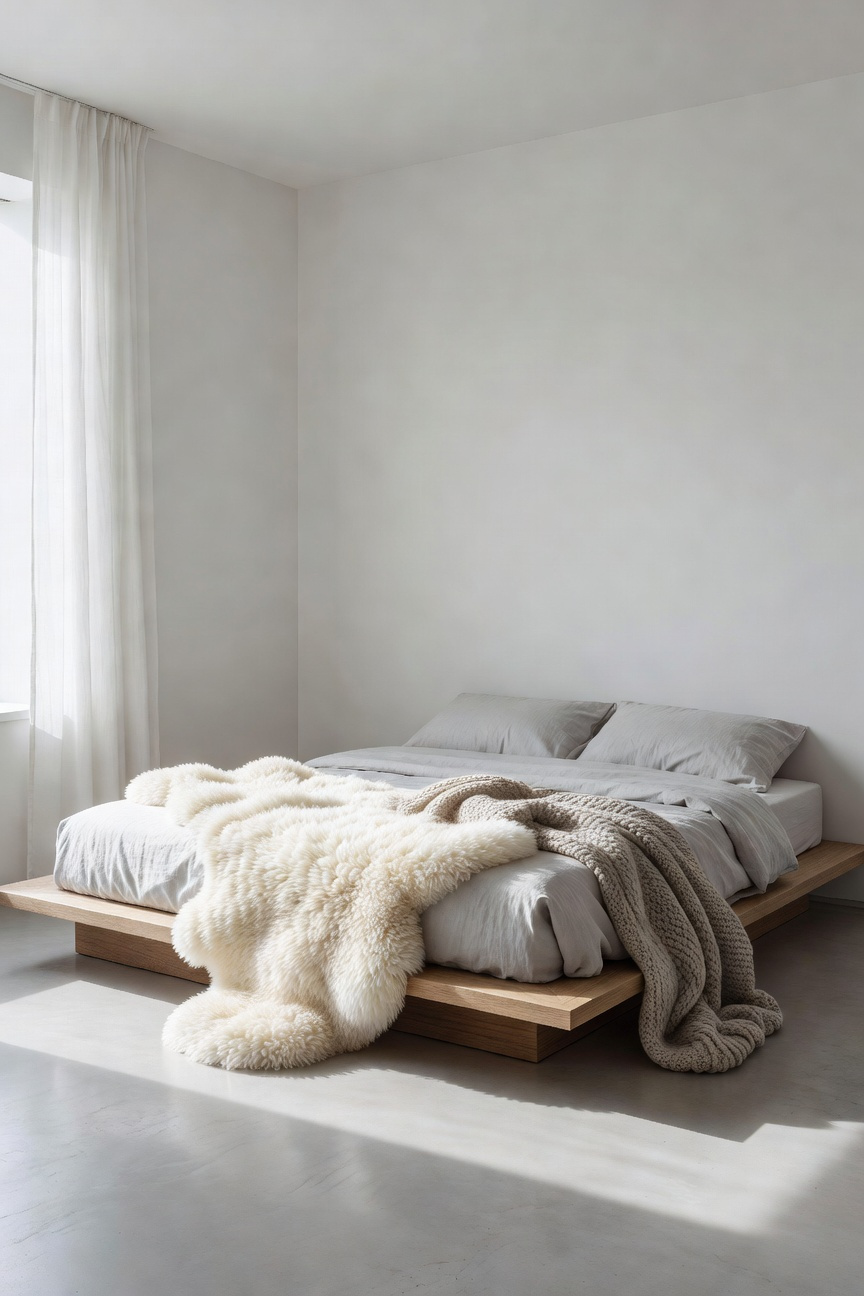
Beyond aesthetics, wool acts as a superior “smart” natural fiber. In fact, it possesses inherent thermoregulatory and moisture-wicking properties. This helps maintain a comfortable micro-climate for better rest. To apply this, simply master the “art of the drape.” For instance, cast a chunky throw over a structured bench or chair. Allow it to fall naturally rather than folding it perfectly. This organic, fluid silhouette tempers the room’s linear perfection instantly.
“Functional Poetry” elevates furniture selection beyond simple utility. Fundamentally, this philosophy treats furnishings as narrative elements within a quiet sanctuary. This approach mirrors the 18th-century Shaker design movement. Specifically, Shakers believed that true beauty rests entirely on utility. We must eliminate superfluous decoration to prioritize clean, balanced lines. Effectively implementing these strategies is key to elevating your bedroom furniture decor and overall spatial harmony. A well-crafted piece acts as a quiet rejection of clutter.
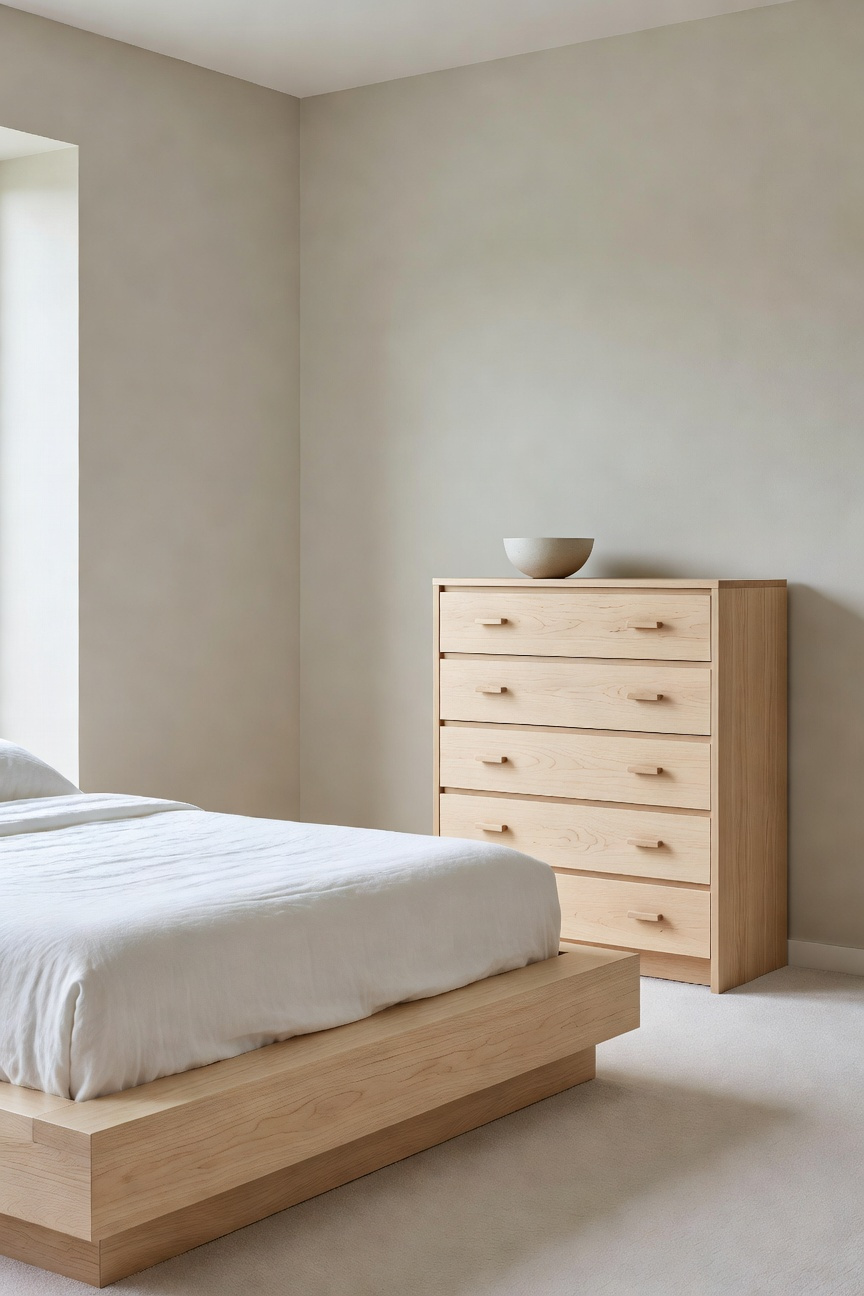
Moreover, the materials you choose speak a distinct language. In design, we refer to this structural expression as “tectonics.” For instance, consider the use of unlacquered brass for hardware. Unlike static, lacquered finishes, this material possesses a “living surface.” Over time, it develops a warm, sun-kissed patina from daily interaction. Distinctively, this allows your bedroom to “gather memory,” creating an authentic record of use.
Finally, we must address the subconscious impact of form. Heavy, towering furniture can often feel oppressive or “out of reach.” Consequently, prioritize accessible pieces that settle the eye. In fact, multifunctional furniture serves this goal perfectly. By concealing storage and daily requirements, these pieces hide the day’s concerns. This intentional concealment allows the room to fulfill its primary poetic function: distinct, undistracted rest.
Fundamentally, a low-profile platform bed acts as an architectural anchor for your sanctuary. Lowering the room’s visual center creates a powerful illusion of expanded vertical space. Even compact bedrooms feel immediately airier, lighter, and more intentional. Often, these frames utilize interlocking solid wood, celebrating the “Japandi” fusion of Nordic warmth and Japanese restraint. Avoiding bulky box springs reduces visual weight, allowing the eye to rest on natural textures.
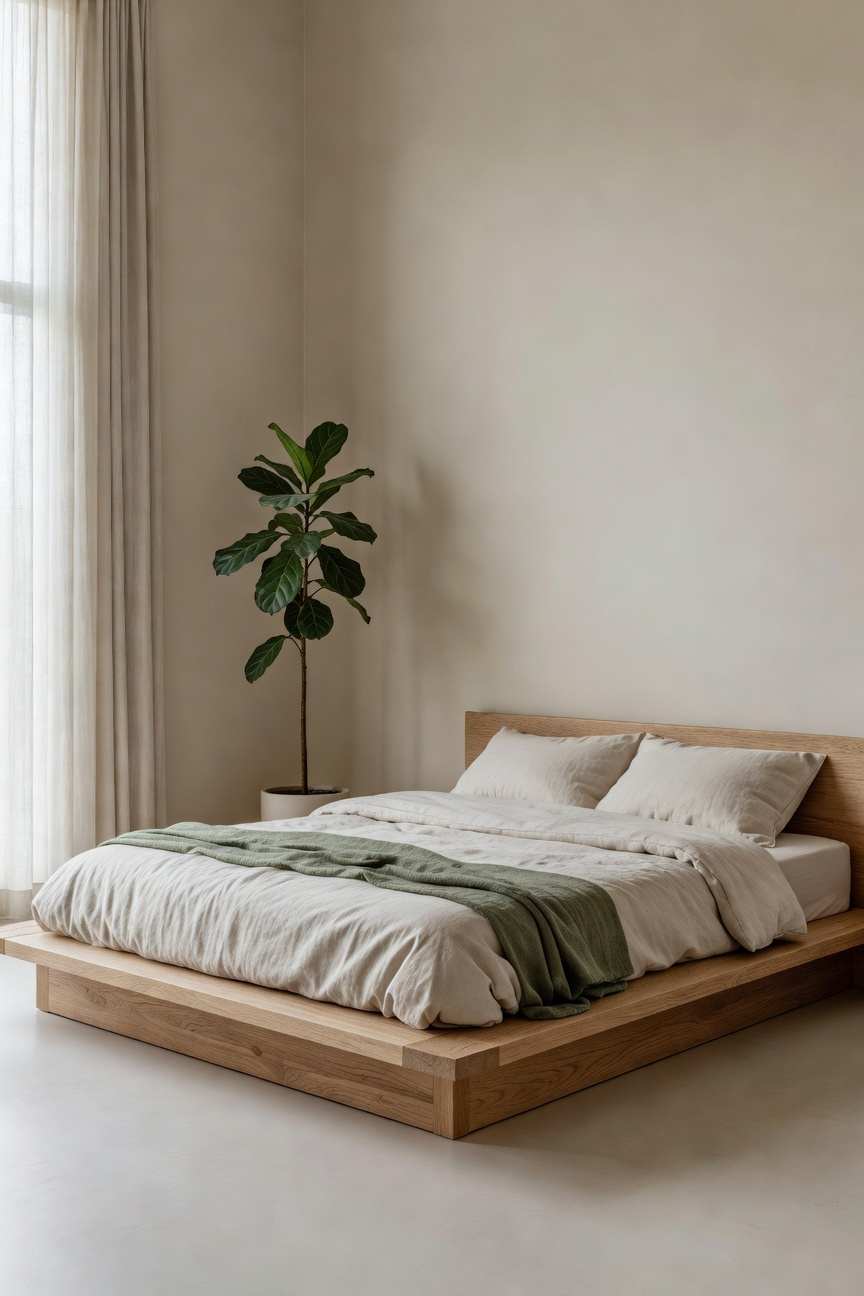
Beyond aesthetics, sleeping closer to the earth triggers a measurable psychological shift. Experts describe this as a “cocooning feel,” which promotes a deeper sense of connection and safety. This proximity to the floor offers functional advantages for sleep quality. Since heat rises, a lower sleeping surface naturally remains cooler throughout the night. Therefore, this thermal regulation aids the body in reaching deep, restorative sleep stages. The sturdy construction ensures that your rest remains undisturbed by squeaks or instability.
Creating a sense of spacious calm requires carefully managing visual weight. When heavy furniture sits directly on the floor, it interrupts the room’s flow. However, floating storage solutions maintain a critical design element: the unbroken sightline. Specifically, keeping the flooring visible all the way to the wall tricks the eye. The room registers as deeper and significantly more airy. This aligns perfectly with minimalist principles, using vertical space to make compact areas feel inviting. For targeted spatial strategies, review our smart bedroom decor ideas for small rooms.
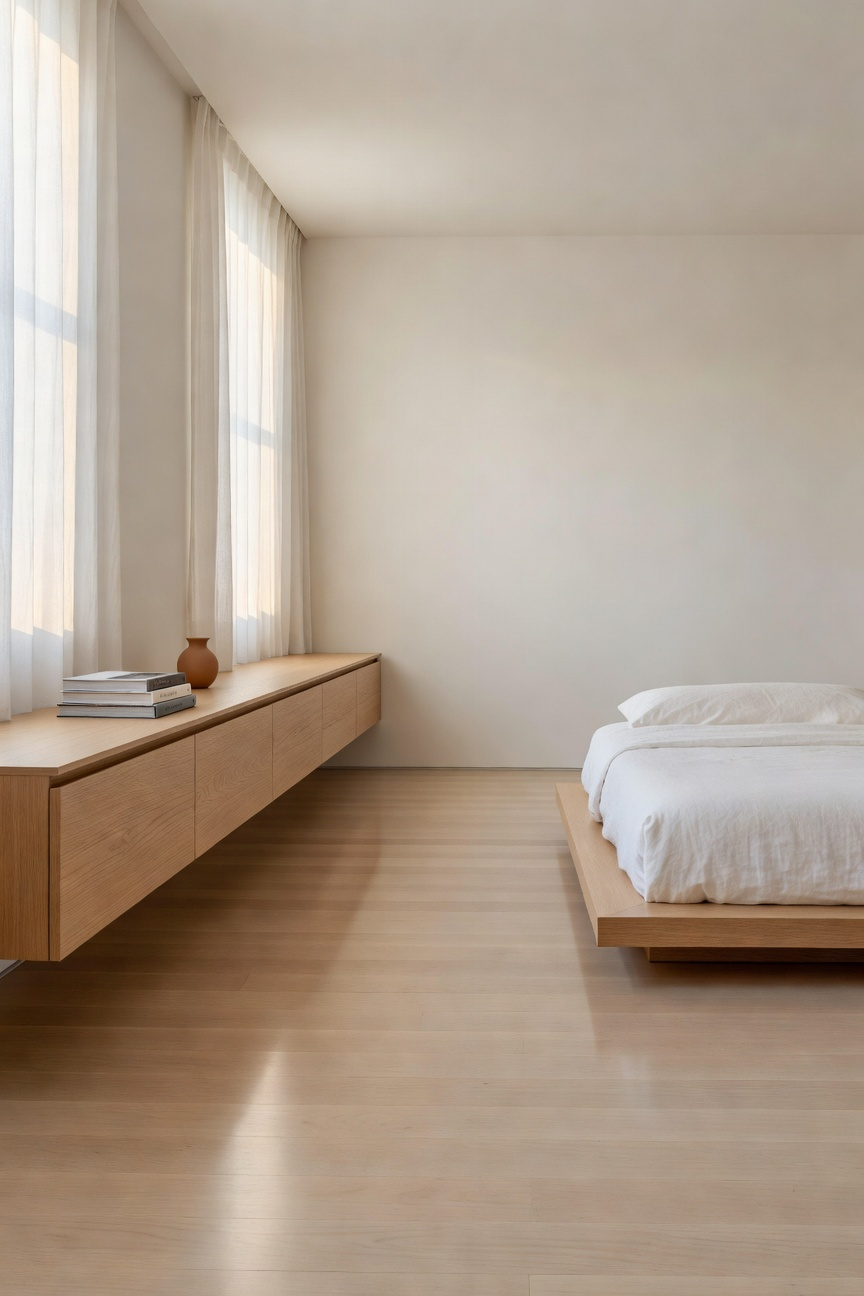
Historically, this approach is a staple of Functionalism. The movement to clear floor space gained traction with Paul Cadovius’s 1948 *Royal System*. By moving shelving onto the walls, designers prioritized function without sacrificing aesthetics. Thus, modern floating nightstands continue this clever architectural lineage.
Furthermore, these suspended elements are surprisingly robust. Homeowners often worry about fragility, but proper installation eliminates this risk. Stability depends on securing brackets to wall studs rather than just drywall. In reality, a bracket attached to a single stud can often support 45 to 50 pounds. You can safely store heavy books or ceramics. Floating storage balances warmth and utility, keeping your sanctuary uncluttered.
Modern sleep hygiene relies heavily on clear boundaries. Creating a “Pause Corner” offers a practical solution for separating rest from sleep. Physically, this strategy involves placing a solo armchair or bench distinct from the bed. Psychologically, this separation is profound. It breaks the modern habit of working, scrolling, or worrying while under the covers. The brain re-learns that the mattress is solely for sleeping.
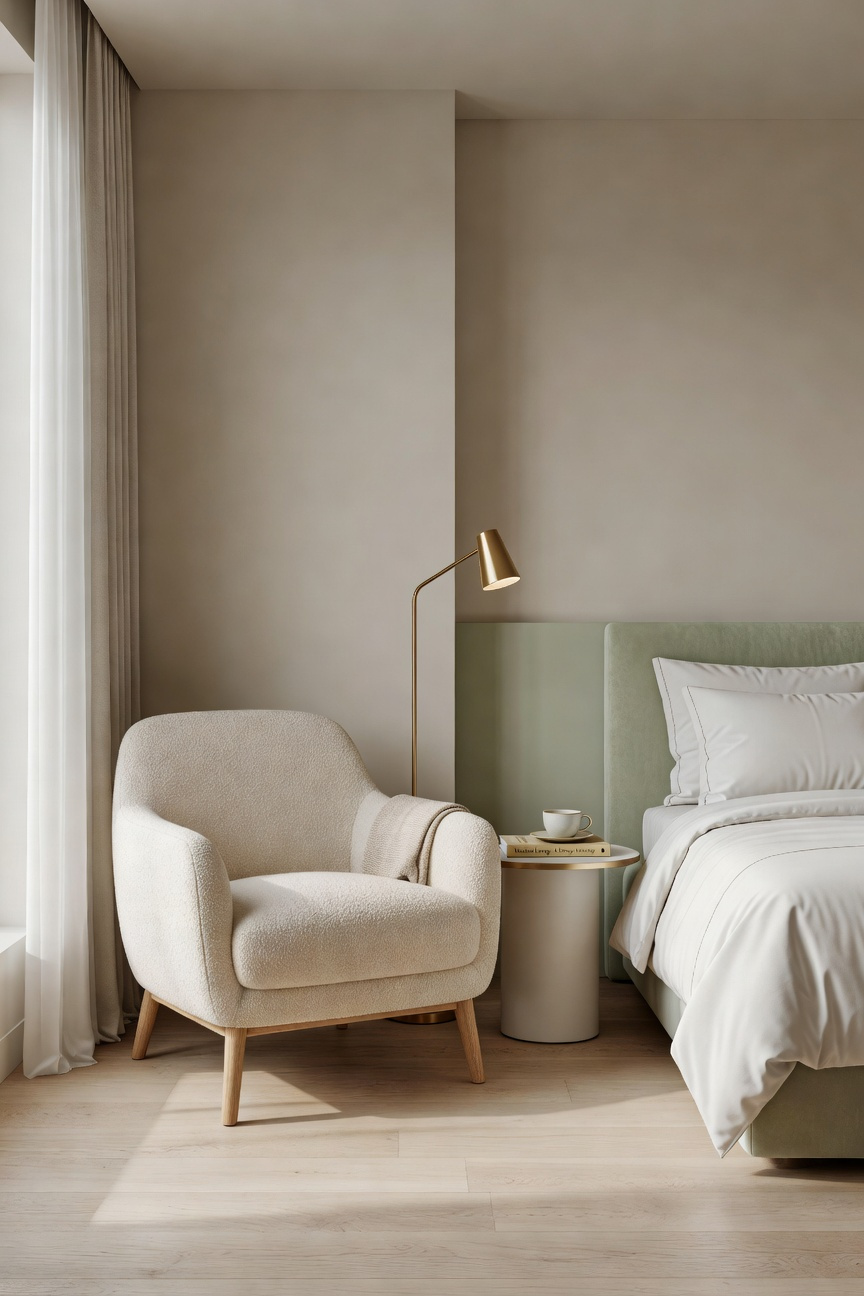
Historically, furniture like the daybed served this exact transitional function. Today, however, we prioritize clean, horizontal lines that signal stability without inviting deep sleep. For example, a structured chaise or a low-slung bench works perfectly. Distinct lighting is essential for this specific zone. Instead of bright overheads, utilize a low-level floor lamp. This creates a soft, intimate atmosphere that encourages melatonin production.
Additionally, introduce natural textures like wool or linen to foster a sense of calm. Ideally, choose colors like slate blue or moss green to visually contrast with the bed linens. This corner acts as a dedicated decompression zone. It allows you to consciously shed the day’s stress before finally entering your sleep sanctuary. For more sophisticated inspiration, explore these master bedroom inspirations.
Biophilic design is rooted in the hypothesis that humans possess an innate desire to connect with nature. Placing living elements in a bedroom transforms the space into a restorative environment. Beyond simple decoration, selected species act as architectural anchors within a minimalist room. For instance, the Fiddle Leaf Fig introduces vertical interest with its dramatic, canopy-style leaves. Its tree-like presence effectively softens the hard lines of walls and furniture. Alternatively, the Snake Plant offers a rigid, geometric silhouette ideal for Zen-inspired interiors.
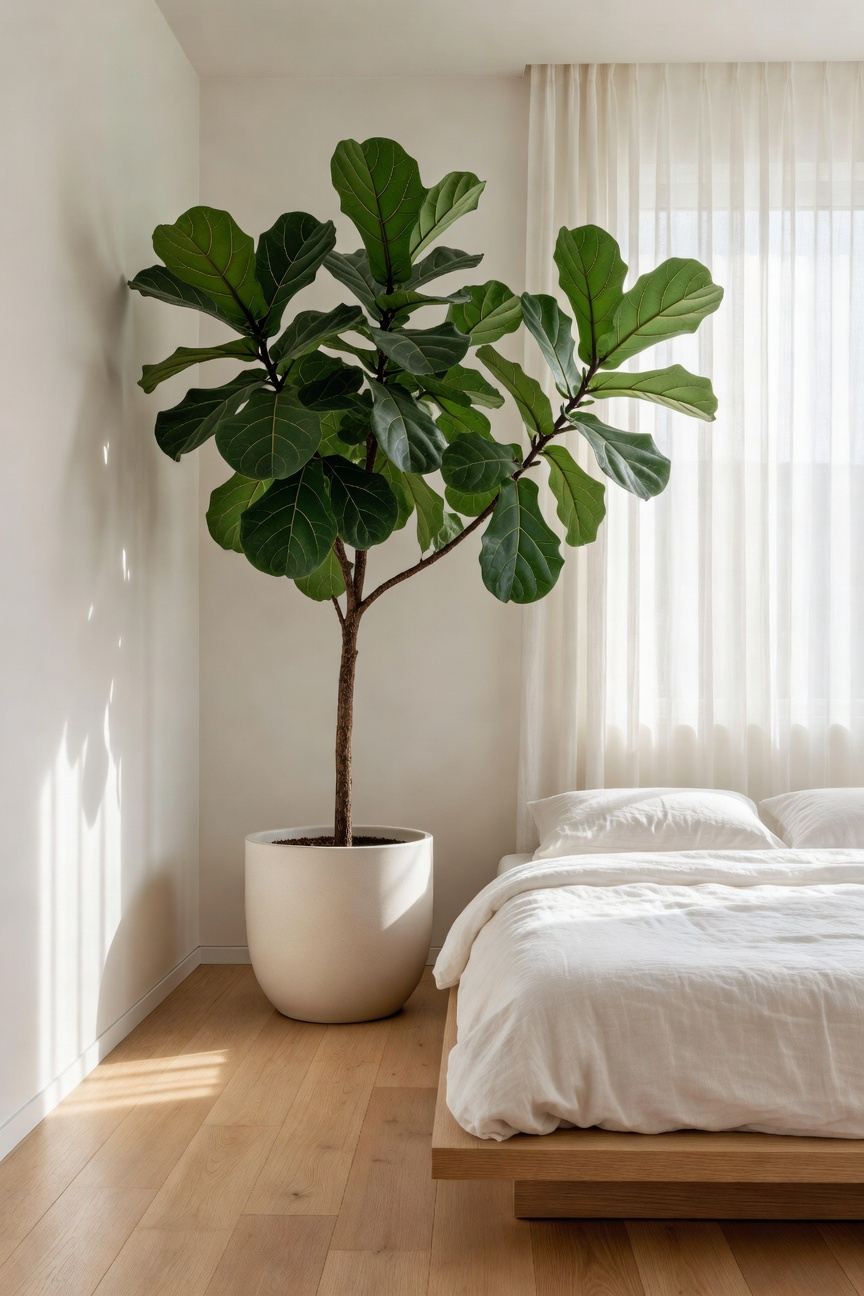
However, the value of these accents extends far beyond their visual impact. Specifically, the famous 1989 NASA Clean Air Study confirmed that many houseplants remove volatile toxins. Surprisingly, the plant’s soil and root system perform the bulk of this filtration. These choices function as biologically active air systems. Moreover, the Snake Plant utilizes a unique process called Crassulacean Acid Metabolism. This allows it to absorb carbon dioxide and release oxygen at night, unlike most other plants. Ultimately, these living sculptures serve as active wellness features that promote deeper rest.
Transforming your bedroom goes far beyond simple aesthetics. In fact, this shift fundamentally rewrites your biological daily rhythm. By strategically manipulating light and layout, you actively reset your internal body clock. The space itself becomes a powerful cue for rest. Unlike the busy, public bedchambers of the past, your modern sanctuary offers total psychological safety. Removing digital noise allows your mind to settle naturally. Moreover, using raw, honest materials grounds you in the present moment. A considered environment makes relaxation inevitable rather than forced.
Eventually, this design discipline creates a sustainable, balanced lifestyle. Instead of relying on willpower, you simply flow with your environment. The home supports your health every single day. Looking ahead, your space will continue to nurture this calm consistency. Executing these premium bedroom makeover ideas results in more than just a beautiful room; it creates a sustainable, balanced lifestyle. To begin, assess the sensory inputs currently in your room. Remove one source of blue light and introduce a natural texture today. Then, observe how your rhythm shifts naturally.
The cost of a high-end or luxury bedroom makeover varies significantly based on material quality and scope. While foundational changes (paint, light fixtures, decluttering) can be achieved relatively affordably, investing in premium items is key for longevity and tactile comfort. For discerning homeowners, the focus is on quality over quantity: high-thread-count organic linens, custom window treatments (especially automated blackout systems), and solid-wood platform beds represent the main investment areas, often ranging from $5,000 to over $20,000 for a comprehensive master suite transformation.
The single most critical element is lighting quality and control. Scientific studies confirm that managing light temperature and intensity directly influences melatonin production and circadian rhythms. By switching to warm, low-Kelvin bulbs (around 2700K) and installing robust blackout solutions, you physiologically signal to your brain that it is time to rest. Proper light control ensures the room functions optimally both as a bright, natural space during the day and a pitch-black, restorative sanctuary at night.
Scientifically, low-Light Reflectance Value (LRV) palettes are proven to enhance sleep quality because they absorb light at dusk, promoting rest. Instead of stark white, the best colors are sophisticated, desaturated neutrals known as the “Circadian Palette.” This includes warm, matte tones like greige, stone, moss green, and muted blues (like “Morning Mist”). These colors create a visual “cocoon” that lowers cognitive load and prevents the overstimulation associated with bright or high-contrast environments.


