Physical Address
304 North Cardinal St.
Dorchester Center, MA 02124
Physical Address
304 North Cardinal St.
Dorchester Center, MA 02124
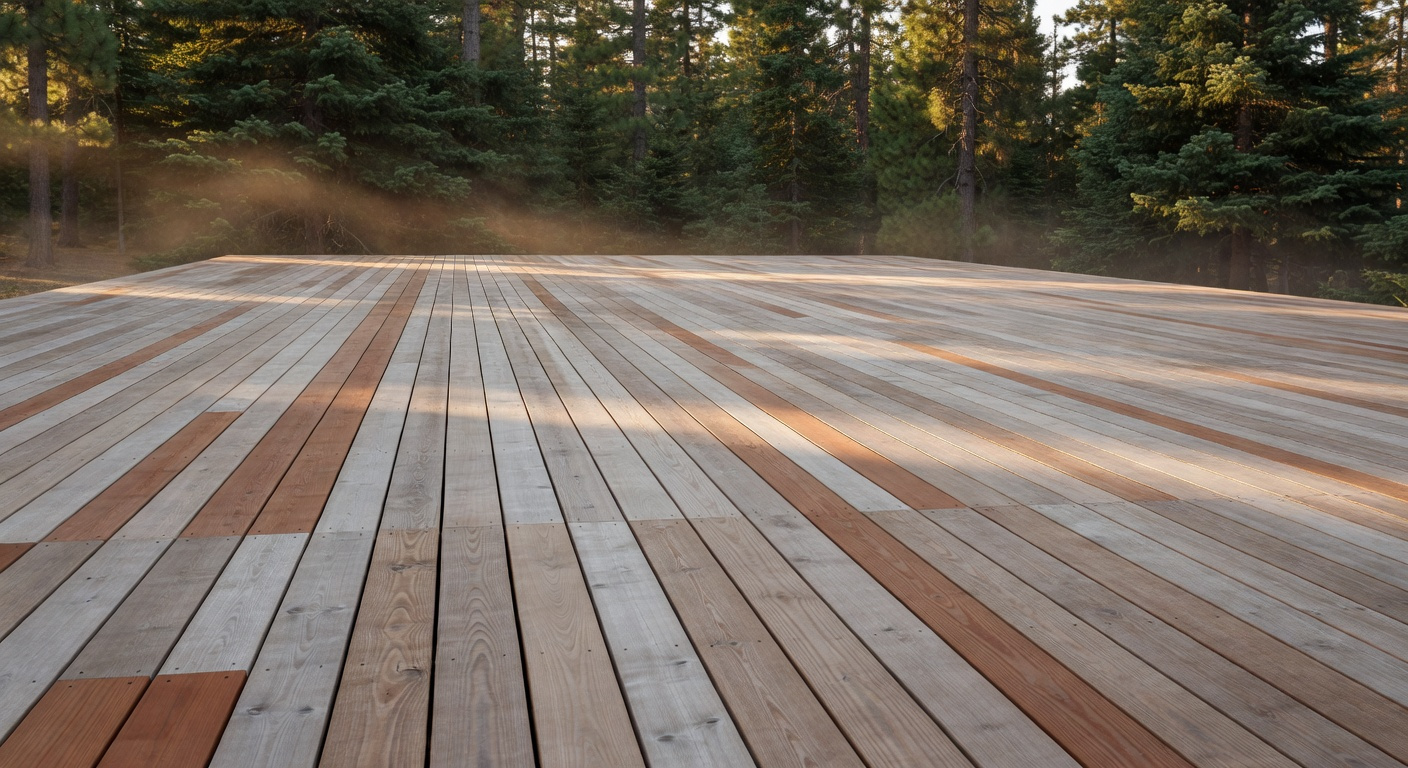
Explore 14 high-end Deck Ideas and architectural techniques to create a seamless, four-season outdoor sanctuary. Elevate your home's design today.
Many homeowners view a deck simply as extra square footage for grilling. Often, it appears as a separate box attached to the home’s exterior. This guide offers essential, high-end Deck Ideas designed to reimagine this structure entirely. Rooted in Organic Architecture, the deck should act as a “guest” in the natural world. To begin conceptualizing your entire project, review our expansive guide to Inspiring Deck Design Ideas. Ideally, the structure must appear to grow easily from its site. Thus, it becomes a cohesive bridge rather than a distinct barrier.
As a result, this area functions as a vital “liminal space.” It serves as a threshold that is neither fully inside nor fully outside. Indeed, biophilic design principles confirm that this connection promotes genuine well-being. By physically immersing inhabitants in nature, we lower stress and enhance comfort. Therefore, we must actively eliminate the “thick threshold” that typically separates us from the outdoors.
Here, we reveal how to design a seamless transition to nature. We will explore the technical importance of flush flooring to remove visual breaks. Next, we discuss using consistent materials to unify the interior with the exterior. Additionally, we look at integrating natural elements, like existing trees, directly into the layout. Ultimately, these choices transform a simple platform into a restorative sanctuary.
Selecting untreated cedar or sustainable teak acts as a serious architectural commitment. Specifically, this choice creates a dynamic, “living” system. In essence, you surrender the material to natural processes rather than fighting them. For instance, untreated Western Red Cedar undergoes a graceful transformation. Over time, UV light softens warm hues into a silvery-gray patina. Additionally, the wood releases a distinctive, earthy aroma. This olfactory signature creates a comforting, sensory link to the forest.
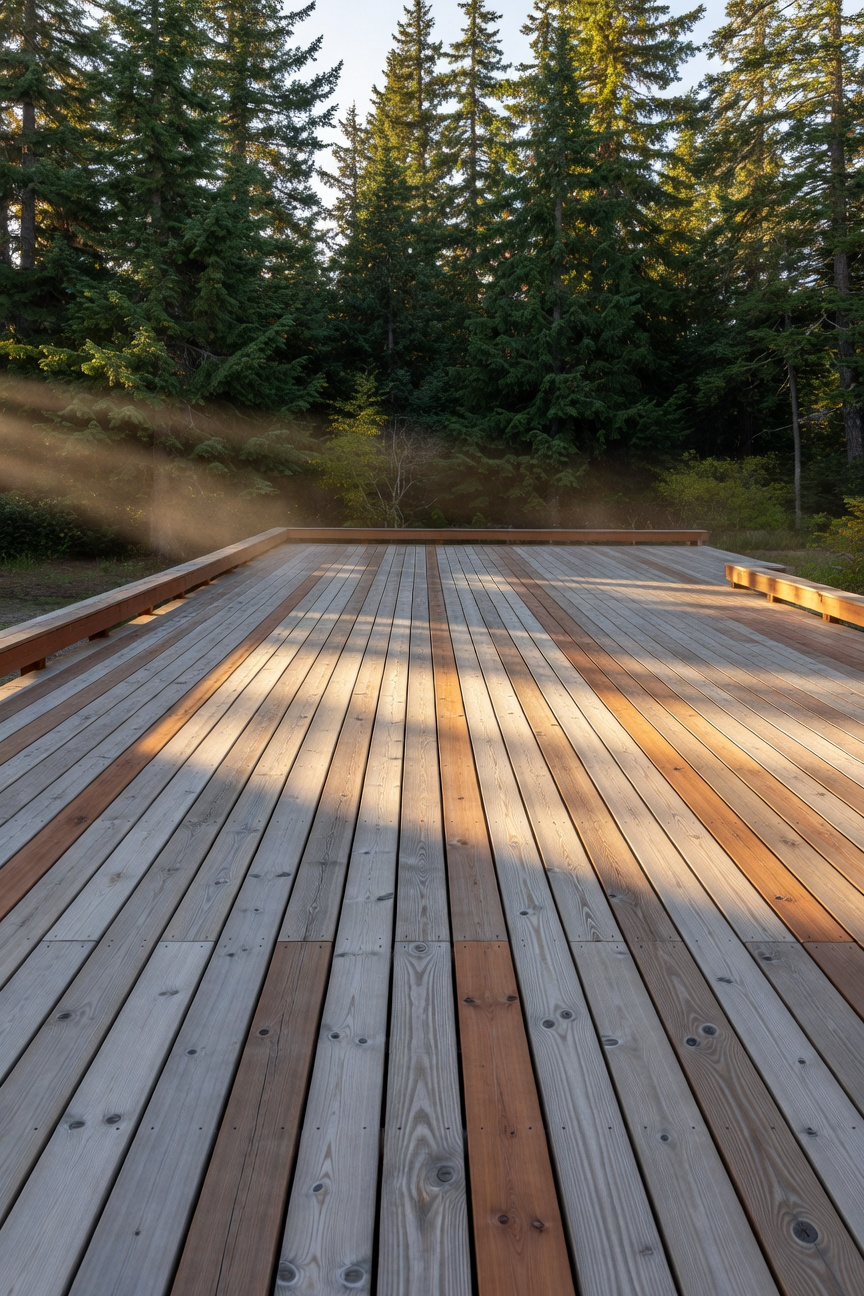
On the other hand, sustainable teak offers hardened, marine-grade resilience. High oil concentrations naturally prevent deep decay without chemical intervention. Eventually, it too matures into a uniform, silver-gray shield. Thus, the oxidized surface protects the dense heartwood underneath. This signifies that the structure has settled into its environment. Furthermore, sourcing sustainable teak emphasizes ethical longevity. In fact, a forty-year lifespan drastically reduces future resource consumption.
Therefore, the choice is not merely aesthetic. Instead, it prioritizes a material’s provenance and life cycle. Consequently, the deck becomes a chronicle of weather and time. Ultimately, these materials do not just age; they evolve with the landscape.
Fundamentally, a flush threshold is more than simple aesthetics. It represents an architectural commitment to uninterrupted flow. Visually, the interior floor appears to merge directly with the exterior decking. Therefore, the living space feels significantly larger and brighter. For more structural inspiration, review these Stunning Decking Ideas to Transform Your Outdoor Space. When sliding doors open, the boundary line effectively vanishes. Consequently, the deck transforms into an integrated outdoor room.
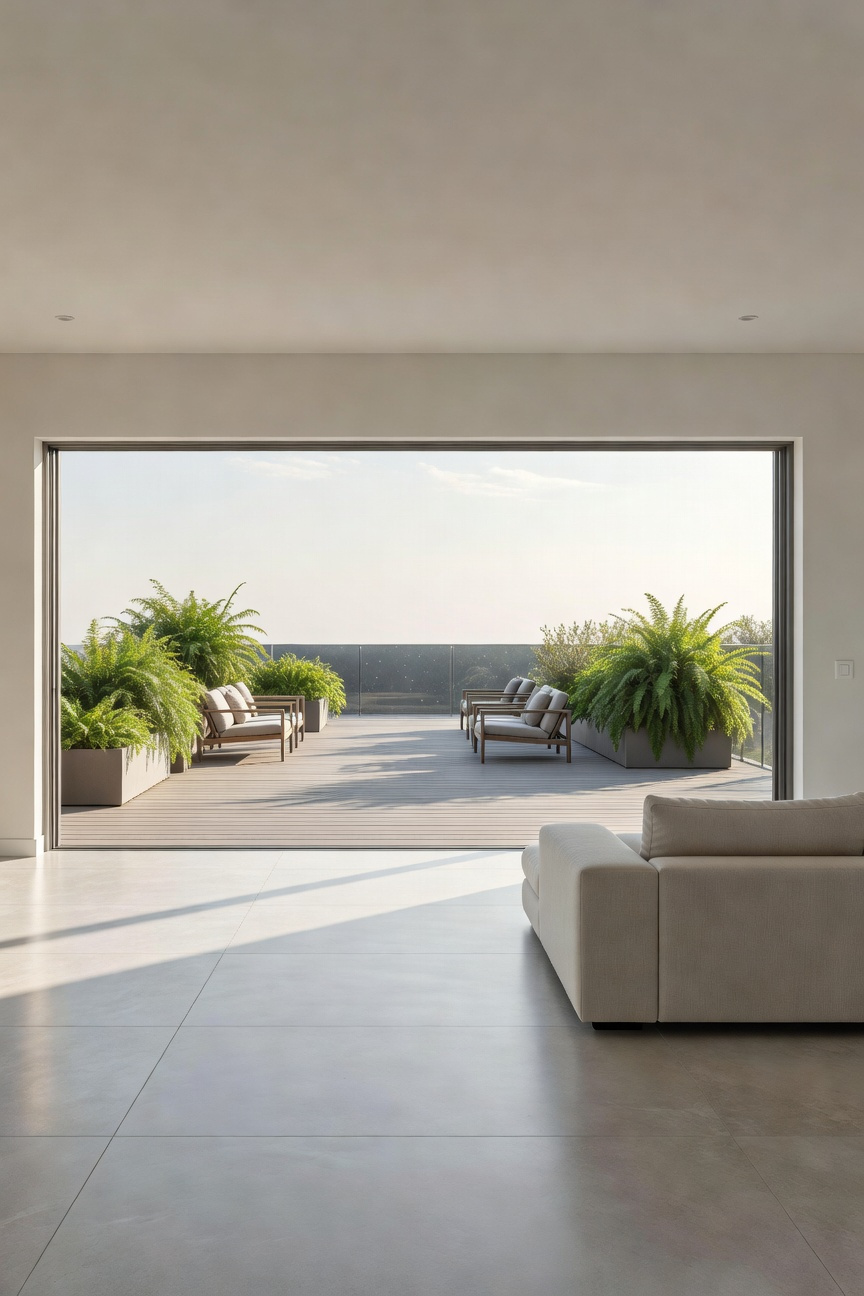
Moreover, this design choice champions safety. By eliminating the traditional “step-down,” you remove a common trip hazard. Specifically, this benefits children and those with limited mobility. Thus, flush thresholds serve as essential components for “aging-in-place” strategies. They ensure frictionless movement from the sofa to the sanctuary outside.
However, achieving this seamless look requires technical precision. Primarily, water management presents a complex engineering challenge. Therefore, builders must install specialized linear channel drainage systems. These sit immediately between the door sill and the deck surface. Furthermore, the decking requires a minimal slope away from the doorway. Ultimately, professional execution ensures your home remains dry while embracing the outdoors.
The cantilevered deck functions as a “floating platform.” Effectively, it merges modern architecture with the natural world. Fundamentally, this design prioritizes environmental stewardship through a “minimal touch” approach. Specifically, it eliminates the need for extensive excavation or numerous concrete footings. Therefore, it preserves sensitive terrain like steep slopes or riparian zones. Consequently, the soil remains uncompacted, and crucial wildlife corridors stay largely intact beneath the structure. Furthermore, the absence of vertical supports prevents moisture buildup by encouraging natural airflow.
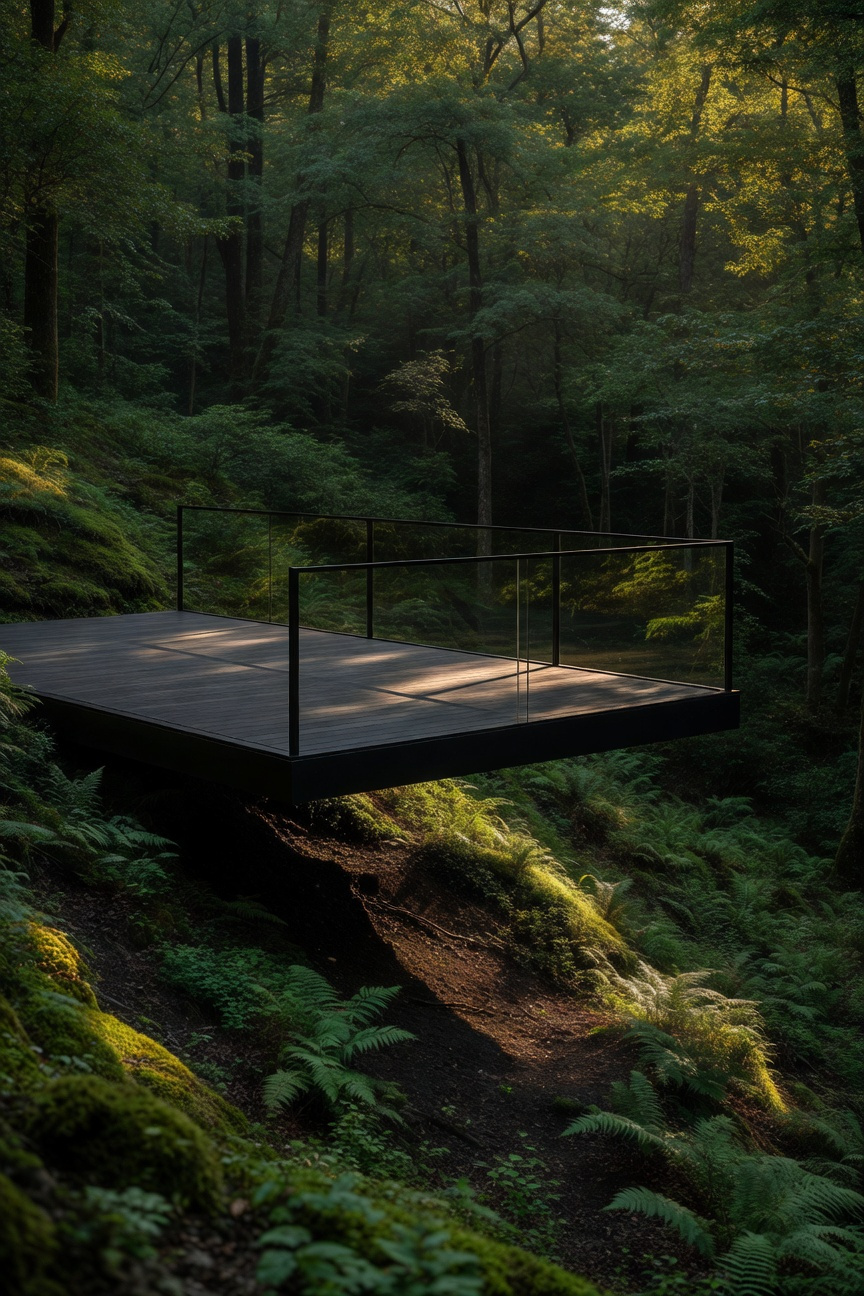
Structurally, achieving this visual lightness relies on aggressive, precise engineering. In fact, many designs utilize structural steel to achieve much thinner, sleeker profiles than timber allows. Ideally, this creates an illusion of defying gravity. To maintain stability, builders often apply the “teeter-totter” principle found in physics. Generally, this dictates a strict 1-to-3 ratio where the main structure acts as a counterweight. As a result, the deck feels weightless and open. Historically, this technique mirrors Frank Lloyd Wright’s *Fallingwater*, where terraces hover seamlessly over the landscape. Ultimately, the design removes visual clutter, offering an unobstructed connection to the horizon.
Creating distinct outdoor rooms does not require vertical walls. Instead, successful design uses the floor itself to guide behavior. Specifically, subtle elevation shifts dictate a space’s function without blocking the view. For instance, lowering a lounging area by a single step creates a cozy, “sunken” effect. This descent fosters intimacy, mentally separating the space for quiet conversation. Conversely, elevating the dining zone improves sightlines across the landscape. Consequently, this slight rise gives the area visual prominence, mirroring indoor open-concept layouts.
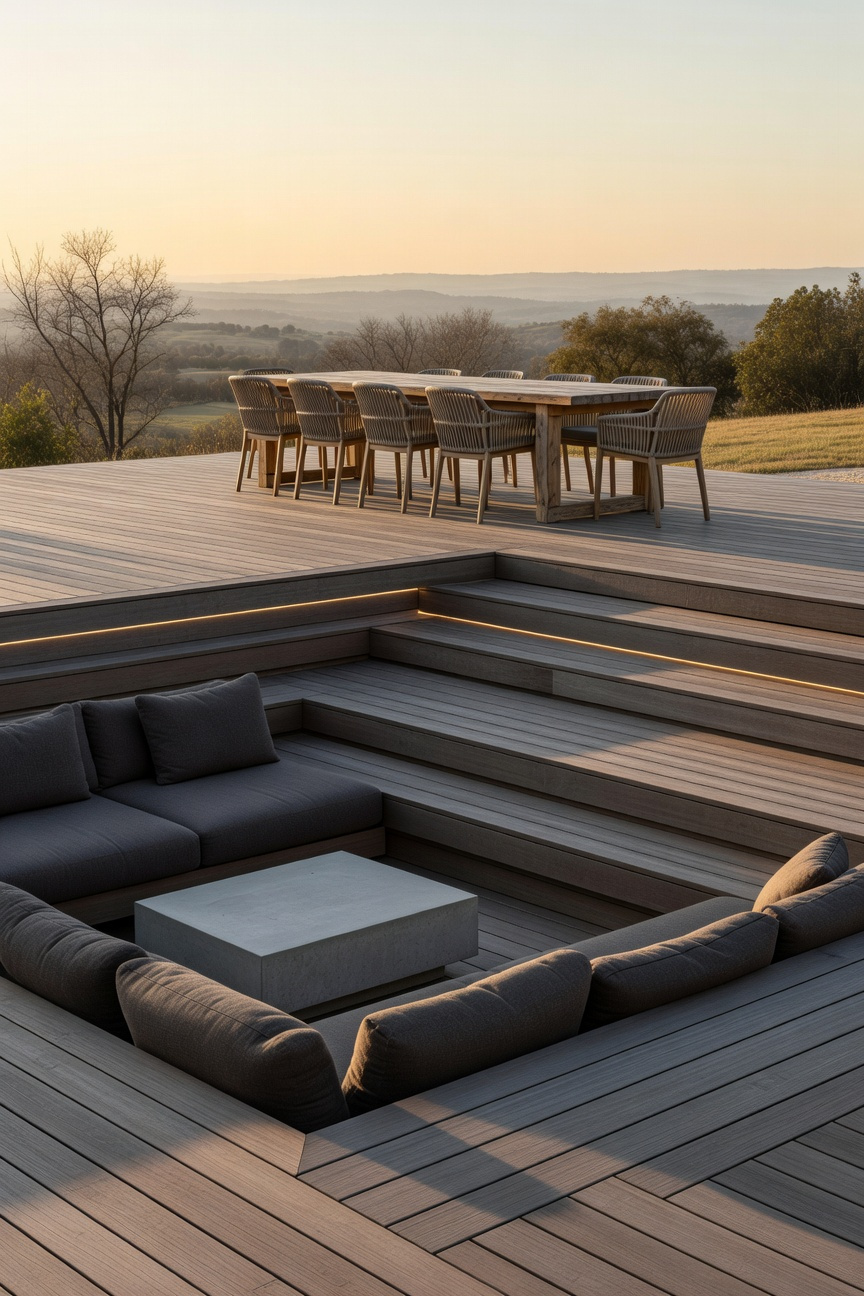
However, safety remains paramount in these transitions. Therefore, architects often recommend a lower riser height paired with a deeper tread. This design ensures an unhurried, gentle rhythm between zones. Beyond elevation, the direction of the timber plays a crucial role. In fact, changing plank direction acts as an invisible directional cue. Simply switching from parallel to perpendicular boards creates a visual “rug effect.” Thus, this technique delineates an eating area without obstructing the open air.
Furthermore, true zoning involves sensory shifts. Integrating stone or tile into the cooking zone offers practical benefits alongside aesthetic ones. Naturally, stone handles grease better than wood. Simultaneously, the acoustic change underfoot signals a functional shift from leisure to preparation. Ultimately, these subtle architectural choices maintain an open flow while clearly defining every purpose.
The “Nordic Railing” is less a specific design and more a functional philosophy. Fundamentally, it stems from a deep-rooted desire to maximize natural light during long, dark winters. Therefore, bulky balusters are replaced with near-invisible infill to create total visual continuity. For more inspiration on minimizing visual clutter, consult our collection of Stunning Deck Railing Ideas. Specifically, frameless glass systems allow the deck to seemingly melt into the surrounding landscape.
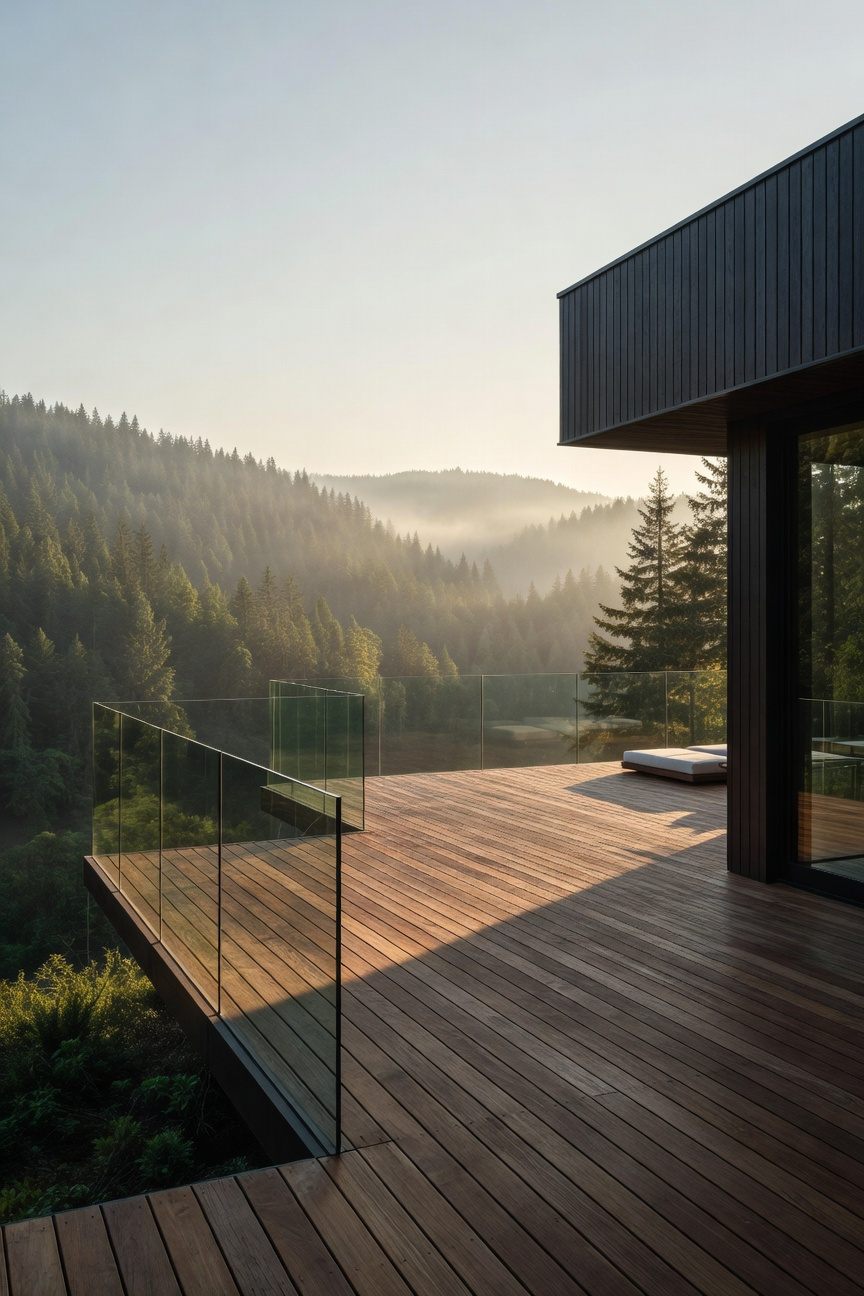
Beyond aesthetics, these choices significantly impact physical comfort. For example, full glass panels act as effective wind barriers in exposed coastal areas. Consequently, this creates a warm microclimate even on cool, breezy days. However, this transparency requires frequent cleaning to maintain absolute clarity against water spots.
Conversely, cable railing systems introduce a subtle, low-maintenance industrial texture. Because they allow air to flow freely, they prevent a greenhouse effect on sun-drenched decks. Furthermore, both systems rely on material integrity to withstand harsh seasons. Typically, designers utilize Type 316 marine-grade stainless steel to ensure decades of corrosion resistance. Ultimately, the goal is a silhouette that disappears, letting nature take center stage.
Integrated seating transforms a chaotic deck into a serene, minimalist sanctuary. Primarily, moving furniture to the perimeter clears valuable floor space. Loose chairs often create visual noise and physical obstacles. Therefore, eliminating them significantly lowers cognitive load. This design choice opens central pathways for dynamic activities like dining or entertaining. Furthermore, perimeter benches anchor the space psychologically. Specifically, they utilize the “prospect and refuge” principle.
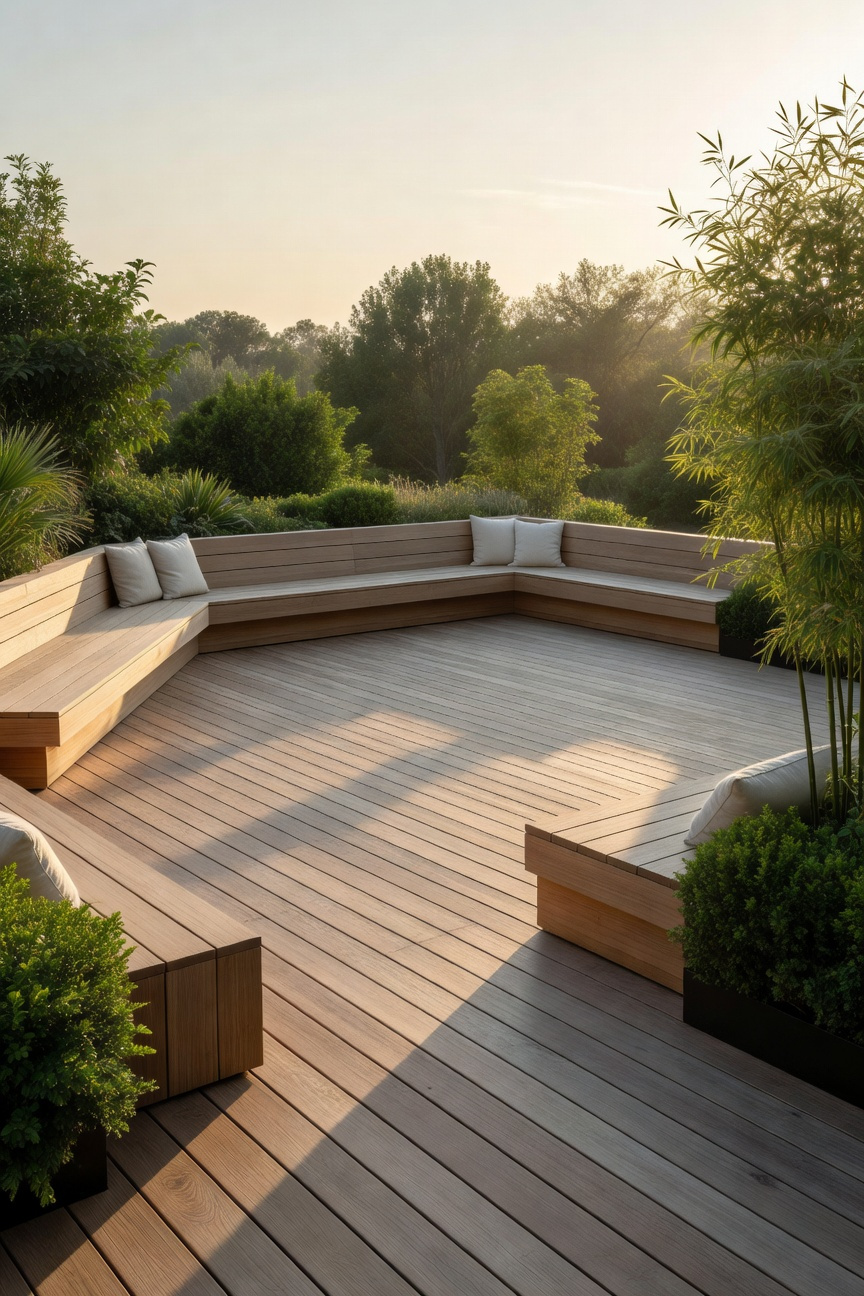
Guests sit with a solid boundary behind them. Consequently, they feel secure while observing the view ahead. This setup mirrors the intimacy of indoor banquette seating. It encourages friends to linger longer than they might in temporary chairs. Historically, fixed seating signaled architectural permanence. Thus, built-ins make the deck feel like an established outdoor room rather than a temporary platform.
However, material selection requires careful thought regarding thermal comfort. Dark composite materials often retain excessive heat in direct sunlight. Conversely, natural woods like pine or cedar generally stay cooler. These porous materials dissipate heat efficiently, ensuring a comfortable seat during summer. Additionally, the structure demands professional engineering. Unlike movable furniture, these benches must withstand significant static loads. Ultimately, the result is a functional, cozy space that honors Scandinavian simplicity.
Historically, the hearth has always served as the home’s emotional center. In fact, modern sunken fire pits echo the philosophy of the mid-century “conversation pit.” Architects like Eero Saarinen designed these lower-level spaces to enforce intimacy. Similarly, the ancient Japanese *Irori* used recessed stone hearths to gather families for heat and light. Therefore, integrating a sunken pit transforms a simple deck into a purposeful destination. Consequently, this architectural choice creates a democratic space that encourages eye contact and shared storytelling.
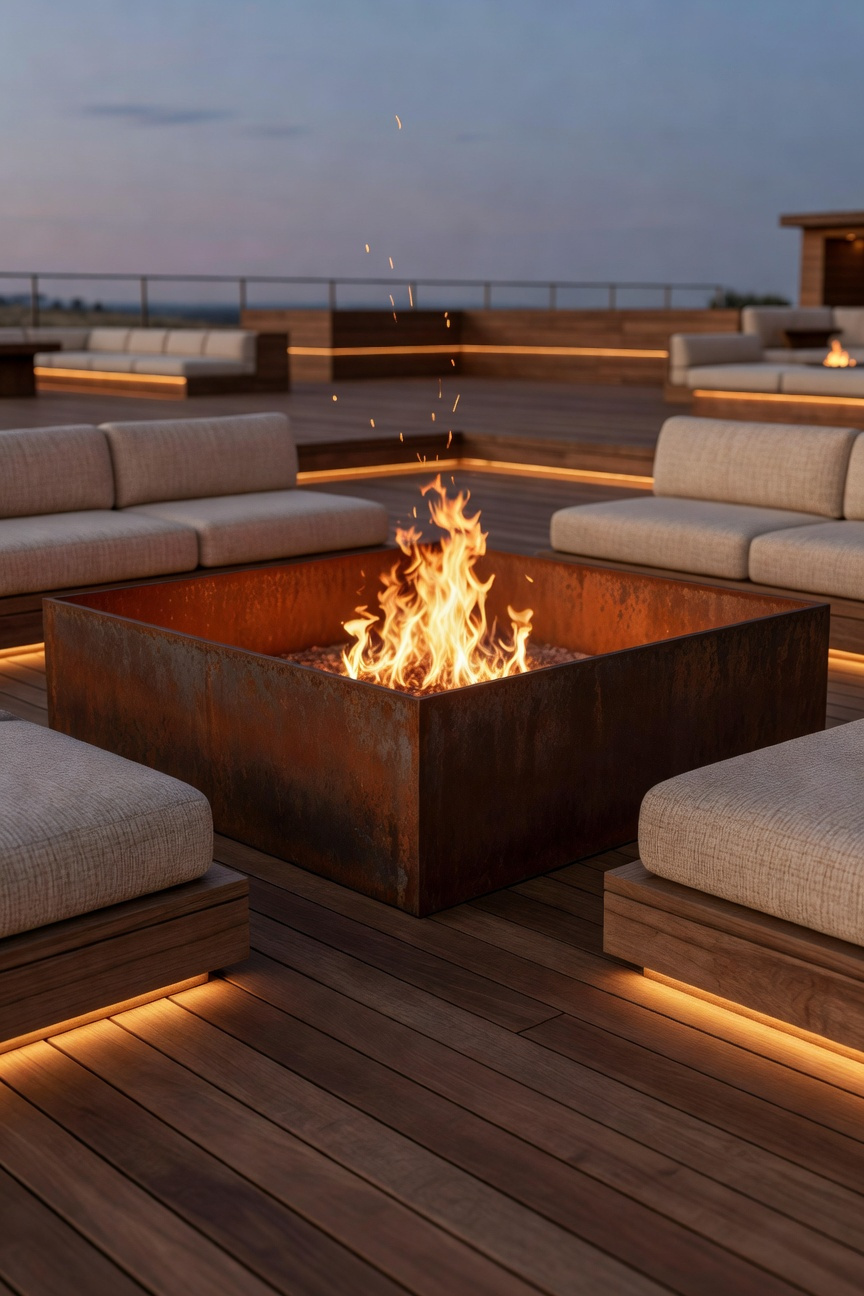
Beyond history, the recessed design aligns perfectly with the Danish concept of *hygge*. Specifically, sinking the seating area creates a defined “outdoor room” separate from general traffic. Furthermore, this lowered position offers superior wind protection compared to raised features. As a result, the flame remains consistent and stable. Additionally, the pit provides warmth directly to the legs, enhancing physical comfort during cooler evenings. Ultimately, this sheltered setup invites the use of plush throws, deepening the sensory experience.
For materials, Corten steel offers an ideal blend of durability and rustic aesthetics. Surprisingly, this material forms a stable, rust-like patina that protects the underlying steel from corrosion. This warm, earthy finish evolves over time, integrating seamlessly with natural wood decking. However, installation requires technical precision. Specifically, the initial weathering process can cause staining. Therefore, you must install a fire-resistant pedestal or non-combustible base plate. This critical step prevents rust runoff from damaging the deck surface.
Traditional floodlights often cast a harsh, blue-enriched glare. Consequently, this cool lighting promotes alertness rather than necessary evening relaxation. Instead, modern Scandinavian-inspired design favors an ultra-warm white light. Specifically, fixtures using the 2500K to 2700K range mimic the soothing, biological cue of a setting sun. This specific temperature supports the body’s circadian rhythm, effectively signaling the brain to wind down.
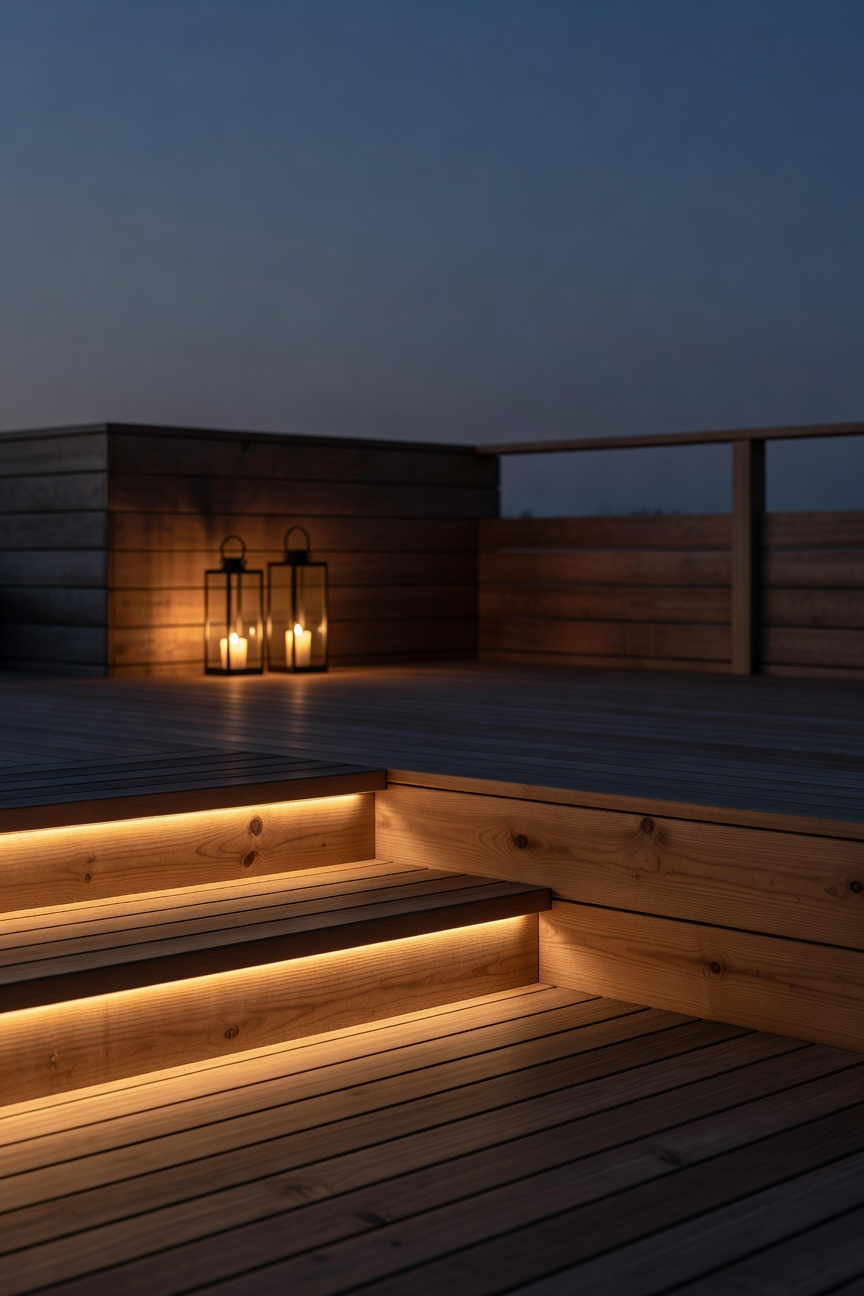
However, achieving this cozy atmosphere requires more than just changing a bulb. In fact, you must avoid the flat, over-lit aesthetic of a warehouse. Therefore, the goal shifts to “sculpting with light” by embracing shadow. Low-voltage step lights serve as the quintessential tools for this technique. By recessing these fixtures into risers or under railing caps, you create controlled pools of illumination. Crucially, this method conceals the light source to eliminate glare. Thus, the viewer notices the wood’s texture and the deck’s architecture, not the bulb itself.
Finally, the fixture’s physical form plays a vital role in creating ambiance. Historically, lanterns were designed to protect a fragile flame from wind and rain. Today, using lantern-style fixtures helps evoke that timeless sense of security and domestic tradition. Furthermore, combining these housings with “flame-effect” LEDs adds dynamic movement to the space. Ultimately, moving toward these lower-lumen options transforms a simple deck into a restorative, intimate sanctuary.
Creating a sense of seclusion on a deck often risks shutting out the natural world. However, the most sophisticated designs balance privacy with openness through slatted wood screens. Historically rooted in Japanese *Koshi* architecture, these screens filter views without creating an impermeable wall. Consequently, they offer a visual oscillation between shade and privacy. This approach feels architectural and intentional, rather than merely functional.
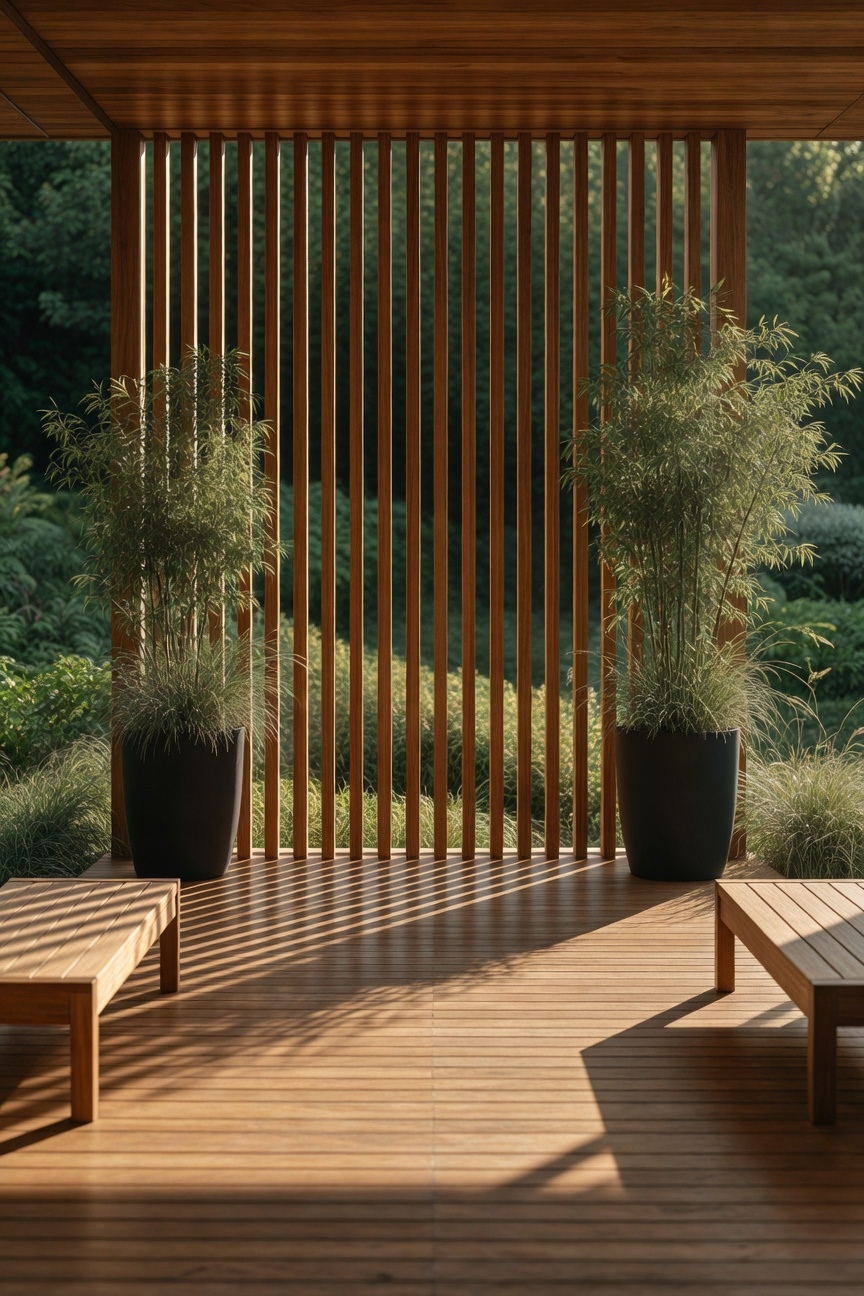
Specifically, the technical success of a screen lies in the gap calibration. For instance, a spacing of 40mm to 50mm maximizes airflow, which is vital in humid climates. Conversely, a narrower 9mm gap creates near-solid opacity for critical privacy zones. Furthermore, vertical slat orientation introduces a rhythmic shadow-play that moves with the sun. Therefore, the screen acts as a calibrated membrane, managing light and temperature effectively.
To soften these linear geometries, integrate tall planter boxes at the base. Ideally, these planters should range from 36 to 60 inches in height. In addition, they provide a weighted anchor for the screen, ensuring stability against the wind. Moreover, the foliage acts as a natural acoustic barrier, absorbing urban noise. Ultimately, fusing organic textures with precise wood joinery transforms a simple deck into a breathable, multisensory sanctuary.
To create a truly inviting outdoor space, we must look beyond simple shade. Specifically, the goal is mimicking the “dynamic and diffuse light” found in a forest. Unlike a solid roof, which creates static, heavy shadows, a natural canopy allows light to dance. Consequently, this subtle movement reduces visual fatigue and fosters deep relaxation through biophilic connection.
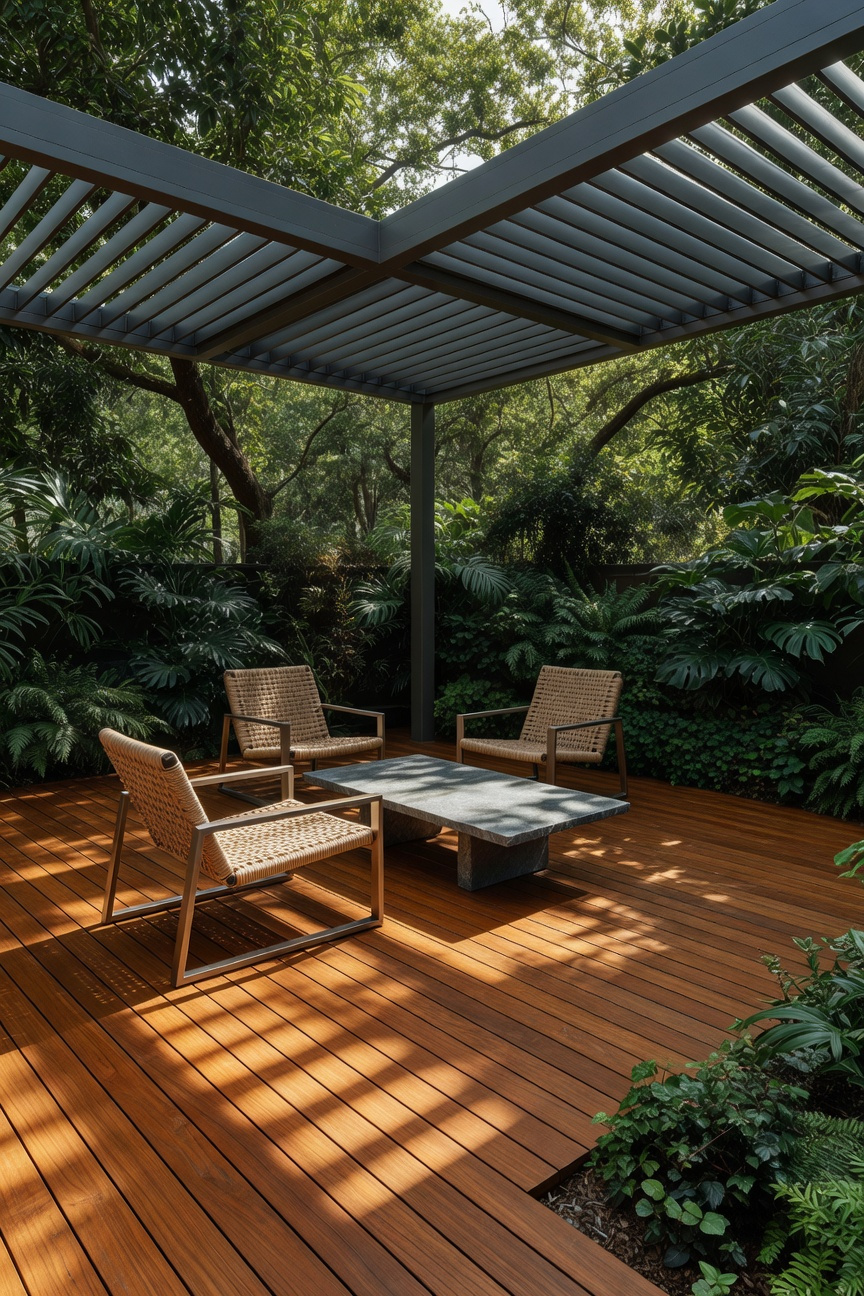
Fortunately, modern engineering allows us to recreate this restorative effect with precision. For instance, adjustable louvered pergolas function as an “intelligent facade” for your deck. By tilting slats between 30° and 45°, you effectively filter harsh rays while admitting soft, indirect illumination. Thus, you achieve a perfect balance of protection and openness. Furthermore, this mimics ancient architectural screens designed to regulate heat without blocking essential airflow. Today, motorized sensors can even automate this process, adjusting the slats instantly to match the sun’s specific geometry.
Alternatively, shade sails offer a softer, more organic approach to light filtration. Specifically, using a twisted “Hypar” shape creates necessary architectural tension. This unique geometry prevents the fabric from feeling heavy or oppressive. Moreover, layering multiple sails at different heights creates a complex “multi-canopy” effect. As sunlight filters through the translucent weave, it scatters gently across the floorboards. Therefore, the deck feels bathed in a natural, airy glow rather than darkness. Ultimately, treating the overhead structure as a light manipulator transforms the deck into a sanctuary.
Decks inherently consist of rigid materials like wood, composite, or stone. Unfortunately, these hardscapes can feel visually stark and acoustically harsh. Therefore, introducing textiles is crucial for bridging the gap between cold structure and inviting comfort. This process, known as softening the hardscape, effectively transforms a flat platform into a habitable outdoor room.
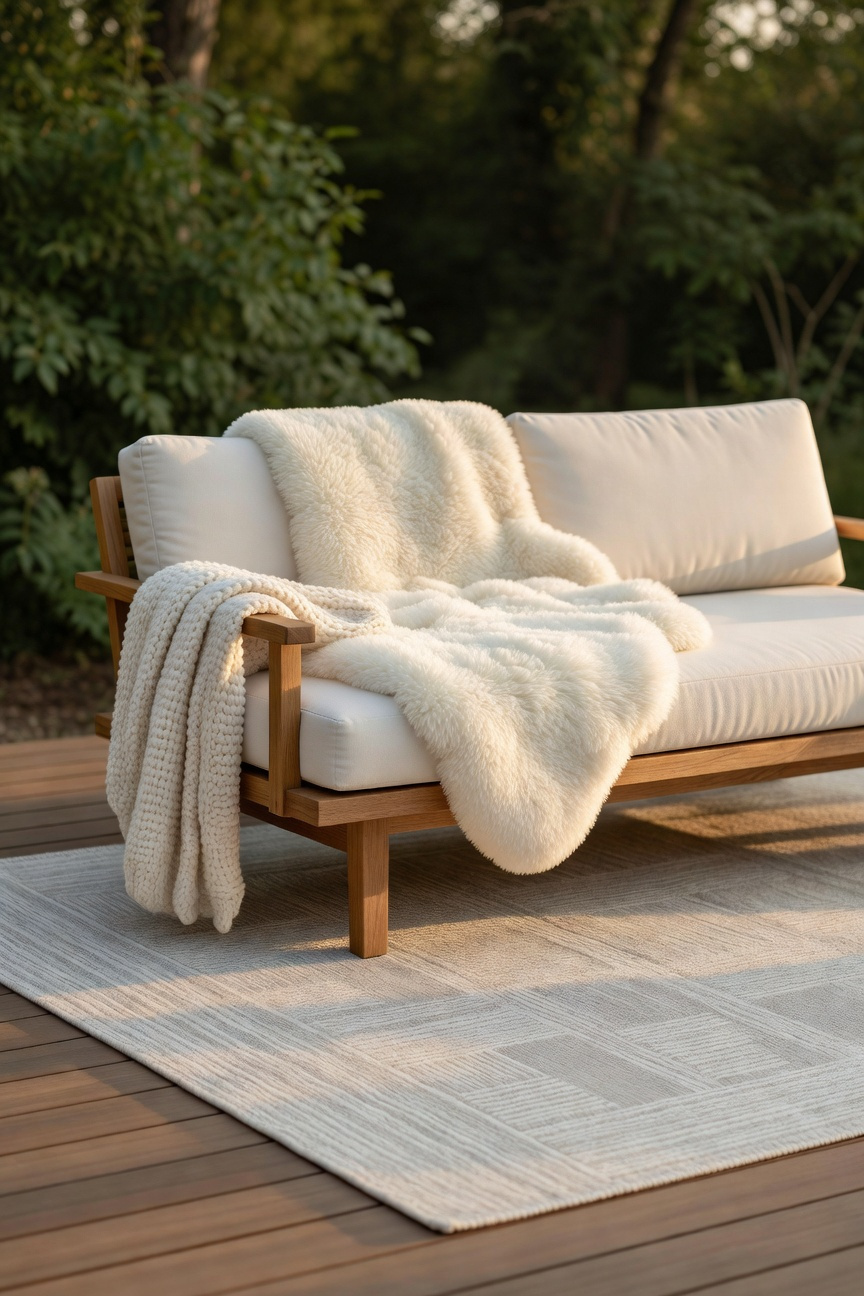
First, begin with a durable foundation to define the space. Specifically, high-performance synthetic flatweaves, such as recycled PET or Olefin, work best here. Unlike natural fibers, these engineered materials withstand rain, sun, and mold without fading. Moreover, they provide essential acoustic dampening, instantly quieting the echo often found on wooden decks. Thus, the deck becomes physically warmer and quieter underfoot.
However, true Nordic *hygge* requires an authentic, organic touch. Consequently, designers often layer genuine sheepskins or wool throws over this synthetic base. Historically, these natural layers served as vital insulation against the bitter Northern cold. Today, they offer a “soft hug” that contrasts beautifully with sleek, modern furniture lines. Functionally, this layer provides immediate thermal warmth, allowing you to enjoy the outdoors longer. Ultimately, balancing engineered durability with natural softness creates a truly inviting sanctuary.
A full-scale masonry kitchen often feels overwhelming on a modest wooden deck. Consequently, the modern design ethos has shifted toward the “outdoor kitchenette,” a streamlined approach that values open space. Technically, standard residential decks are engineered to support approximately 50 pounds per square foot. However, a stone-clad kitchen can easily exceed 100 pounds per square foot in a concentrated area. Therefore, installing heavy masonry often requires expensive structural reinforcement to prevent dangerous sagging.
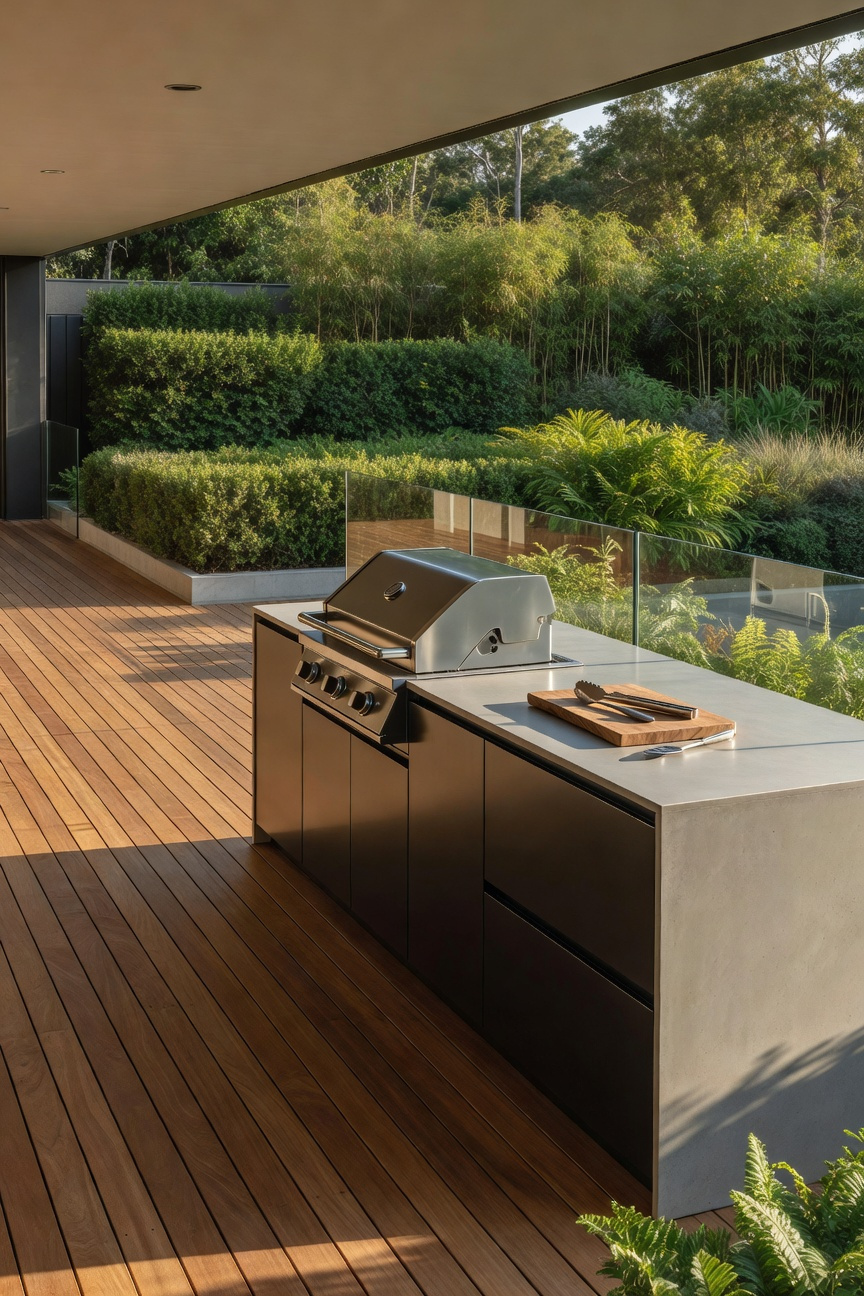
Alternatively, a modular grill station offers a lighter, smarter solution. These systems utilize architectural-grade aluminum or lightweight concrete panels to mimic the texture of stone without the crushing weight. Furthermore, this approach simplifies the culinary workflow. Most chefs prefer to perform heavy chopping indoors, moving only the final assembly outside. Thus, a simple setup focusing strictly on the grill and a prep counter is functionally superior.
Additionally, safety is paramount when cooking over combustible wood decking. A freestanding kitchenette allows for proper clearance and airflow, unlike built-in units that require complex fire-resistant barriers. Ultimately, stripping away the excess creates a warm, minimalist environment. It allows the social experience, rather than the appliances, to take center stage.
Adopting a monochromatic palette is not merely an aesthetic choice. Fundamentally, it represents a philosophical stance rooted in the concept of *Wabi-Sabi*. This approach finds beauty in the visible wisdom of age. Therefore, we select materials that weather gracefully rather than those that fight the elements. For instance, hardwoods like Ipe naturally photo-oxidize over time. Eventually, they transform from dark brown to a soft, silvery-gray patina. Consequently, this platinum monochrome provides a quiet, high-end backdrop for your garden.
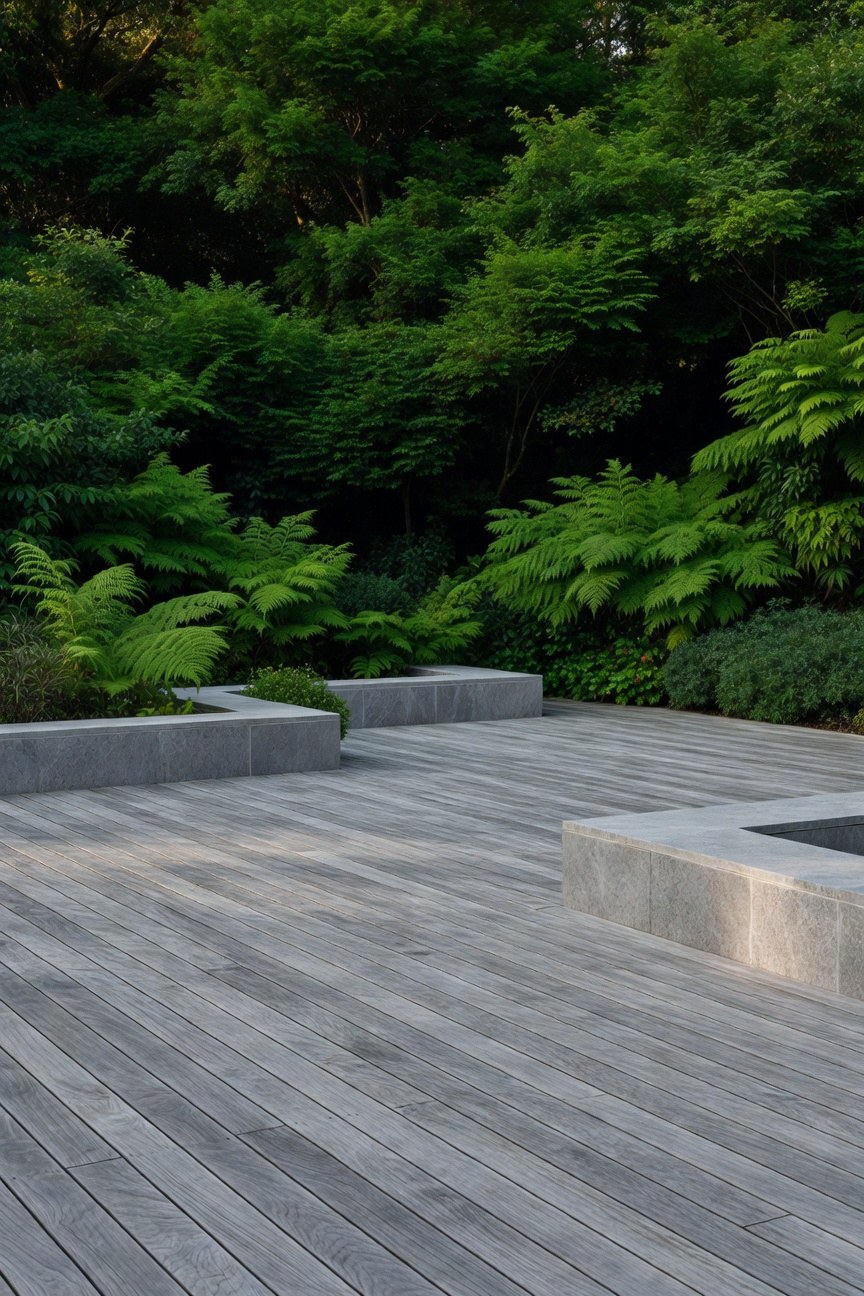
Since the color spectrum is restrained, texture becomes the primary source of visual interest. Specifically, depth is achieved by juxtaposing different material weights. You might pair smooth, honed decking with rough, dry-stacked granite. Thus, the dialogue between the warm wood and craggy stone creates a dynamic environment. Furthermore, matte finishes are essential here. They absorb light, creating a soothing, earthy atmosphere rather than a sterile one.
Ultimately, this neutral scheme functions as an architectural stage. It allows the surrounding greenery to provide the vibrancy. By selecting chalky neutrals or aged grays, the deck reacts to the sun’s angle. In low light, a charcoal deck appears deeply saturated. Conversely, midday sun turns it into a reflective surface. In this way, the built environment steps back. It ensures nature remains the true focal point.
Ideally, we crave the tactile warmth of genuine timber in our outdoor sanctuaries. Historically, however, synthetic alternatives felt cold and artificial. Fortunately, technology has bridged this aesthetic gap. Specifically, modern “capped” composites now feature sophisticated, multi-tonal color blending. Consequently, these boards successfully replicate the non-repetitive grain and matte finish of exotic hardwoods.
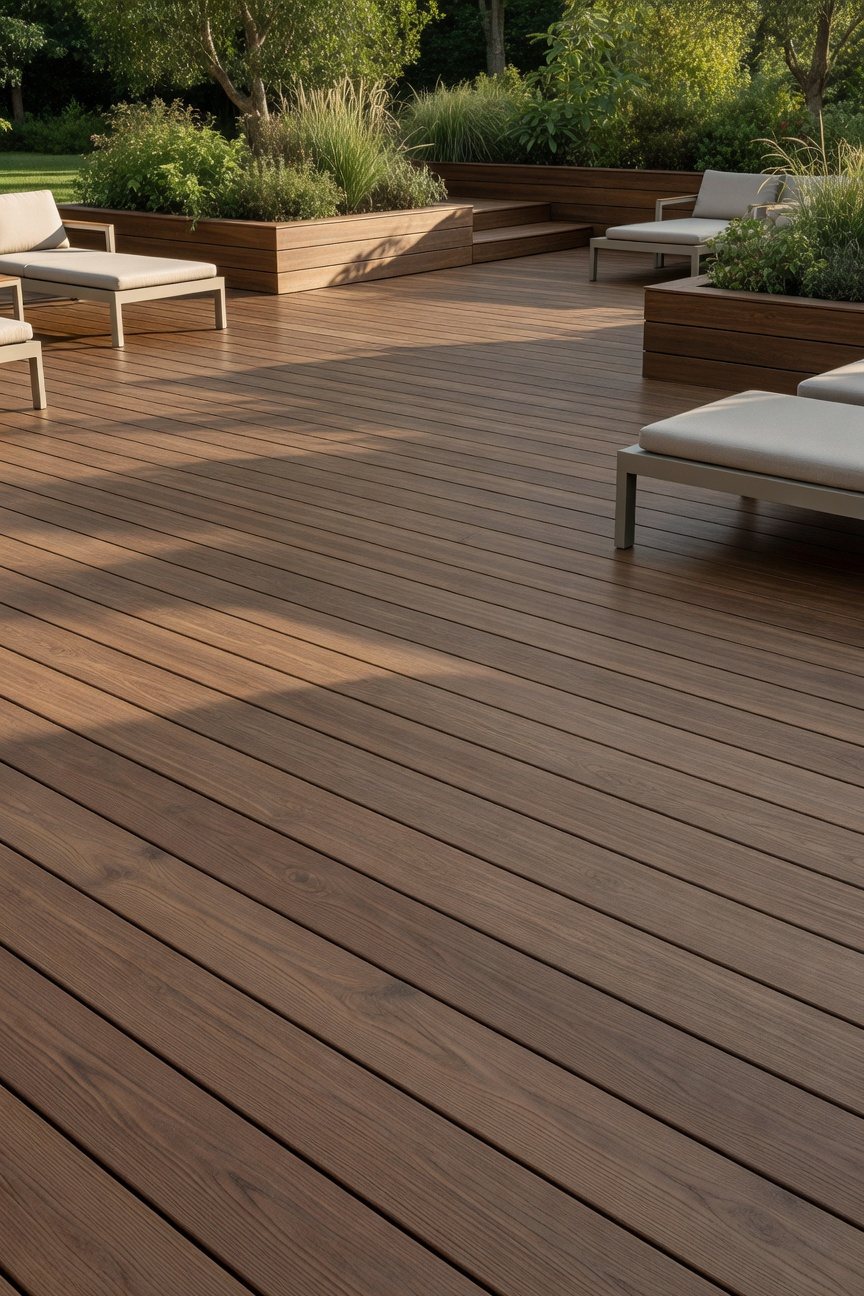
Furthermore, sustainability requires longevity. In harsh environments, even premium wood eventually falters. For instance, coastal areas subject materials to relentless salt and moisture cycles. Similarly, ground-level installations often suffer from poor airflow. In these contexts, high-end composite becomes the responsible engineering choice. It resists rot and warping where natural timber would inevitably decay.
Nevertheless, successful integration requires a thoughtful design approach. Synthetic materials can be denser, causing them to retain heat. Therefore, select lighter hues like soft tans to reflect intense sunlight. Additionally, consider lighter-density PVC materials for better heat dissipation underfoot. Finally, mimic organic randomness during the installation process. Simply mix boards from different boxes to ensure the color variegation flows naturally. Ultimately, this technique prevents a manufactured appearance, keeping your minimalist space grounded and inviting.
True four-season adaptation requires shifting from temporary spot heating to permanent microclimate creation. Fundamentally, this process relies on the synergy between radiant heat and physical wind protection. Without a barrier, wind causes rapid convective heat loss, neutralizing even powerful heaters. Therefore, effective wind-blocks are often more critical than the heat source itself. Historically, builders used simple walls to trap warm air pockets. Similarly, modern retractable glass railing systems offer adjustable protection while preserving panoramic views. Consequently, these “wind-dams” eliminate the chilling effect of air movement.
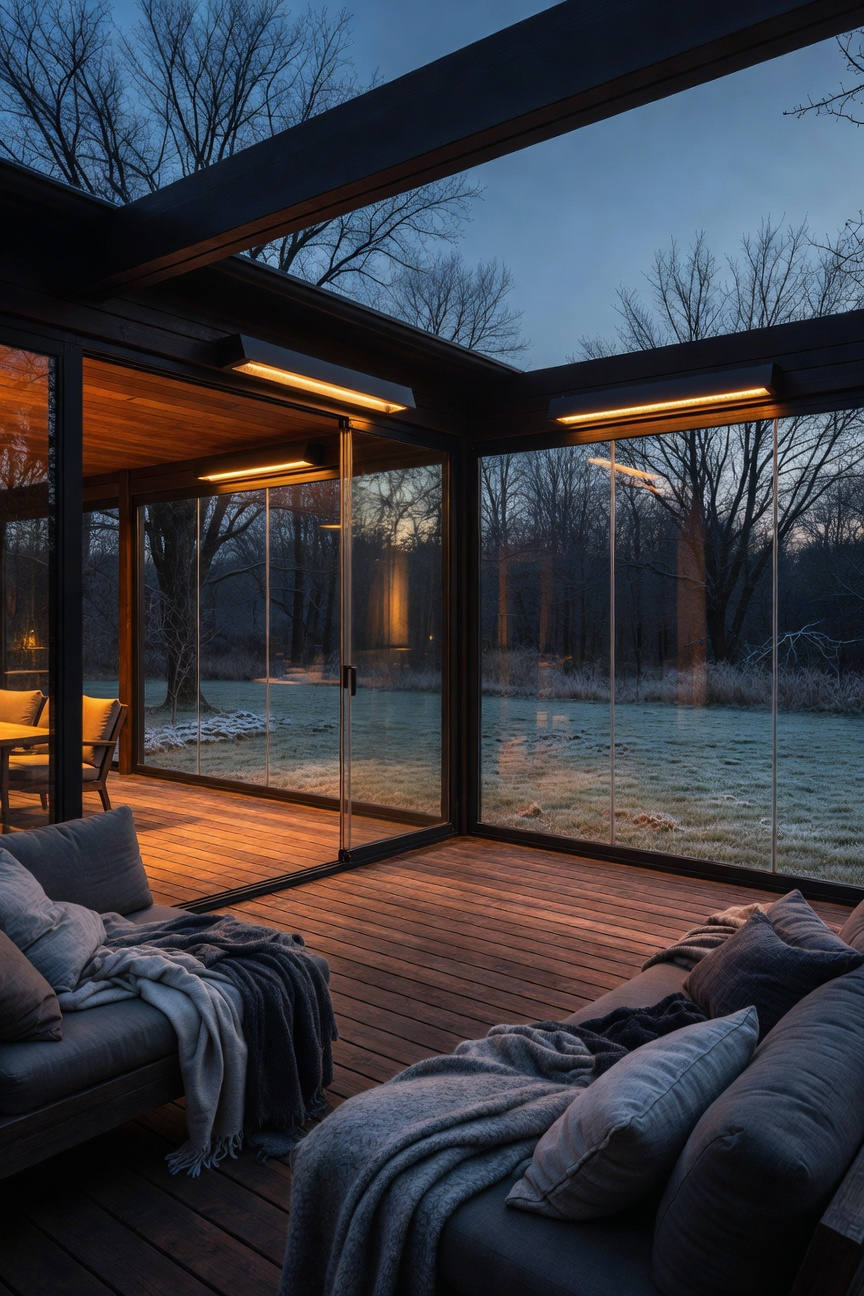
Once sheltered, infrared technology provides the necessary warmth. Unlike convection heaters that warm the air, infrared units heat objects and people directly. In fact, this efficient method mimics the natural feeling of the sun. Moreover, modern electric models are up to 90% energy efficient. Specifically, flush-mounted designs integrate seamlessly into pergola beams, maintaining a clean, minimalist aesthetic. Furthermore, these units operate silently and without the odors associated with gas. Ultimately, combining invisible heat with transparent wind protection creates a sustainable, cozy outdoor sanctuary.
Integrating a cedar hot tub brings a sensory richness that synthetic materials simply cannot replicate. Specifically, Western Red Cedar releases natural oils when heated or wetted. Consequently, a warm, spicy fragrance envelopes the bather, significantly enhancing the therapeutic experience. Furthermore, traditional “stave and swell” construction utilizes the wood’s natural expansion. As the wood swells, it creates a watertight seal without artificial liners, blending historic craftsmanship with modern design.
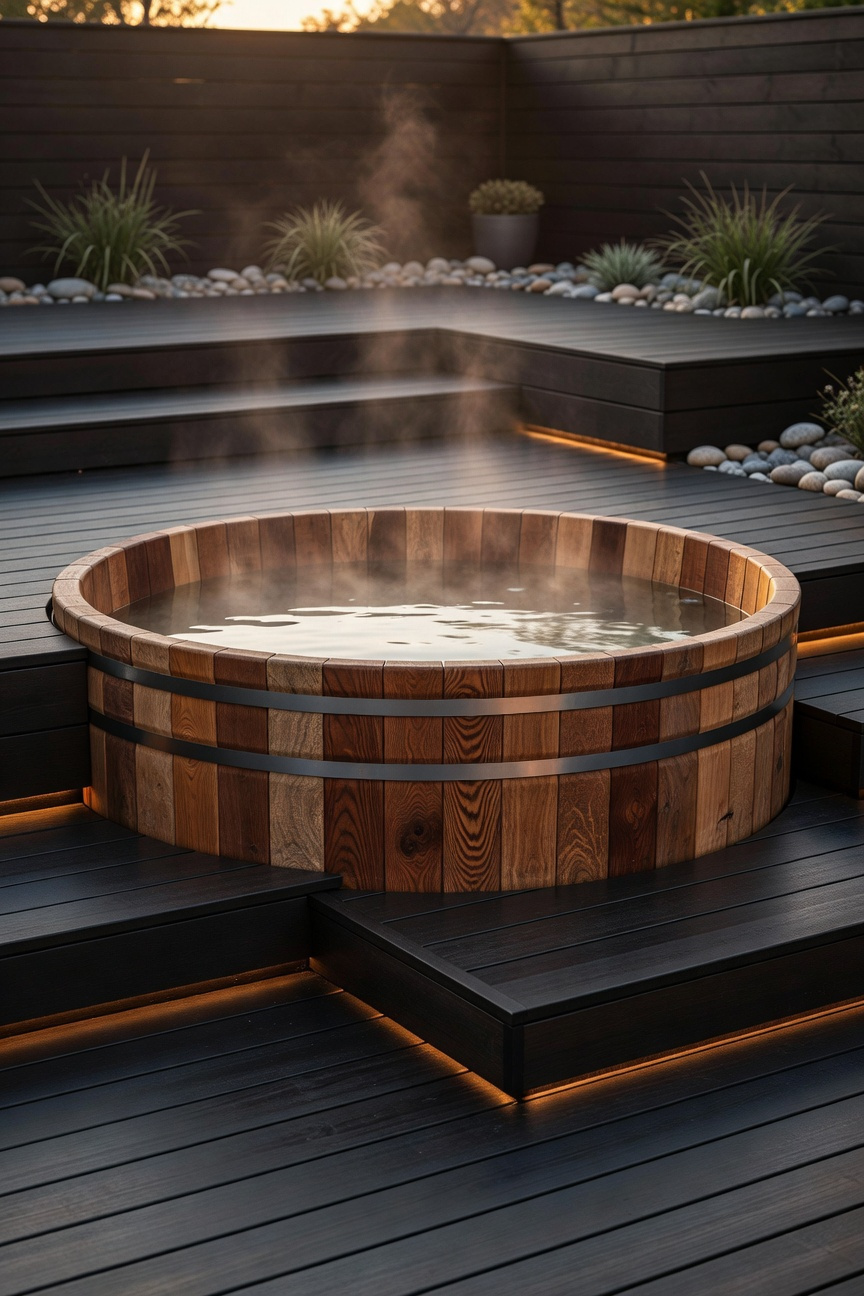
However, achieving this seamless aesthetic requires rigorous structural planning. Water creates an immense dead load, often exceeding 4,000 pounds. Therefore, the deck’s sub-structure typically requires reinforcement with double beams to prevent dangerous sagging. Additionally, if you desire a recessed, minimalist look, you must plan for maintenance. Crucially, leaving 16 to 18 inches of the rim above the deck allows for easier entry. Moreover, you must incorporate removable hatches to access pumps and heaters without destroying the decking.
Finally, modern cold plunges introduce unique ventilation challenges. Unlike simple ice barrels, active chillers expel significant heat to maintain low temperatures. Thus, enclosing these units entirely causes overheating and reduces efficiency. Instead, design ventilated cabinetry or slatted sections to ensure 12 to 18 inches of airflow. Ultimately, balancing these technical requirements with natural materials creates a functional, restorative sanctuary.
Ultimately, a deck acts as far more than simple architectural square footage. Instead, it serves as a vital threshold between domestic routine and the natural world. By embracing “structured wildness,” you create a necessary antidote to modern digital fatigue. Furthermore, strategic acoustic masking and soft lighting transform these spaces into genuine sensory retreats. Thus, the design becomes a historical echo of ancient contemplative spaces, adapted for today. Consequently, your outdoor area shifts from a mere viewing platform to a psychological anchor.
Looking forward, the modern home must prioritize restoration over mere presentation. In fact, true Scandinavian functionality demands that every element actively supports your well-being. Therefore, moving toward intentional minimalism ensures your sanctuary remains a place of calm, not clutter. Begin by auditing your current layout for aggressive noise and visual distractions. Finally, remove one unnecessary item to let the outdoors truly breathe. By implementing these sophisticated deck ideas, you ensure your outdoor space shifts from a mere viewing platform to a psychological anchor, ready to serve as a daily refuge.
For a luxury finish, discerning homeowners should prioritize materials that age gracefully and offer superior longevity. Untreated natural hardwoods like Western Red Cedar or sustainable teak develop a beautiful silver-gray patina over time. Alternatively, high-end capped composite decking is engineered to replicate the non-repetitive texture of exotic wood while offering maximum durability and minimal maintenance, especially in harsh climates.
Achieving a seamless transition requires focusing on architectural integration. The primary strategy is implementing a flush threshold where the interior floor meets the exterior decking at a perfectly level plane. Additionally, use consistent color palettes (e.g., monochromatic wood tones) and extend interior design philosophies, such as using modular, built-in seating, to reduce visual clutter and unify the spaces.
The most elegant privacy solutions balance seclusion with airflow and light. Utilize architectural elements like slatted wood screens, inspired by Japanese *Koshi*, which filter views without creating heavy, oppressive walls. Supplement these with tall, structural planter boxes filled with dense foliage (like bamboo) to act as natural acoustic barriers and soften the geometry of the hardscape.


