Physical Address
304 North Cardinal St.
Dorchester Center, MA 02124
Physical Address
304 North Cardinal St.
Dorchester Center, MA 02124
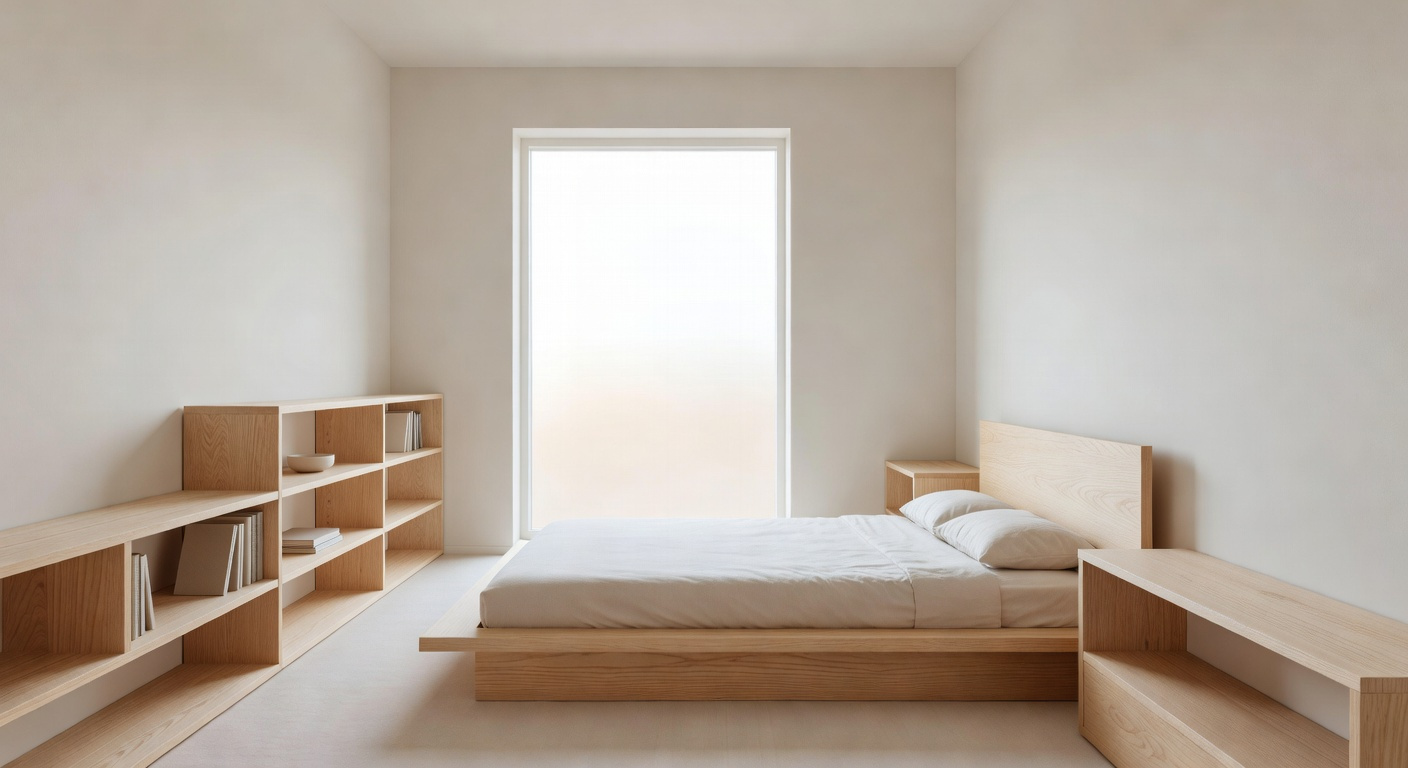
Discover how to transform your space with a sophisticated small bedroom idea. Learn Nordic design principles and luxury storage for a refined sanctuary.
Many homeowners instinctively believe a compact bedroom demands miniature furniture. However, finding the right small bedroom idea isn’t just about downsizing. Instead, it is about achieving spatial harmony. We often fill tight corners with petite dressers and narrow chairs to save square footage. The logic appears sound. Shrinking the furnishings should theoretically maximize the available room. Yet, true luxury lies in the balance of scale and architectural depth.
This common strategy creates a paradoxical effect known as “visual noise.” Instead of creating openness, multiple small items cause the eye to jump rapidly between many boundaries. Therefore, the space feels chaotic and fragmented rather than airy. This “dollhouse effect” generates subconscious micro-stresses as we navigate unnecessary obstacle courses of clutter.
True Scandinavian minimalism offers a warmer, more functional alternative. By prioritizing scale over size, we can anchor a room with substantial, intentional pieces. This guide reveals how to balance visual weight against physical mass for true harmony. Indeed, we will explore mathematical ratios and psychological principles to transform cramped quarters into purposeful sanctuaries.
The Nordic philosophy of volume centers on presence, not absence. Specifically, we view “less” as a deliberate choice to prioritize light. We look to Nordic-inspired small bedroom ideas that maximize every square inch. In a small bedroom, air acts as a functional material. Consequently, emptiness becomes a vital medium for daylight to travel freely. Unlike sterile minimalism, this approach relies on light-toned woods like ash or birch. Notably, these materials reflect up to 80% of natural light. Therefore, we avoid bulky wardrobes that create deep shadows or “light traps.”
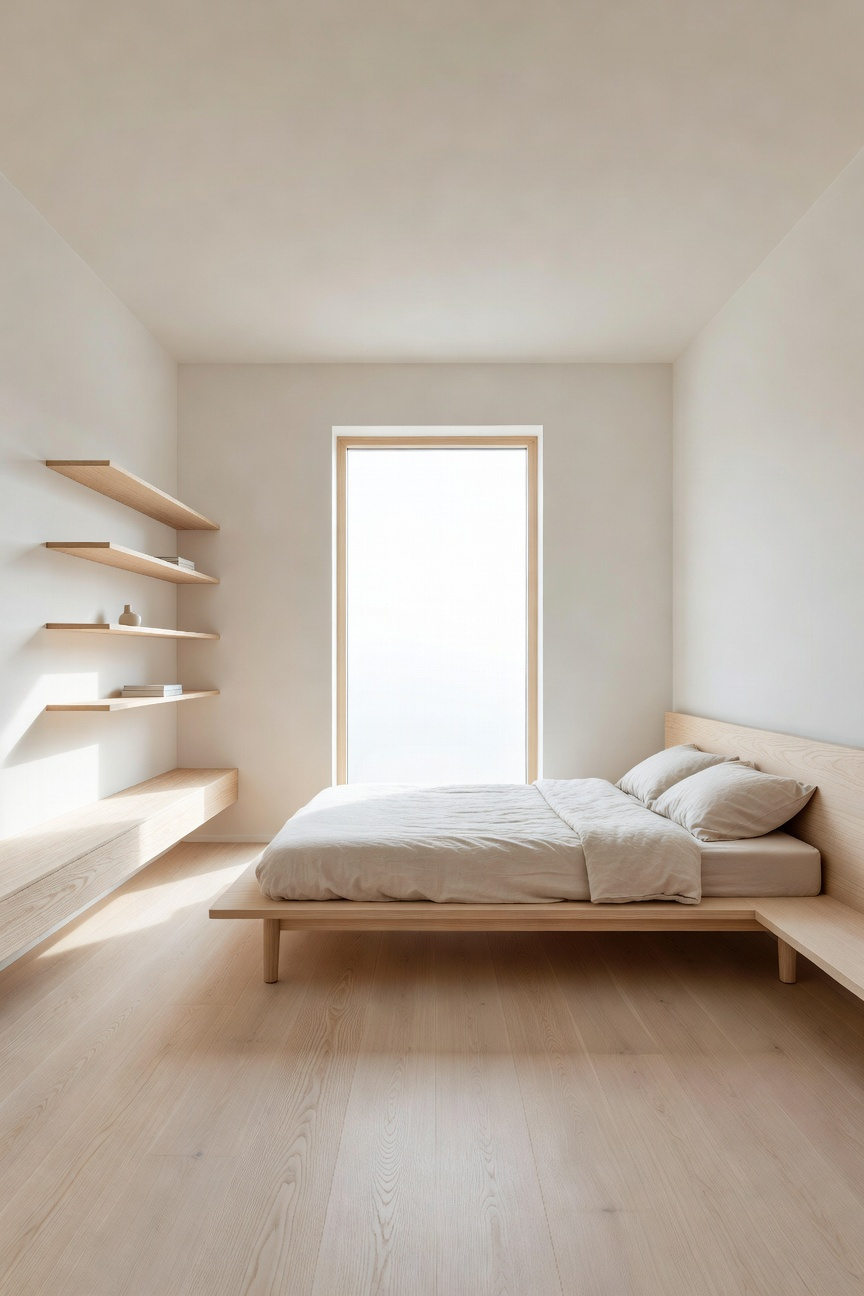
Next, consider “visual buoyancy.” This concept is essential for spatial perception. Designers like Alvar Aalto prioritized furniture with exposed, slender legs. By maximizing floor clearance, the eye perceives the room’s footprint as continuous. As a result, the space feels lifted rather than weighted. This creates a psychological sense of freedom through refined minimalism.
Additionally, the Swedish concept of *Lagom*—meaning “just right”—ensures warmth. We seek equilibrium rather than scarcity. For instance, a single high-quality linen throw adds essential texture without visual clutter. This aligns with the legacy of Kaare Klint, who championed human-centric geometry. Specifically, utilizing low-profile furniture increases the vertical volume between the bed and the ceiling. This shifts the room’s center of gravity downward. Ultimately, this ample “breathing room” transforms a cramped area into a sanctuary of mental clarity.
To transform a small bedroom, we must first reimagine its physical limits. Traditionally, a room is merely a static, six-sided box. However, true spaciousness requires breaking this rigid “envelope.” Specifically, try viewing walls as independent planes rather than barriers. For instance, slightly lowering the ceiling over the bed creates intimacy. This technique effectively implies a “room within a room” without adding walls.
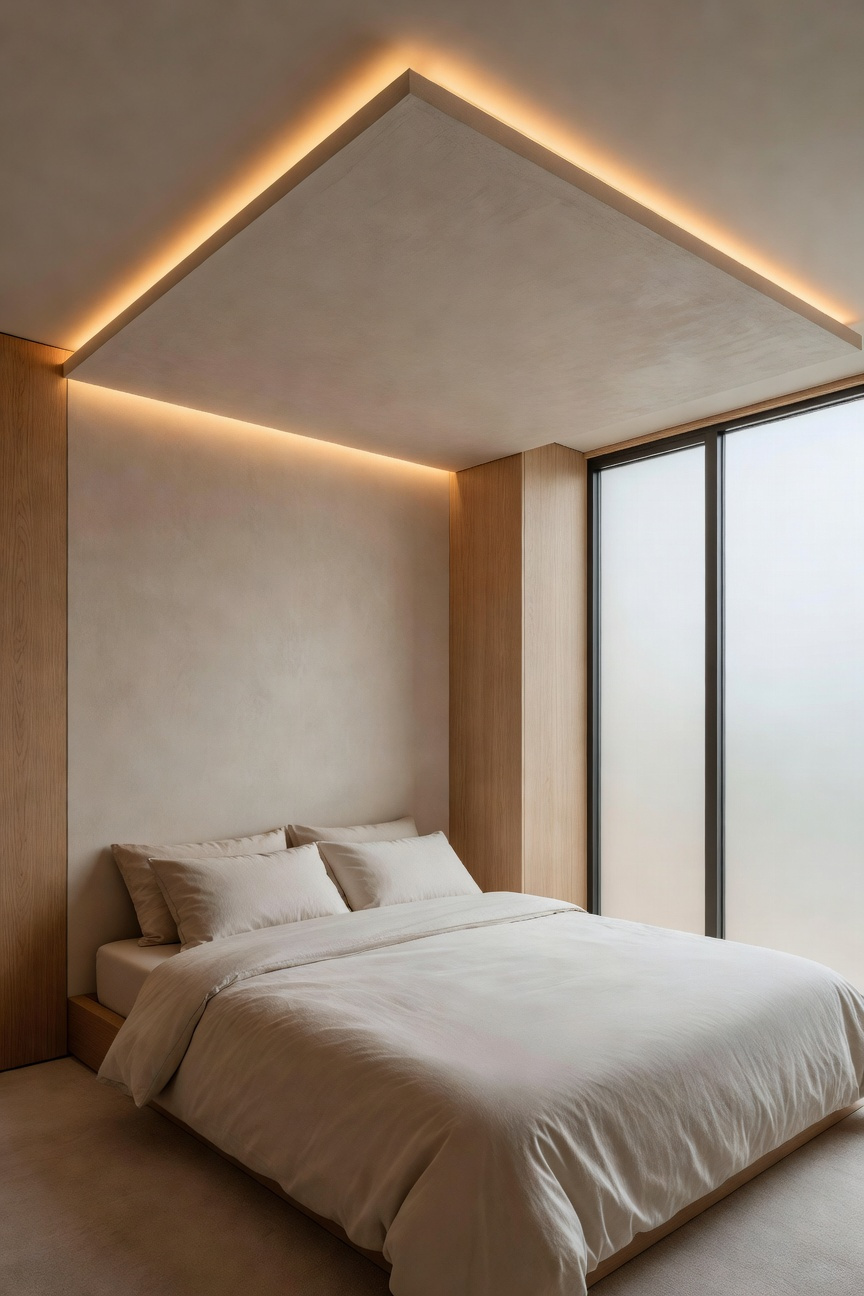
Next, we must manipulate visual perception. Remarkably, spatial authority relies heavily on peripheral vision. If your eyes constantly hit sharp corners, the brain registers confinement. Therefore, consider painting walls and ceilings the same deep, receding hue. This method effectively “erases” the shadow lines. Consequently, the boundaries dissolve into an atmospheric void, feeling expansive yet cozy.
Beyond visuals, the envelope is also felt and heard. Unfortunately, small rooms often suffer from a hollow, “boxy” acoustic signature. To combat this, introduce soft, natural textures like wool or linen. In fact, fabric-wrapped panels or heavy drapery absorb sound at the boundary. Thus, the space feels quieter and distinctively high-end. Finally, consider the flow of light. Replacing a solid door with reeded glass allows light to perforate the envelope. Ultimately, the room becomes a breathable mediator rather than a cell.
Traditional design rules dictate that small rooms require white walls to reflect light. However, this approach often fails in bedrooms with limited natural illumination. Specifically, bright white turns muddy in low light. This creates a “shadowy box” effect. Consequently, high contrast in the corners emphasizes the room’s physical limits rather than expanding them.
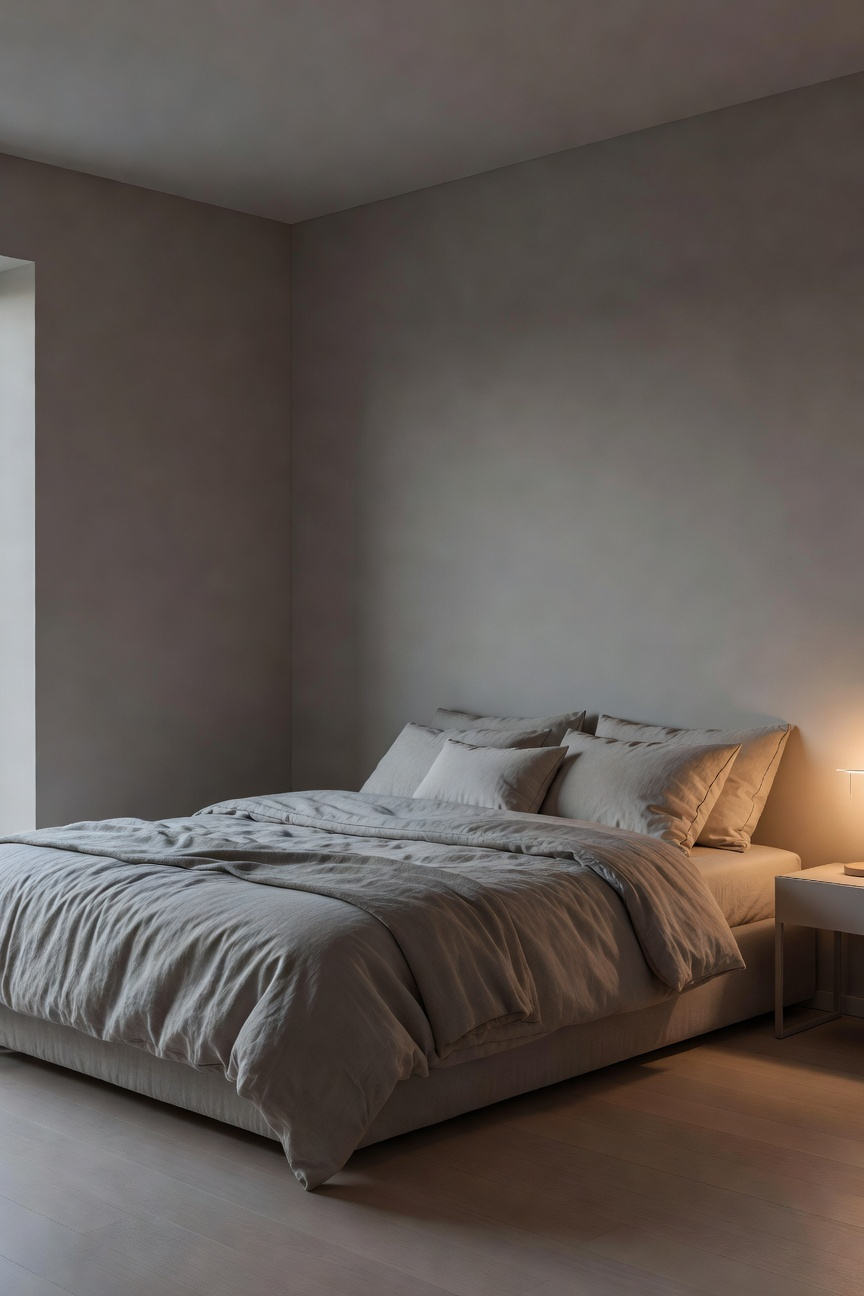
To solve this, Nordic designers utilize warm greys to achieve the “Infinity Effect.” Unlike white, which reflects light to define edges, mid-toned greys absorb a portion of the light. Therefore, the “hard line” where walls meet softens significantly. As a result, corners seem to dissolve. The walls appear to recede into indeterminate depth. This creates a “cocooning” sensation that feels expansive rather than restrictive.
Furthermore, maximizing this “boundary blur” requires a technique known as “color drenching.” Simply put, you paint baseboards, trim, and ceilings in the exact same warm grey. By removing the white trim, you effectively erase visual boundaries that usually box in the space. Thus, the eye sweeps continuously across the room without interruption.
Ultimately, this shift moves away from clinical functionalism toward *Hygge*, or cozy contentment. To prevent the monochromatic palette from feeling flat, designers recommend a matte finish to scatter light. Additionally, anchoring the space with tactile elements like bouclé or light oak adds necessary sensory depth.
In small bedrooms, distinct boundaries often work against us. Specifically, contrasting trim acts like a visual “speed bump” for the eyes. According to Gestalt psychology, the brain automatically pauses to register these hard edges. Consequently, a traditional white baseboard cuts the wall’s visual height. This emphasizes the room’s tight limits.
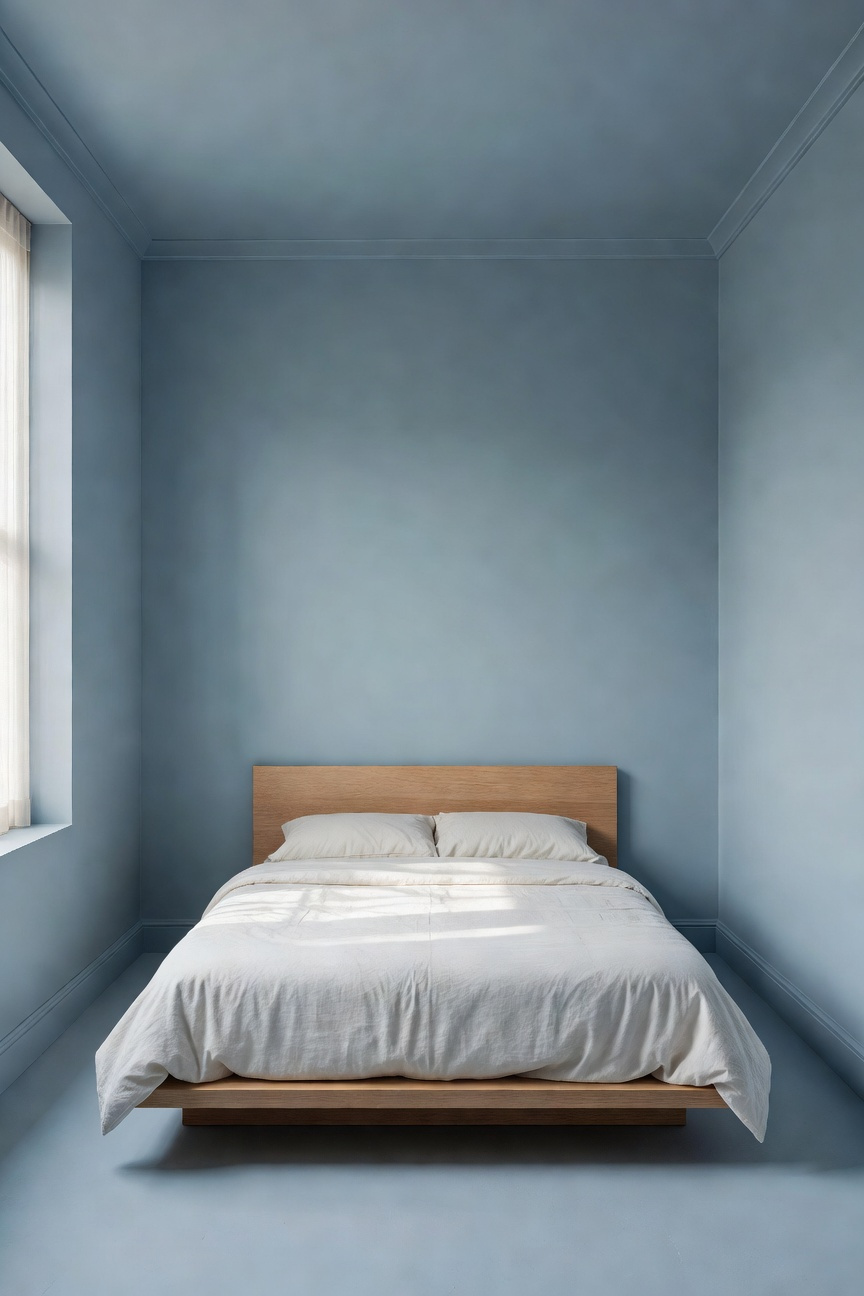
Conversely, the “continuous line” technique creates a seamless, limitless vertical flow. Simply paint your baseboards, walls, and crown molding the exact same shade. As a result, the eye glides upward without interruption. This effectively stretches the room’s perceived height. In fact, this approach mimics the immersive feeling of an art gallery, where walls recede rather than encroach.
However, this monochromatic approach does not mean erasing architectural character. Instead, we replace color contrast with “tactile monochrome” by manipulating the paint’s sheen. For example, apply a flat or matte finish to the walls to softly absorb light. Simultaneously, use a satin or semi-gloss finish on the trim.
This subtle shift allows natural light to highlight the molding’s curves and shadows. Therefore, the architectural details remain visible through texture rather than jarring color. Ultimately, this method creates a “cozy hug,” blurring the room’s corners to suggest infinite depth.
Reflective geometry acts as more than simple decoration; it is essentially visual engineering. Specifically, this discipline manipulates light paths to dissolve physical boundaries. In compact bedrooms, this strategy effectively creates a psychological sense of expanded volume. Consequently, the most powerful application is the “Window Illusion.” By placing a mirror directly opposite a window, you trick the eye into perceiving a second opening. Thus, the outdoors is pulled inside. This maximizes natural light and creates deep, virtual images.
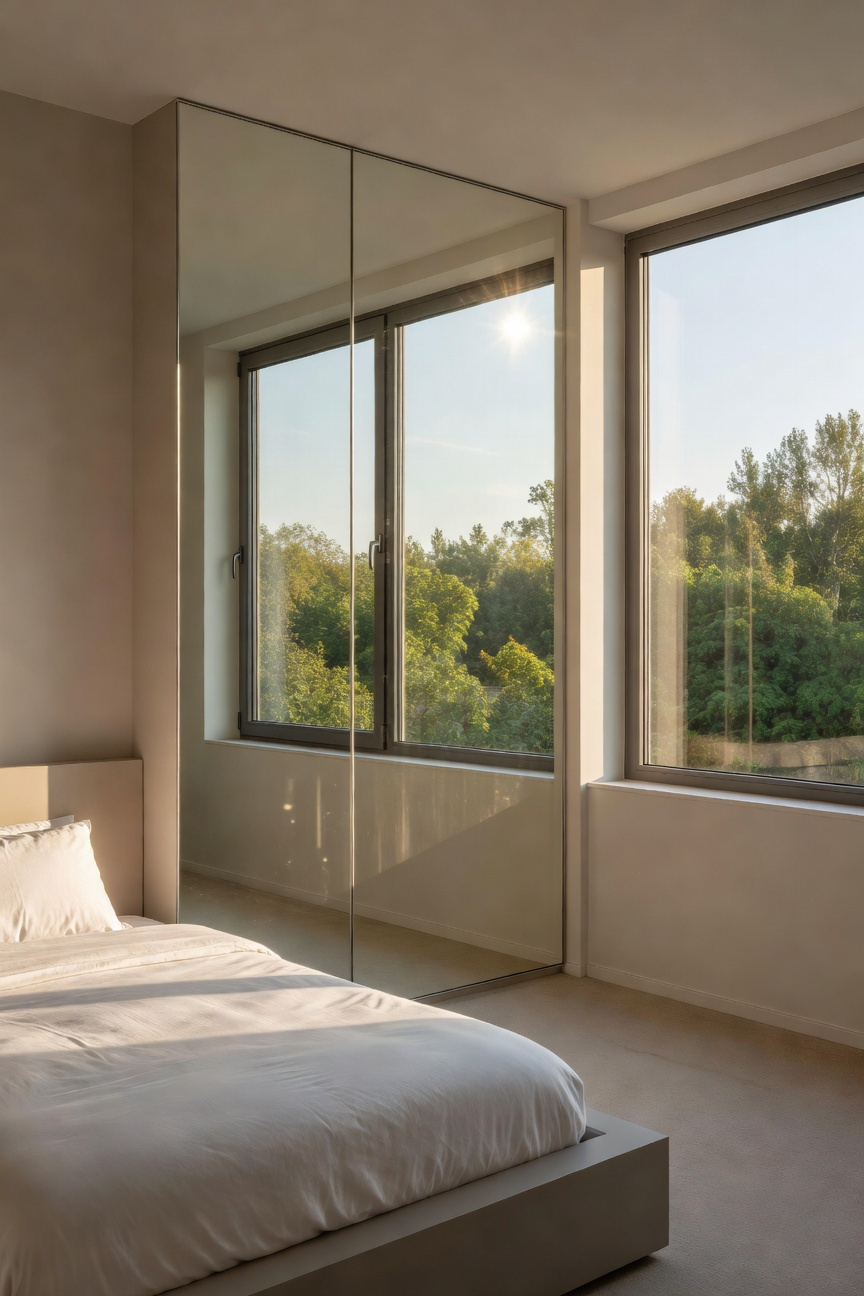
However, proper scale is critical to avoid a disjointed look. Professional designers adhere strictly to the “2/3 Rule” for harmony. A mirror should occupy roughly 75% of the width of the furniture below it. If smaller, the glass reads merely as decor. Conversely, correct sizing transforms it into an architectural extension. This creates a “float effect,” making heavy nightstands feel less anchored to cramped walls.
Furthermore, one must consider the sensory experience of “atmospheric shimmer.” Polished glass offers a cool, tactile contrast to warm bedding and natural wood. Therefore, it creates a balanced, breathable environment. Yet, placement requires strategy to prevent visual noise. Ideally, position mirrors in dark corners to “delete” the intersection of walls. Crucially, ensure the reflection targets a positive focal point, like a plant. Reflecting clutter effectively doubles visual stress, defeating the purpose of the design.
In compact sleeping quarters, heavy drapes often act as a visual hard stop. Conversely, sheer window treatments function as strategic diffusers. Technically, they convert harsh, directional beams into a distributed “luminous flux.” Consequently, this uniform glow fills dark corners without requiring extra floor lamps. By scattering incoming photons, you effectively reduce the high-contrast shadows that fragment small rooms.
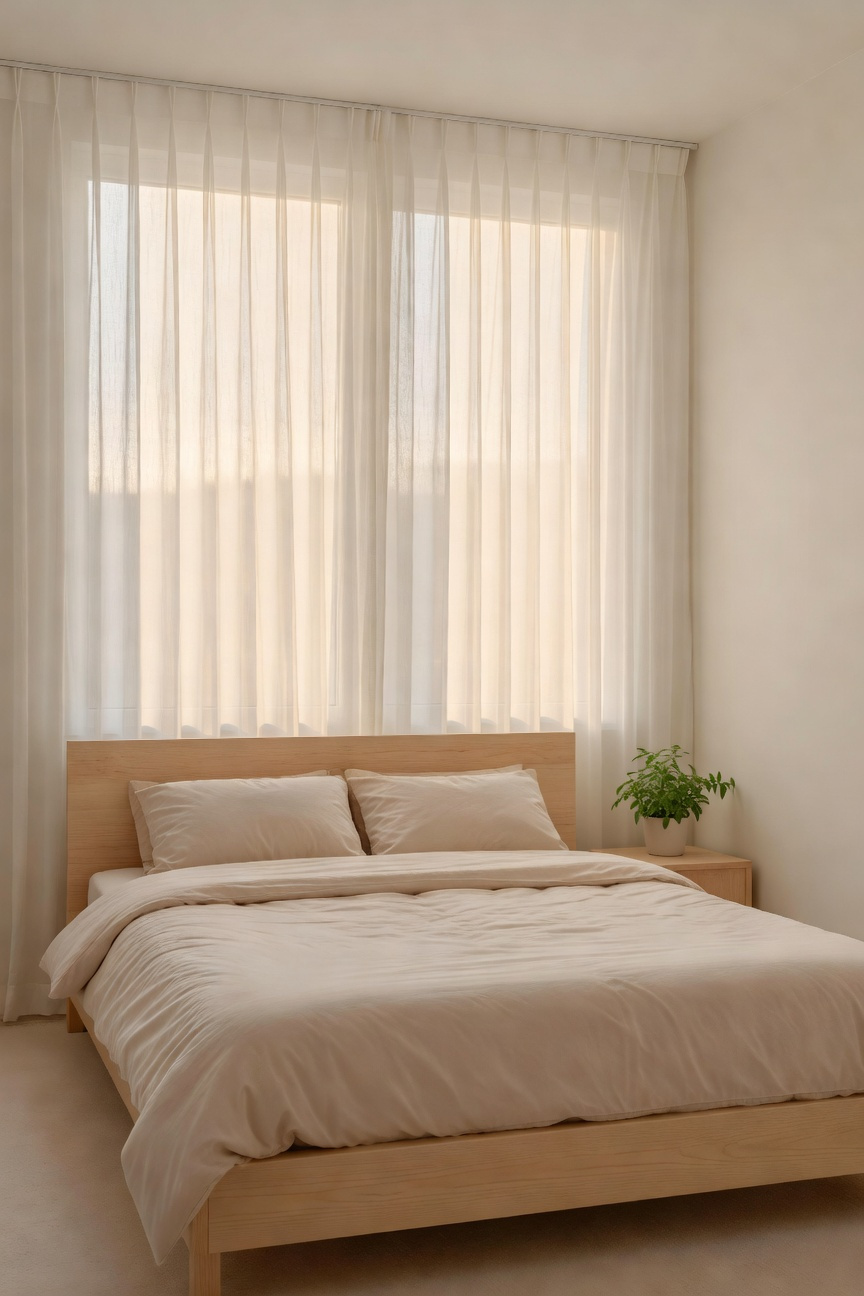
Moreover, this light diffusion alters the room’s perceived boundaries. Unlike opaque curtains, sheers create a soft transition zone. Therefore, the eye perceives a “continuum of space” rather than a confined box. Specifically, hanging these treatments high and wide maximizes this “receding wall” illusion. The window subsequently appears larger than its physical dimensions.
Material choice further dictates the atmosphere. For instance, linen sheers feature natural “slubs” in the weave. Thus, they create a dappled, organic texture perfect for warming clinical spaces. Alternatively, cotton-blend voiles offer a uniform, cloud-like aesthetic. Historically, fabrics like organza were used to add “visual weightlessness,” and that principle remains valid today.
However, functionality must balance with aesthetics. Experts recommend a “dual-track” system for versatility. A blackout layer ensures sleep hygiene, while the sheer layer maximizes daylight. Furthermore, sheers permit natural ventilation even when drawn. The fabric’s gentle movement prevents the air from feeling stagnant. Ultimately, this approach transforms a cramped space into a breathable sanctuary.
Moving from abstract planning to tangible curation requires a shift in perspective. Specifically, this phase is about strategic selection, not merely filling a room. First, consider the concept of visual transparency to maintain a sense of openness. When looking for small bedroom inspiration, one must look past the physical dimensions to the emotional impact of the furniture. Imagine the room’s floor as a flowing body of water. Heavy, solid furniture acts as a visual dam, stopping the flow. Consequently, select “leggy” pieces raised on slender wooden or metal dowels. This allows the eye to trace the floor continuously underneath. Thus, the brain perceives the room as significantly larger.
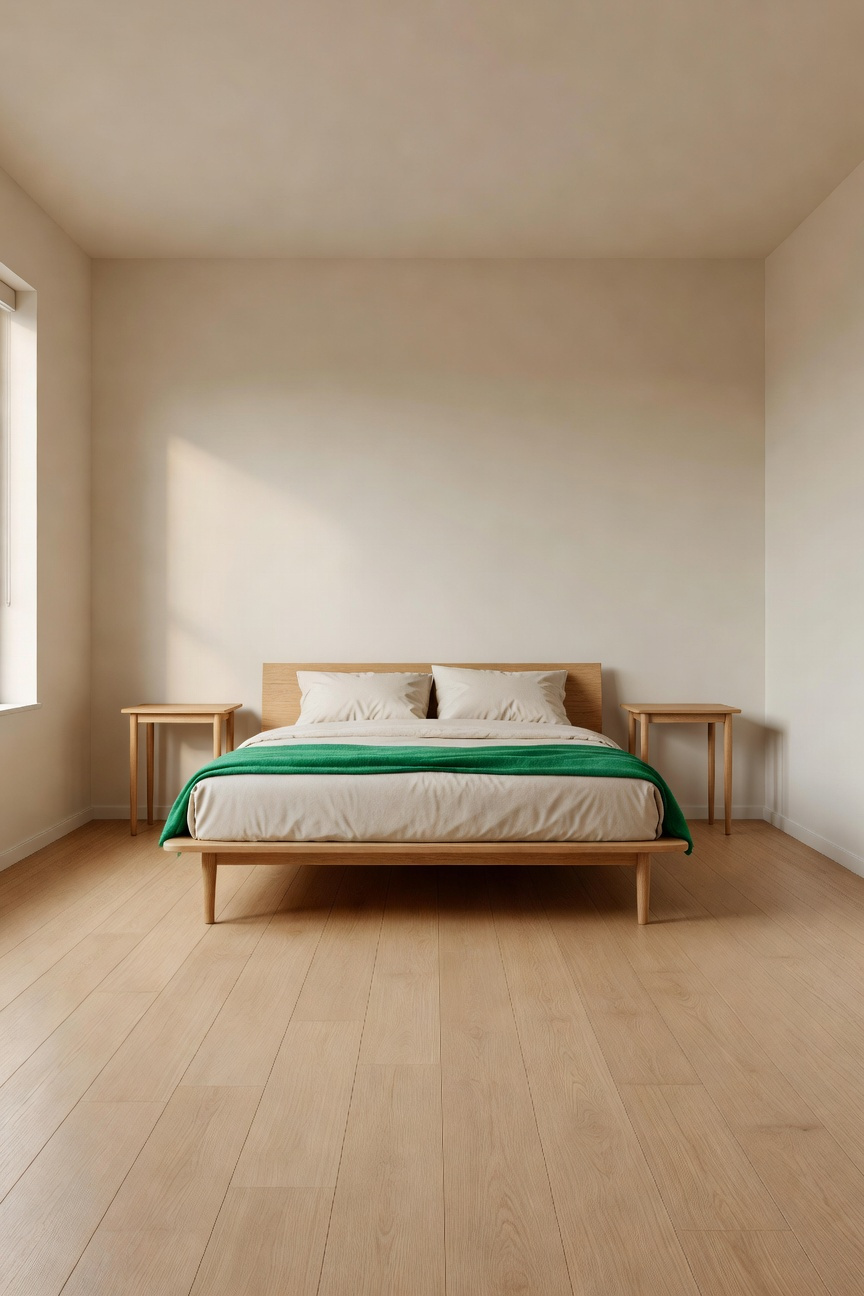
Furthermore, avoid the “dollhouse effect” caused by cluttering the space with miniature items. Instead, embrace the “Hero Piece” paradox. Surprisingly, one high-quality, substantial bed often makes a room feel grander than small, timid furniture. By establishing this hierarchy, you draw the eye upward. This effectively utilizes the room’s vertical volume. However, aesthetics must never impede physical movement. Anthropometrically, you need at least 18 inches of clearance to walk comfortably. Therefore, consider “kinetic” furniture that adapts to your needs. For instance, a secretary desk with a fold-down top creates space when unused.
Finally, prioritize material honesty and sensory proximity. In compact rooms, you live in constant physical contact with every surface. As a result, choose ergonomically soft forms over sharp, cold angles. A bed frame wrapped in tactile linen offers necessary psychological comfort. Ultimately, this creates an ecosystem that feels curated rather than caged.
In small bedroom design, perceived “heaviness” often matters more than physical dimensions. Specifically, this concept is known as the Theory of Visual Weight. The human brain estimates total room size primarily by scanning the visible floor area. Therefore, furniture sitting flush against the ground creates a visual “dead end.” Conversely, choosing pieces with slender legs reveals the flooring underneath. Consequently, this triggers “perceptual completion,” where the brain mentally fills in the missing space. Surprisingly, a queen bed on legs often feels smaller than a solid twin base.
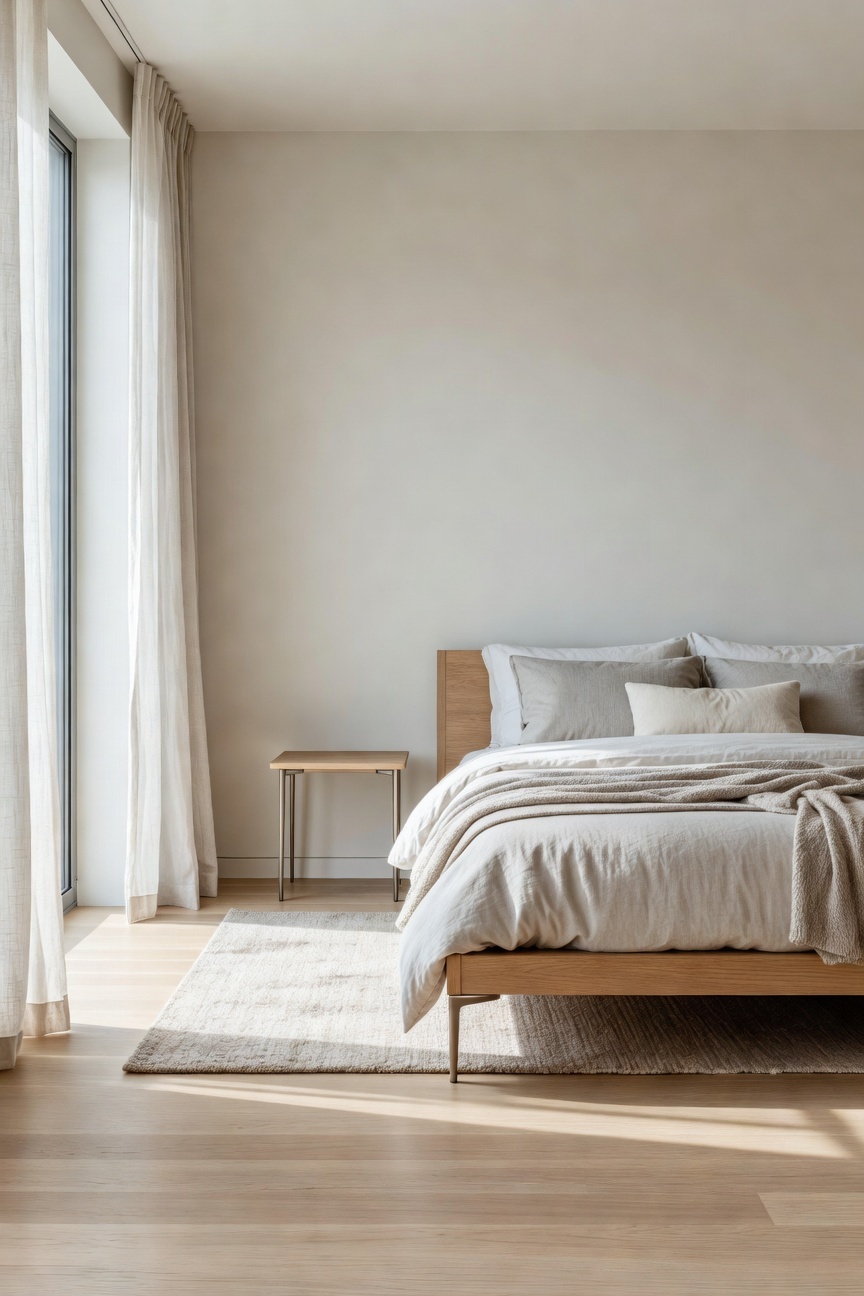
Furthermore, these structural choices influence how light interacts with the room. Solid furniture creates blocky “shadow anchors” that visually weigh down the space. In contrast, elevated designs allow natural light to flow freely across the floor. Thus, you eliminate dark corners and create necessary “atmospheric lift.” This transparency significantly reduces the sense of claustrophobia common in tight quarters.
However, balance remains key to avoiding a “floaty” or unstable atmosphere. Ideally, aim for a proportional harmony where legs occupy roughly half the piece’s height. Additionally, consider a 70/30 split for the room’s furniture. For instance, place the bed on spindles but ground a nightstand for visual stability. Finally, elevated furniture improves airflow and simplifies cleaning. Ultimately, a visible floor suggests a fresher, more breathable environment essential for rest.
Many homeowners mistakenly believe that compact spaces require tiny furniture. However, filling a small room with miniature chairs and dressers actually creates visual clutter. Instead, the “One Big Piece” principle suggests anchoring the space with a single, grand bed. Psychologically, this approach reduces cognitive load through the concept of Gestalt grouping. Consequently, the eye perceives a unified sanctuary rather than jumping between dozens of fragmented objects.
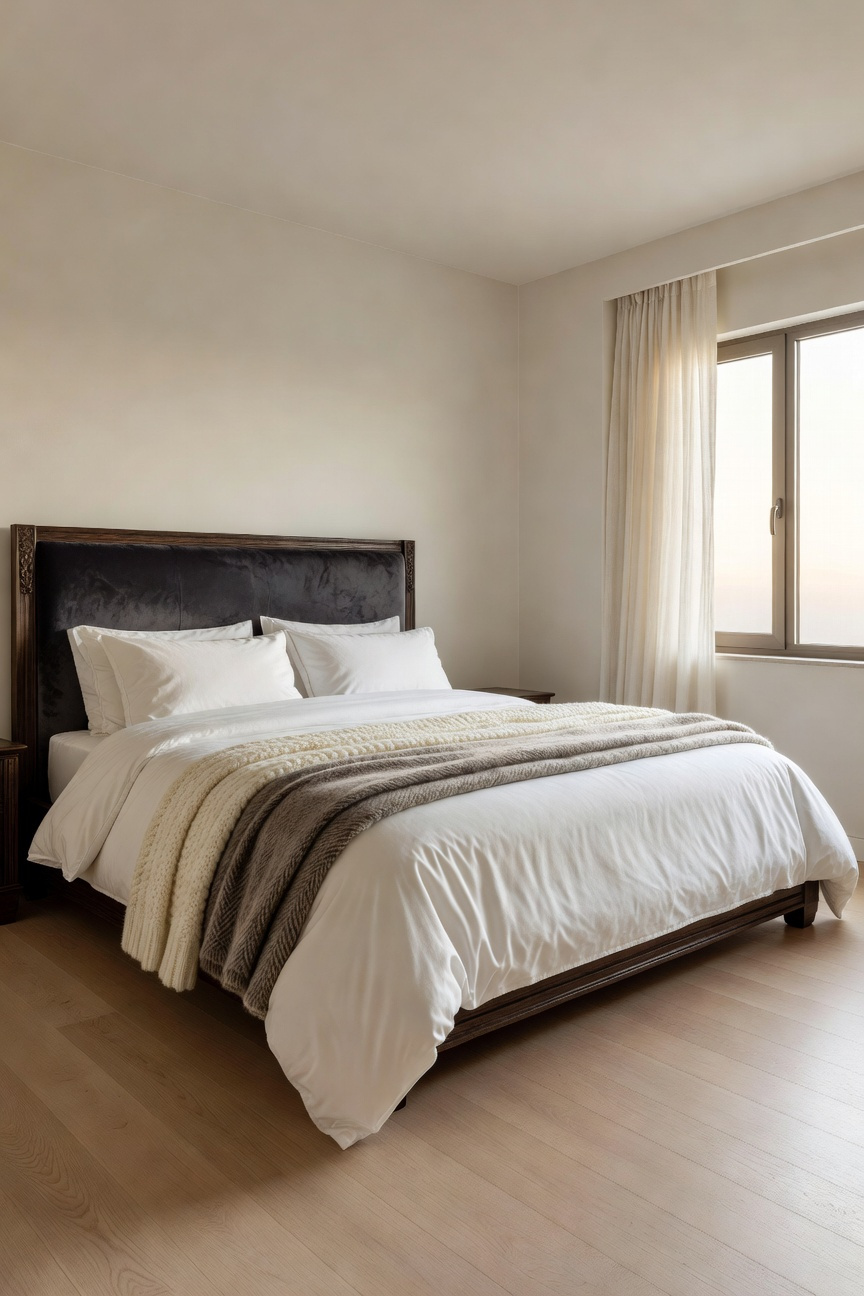
This dominant element transforms a cramped room into a cozy “bedwomb.” Historically, this effect mimics the “blissful sequestration” found in French castle alcoves. To achieve this look, treat your bedroom like a luxury ship’s cabin. Specifically, replace “leggy” nightstands and cluttered dressers with sleek built-ins or floating shelves. A grand bed acts as a deep architectural bassline, grounding the space beautifully.
Naturally, you must maintain functionality despite the furniture’s size. Therefore, ensure at least 24 inches of walking clearance remains on two sides. Furthermore, avoid bulky footboards to keep the visual flow uninterrupted and open. Ultimately, sacrificing general utility for specific grandeur creates a space that feels intentional, plush, and hushed.
Traditionally, bedside furniture was defined by bulk and concealment. These heavy units, once rooted in the era of chamber pots, often clutter compact spaces. However, floating architecture represents a significant shift toward “visual lightness.” Historically, visionaries like George Nelson and Børge Mogensen championed this specific approach. Specifically, they stripped away heavy legs to let the bedroom aesthetic finally breathe.
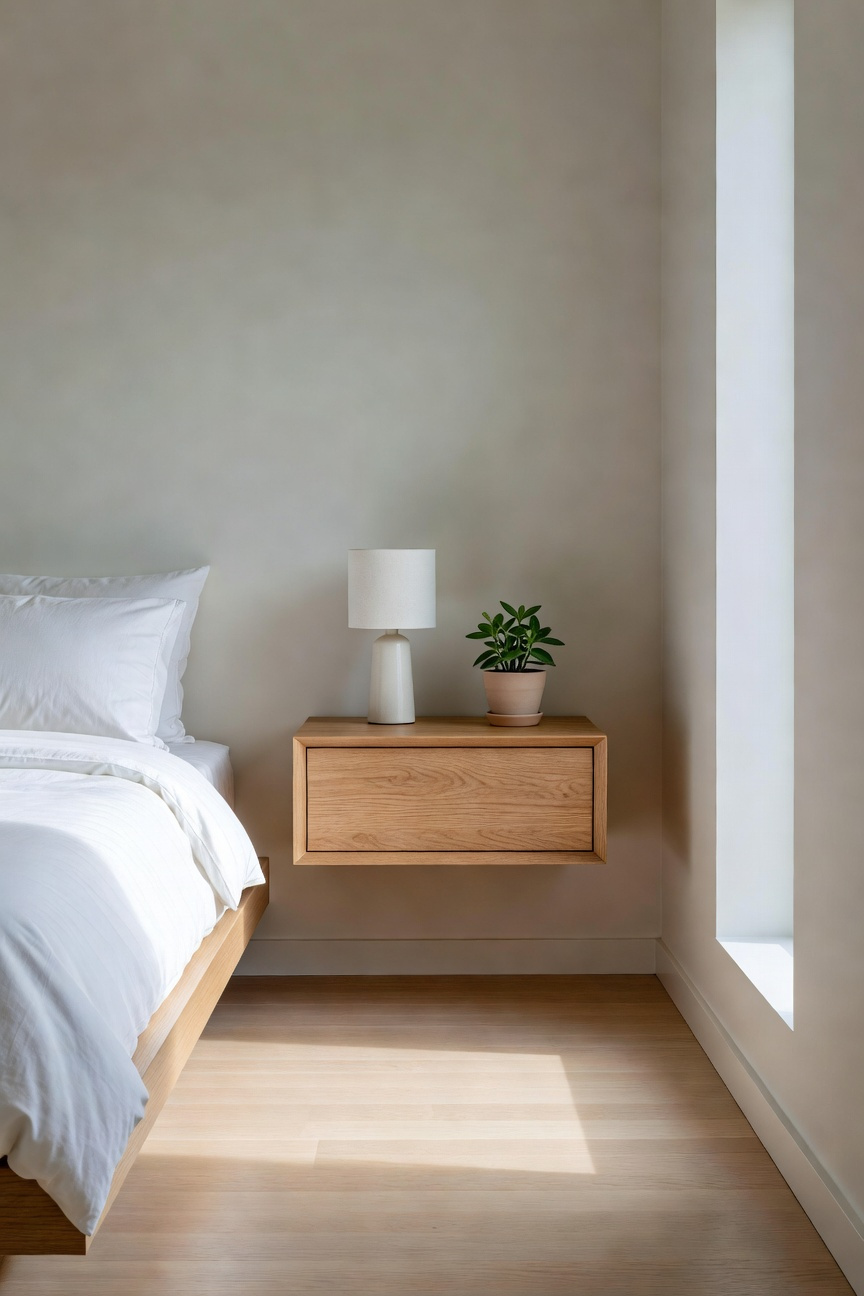
In small bedroom design, perception is everything. Therefore, maintaining an “uninterrupted floor line” is a critical spatial strategy. When furniture legs do not break the floor surface, the eye sees more area. Consequently, the brain registers the room as expansive rather than restrictive. In fact, this perceptual transparency reduces visual noise significantly. It creates a sense of serenity that lower-quality, cluttered arrangements cannot match.
Functionality remains paramount in this minimalist approach. For instance, superior units utilize a “French cleat” for installation. This invisible, 45-degree interlocking bracket distributes weight evenly across wall studs. Furthermore, wall-mounting allows for total ergonomic customization. You can position the nightstand perfectly aligned with your mattress’s top edge. Thus, reaching for a glass of water becomes an effortless movement. Ultimately, this design choice merges structural stability with an airy, sophisticated atmosphere.
In small bedrooms, freestanding wardrobes often create unwanted visual clutter. Consequently, intelligent joinery and bedroom storage ideas for small spaces shift the focus from furniture to architecture. This concept, rooted in mid-century design, absorbs storage directly into the room’s structure. Thus, the space returns to a clear, liberated volume for its inhabitants.
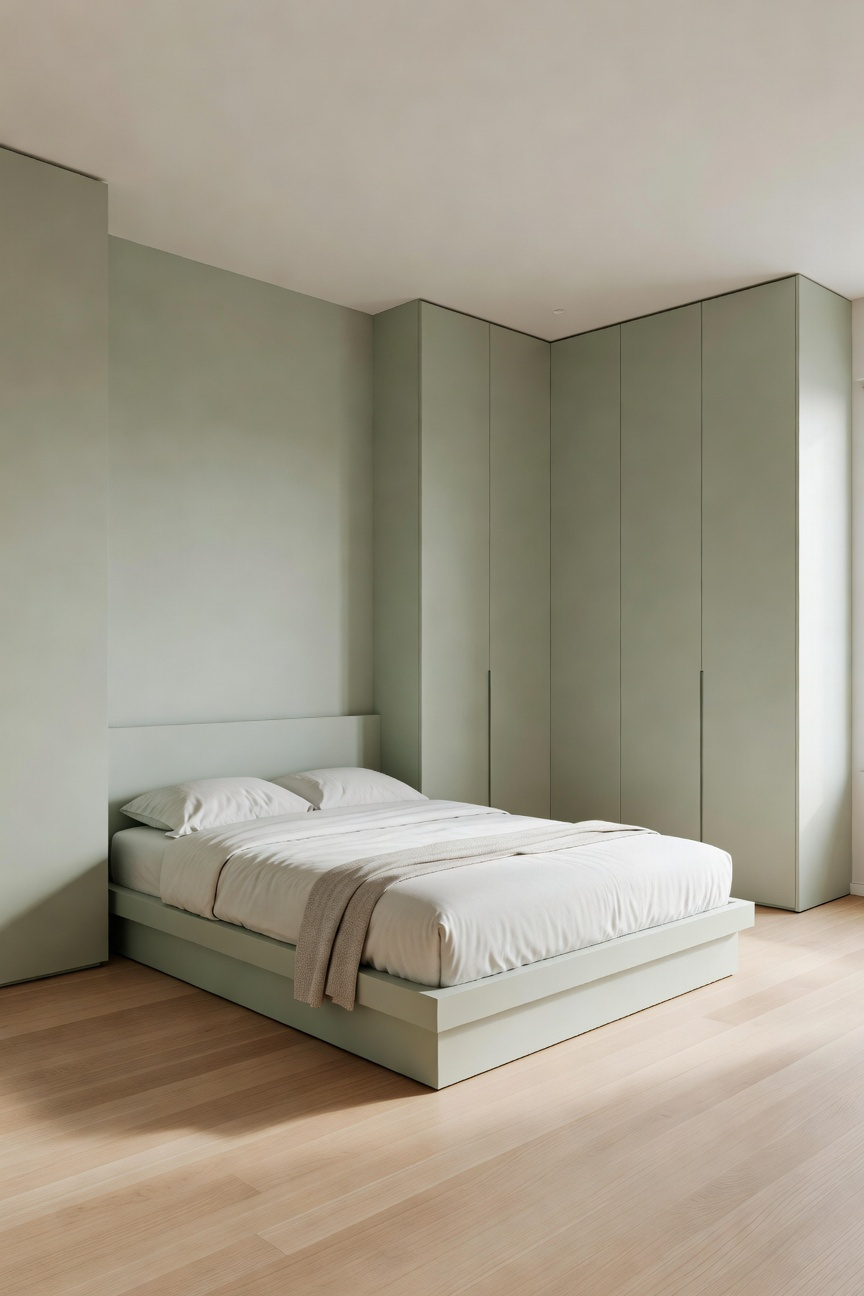
To achieve true invisibility, technical precision is paramount. Specifically, designers often employ the “Monochrome Rule,” painting bespoke joinery to match the walls perfectly. This technique allows bulky cabinets to recede into peripheral vision. Additionally, craftsmen use “shadow gaps” instead of heavy baseboards. These recessed lines make the entire structure appear to float, significantly lightening its visual weight.
Beyond aesthetics, this approach profoundly impacts psychological comfort. For instance, removing handles via “push-to-open” mechanics eliminates the final visual cue of a closet. Therefore, the brain processes the surface as a solid, soothing wall. This reduction in visual noise effectively lowers cognitive load. Ultimately, these seamless, matte-finished surfaces create the serene, architectural “hush” that is essential for restorative sleep.
Originally, headboards merely protected sleepers from cold drafts. However, modern design views them quite differently. Specifically, mid-century pioneers like George Nelson re-imagined the headboard as a sophisticated “management system.” In compact spaces, this functional shift is vital.
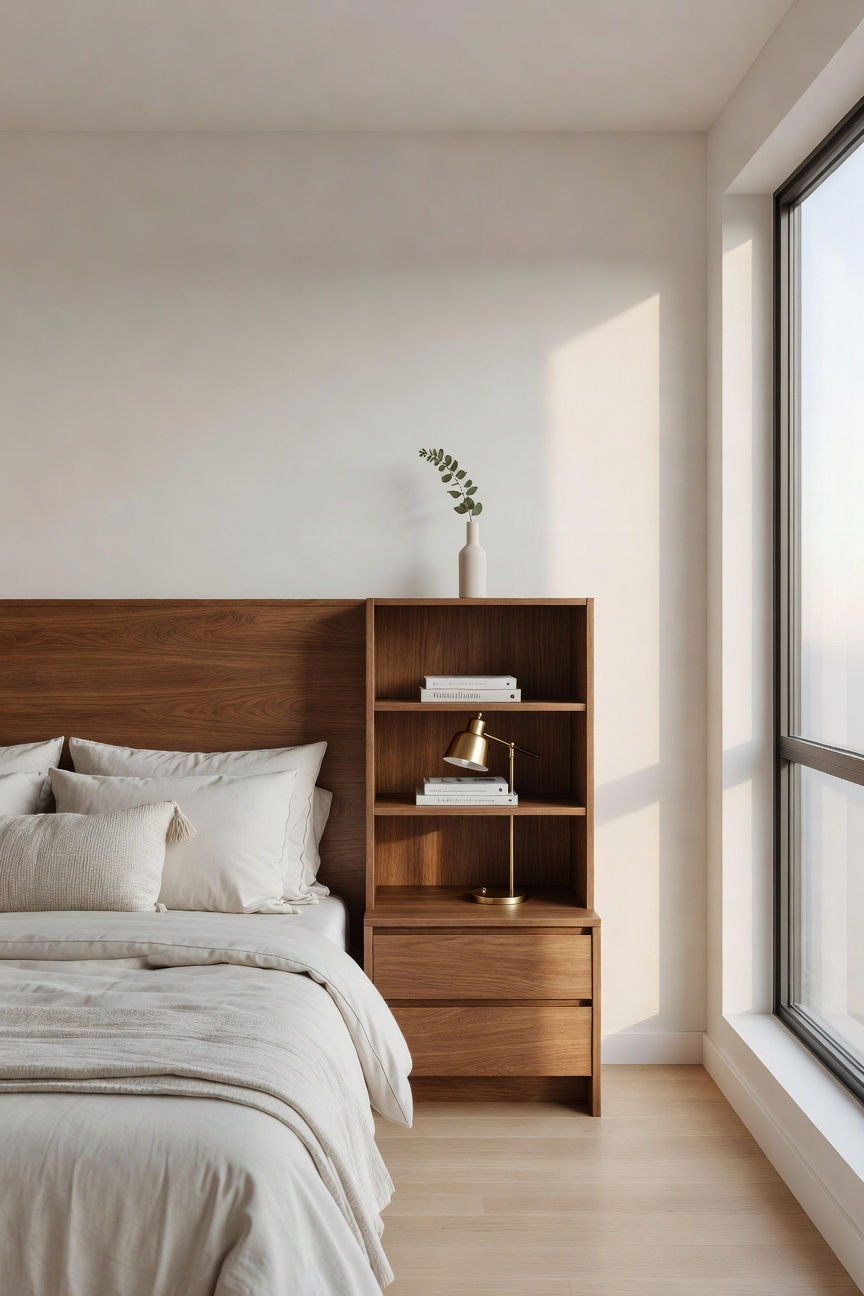
Psychologically, visible clutter generates “visual noise.” Consequently, seeing messy nightstands can spike cortisol levels right before sleep. Therefore, a storage headboard serves as a necessary architectural filter. It effectively hides books and cables behind sleek, sliding panels. Furthermore, this “closed” storage combats the Zeigarnik Effect, signaling to your brain that the day is finished.
Structurally, this design choice maximizes the “dead space” behind your mattress. Thus, you eliminate the need for bulky side tables requiring 30-inch clearances. Ideally, aim for a shelf depth of 8 to 12 inches. Anything deeper often feels oppressive in a small room. Additionally, consider floating designs to maintain visible floor space, making the room appear larger.
Finally, consider the sensory experience. Modern iterations often feature acoustic wood slats to dampen environmental noise. Moreover, integrated warm-tone LEDs support natural circadian rhythms better than harsh bedside lamps. Ultimately, this approach replaces chaotic wires with the serene silence of Scandinavian minimalism.
Counter-intuitively, adding “more” texture actually makes a small bedroom feel significantly larger. Often, smooth surfaces like standard drywall create visual “dead-ends,” reinforcing a sense of confinement. Therefore, we must introduce texture to create architectural depth. Specifically, materials like limewash paint or slubby linen generate thousands of micro-shadows. Consequently, the wall creates a detailed gradient, tricking the brain into perceiving more space. The surface no longer feels like a hard limit, but rather a receding plane.
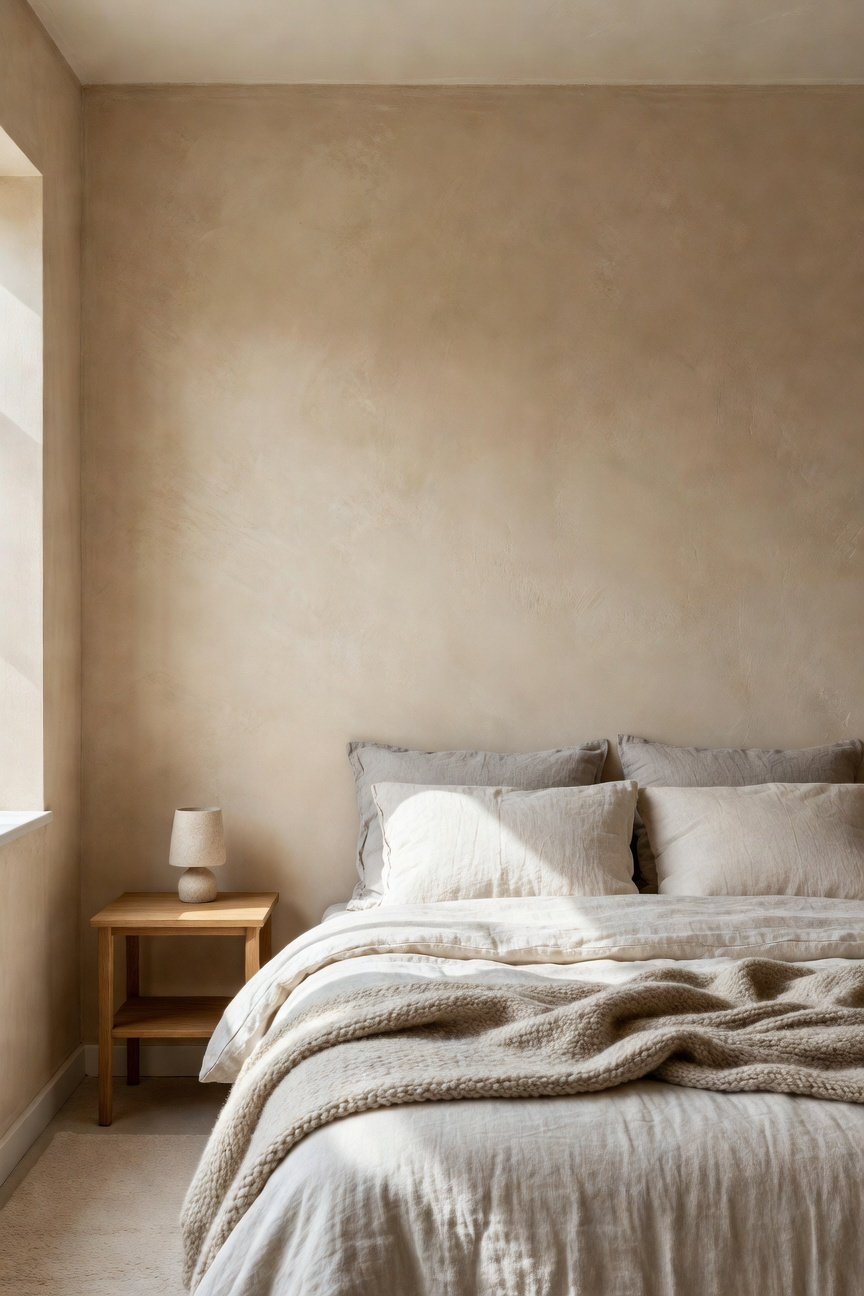
Furthermore, this approach reduces “spatial friction.” In a compact room, hard surfaces can subconsciously feel aggressive or restrictive. Thus, we apply “sensory softening” by layering tactile materials like sheepskin or brushed cotton. When physical boundaries are blurred, the room feels like an infinite sanctuary rather than a finite cell.
Additionally, successful *hygge* relies heavily on “monochromatic layering.” This involves using various textures within a single color family, such as warm stone. For example, you might pair a velvet pillow with a matte wall and a wool rug. Because there are no jarring color shifts, the eye moves seamlessly across the room. Effectively, this expands the room’s perceived volume without adding visual noise.
Finally, consider the acoustic benefit of these layers. Heavy textures absorb the “flutter echoes” that typically plague small, boxy rooms. As a result, the space sounds quieter and feels less enclosed. Ultimately, you are replacing flat boundaries with inviting, three-dimensional depth.
Dimensionality in a compact bedroom often requires a strategic battle against visual flatness. Specifically, synthetic fabrics tend to reflect light uniformly, creating a harsh, clinical atmosphere. In contrast, natural materials like linen and wool introduce necessary depth through their unique physical structures. For instance, linen features natural “slubs,” or slight irregularities within the flax yarn. Consequently, these tiny imperfections catch the light at various angles, creating a subtle, vibrating texture. Simultaneously, wool fibers possess a natural crimp that generates millions of microscopic shadows. Therefore, this interplay prevents a light-colored small room from feeling “floaty” or ungrounded.
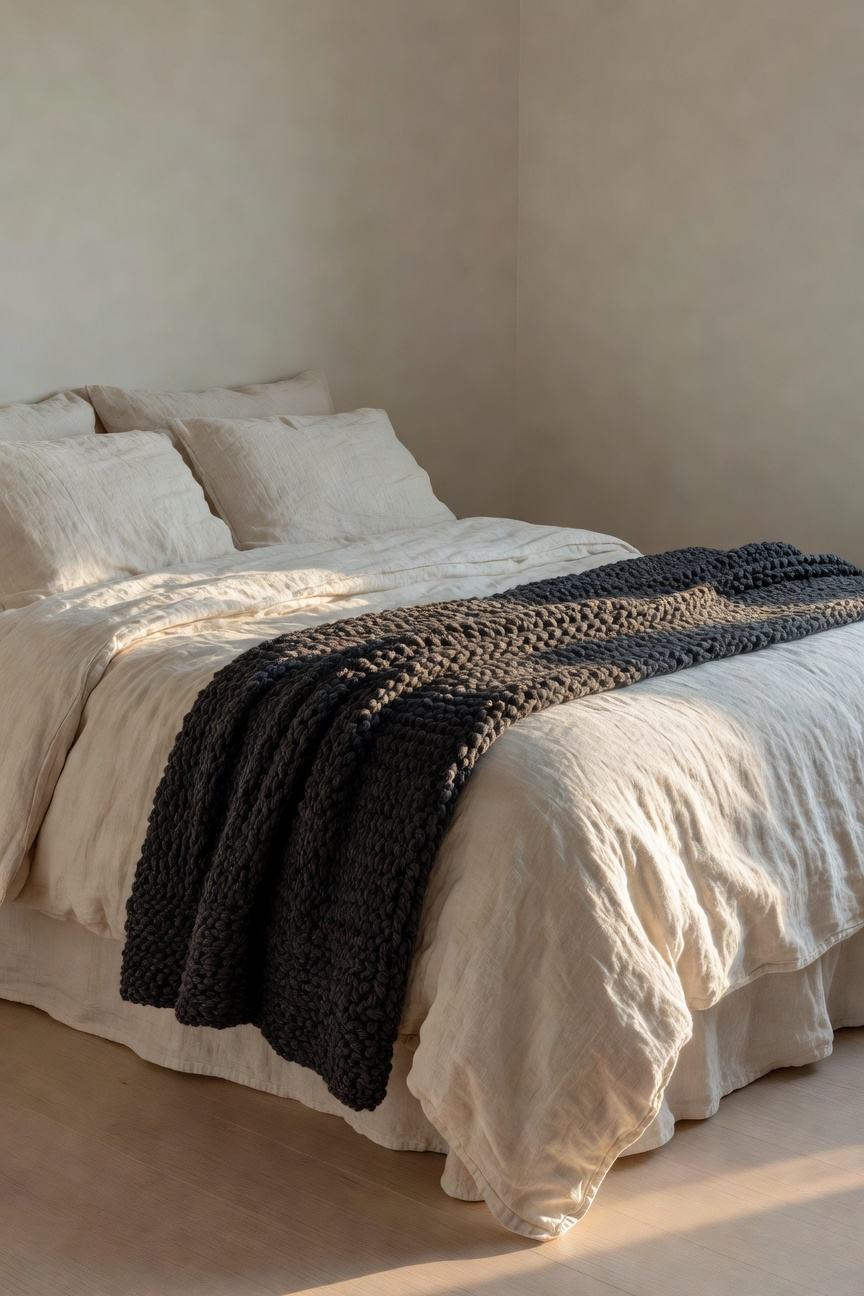
Furthermore, these materials actively alter the room’s sensory experience beyond mere aesthetics. Notably, high-quality wool acts as an acoustic sponge. It absorbs sound to reduce the “boxy” echo common in small spaces. Thus, the room feels quieter and, psychologically, significantly larger. To achieve the perfect balance, designers often recommend a specific 70/30 ratio. Essentially, prioritize breathable linen for 70% of the textiles to diffuse sunlight softly, much like a photographer’s filter. Then, introduce heavy, textured wool for the remaining 30% to provide a tactile anchor. Ultimately, this historical “Linsey-woolsey” synergy creates a sophisticated, biological comfort that synthetic alternatives simply cannot replicate.
Placing a small rug in a compact bedroom often feels intuitive. However, this common instinct actually fragments the floor plane. Specifically, the human brain constantly scans for boundaries to calculate space. When your eye hits a transition from rug to bare floor, it registers a visual stop. Consequently, these breaks increase cognitive load, making the space feel busy and disjointed.
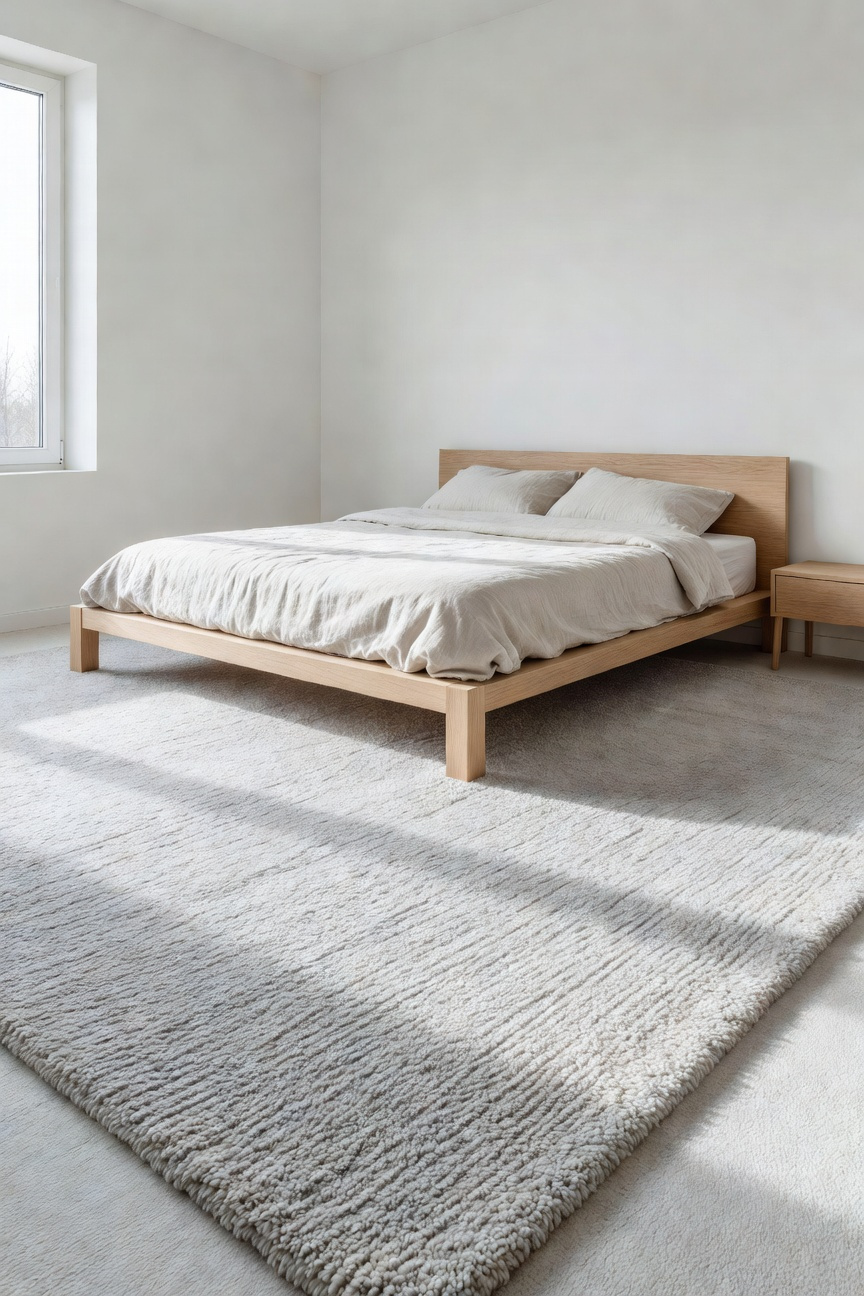
Conversely, an oversized rug creates a powerful illusion of continuity. By covering nearly the entire floor, you effectively “reset” the room’s boundaries to the rug’s edges. Therefore, the brain perceives one unified surface rather than disjointed parts. Ideally, aim for a “governing surface” where the bed and nightstands sit entirely on the textile. This anchors the furniture, preventing the cramped sensation of floating pieces.
Furthermore, the gap between the rug and the wall is critical. Standard design rules often suggest a large 18-inch border. Yet, in small bedrooms, you should shrink this perimeter to 8 or 10 inches. This tighter border acts as a frame, creating a “telescoping” effect that visually pushes the walls outward.
Finally, consider the sensory impact of scale. A large, natural wool rug acts as a massive acoustic dampener. Surprisingly, studies show that quieter rooms are perceived as more spacious and airy. Thus, by softening the “slap-back” of sound, you significantly increase the sense of luxury and volume.
In Scandinavian design, we rarely view a small bedroom as a single, monolithic block. Instead, we treat it as a collection of micro-environments defined by “pools of light.” Specifically, lighting zones act as distinct “virtual walls.” These boundaries signal the brain to switch modes from active work to passive rest without physical partitions.
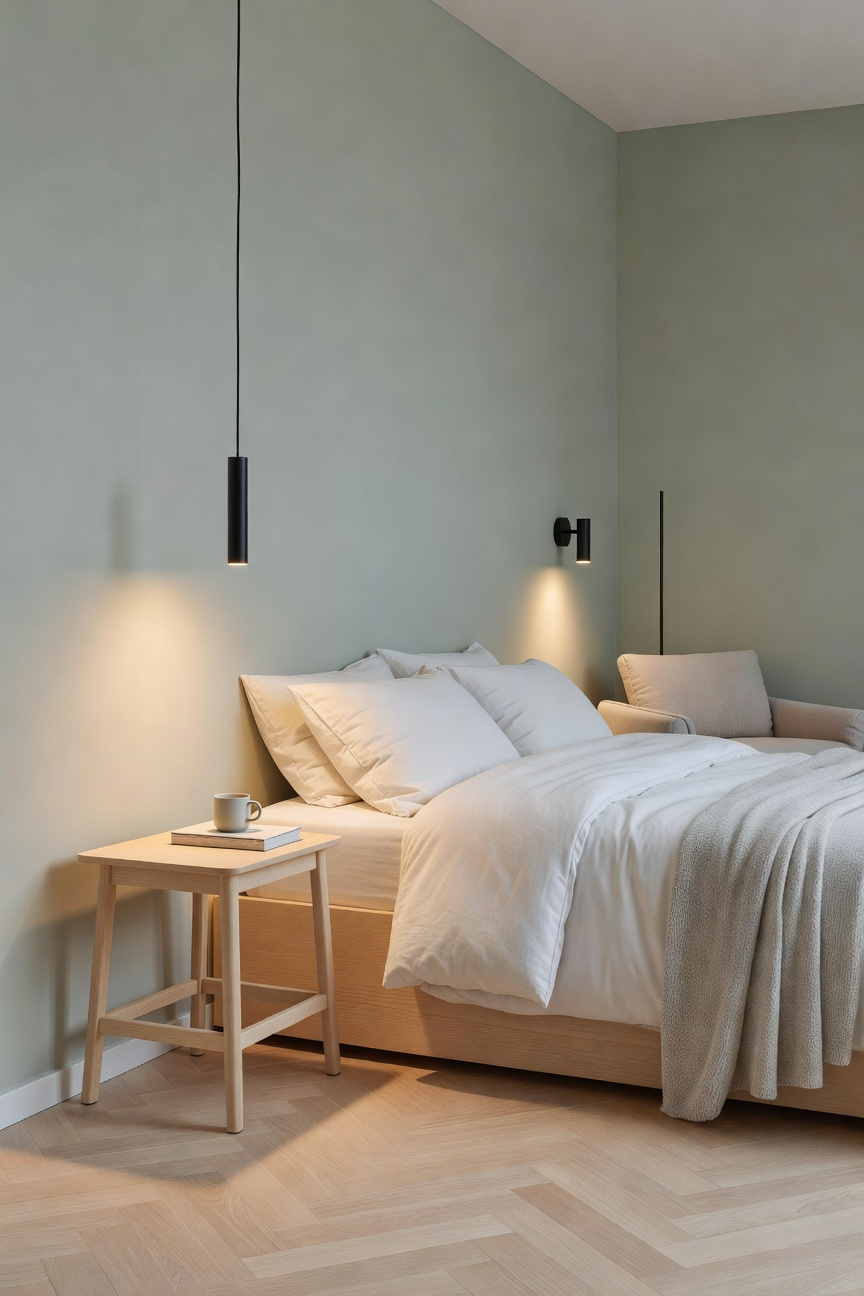
For instance, a low-hung pendant over a bedside table creates a localized “halo.” Consequently, this creates a psychological sense of refuge. By keeping the room’s periphery in soft shadow, you reduce visual clutter and mental load. Furthermore, these fixtures serve as “spatial jewelry.” Because they hang vertically, they reclaim wall space and allow furniture to remain minimal.
However, creating these zones requires technical precision. To avoid glare, mount task-oriented sconces so the shade sits at chin height. This is usually 30–36 inches above the mattress. Additionally, you must layer your light temperatures. Therefore, utilize warm white bulbs (2700K) in sleeping zones to encourage melatonin production. Conversely, use cooler light for vanity areas to promote alertness.
Finally, lighting anchors your furniture. A pendant suspended over a corner chair instantly grounds it. Thus, a simple seat transforms into a dedicated reading nook. Even exposed cords function as a “line of design,” guiding the eye through your personal sanctuary.
In the design of a compact bedroom, raw wood serves as a vital psychological stabilizer. Specifically, these “Natural Anchors” prevent a small space from feeling transient or unmoored. According to neuroarchitecture, the presence of untreated timber directly activates the parasympathetic nervous system. Consequently, this triggers a “rest and digest” response that lowers heart rate and cortisol levels. Unlike cold metal or glass, wood possesses low thermal conductivity. Therefore, it remains warm to the touch, offering immediate sensory comfort that makes a room feel safe.
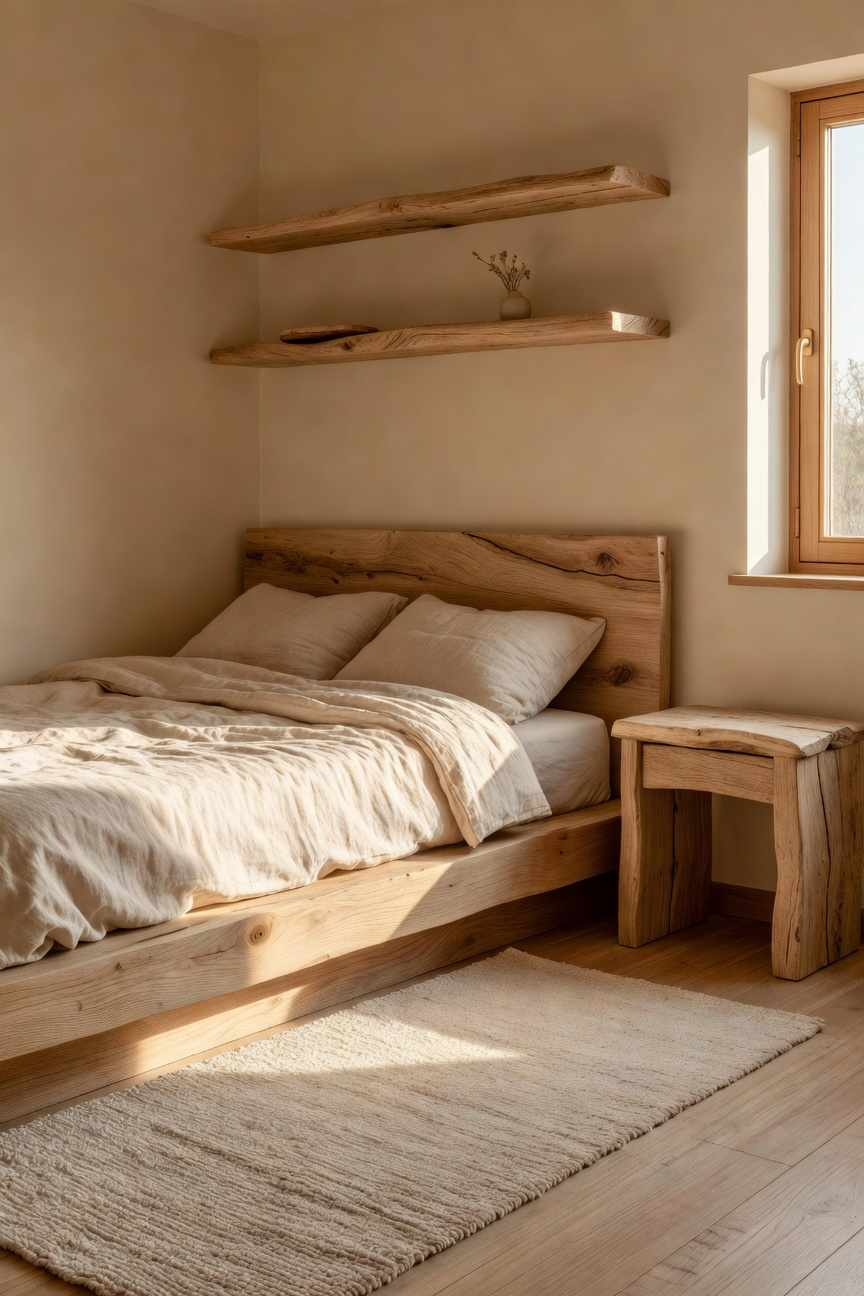
Furthermore, raw wood functions as a living entity within the room. Because it is hygroscopic, the material naturally regulates humidity by absorbing and releasing moisture. In addition, species like Cedar emit phytoncides. Remarkably, these natural compounds are proven to reduce anxiety and deepen sleep through olfactory memory. Visually, we draw inspiration from George Nakashima’s “Modern Primitive” philosophy to balance the space. For instance, a live-edge nightstand acts as a “grown” focal point. Because these pieces carry significant visual weight, they ground the room’s design without adding physical bulk. Ultimately, a raw wood headboard creates a horizontal “gravity point.” Thus, the room feels curated, permanent, and deeply restful.
True Scandinavian design transforms organization from a static noun into an active verb. In compact quarters, visual clutter acts as constant “peripheral noise.” Consequently, the brain struggles to rest, which instinctively increases cortisol levels. To combat this, we must practice a concept called “environmental mastery.” Specifically, this involves intentional constraint through the “One-In, One-Out” rule. Thus, the room remains a curated sanctuary rather than a chaotic warehouse.
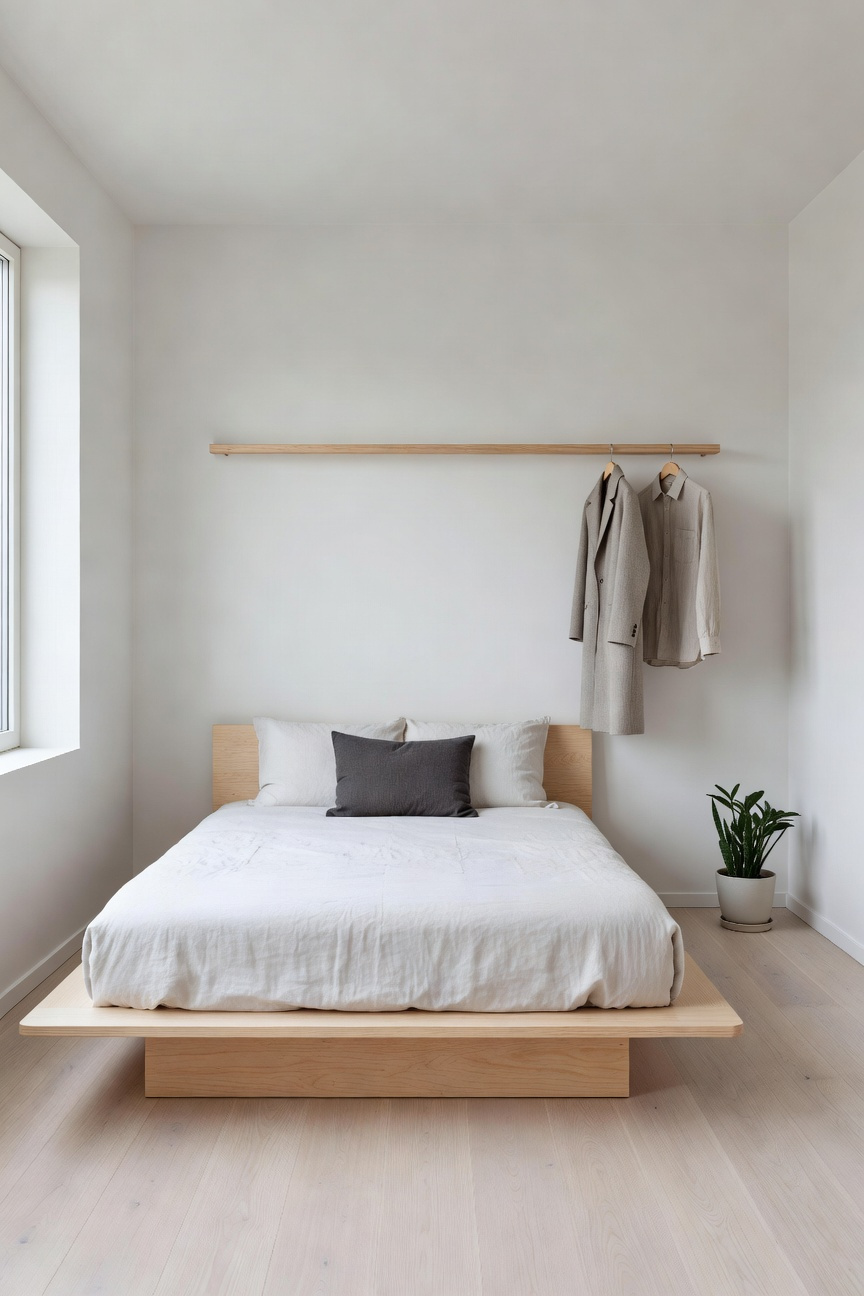
Furthermore, the daily “moving meditation” of tidying requires “zero-friction storage.” For example, utilize accessible hooks instead of complex, hidden hangers. Ideally, returning an item to its home is effortless. Beyond storage, the bed itself dictates the room’s atmosphere. Since the bed consumes most floor space, making it is essential. In fact, this morning ritual serves as a critical architectural reset. Adding a weighted blanket or linen textures introduces necessary tactile variety.
Finally, we must prioritize “aesthetic sustainability” through sensory layering. This approach aligns with modern minimalist bedroom design principles established by designers like Dieter Rams. Establish a “digital sunset” by removing all electronic devices at night. Instead, use warm pools of light to create an “inner sanctum.” Ultimately, these habits transform a small room into a vast, restorative retreat.
In tight quarters, horizontal surfaces often become cluttered battlegrounds. However, the “Breathable Surface” strategy effectively reclaims this necessary space. Specifically, this approach relies on the neuro-psychological Rule of Three. The human brain naturally seeks patterns. Consequently, three is the minimum number required to create a recognizable visual rhythm. A single item often feels lonely or accidental. Conversely, two items create a rigid, stuffy symmetry. Therefore, a trio engages the eye without overtaxing it.
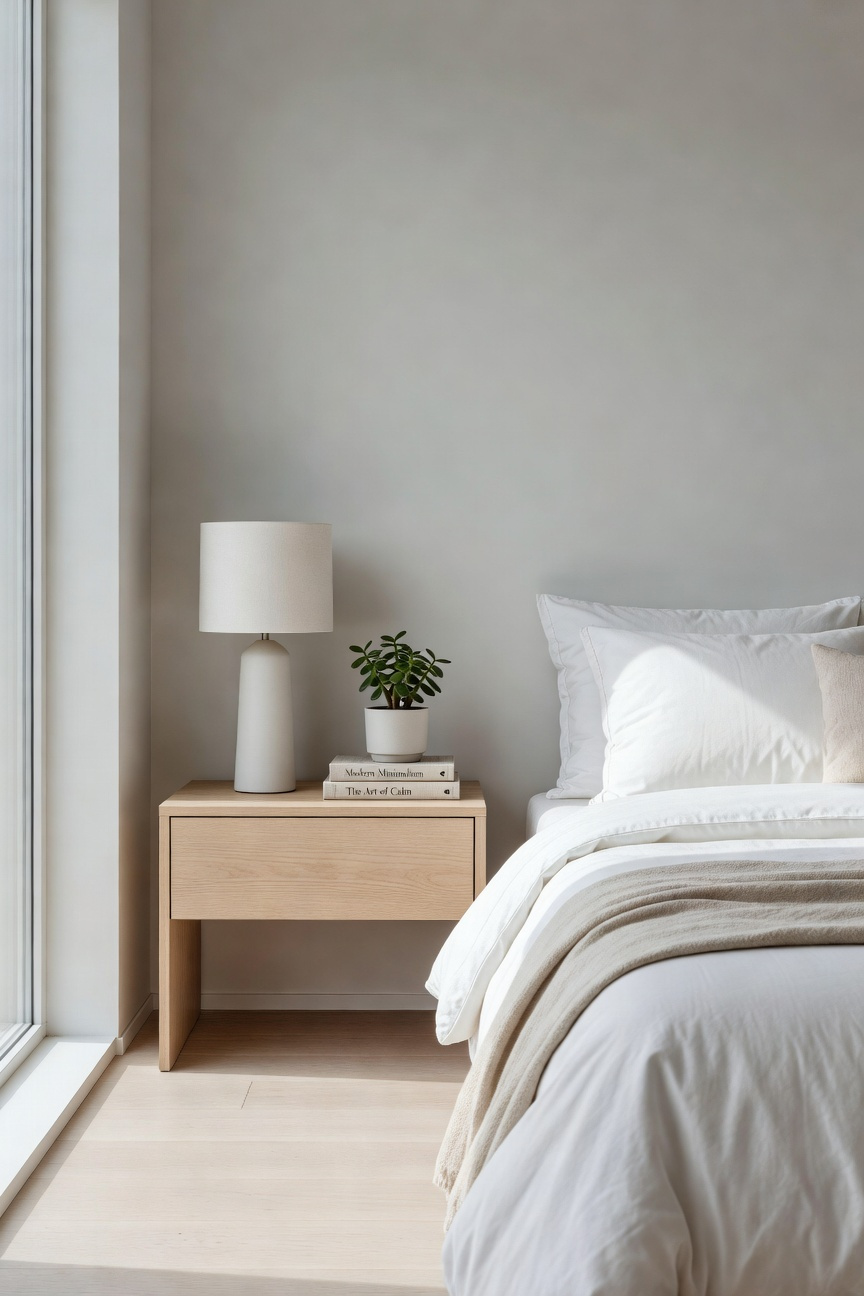
Furthermore, true breathability requires significant negative space. Ideally, apply the Rule of Two-Thirds to your bedside table or dresser. You should occupy only that portion of the surface with your decor. Thus, the remaining third acts as the room’s “visual lungs.” This empty space prevents overwhelming visual noise. As a result, your curated items stand out as intentional design features rather than clutter.
To avoid a flat appearance, vary the dimensions within your trio. First, establish an anchor, like a slender lamp, to draw the eye upward. Next, add weight with a grounded element, such as a stack of books. Finally, introduce “soul” with an organic shape. For instance, a small ceramic bowl breaks hard lines and adds necessary softness.
Moreover, consider material interaction to manage sensory depth. Instead of bold colors, mix natural textures like unvarnished wood and soft linen. Ultimately, this limit of three acts as a strict clutter filter. It transforms a storage unit into a restful sanctuary.
The concept of the “uncluttered sanctuary” represents a sophisticated evolution in interior philosophy. Specifically, it prioritizes “invisible technology” to restore the bedroom’s biological function: rest. Today, the ultimate luxury is the “Dumb Bedroom,” where technology exists but remains unseen. Therefore, the primary goal is stripping away the digital age’s visual noise to promote deep relaxation.
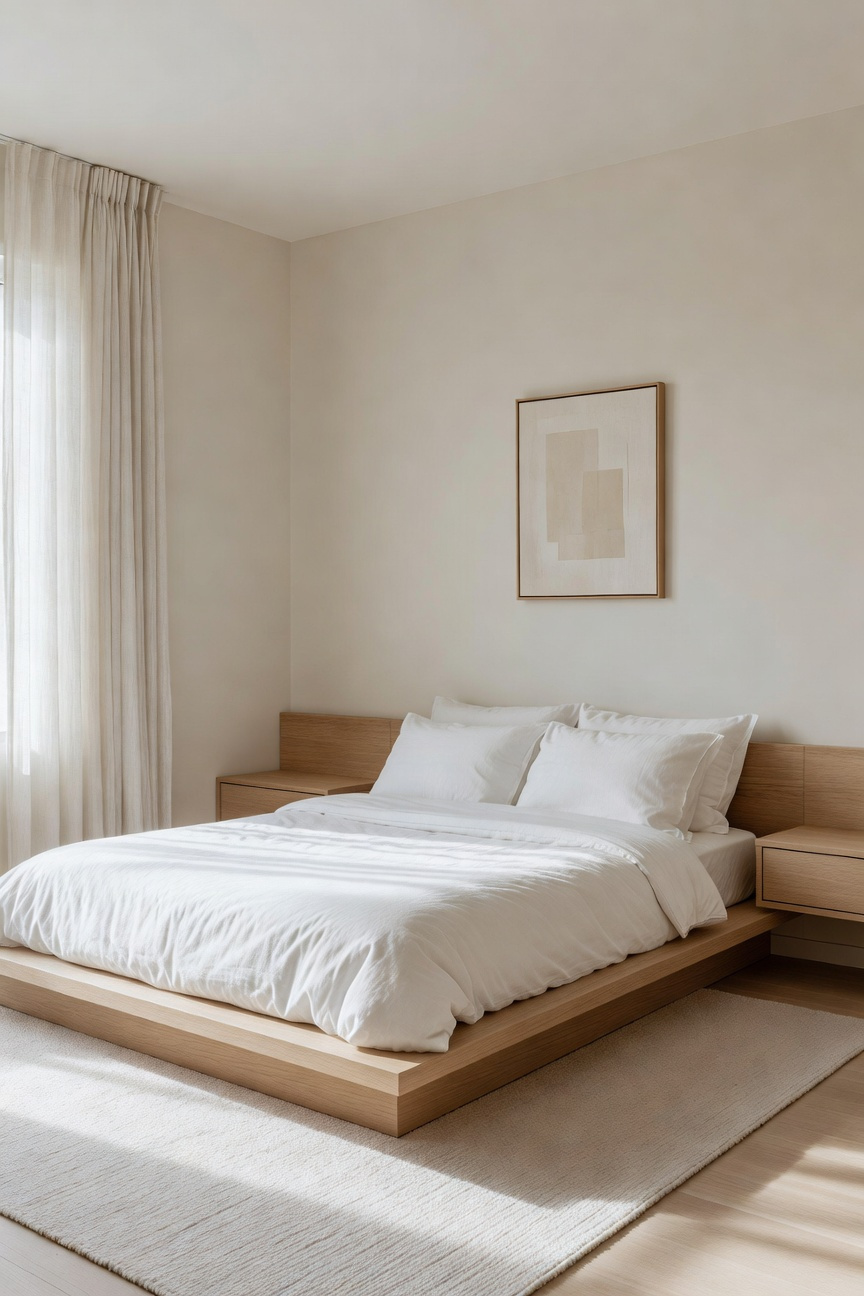
Psychologically, visible cords trigger the “Zeigarnik Effect.” Essentially, the brain perceives wire tangles as unfinished tasks. This keeps you in a state of low-level alertness. In fact, research indicates that such visual clutter directly correlates with higher cortisol levels. To combat this, authority in small spaces comes from architectural integration rather than temporary fixes. For instance, recessed “raceways” inside baseboards effectively turn electrical infrastructure into invisible trim.
Moreover, true sanctuary design improves the sensory experience through natural materials. Wooden slat acoustic panels serve a crucial dual purpose here. Visually, they add high-end textural warmth and dampen urban noise. Functionally, the gaps between slats provide hidden channels for running wires to wall-mounted sconces.
Finally, lighting should be felt, not seen. Instead of bulky smart lamps, utilizing hidden LED tape tucked into cove lighting creates a softer atmosphere. Consequently, this allows for circadian rhythms that mimic the solar cycle without the intrusion of glowing screens or plastic fixtures. Ultimately, by removing physical interactions with tech, the room serves human rhythms first.
Luxury in a small space is achieved through bespoke joinery and high-quality natural textures. Instead of using multiple small items, anchor the room with one grand “hero” piece. A king-sized bed with premium linen works perfectly here. Focus on hidden storage and integrated lighting to maintain an uncluttered, serene atmosphere.
While bright white is a common choice, warm Nordic greys or soft sand tones often work better. These shades blur the sharp corners of a room effectively. Using a single receding hue for walls, trim, and ceilings creates an “infinity effect.” This makes the boundaries dissolve and the space appear significantly more expansive.
Yes, a queen bed can often make a small room feel grander than a twin bed if styled correctly. Choosing a frame with slender legs creates “visual buoyancy” by revealing the floor underneath. Ensure you maintain at least 18-24 inches of walking clearance on both sides to keep the room functional.
The “Hule” philosophy invites a radical shift in perspective regarding small spaces. Instead of fighting limited square footage, we embrace every small bedroom idea as a purposeful step toward a curated sanctuary. In fact, this design approach taps into a primal, childlike need for safety and enclosure. By layering heavy textiles and softening the light, a cramped room transforms completely. Therefore, the space no longer feels like a cage, but rather a protective burrow.
As modern life accelerates, our homes must offer specific spaces for true regeneration. Consequently, the small bedroom becomes the ultimate luxury: a dedicated place for hibernation. To start this transformation, simply turn off your harsh overhead lighting tonight. Instead, introduce a single, low lamp to instantly create that essential, grounding amber glow. Thus, you begin building your own nest not by expanding out, but by drawing in.