Physical Address
304 North Cardinal St.
Dorchester Center, MA 02124
Physical Address
304 North Cardinal St.
Dorchester Center, MA 02124
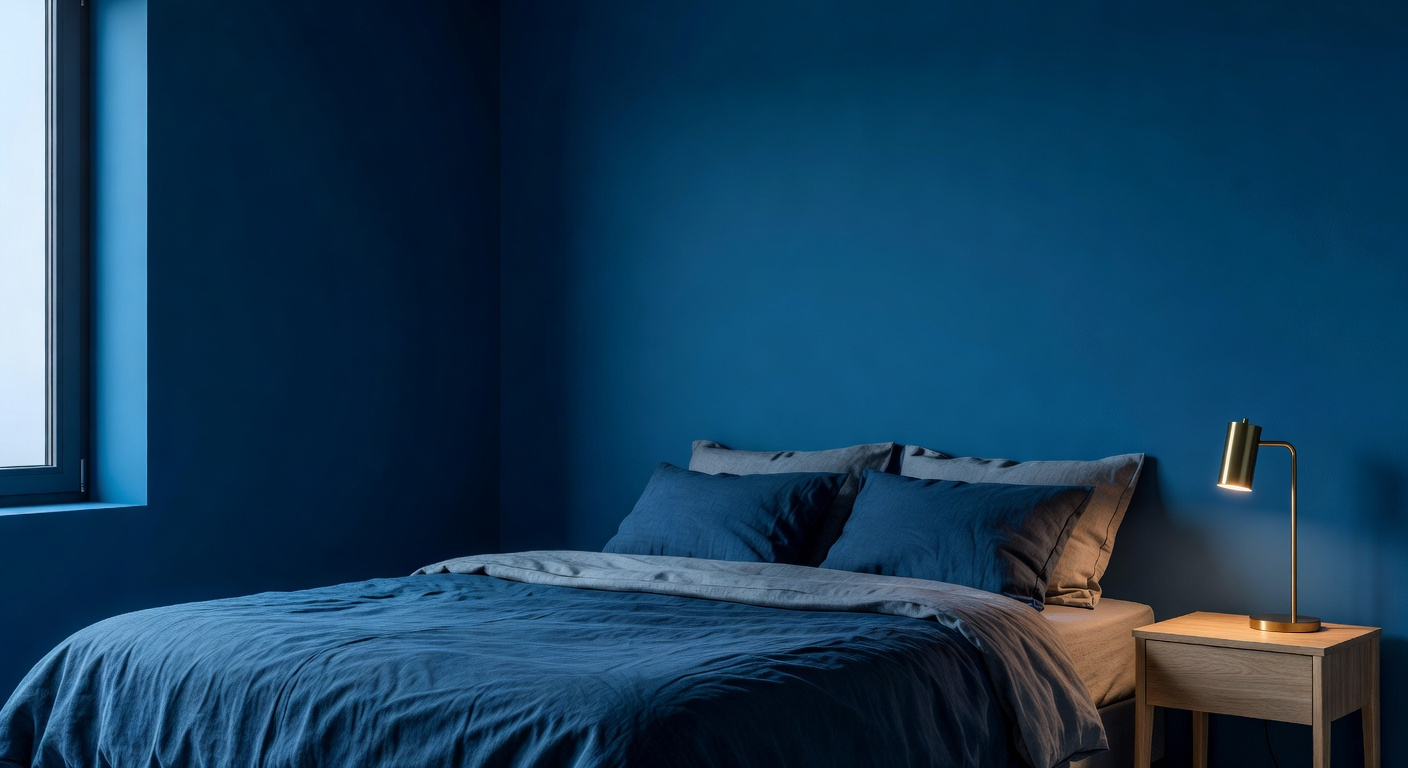
Transform your space with a professional small bedroom makeover. Discover designer secrets for creating a curated sanctuary with more style. Start today!
I constantly see people struggling to fit their lives into tiny bedrooms. Executing a successful small bedroom makeover is about manipulating spatial perception and light. It isn’t just about cramming furniture into a tight room. Instead, it’s about making a compact footprint feel like a high-end retreat. By prioritizing quality over quantity, you can transform a cramped sleeping area into a curated sanctuary. Therefore, the room feels intimate yet surprisingly expansive. Next, we will explore seventeen practical strategies to maximize your square footage through intentional architecture and tactile luxury.
The conventional “white box” approach often disappoints in tiny bedrooms. Specifically, white paint needs ample natural light to work effectively. Without it, bright walls quickly turn a muddy, depressing gray. In fact, stark white only highlights tight dimensions and cramped corners.
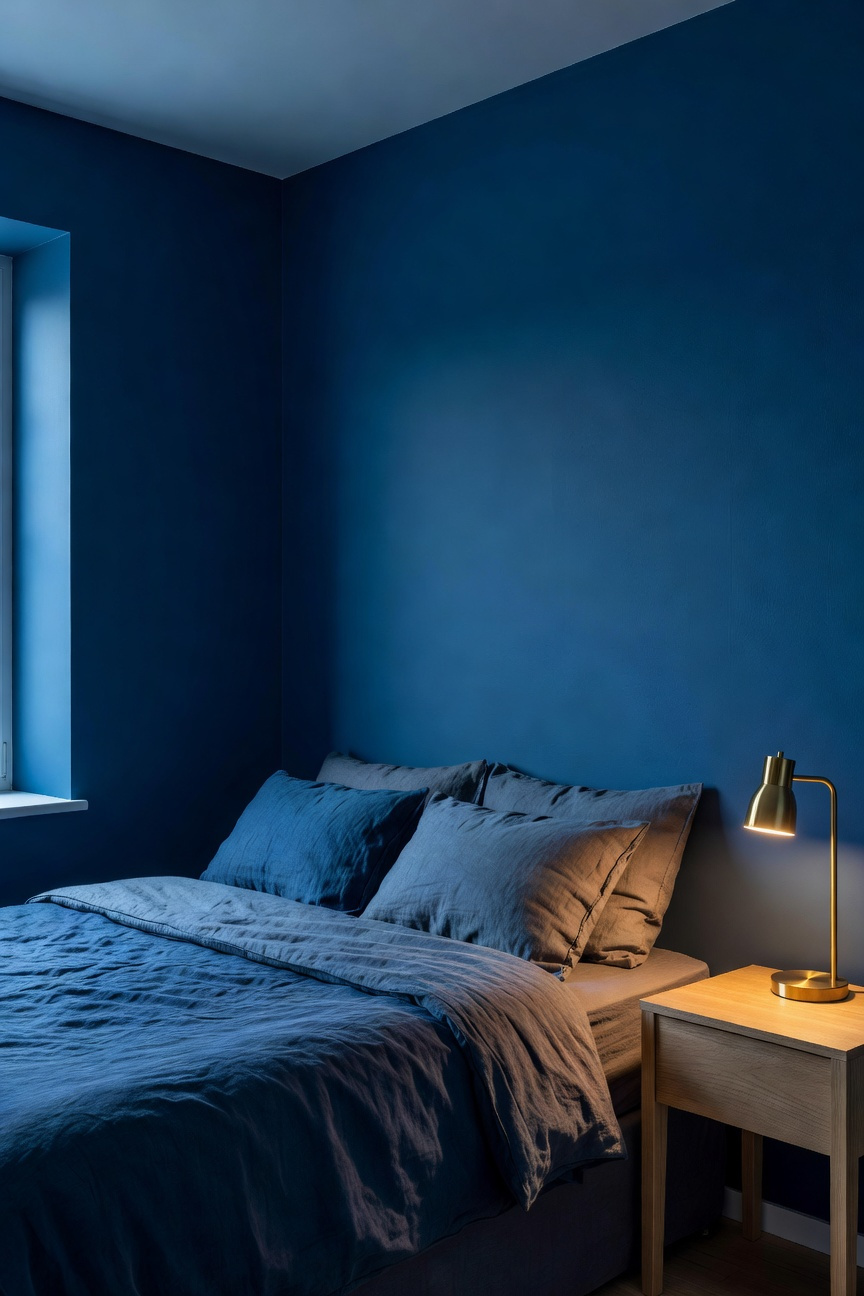
However, deep, saturated hues actually push walls back. Historically, Nordic design embraces the cool twilight of the blue hour. Deep colors like Serene Blue mimic this natural phenomenon. Crucially, the human eye perceives these cool tones as distant. As a result, dark walls naturally recede into the background.
Painting everything one color erases visual boundaries entirely. This includes baseboards, walls, and ceilings. Thus, the eye never stops at harsh trim lines. This seamless envelope makes the room’s true size incredibly hard to guess.
Finish matters just as much as color. A flat, ultra-matte finish aids this spatial illusion. Unlike gloss, matte pigments absorb light and prevent glare. Therefore, the wall takes on a velvety, bottomless depth. It creates a cozy cocoon rather than a claustrophobic box.
Finally, pair these dark walls with warm artificial light. Indeed, 2700K bulbs create a stunning, gallery-like contrast. In this environment, shadows become rich atmosphere rather than ugly stains. Your furniture pops against the dark, receding void. In turn, your cramped room transforms into a curated retreat.
Our brains use subtle visual shortcuts to assess room size. Specifically, we track where the floor meets the wall. Heavy furniture pushed against walls shrinks our perceived space. However, lifting furniture off the ground reveals the true perimeter. Finding smart bedroom decor ideas for small rooms always starts with elevation.
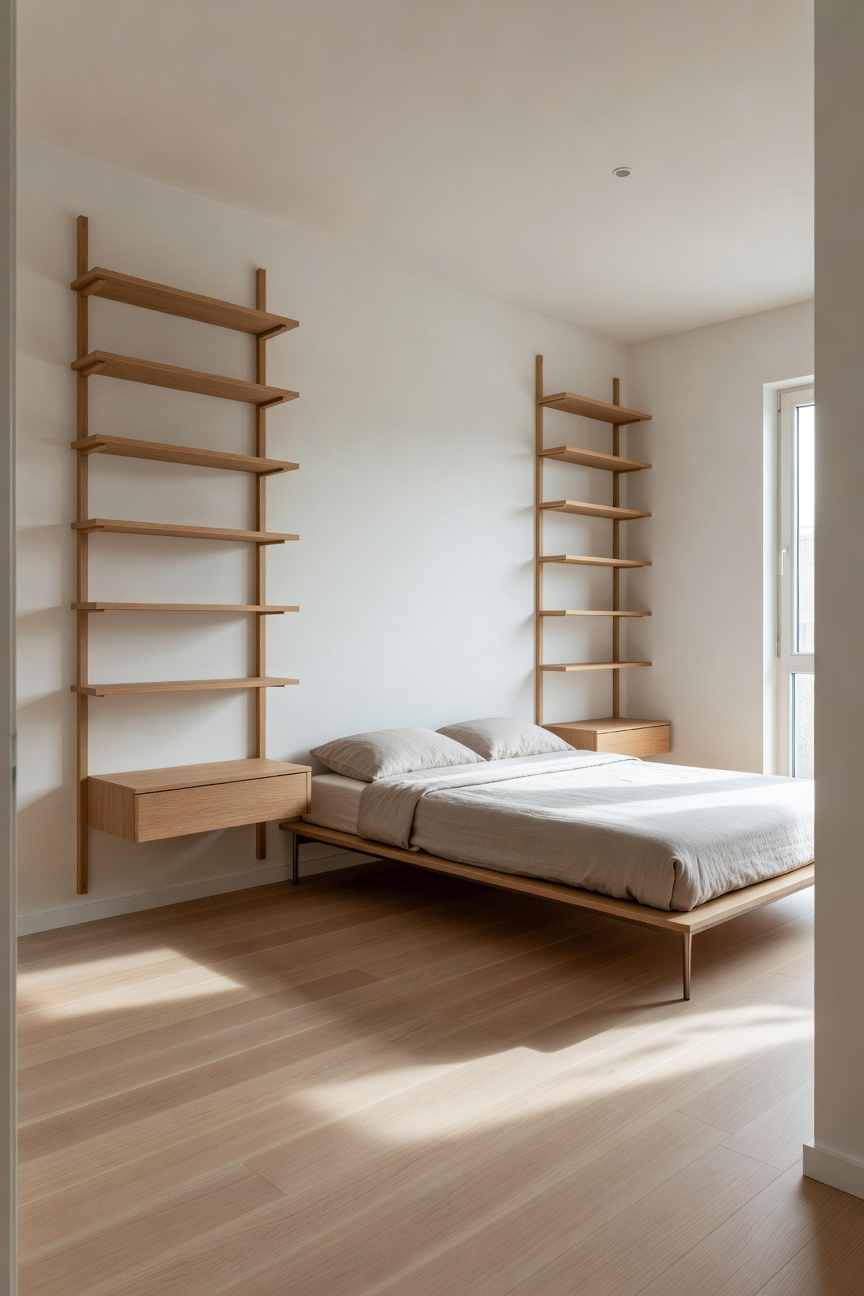
Danish designer Poul Cadovius championed this highly functional approach. He believed floor space was too valuable for heavy storage. Wall-hung systems were born to create a sense of weightlessness. Indeed, this floating principle changes how light behaves indoors. Light flows directly underneath your wooden nightstands and bed. Therefore, the bedroom feels like one continuous volume.
Seeing consistent flooring extend beneath furniture reduces visual clutter. This transparency shifts the room from confined to meditative. Still, you must balance this airy look with tactile grounding. For example, a textured wool rug anchors floating elements beautifully. Technical precision remains vital to maintain the clean illusion. Sagging shelves or exposed cables will quickly ruin the calming vibe. Next, securely mount heavy units directly to wall studs. Conceal messy wires within walls or cord covers. In fact, liberating the floor is the fastest way to create a serene sanctuary.
Traditional layouts demand identical flanking nightstands. However, this strict symmetry wastes valuable floor space. Pushing your bed against a wall immediately reclaims usable room. In fact, this simple shift increases efficient space by nearly 22 percent. Next, you can use that newly opened area for a functional oak desk. Alternatively, a cozy reading chair easily fits into this space.
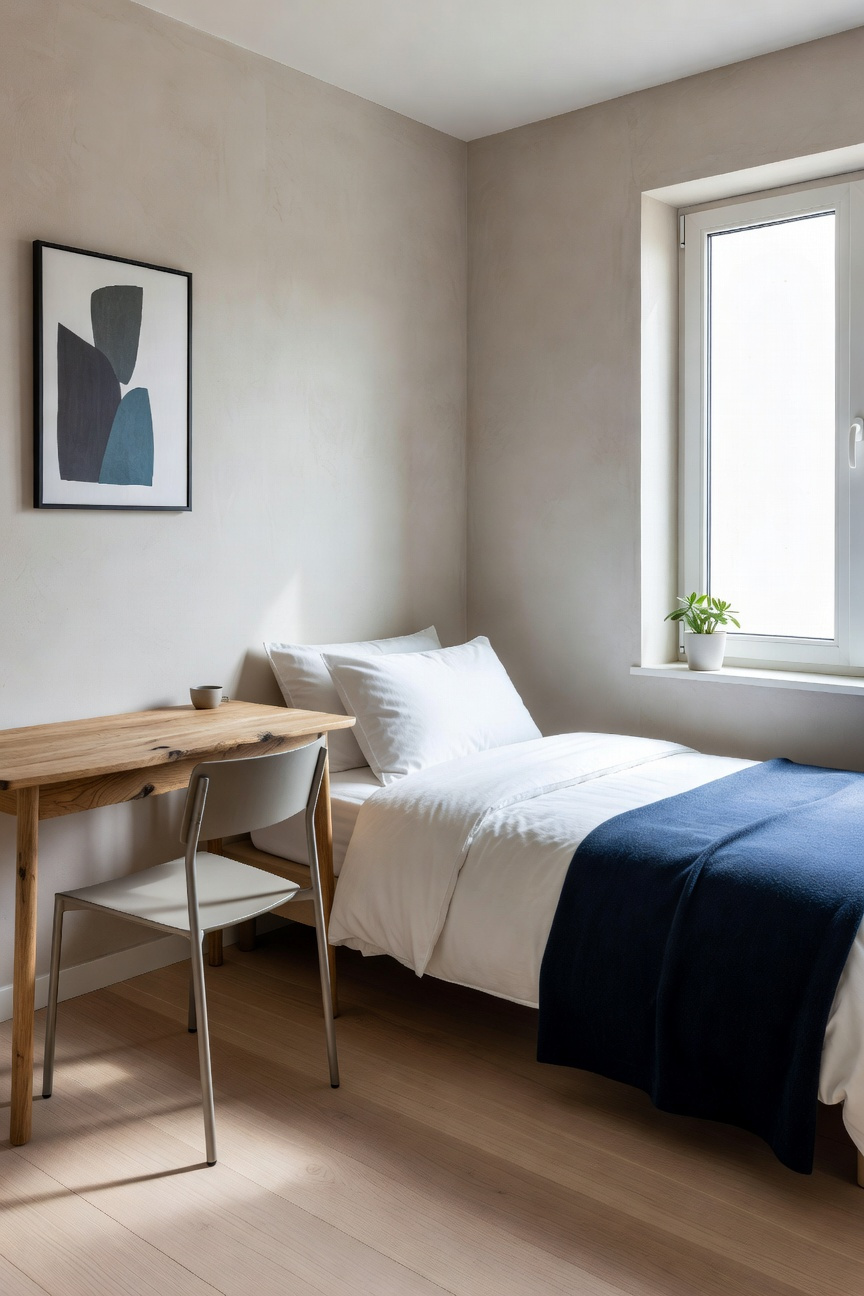
Asymmetrical placement also offers deep psychological comfort. Tucking a bed into a corner creates a soothing, cocooning effect. I always find that this physical enclosure calms the nervous system. Notably, recent environmental studies reveal a surprising restorative benefit. People in enclosed corner layouts actually fall asleep 17 minutes faster. Therefore, lowered cortisol levels lead to truly restful nights.
Aesthetically, this layout echoes the artful asymmetry of wabi-sabi. An off-center bed embraces the natural flow of life. However, you must balance the room using heavy visual weight. For instance, a tall ficus plant anchors the opposite empty space. This corner placement also optimizes your daily connection to sunlight. Moving away from drafty windows improves the room’s overall thermal comfort. Indeed, wrapping a low-profile headboard around the corner works wonderfully. It provides a shared resting surface without demanding bulky tables.
Low ceilings can make a small bedroom feel incredibly oppressive. However, floor-to-ceiling textiles act as a vital architectural intervention. Specifically, they create unbroken vertical sightlines that stretch perceived dimensions. You must eliminate the visual fracture caused by standard curtain placements. Instead, mount curtain rods directly into the ceiling using a simple track system. Alternatively, place them at least four to six inches above the window frame. Extending the rod ten inches wider on each side prevents a boxed-in feeling. Therefore, this high-and-wide technique tricks the eye into seeing a single, towering wall.
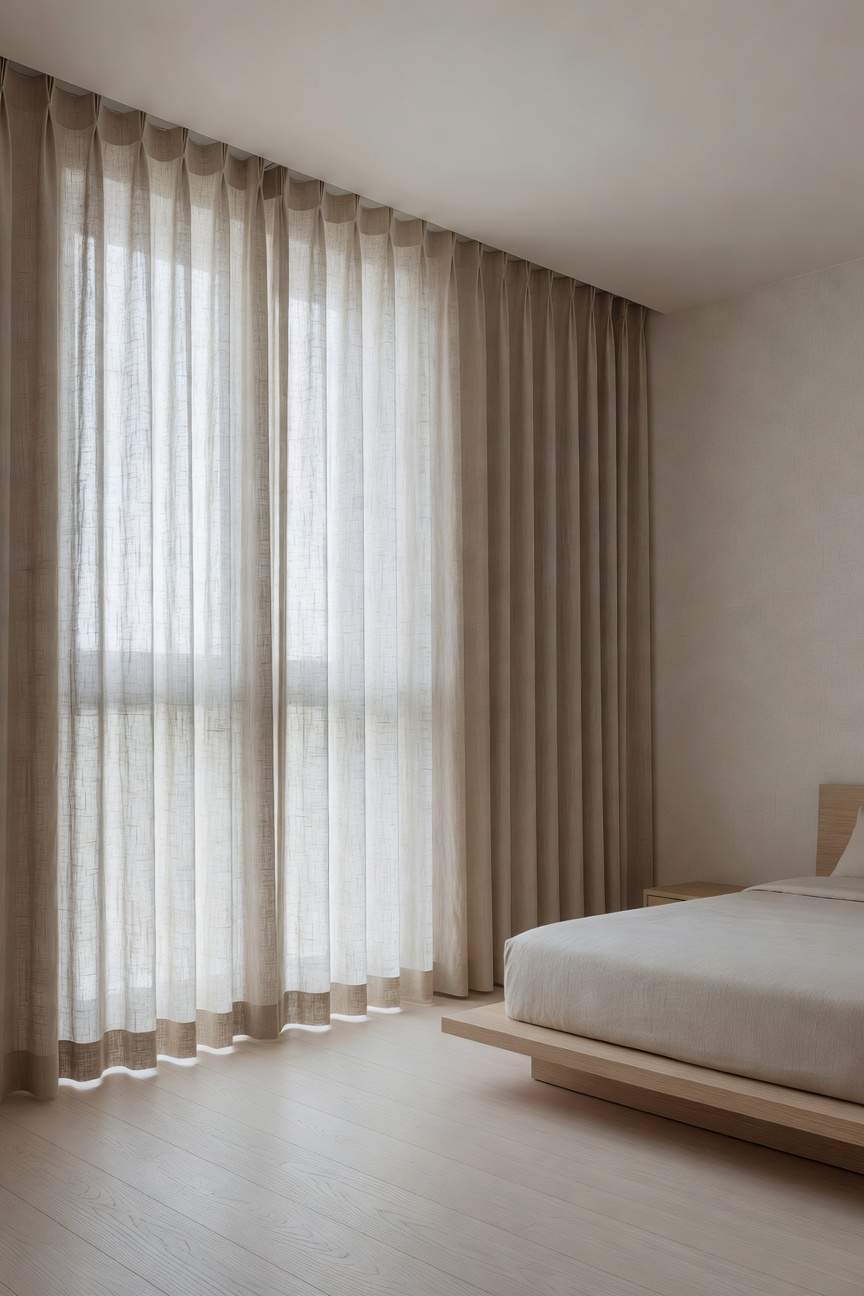
Material choice dictates the sensory weight of this feature. For instance, organic linen features an open weave with natural irregularities. It gently filters daylight rather than blocking it entirely. Consequently, the fabric avoids feeling like a heavy, oppressive barrier. Natural fibers also act as an essential acoustic shield. They can effectively reduce sound reverberation by up to forty percent. Ultimately, this acoustic cushioning turns a cramped room into a muffled, cozy sanctuary.
How the textile meets the floor also matters immensely. Ideally, employ the modernist kiss method where fabric barely grazes the floorboards. This creates a crisp vertical line perfectly suited for warm, minimalist spaces. Conversely, puddling excess fabric adds visual clutter that works against vertical lift. Next, ensure the total fabric width is at least twice the window size. This creates deep vertical shadows within the tailored pleats. Indeed, these empty shadows act as visual arrows pointing straight upward.
Negative space is a vital requirement in Scandinavian design. Specifically, empty corners prevent visual suffocation in confined bedrooms. You must treat empty space as a positive design element. First, the corner immediately adjacent to your doorway must remain empty. Psychologically, this creates a necessary breathing threshold for the room. Avoiding tall furniture here allows a deep visual inhale. Therefore, maintaining a 36-inch clearance lets the eye travel freely.
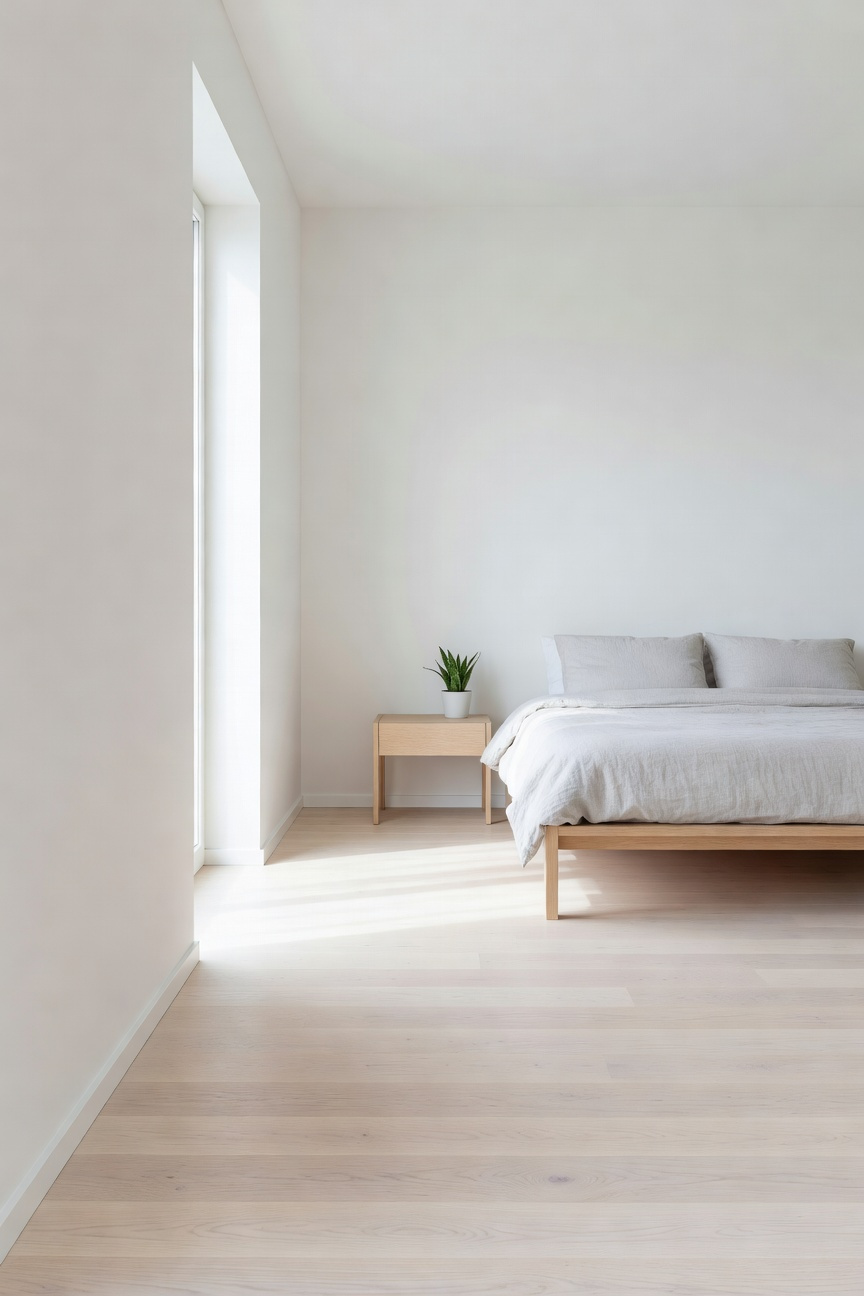
Pushing a bed flush into a corner isn’t always the answer. Sometimes, you should embrace the Japanese philosophy of Ma, or pure space. Accordingly, leave ten to eighteen inches of air beside the bed. Naturally, this transforms heavy furniture into a calm, floating sanctuary. This gap also allows warm lamp light to spill gracefully. As a result, soft shadows emerge on the bare walls.
Every small bedroom features a tall visual high point. To balance this, keep the diagonal corner completely empty. Indeed, this creates a visual low where the eye can rest. This predictable rhythm helps lower cortisol for better sleep. Leaving this far corner bare creates a vanishing point. In fact, this tricks the brain into perceiving much more depth.
Finally, remember that the floor underneath your furniture matters deeply. Consequently, always select beds and dressers with slim tapered legs. Visible floor real estate expands significantly when you lift pieces up. Therefore, light and air circulate freely throughout the serene space.
Strategic light bouncing mimics classic Scandinavian architectural principles. Historically, Nordic builders used deep window reveals to capture scarce winter light. You can mimic this depth in a shallow modern bedroom. Simply place a leaner mirror at a 45-degree angle near your window. Light hits the glass, bounces onto the wall, and diffuses softly. Therefore, this double-bounce effect creates a warm, layered gradient of illumination. It perfectly replicates the architectural glow of historic Stockholm apartments.
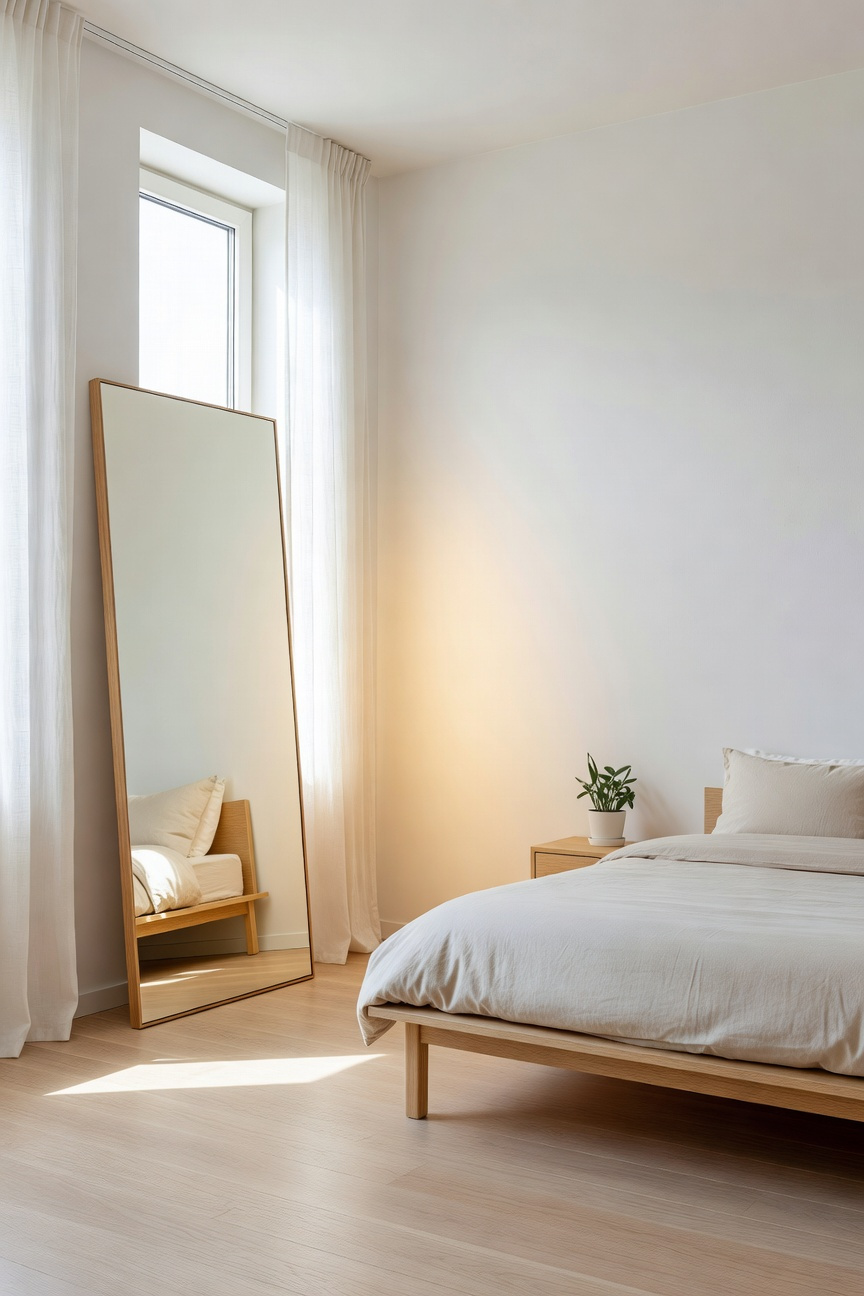
Scandinavian design often utilizes mullioned grids for visual rhythm. Instead of a single glass sheet, position a window-pane mirror opposite your bed. Specifically, this tricks the eye into perceiving an optical escape route. You introduce much-needed visual breaks by mimicking classic window proportions. However, you should avoid hanging these mirrors perfectly flush to the wall. Give the mirror a slight upward tilt of five to ten degrees. Technically, this captures high-angled afternoon light and bounces it ceilingward. Thus, the light reflects back down as a soft, ambient glow.
Consider incorporating a modern take on the Swedish gossip mirror. Position a small, convex mirror in a corner perpendicular to the window. Instantly, this provides a panoramic connection to the outdoors. Therefore, it satisfies the Nordic desire for nature without overcrowding the room. Next, remember that the materials surrounding your mirrors matter deeply. Frame your mirrors in light-toned birch, ash, or white-washed oak. Heavy, dark frames create a visual stop that breaks light travel. Indeed, a light-wood frame allows reflected light to bleed seamlessly into walls.
The monochromatic wash is a brilliant architectural tool. It effectively manipulates spatial perception in tiny bedrooms. Standard rooms usually feature stark visual interruptions. For example, a white baseboard against a colored wall acts as a strict boundary. Your eye constantly stops at each high-contrast line. However, exploring premium bedroom makeover ideas reveals a better way. Applying a single hue to every surface entirely eliminates these hiccups. Therefore, your gaze travels uninterrupted from the floor to the ceiling. This visual sleight of hand gracefully blurs the room’s hard edges. As a result, a tight space feels significantly more boundless and expansive.
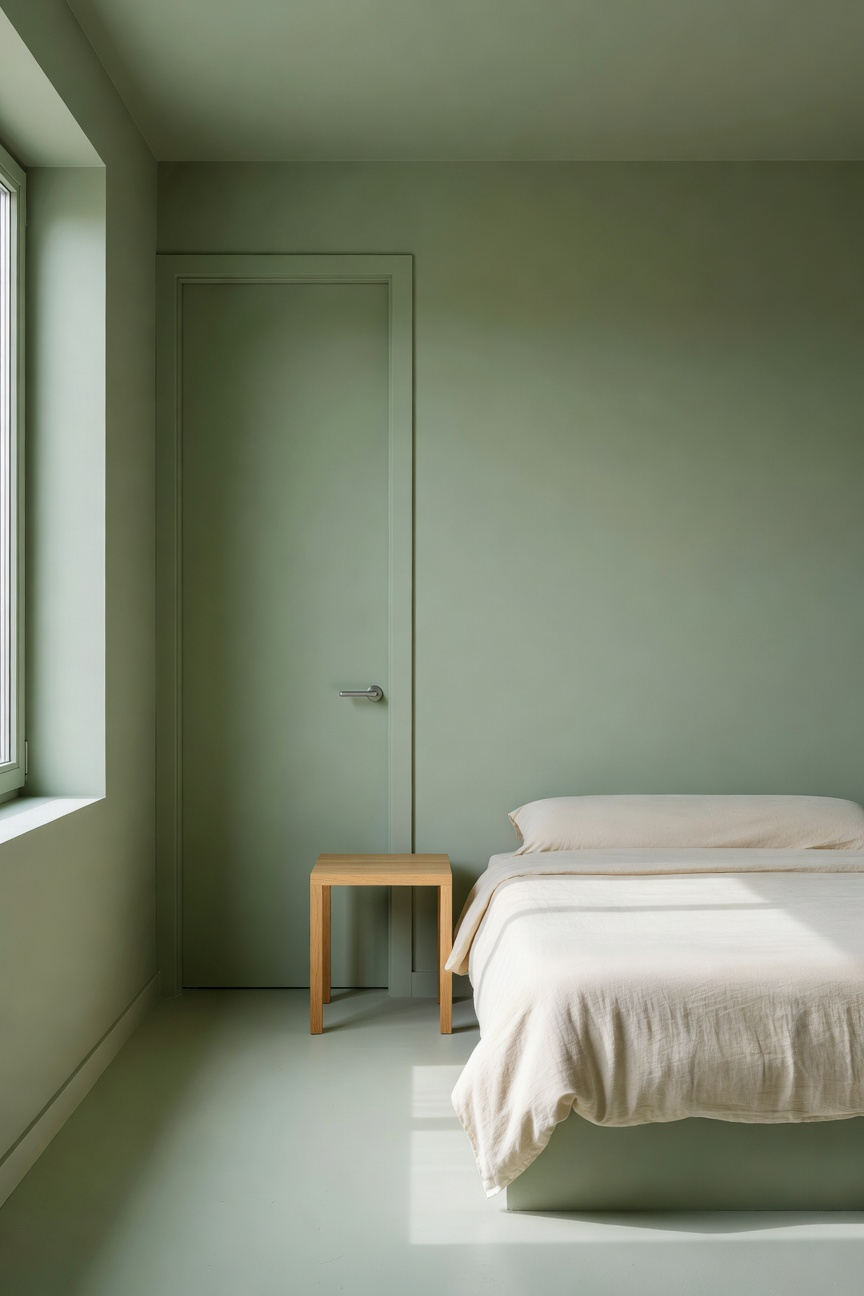
Many people fear this unified approach will look entirely flat. Fortunately, the secret to success lies in varying the paint sheen. Typically, bedroom walls are finished in flat or eggshell paint. Conversely, doors and baseboards require a satin or semi-gloss finish. Thus, the identical pigment catches light differently across various surfaces. This subtle sheen shift provides elegant architectural definition. Indeed, it creates organic depth through natural light physics rather than jarring pigments.
Beyond aesthetics, this technique fosters a profound psychological cocoon effect. In fact, stepping into a unified room instantly calms the nervous system. Visually erasing contrasting trim removes any looming architectural distractions. Ultimately, this seamless envelope turns a functional space into a cozy sanctuary. Therefore, your small bedroom easily becomes a curated, restful haven.
The traditional overhead fixture creates a flat, shadowless room. However, Scandinavian minimalism favors gentle, distributed atmospheric islands. This layered approach mimics the varied light found in nature. Specifically, warming ambient layers to 2700K promotes restful melatonin production. Meanwhile, a 4000K neutral light energizes your morning dressing zone. We must also solve the challenge of tiny nightstands. Therefore, wall-mounted swing-arm sconces brilliantly reclaim valuable surface area. This strategy creates zero-footprint task lighting without adding visual clutter.
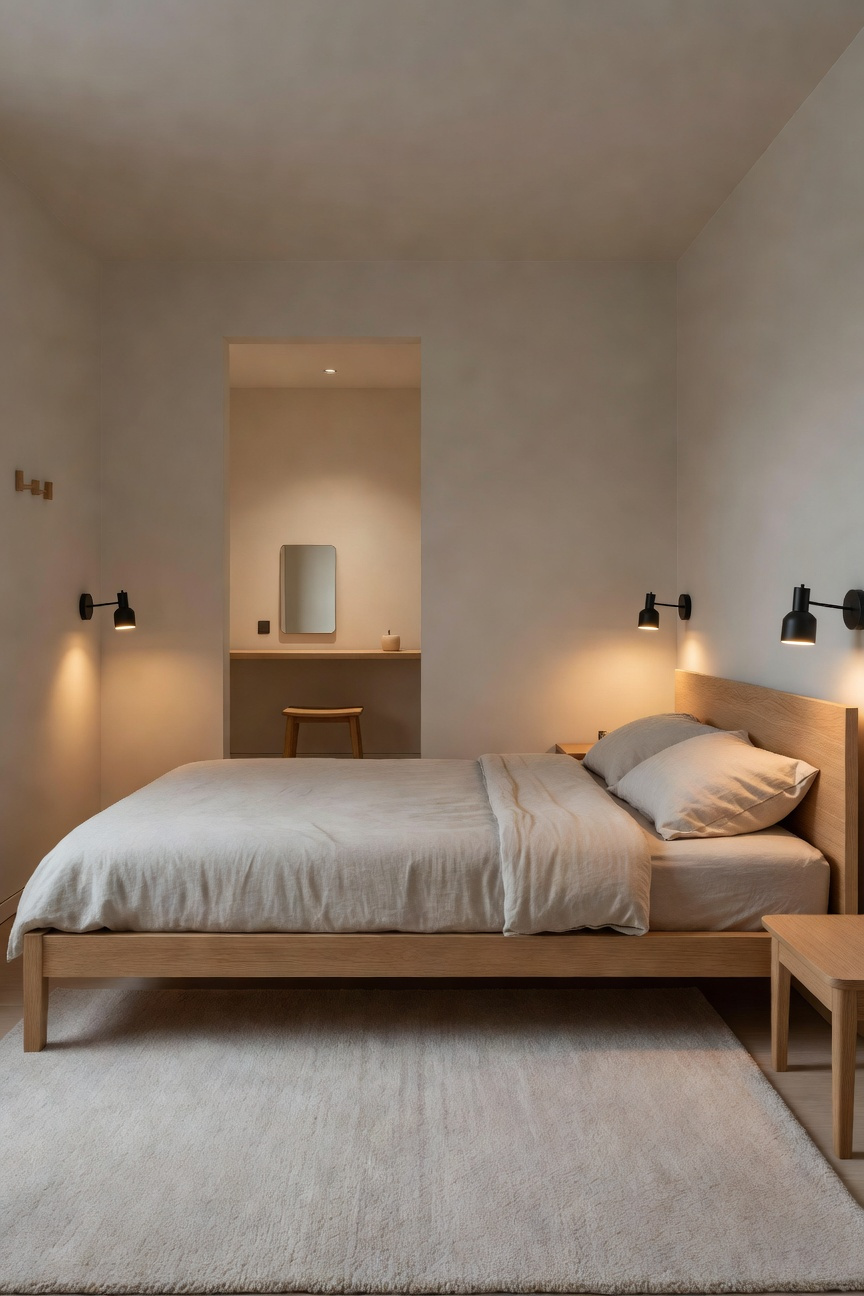
Upward-facing floor lamps gracefully bounce light off the ceiling. Consequently, this simple optical lift makes low ceilings feel taller. We also want to highlight organic, sustainable room materials. Indeed, grazing a linen headboard with light reveals beautiful, tactile shadows. Placing fixtures twelve inches away emphasizes these deep natural textures. A perfectly balanced room uses twenty percent ambient and sixty-five percent task lighting. Ultimately, dimming these ambient layers creates a cozy, sunset-like evening ritual. The space then visually shrinks into a peaceful, deeply comfortable sanctuary.
Traditional freestanding furniture creates visual noise in a small bedroom. Your brain constantly processes staggered heights and awkward shadows. This visual clutter can subtly elevate your daily stress levels. However, filling an alcove from floor to ceiling eliminates these dead zones entirely. Custom cabinetry creates a profound sense of visual silence. Therefore, the small room feels significantly larger and wonderfully tranquil.
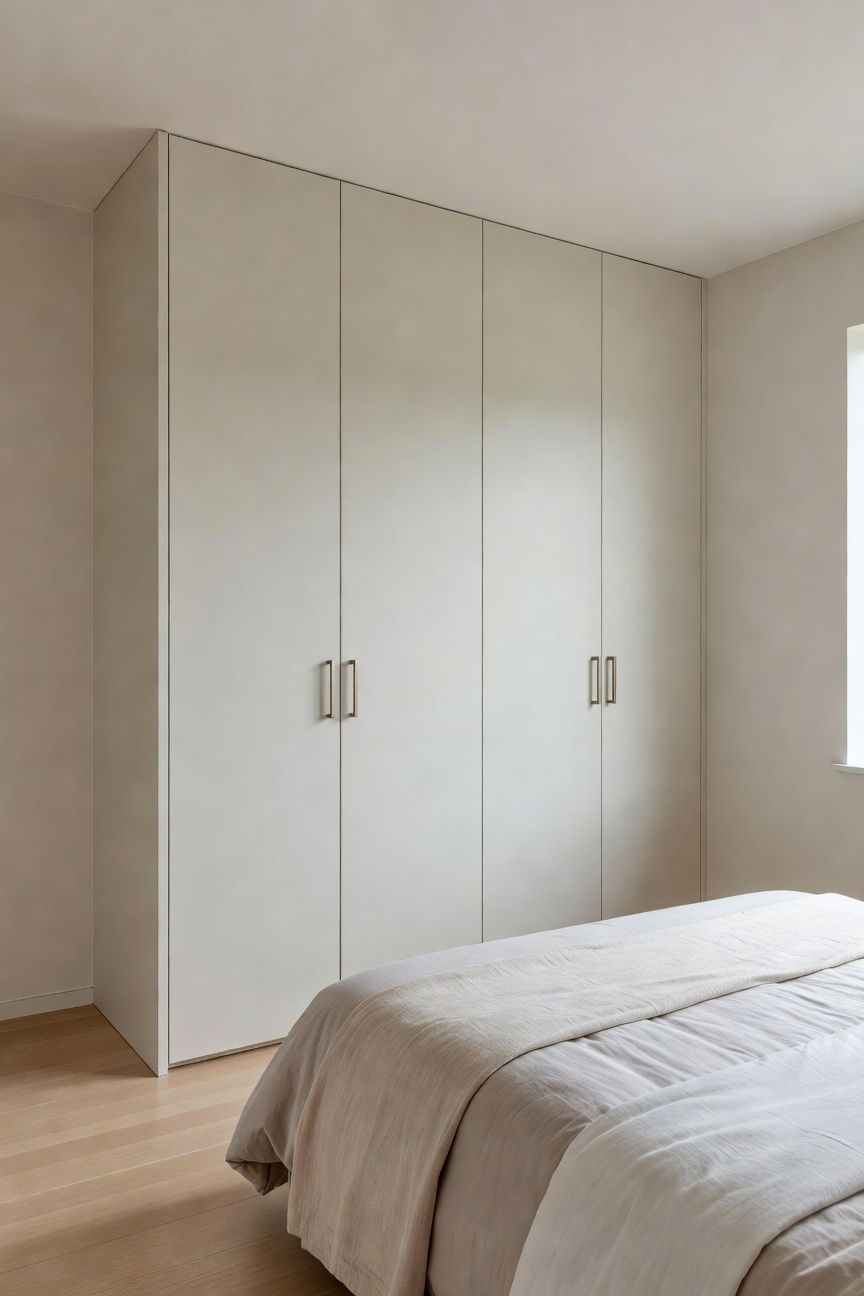
True architectural joinery relies on a technical method called scribing. Craftsmen precisely shape the cabinetry to match wavy wall contours. This custom fit eliminates clunky filler strips that disrupt clean lines. I personally prefer using sustainable birch plywood for these mindful projects. Its honest exposed edges provide a beautiful, warm Scandinavian aesthetic. Alternatively, moisture-resistant MDF allows for a seamless, super-matte lacquered finish. Incorporating deliberate shadow gaps hides natural house movement beautifully.
Wall-to-wall storage greatly enhances the room’s sensory experience. For example, deep cabinetry acts as excellent acoustic dampening. This wooden structure absorbs disruptive ambient noise from adjacent hallways. Moreover, lining the interior with aromatic cedar provides a subtle, natural scent. This timber naturally repels moths while preventing musty enclosed odors. Choosing carved recessed finger pulls encourages a mindful, tactile interaction.
Some homeowners fear permanent built-ins lock a room into one layout. However, modern bespoke solutions utilize highly modular interior systems. You can easily swap internal shelves for pull-out trays later. Ultimately, this balanced approach transforms a simple alcove into a functional, cozy sanctuary.
Bedside tables evolved from heavy, floor-bound commodes. Scandinavian pioneers like Finn Juhl eventually stripped away this unnecessary weight. They sought structural lightness and a cleaner, breathable atmosphere. Today, lifting the nightstand off the floor completely transforms small bedrooms. Psychologically, our brains estimate room size by scanning the floor’s perimeter. Therefore, seeing an uninterrupted baseboard creates the illusion of expansive space. In fact, this simple shift increases perceived floor area by fifteen percent.
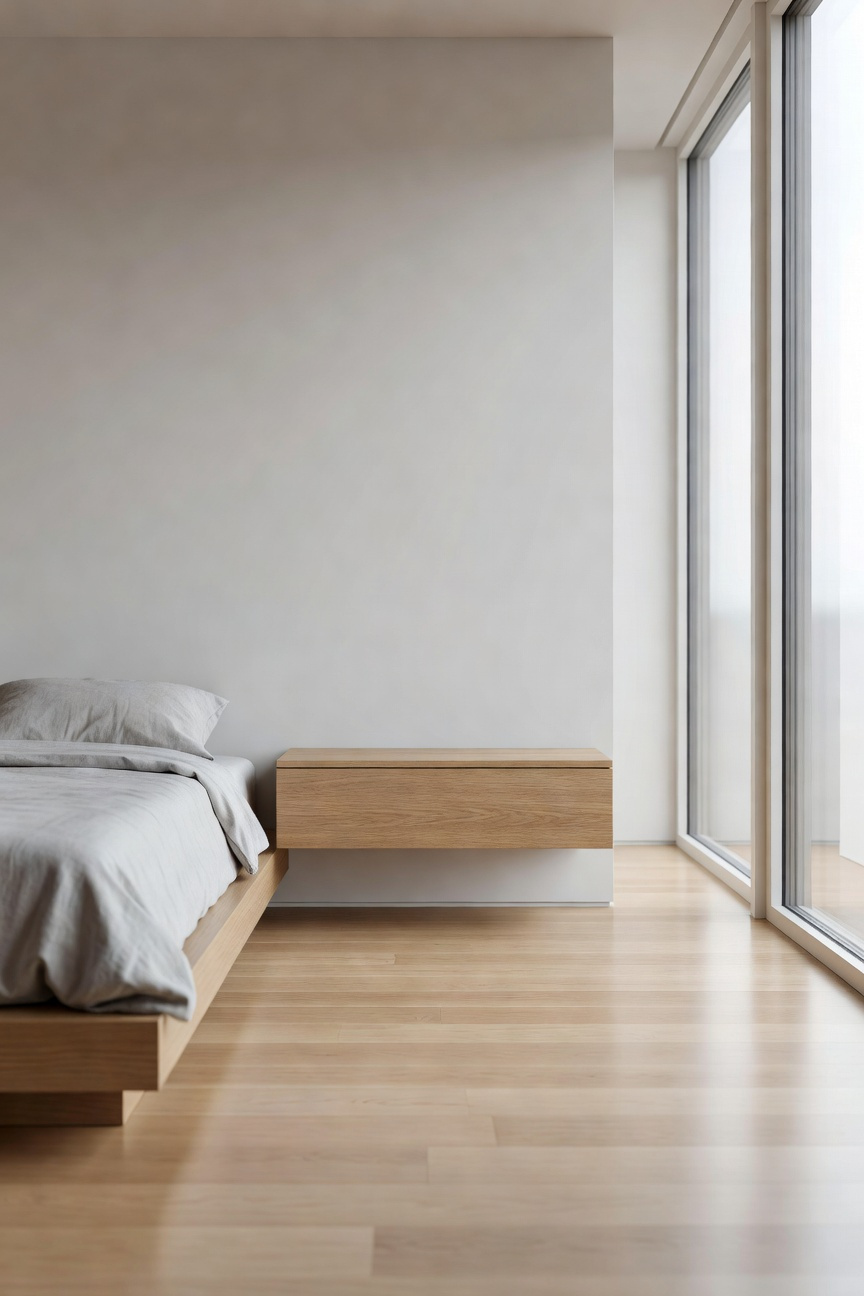
Floating nightstands also introduce a beautiful sensory play of shadows. The soft shadow cast against the wall anchors room depth. Additionally, pairing warm wood units with under-cabinet LED strips is a brilliant trick. This gentle glow literally pushes the room’s physical boundaries outward. It shifts a cramped sleeping area into a cozy, floating sanctuary.
However, achieving this effortless minimalism requires careful technical precision. You must mount the nightstand directly into the wall studs. Without a stud connection, downward pressure will quickly crack the drywall. Fortunately, a proper stud anchor safely supports fifty pounds of weight. This cantilevered design also solves frustrating mattress height mismatches. You can easily align the warm oak surface exactly with your bed.
Ultimately, this edited approach naturally encourages true Scandinavian minimalism. Because the piece appears light, you avoid piling it with heavy clutter. Instead, this intentional negative space provides a calming visual rest. Thus, you experience a deeply restful environment just before sleep.
Achieving visual silence is essential for a restful bedroom. Nordic design views daily clutter as stressful visual noise. Therefore, concealing your belongings behind seamless panels helps the brain relax. Bulky standalone wardrobes usually create dark gaps and awkward shadows. Conversely, the Nordic approach wraps the room in a shallow false wall. This method uses floor-to-ceiling cabinetry spanning the entire width of the space.
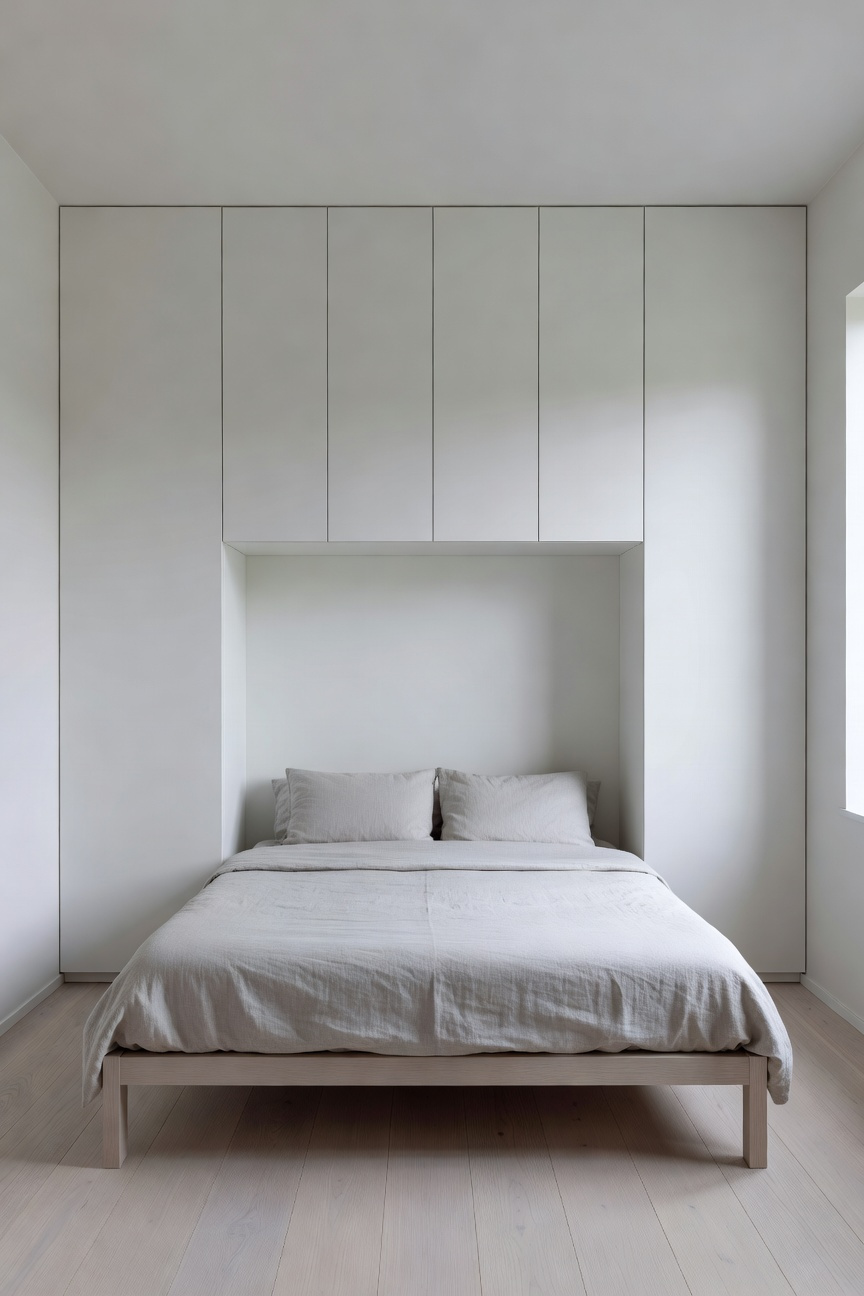
Flanking your bed with identical units creates a cozy recessed alcove. This bilateral symmetry reduces the visual information your brain must process. As a result, the confined space feels incredibly unified and calm. Mastering this invisible management requires removing all external hardware. Instead, utilize push-to-open mechanisms for a completely flat, uninterrupted surface.
Next, apply a color-drenched camouflage technique to these minimalist surfaces. Paint the cabinetry the exact same earthy pigment as the walls. Consequently, the physical boundaries of the room begin to softly blur. Warm materials like ultra-matte veneers ensure the space feels inviting. Rather than reflecting light aggressively, these soft textures gently absorb it. These wall-to-wall storage units also act as a massive acoustic buffer. Indeed, this seamlessly transforms your small bedroom into a truly silent sanctuary.
Choosing furniture in a compact room becomes an exercise in spatial choreography. Specifically, multi-purpose investment pieces balance everyday utility with cozy comfort. Historically, this concept mirrors Japanese Tansu cabinetry or British campaign furniture. Those historical pieces used solid hardwoods and brass to age gracefully. Today, you can channel this mobile nobility with sustainable materials. For instance, a solid walnut dresser that elegantly doubles as a vanity adds lasting warmth.
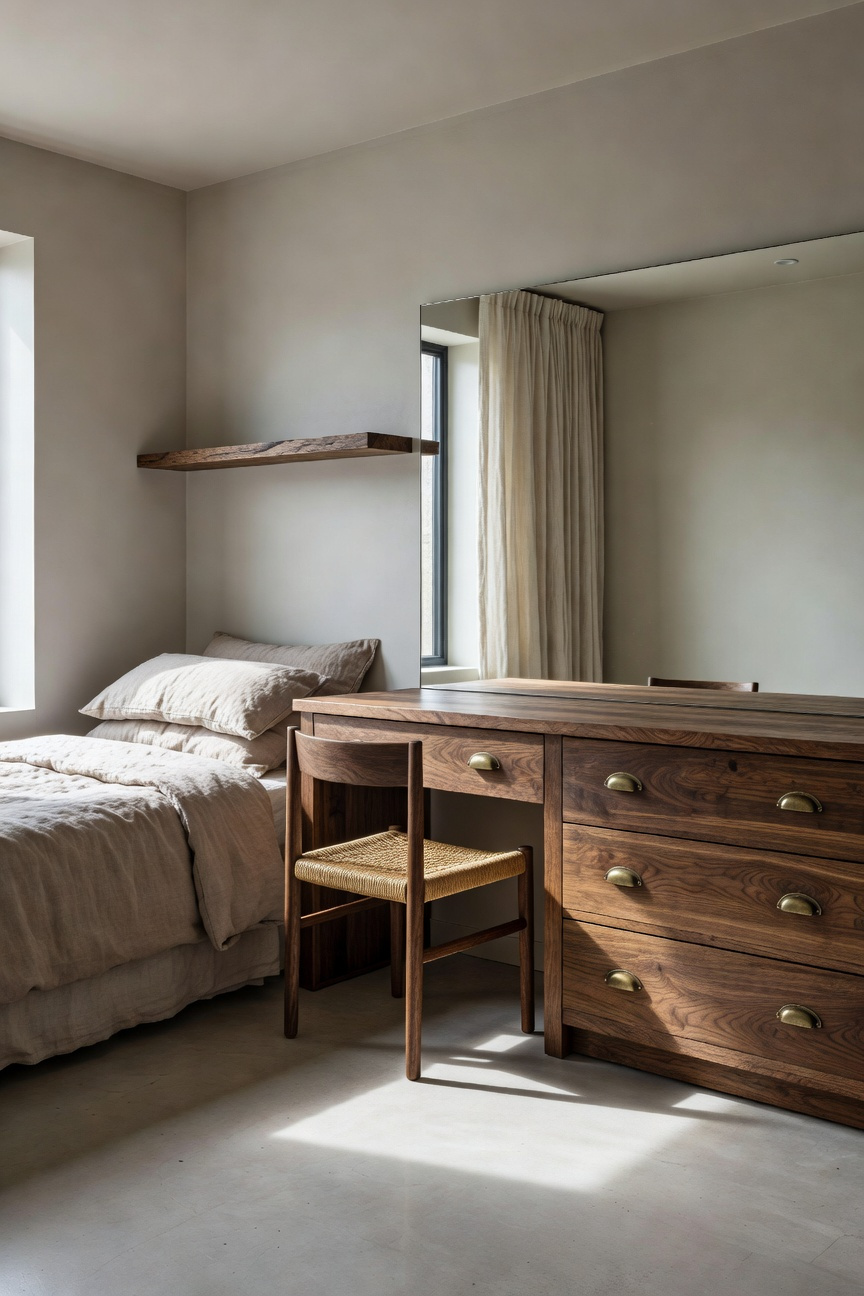
Interior designers often apply a strict function matrix to small spaces. An investment piece must serve at least three distinct roles. Similarly, a luxury nightstand must do more than simply hold a lamp. It should ideally provide hidden drawer storage, a charging station, and ambient lighting. Maintaining vertical breathing room is also vital for a minimalist sanctuary. Therefore, selecting a low-profile platform storage bed reclaims crucial visual volume. Keeping the bed lower leaves more visible wall space, which prevents a cramped feeling.
The true language of luxury operates in absolute silence. Modern transformable furniture utilizes hidden pneumatic piston-lifts. Thus, lifting a heavy bed frame to access storage feels entirely effortless. Tactile mastery plays a huge role in Scandinavian comfort, too. Choosing a storage ottoman in heavy-weight mohair velvet naturally dampens harsh ambient sounds. Ultimately, this rich haptic feedback absorbs echoes, making a hard-surfaced room feel incredibly warm.
Psychologically, reducing visual clutter creates a deeply restorative environment. After all, a messy room acts as a visual to-do list that spikes cortisol. However, a single monolithic piece elegantly replaces several cheap, disconnected items. This integrated design reduces harsh visual edges in your space. Finally, your eye easily sweeps across the calm room. Your confined cell quickly transforms into a peaceful retreat.
Modern psychology shows that a cluttered bedroom creates stressful visual noise. Small knick-knacks constantly compete for your brain’s attention. This excess visual stimulation keeps your nervous system on high alert. However, when you embrace minimalist bedroom design, you significantly reduce this cognitive load. Replacing multiple trinkets with a single wool throw brings instant calm. Furthermore, tactile richness grounds the room without overwhelming the eye.
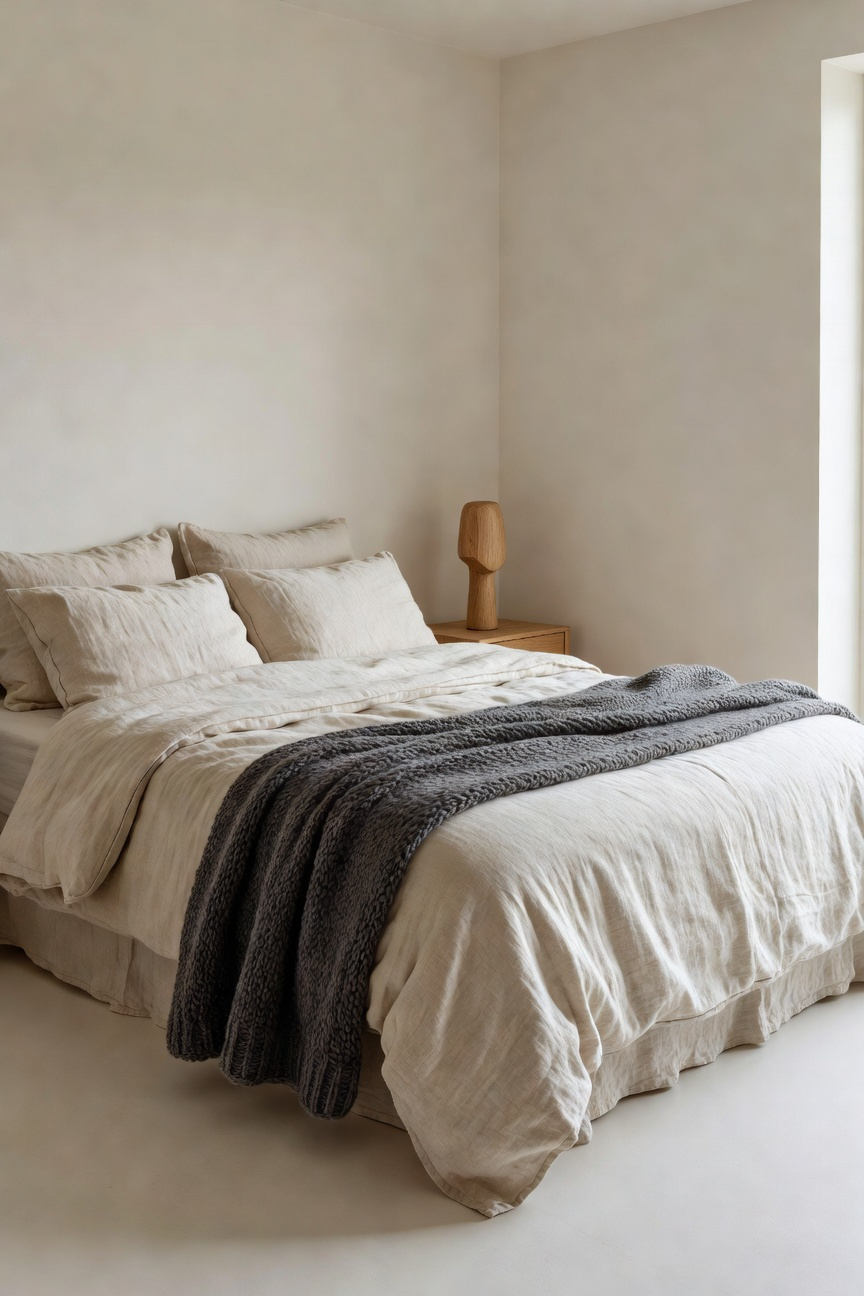
Natural materials like wool and linen also offer powerful biological benefits. In fact, wool acts as a thermal buffer to regulate your microclimate. Similarly, the irregular slubs in natural linen promote vital airflow. These breathable fabrics actively enhance restorative sleep in confined spaces. Historically, this focus on honest materials stems from Nordic Hygge traditions. The true goal is adding warmth without stuffing the small space.
Therefore, adopt a monochromatic approach using a soothing tonal color palette. Layering three shades of cream creates profound visual depth. For instance, contrast a smooth linen sheet against a chunky wool knit. You must be careful to avoid sensory overload in a compact bedroom. Accordingly, limit yourself to three distinct textures to maintain peaceful harmony. Overall, this curated tactile conversation makes the room feel cozy yet beautifully expansive.
A small bedroom requires visual rest to function as a calming sanctuary. Therefore, swapping a cluttered gallery wall for one oversized piece is a smart strategy. Multiple small frames force the brain into exhausting cognitive sifting. Conversely, a singular oversized canvas provides a calming neural anchor. This single focal point instantly resolves the room’s visual structure. Consequently, your nervous system registers the space as safe. This clarity directly supports faster sleep onset and deeper rest.
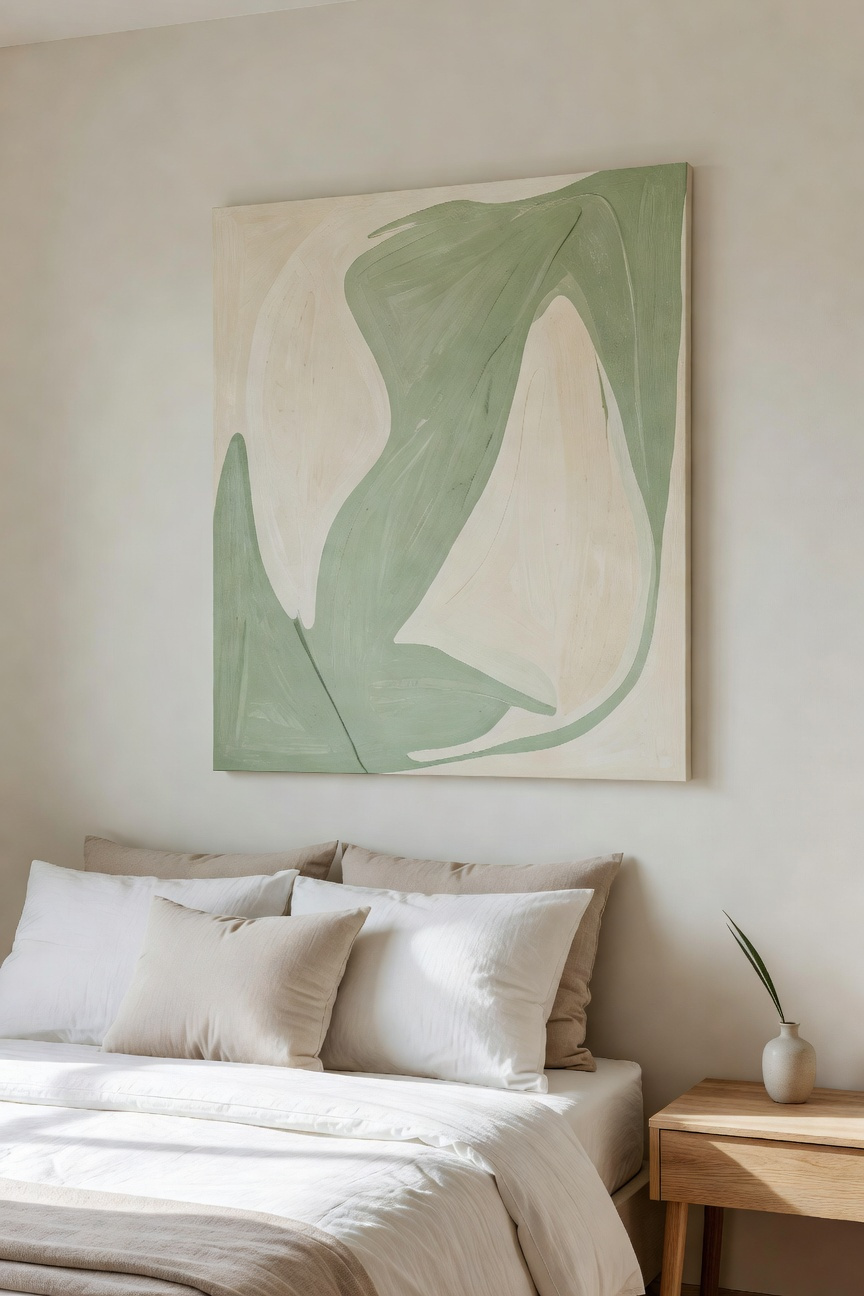
An oversized landscape also creates a subtle window illusion. This beautiful trick expands the perceived boundaries of compact spaces. Specifically, a large vertical artwork gently draws the eye upward. This visual lift mimics the expansiveness of taller ceilings. Interestingly, designers call this architectural trickery the Cathedral Effect.
Practically, you must follow the two-thirds rule for perfect scale. The art should cover roughly two-thirds the width of your headboard. As a result, the surrounding walls become breathable negative space. Natural light reflects smoothly across this broad, uninterrupted surface. Finally, choose heavy natural textiles or matte finishes to add tactile luxury. Thus, you easily create a cozy, expansive, and minimalist retreat.
Floor textiles serve as vital tools for spatial organization in Scandinavian design. Specifically, a large natural wool rug acts as a horizontal wall. This defines your sleep zone without adding any physical clutter. Counterintuitively, small postage-stamp rugs actually shrink compact bedrooms. Instead, an oversized textile expands the visual floor plan. For example, an 8′ x 10′ rug properly anchors a queen bed. Furthermore, leaving an eight-inch border of bare wood creates essential breathing room. Thus, the eye perceives one continuous, grounded architectural unit.
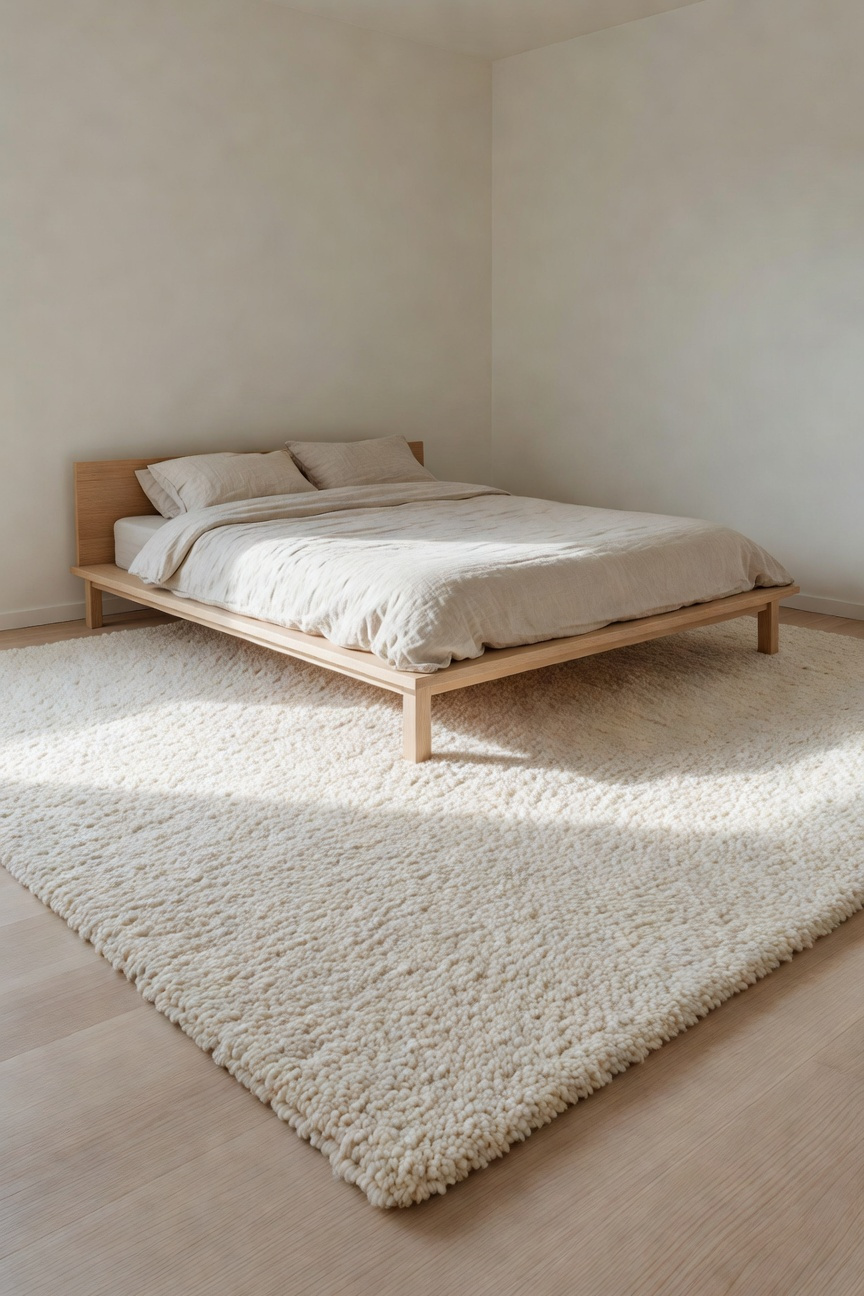
Tactile rug anchoring deeply influences your nervous system, too. Human feet are packed with high-density sensory receptors. Stepping from cold flooring onto sustainable wool triggers instant relaxation. Immediately, this physical transition signals the brain to prepare for sleep. Thick textiles also absorb echoing high frequencies in cramped spaces. Accordingly, the room visually and acoustically softens into a cozy sanctuary.
Naturally, pattern and shape play a crucial role in spatial perception. Low-pile flatweaves reflect natural light beautifully. Alternatively, round rugs dynamically soften the rigid corners of a tiny bedroom. This organic geometry prevents the space from feeling strictly enclosed. Historically, nomadic cultures used similar floor coverings to carve out distinct rooms. Today, we simply adapt this ancient wisdom for the modern minimalist home. Ultimately, the right floor anchor balances beautiful functionality with profound, quiet comfort.
Bringing nature into a small bedroom goes beyond simply placing a potted plant in a corner. We must view biophilic design as a functional requirement that actively shapes our sleep hygiene. Specifically, incorporating an architectural Snake Plant or ZZ Plant aligns perfectly with human sleep cycles. These unique species perform specialized nocturnal photosynthesis. Therefore, they quietly release oxygen while you rest in a tight space.
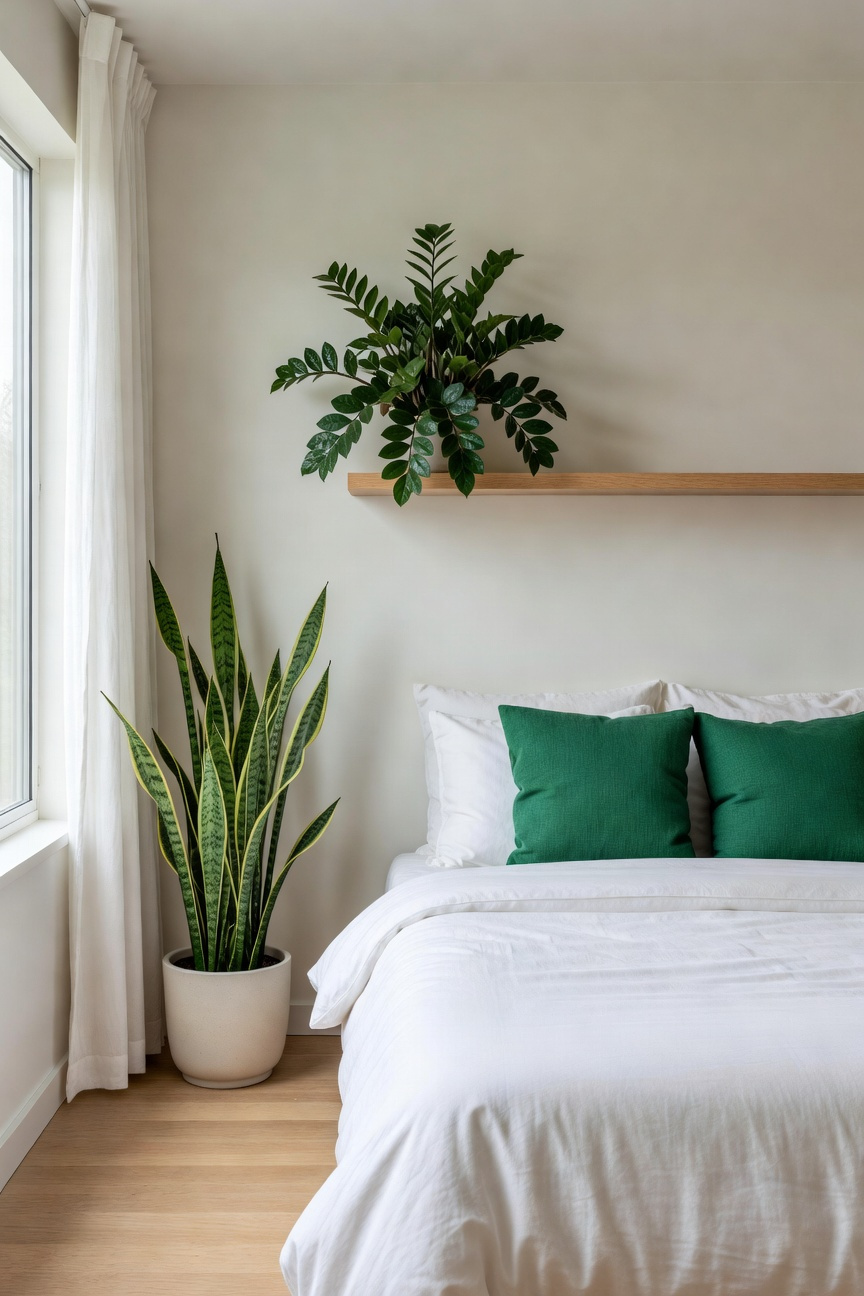
Sensory experiences matter just as much as physical air quality. For instance, the Rattlesnake Plant offers a beautiful, living clock through its circadian leaf movements. The gentle rustle of its velvet leaves provides a soothing auditory cue for sleep. Similarly, the complex fractal patterns on a Chinese Evergreen naturally reduce cortisol levels. Simply gazing at these mid-complexity leaves helps the brain transition into restorative relaxation.
Deep green varieties like the Cast Iron Plant absorb ambient light to create moody atmospheres. This heritage plant remains incredibly resilient in gloomy, north-facing bedrooms. Floor space is exceptionally precious in compact Scandinavian-inspired interiors. Thus, mounting epiphytic Staghorn Ferns directly onto the wall provides a brilliant architectural solution. Ultimately, this vertical jungle effect draws the eye upward, making the room feel remarkably spacious.
The concept of a sensory wind-down stems from the Old Norse word *hugr*. Meaning mind or soul, this Viking heritage prioritized atmospheric wealth over actual spatial wealth. Transforming a limited square footage bedroom requires intentional sensory architecture. Specifically, lighting acts as the most powerful tool for this evening transition. Rather than using cool daylight bulbs, you must create a biological sunset. Utilizing 2000K to 2200K amber lights perfectly mimics an eighteenth-century Danish firelight. Furthermore, this warm glow signals the pineal gland to begin natural melatonin production.
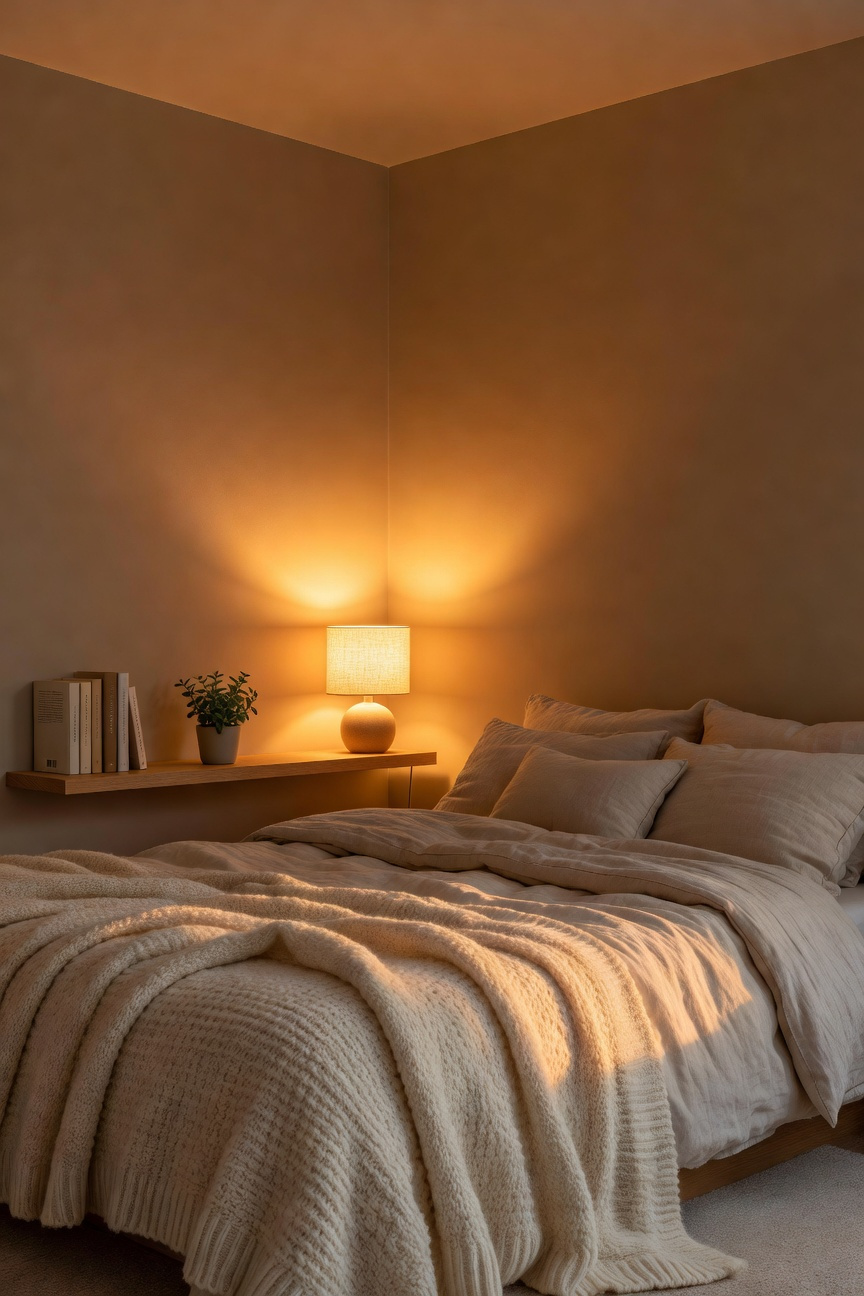
Traditional room dividers often create visual clutter in small rooms. Modern Scandinavian design utilizes psychological partitioning instead to build dedicated sensory zones. For example, a cozy reading nook can exist entirely through a textured floor rug. Integrating haptic resonance is vital for establishing this invisible tactile boundary. Uniquely, touching natural materials like European flax linen or organic wool triggers the parasympathetic nervous system. Ultimately, layering these breathable fabrics creates a nesting effect that provides essential biological grounding.
Scent also serves as an invisible anchor for your daily evening ritual. Diffusing functional fragrances like cedarwood or sandalwood actively stimulates the vagus nerve. Over time, your brain firmly associates these woody aromas with immediate relaxation. Consequently, you can mentally exit the workday, even if your desk sits exactly three feet away. Indeed, this layered sensory approach transforms any compact room into a deeply restorative sanctuary. Your final small bedroom makeover should feel less like a compromise and more like a curated masterpiece of modern living.
To achieve a premium look in a limited space, focus on high-quality natural materials and a cohesive color palette. Use the monochromatic wash technique to paint your walls and trim the exact same color. Invest in solid wood floating furniture to maximize floor visibility. Replace generic overhead lighting with layered amber-toned fixtures. Finally, reduce visual clutter by choosing a single oversized art piece for immediate designer-led sophistication.
The most efficient layout often breaks the rule of symmetry. Pushing the bed into a corner can reclaim up to 22 percent of usable floor space. Next, use that reclaimed footprint for a dedicated workspace or cozy reading nook. Additionally, using wall-mounted shelving and floor-to-ceiling curtains creates vertical sightlines that make the room feel taller.
Counterintuitively, deep saturated hues like Nordic blues or earthy greens can make walls appear to recede. This effect works exceptionally well in low-light conditions. When you apply the same dark color to the ceiling and baseboards, you erase the visual boundaries defining the room’s true size. This creates an infinite effect that makes a small bedroom feel like a cozy, expansive cocoon rather than a cramped box.


