Physical Address
304 North Cardinal St.
Dorchester Center, MA 02124
Physical Address
304 North Cardinal St.
Dorchester Center, MA 02124
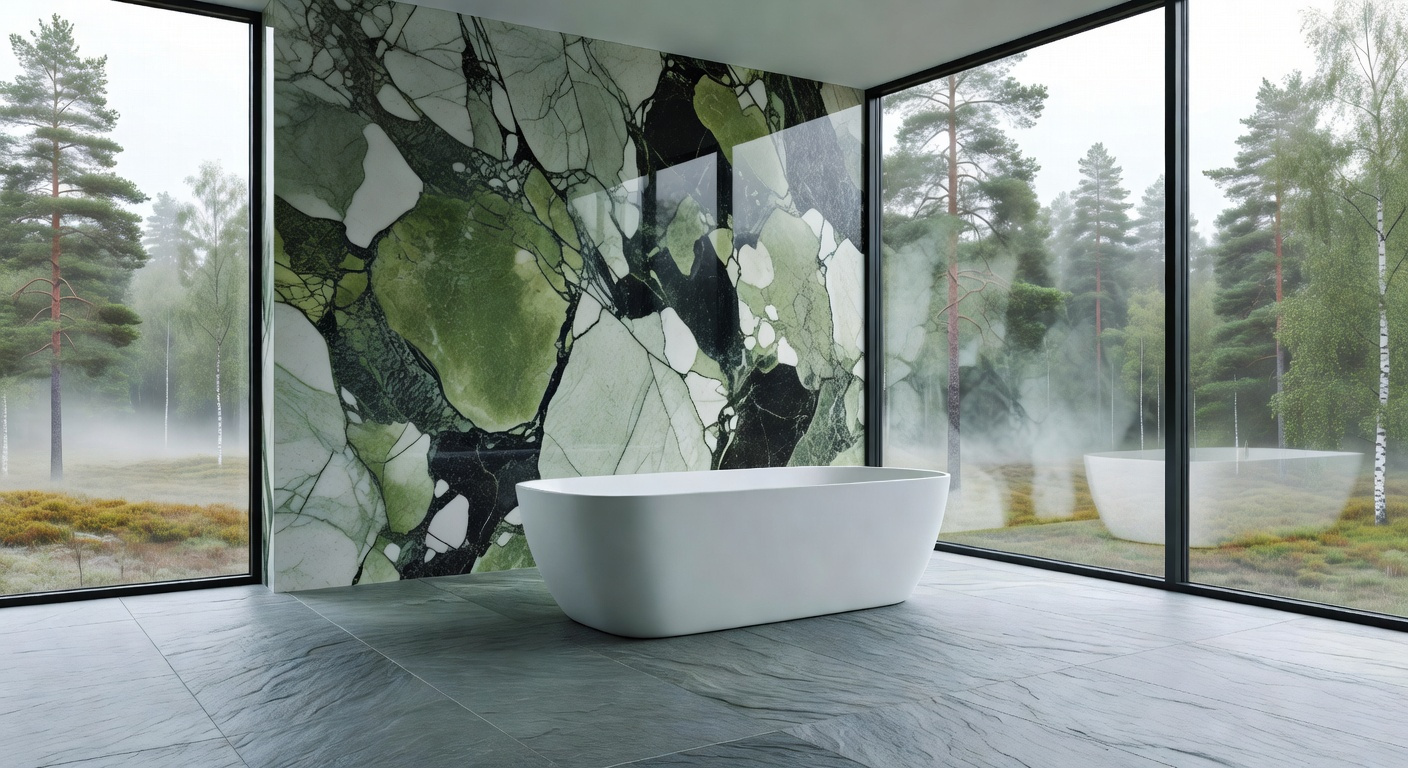
Explore elegant bathroom makeover ideas to transform your space into a serene Nordic sanctuary. Elevate your home with Decor Swag’s expert design guide.
I’ve noticed a strange trend in high-end bathroom design recently. People often assume that building a luxurious washroom requires buying the most expensive, highly polished fixtures available. The result is almost always a cold, sterile utility room. When exploring the best bathroom makeover ideas, we quickly realize that high-gloss tiles and polished chrome are missing something crucial. They lack the fractal complexity our brains naturally crave.
In fact, these hard surfaces often trigger subtle anxiety. This completely misses the restorative relaxation found in professional bathroom renovation ideas. Your morning routine ends up feeling rushed and clinical rather than calming.
However, building a true Nordic sanctuary requires a different approach. The focus shifts to a warm atmosphere rather than isolated luxury objects. We need to blend tactile warmth with functional Scandinavian minimalism. For instance, materials like unlacquered brass develop a beautiful living finish. Integrating natural wood and stone actively lowers your heart rate. Next, wall-hung vanities create a continuous flow. They provide breathable negative space. The room starts to feel like a carved retreat.
Here is how to transform a clinical washroom into a calming Nordic escape. Specifically, we will look at managing ambient light, sound, and natural textures found in recent bathroom design trends. Layered lighting and soft acoustics mimic the serenity of a traditional spa. Indeed, true luxury is just a warm environment that welcomes you every single morning.
A proper Nordic bathroom makeover begins with living stone. I prefer skipping generic marble in favor of deeply regional stones. Kolmården marble, for example, brings the dark Swedish forests indoors. Its deep green hue provides an immediate sense of calm. Alternatively, Norwegian Oppdal slate offers a unique silk-brushed finish.
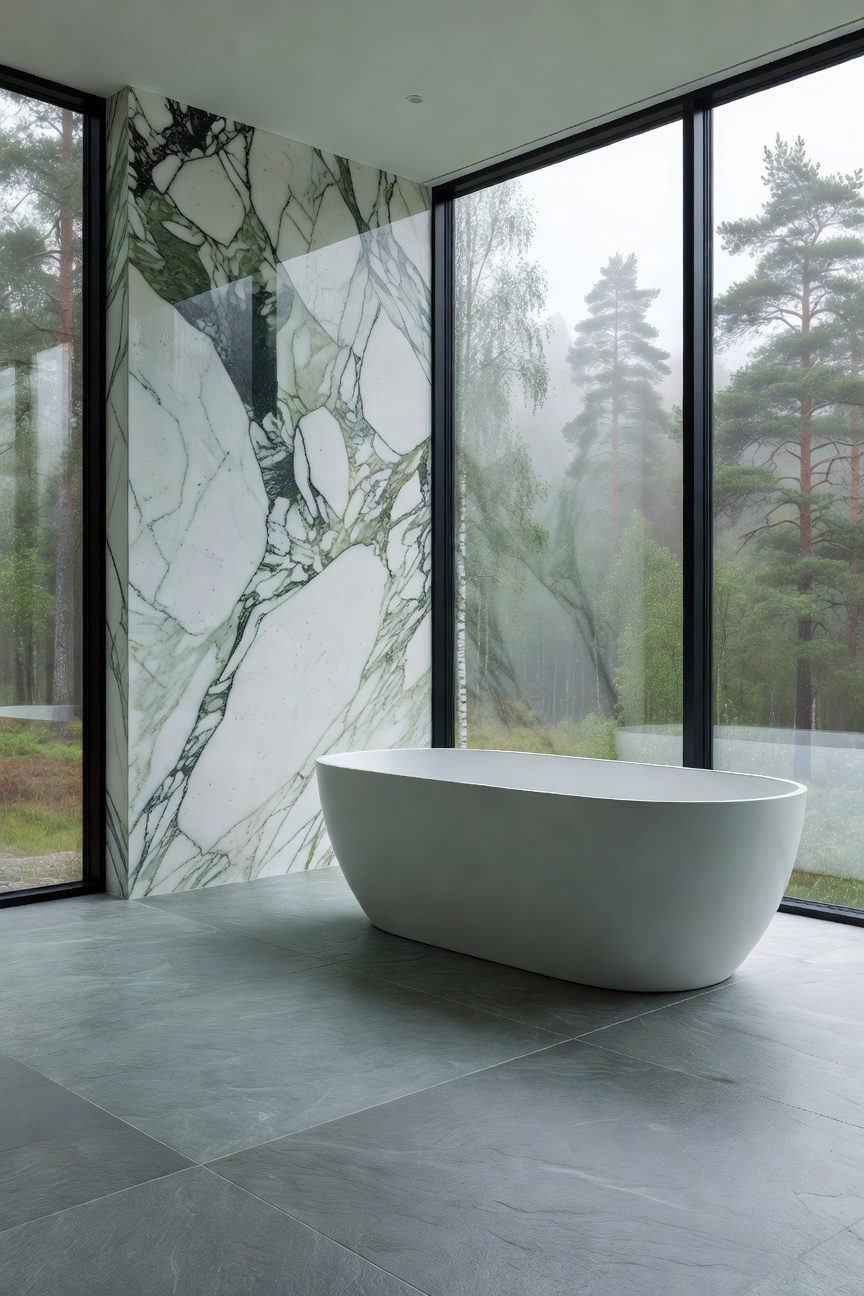
Walking on this ancient mountain rock actually feels surprisingly soft. The slate also darkens gracefully when exposed to water. This creates a visual story that mimics stepping onto wet seaside rocks through thoughtful biophilic design.
Grounding materiality also means cleverly using thermal timber. Placing raw wood in wet spaces used to be a massive design headache. However, Finnish innovations like Lunawood solve this problem through careful heat modification. Interestingly, this treated Thermowood acts as a passive heating system.
During a shower, the wood effortlessly absorbs the rising humidity. This phase change then releases latent energy right back into the room. In fact, the process naturally raises the bathroom temperature by several degrees. The walls literally wrap you in genuine physical warmth.
This approach traces back to the architect Alvar Aalto. He firmly believed architecture must serve human healing and comfort. Modern Nordic spaces still prioritize soft forms and tactile ergonomics. Every touched surface should provide a deep physical connection to the earth.
Experts usually apply a strict sensory hierarchy here. Heavy raw slate is reserved strictly for the floors. Conversely, the upper walls feature airy white plaster or frameless glass. The heavy earth beautifully meets the light-filled sky. Finally, choosing materials with high reflectance catches that limited winter light perfectly.
Bathroom design favored sterile ceramics for decades just to signal cleanliness. However, this clinical approach often creates a neurologically taxing environment. Modern Scandinavian design embraces biophilic elements for organic warmth instead. We see this often in modern bathroom ideas that prioritize natural textures.
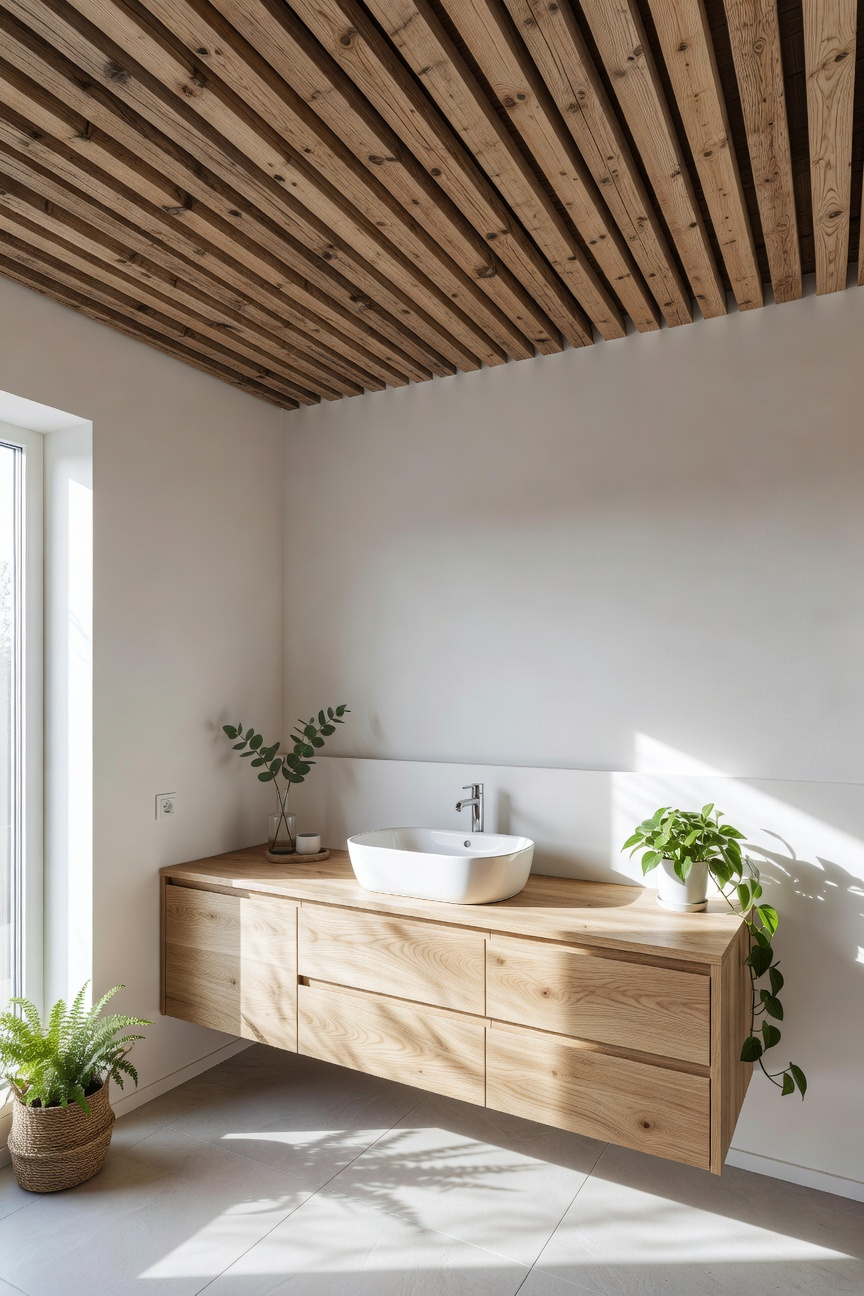
Specifically, introducing raw timber immediately breaks the visual monotony. Wood possesses a tactile warmth and low thermal conductivity. It genuinely softens the physical shock of a cold room. Swapping a bulky cabinet for a floating oak vanity helps significantly.
Suspending the unit increases the perceived floor area. Even a cramped washroom instantly feels much larger. White oak is particularly ideal for these moisture-heavy spaces. Its cellular structure contains organic plugs that resist rot. Finishing the wood with hard-wax oils preserves its beautiful matte texture.
The ceiling also offers a beautiful canvas for raw timber. Hard tile surfaces normally turn bathrooms into noisy echo chambers. Conversely, installing a slatted wood ceiling acts as an acoustic diffuser. These slatted treatments absorb harsh sounds and reduce clatter.
Running linear slats can also beautifully draw the eye outward. This combination of timber accents completely re-humanizes the space. Importantly, you must pair raw oak with stainless steel hardware. Otherwise, natural tannins in the wood will react and blacken. This simple detail ensures your natural sanctuary ages gracefully.
Moving away from high-gloss tiles shifts the room toward sensory architecture. Clinical surfaces bounce light aggressively around the room. This glare keeps the mind on high alert. Instead, matte limestone or slate absorbs light beautifully. These honed finishes create a calming micro-texture. Your eyes and brain can finally rest.
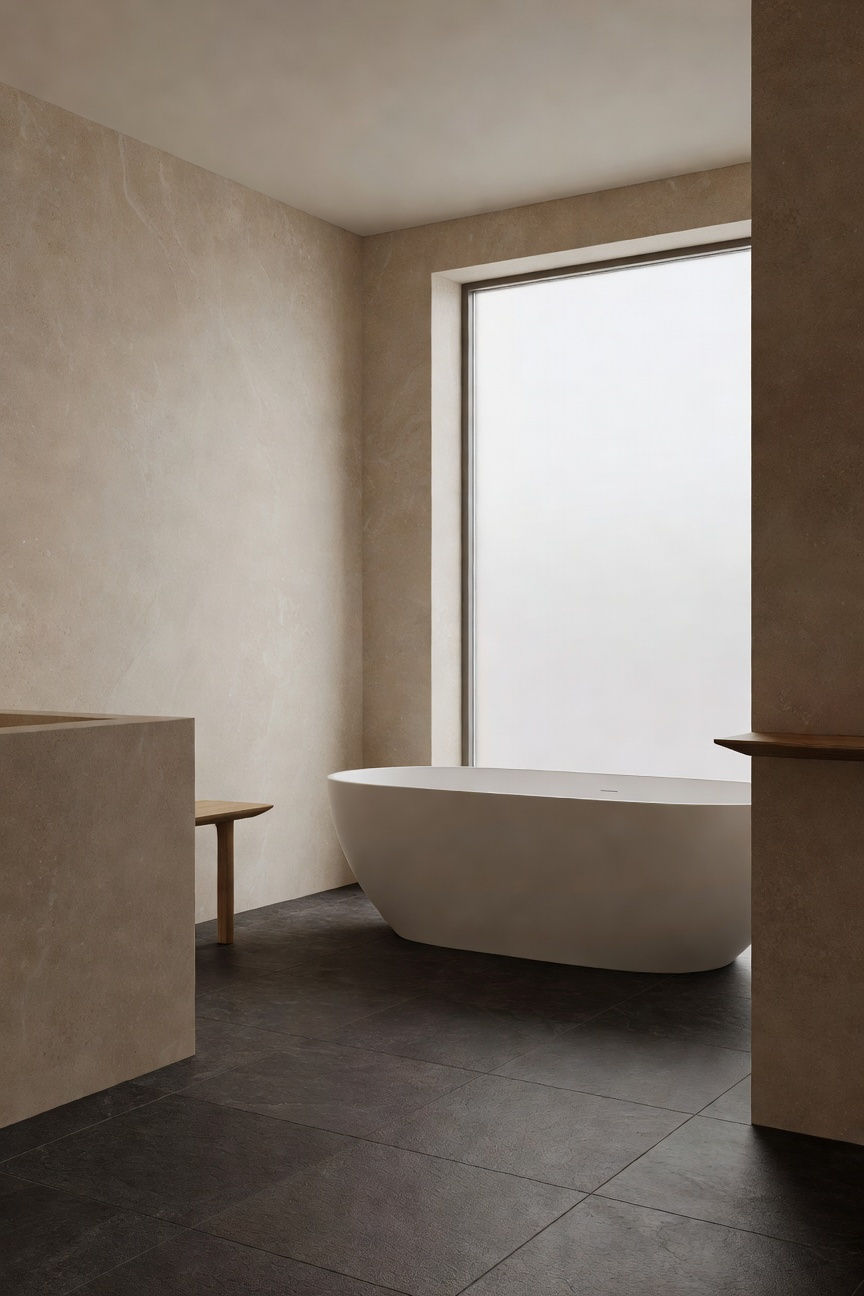
Underfoot, the velvety feel of honed stone provides instant grounding. The matte texture gently increases skin contact. It drastically reduces the jarring coldness of glossy tiles. Additionally, natural stone acts as an excellent thermal battery. Limestone pairs perfectly with underfloor heating systems. The stone retains heat and releases it slowly. This mimics the comforting warmth of sun-baked rocks.
Adopting natural stone means embracing slight imperfections. Porous slate and limestone develop a unique patina over time. This aging process aligns perfectly with Scandinavian design principles. Rather than demanding clinical perfection, the stone feels authentically lived-in.
Honed surfaces also offer superior natural slip resistance. A wet bathroom floor becomes much safer without artificial coatings. These natural materials do require periodic sealing routines. However, this simple care ritual preserves their geological beauty. Matte finishes also easily hide daily water spots and scratches.
Applying seamless microcement moves a bathroom beyond simple renovation. It creates a clean, warm architectural skin. Traditional tiling introduces harsh, restrictive grout lines. The human eye instinctively uses these grids to measure space. Removing them instantly expands the room’s visual boundaries.
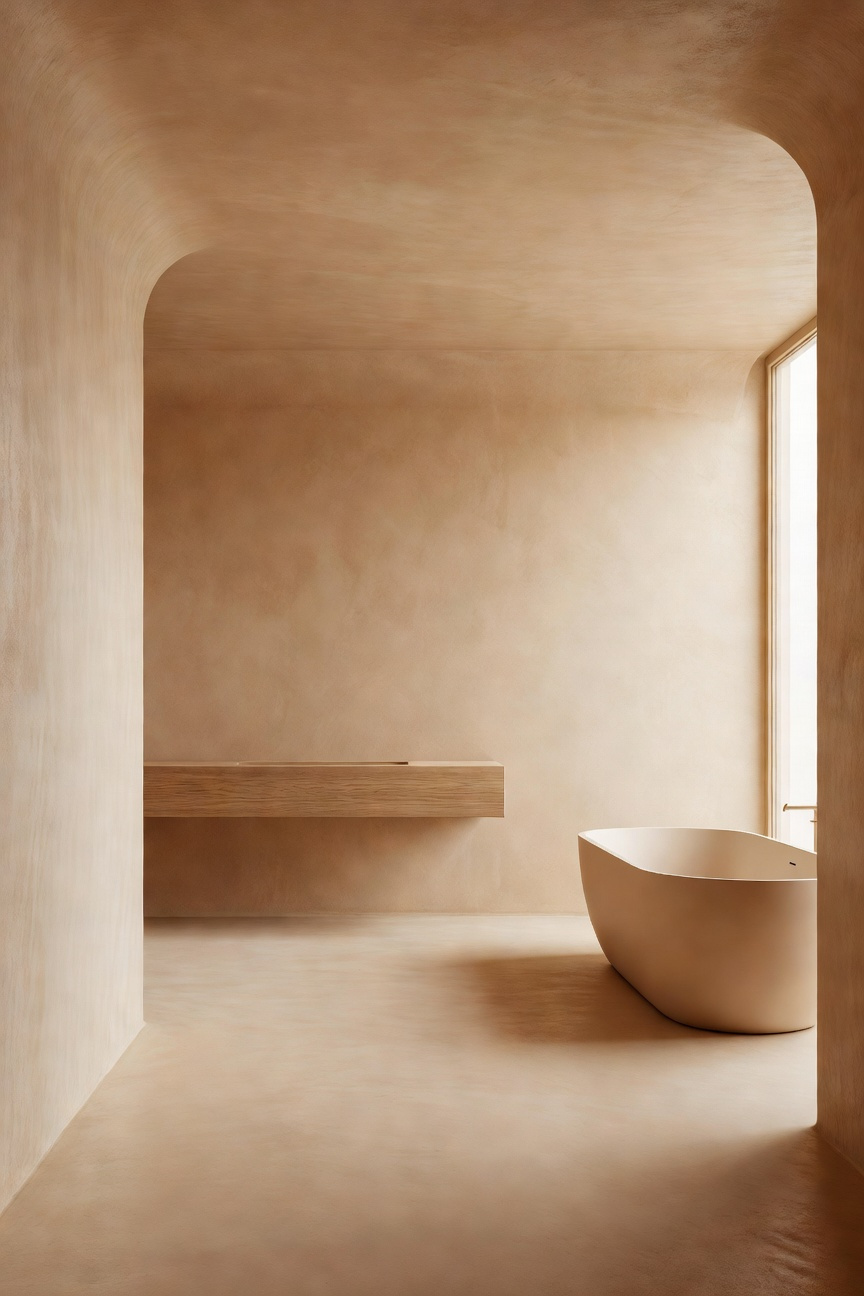
Designers often use a technique called color drenching here. By matching the floor and walls, sharp corners effectively disappear. Additionally, microcement offers a soft, ethereal depth. Light gently penetrates its thin, mineral-rich resin layers. The walls end up feeling breathable and distant.
Minimalism can sometimes feel cold or overly clinical. However, microcement provides essential warmth when paired with underfloor heating. Its thin application ensures excellent thermal conductivity. Cozy heat transfers quickly and evenly. This daily sensory comfort is undeniable.
The hand-troweled material feels incredibly velvety under bare feet. It entirely lacks the harsh, glassy snap of traditional porcelain. Moreover, these polymer-modified layers provide subtle acoustic dampening. This dampening softens running water into a quiet, meditative ritual. The finish mimics the organic look of ancient Moroccan plaster. Yet, it adds modern waterproof integrity for effortless daily use.
River rock flooring transforms a standard shower into a grounded micro-spa. This biophilic trend descends directly from the traditional Japanese Ashi-yu experience. These ancient, shallow pools historically relieved muscle fatigue using geothermally heated stones. Today, standing on natural pebbles provides a remarkably similar daily reflexology ritual. Stimulating the foot’s many nerve endings effectively reduces systemic bodily stress.
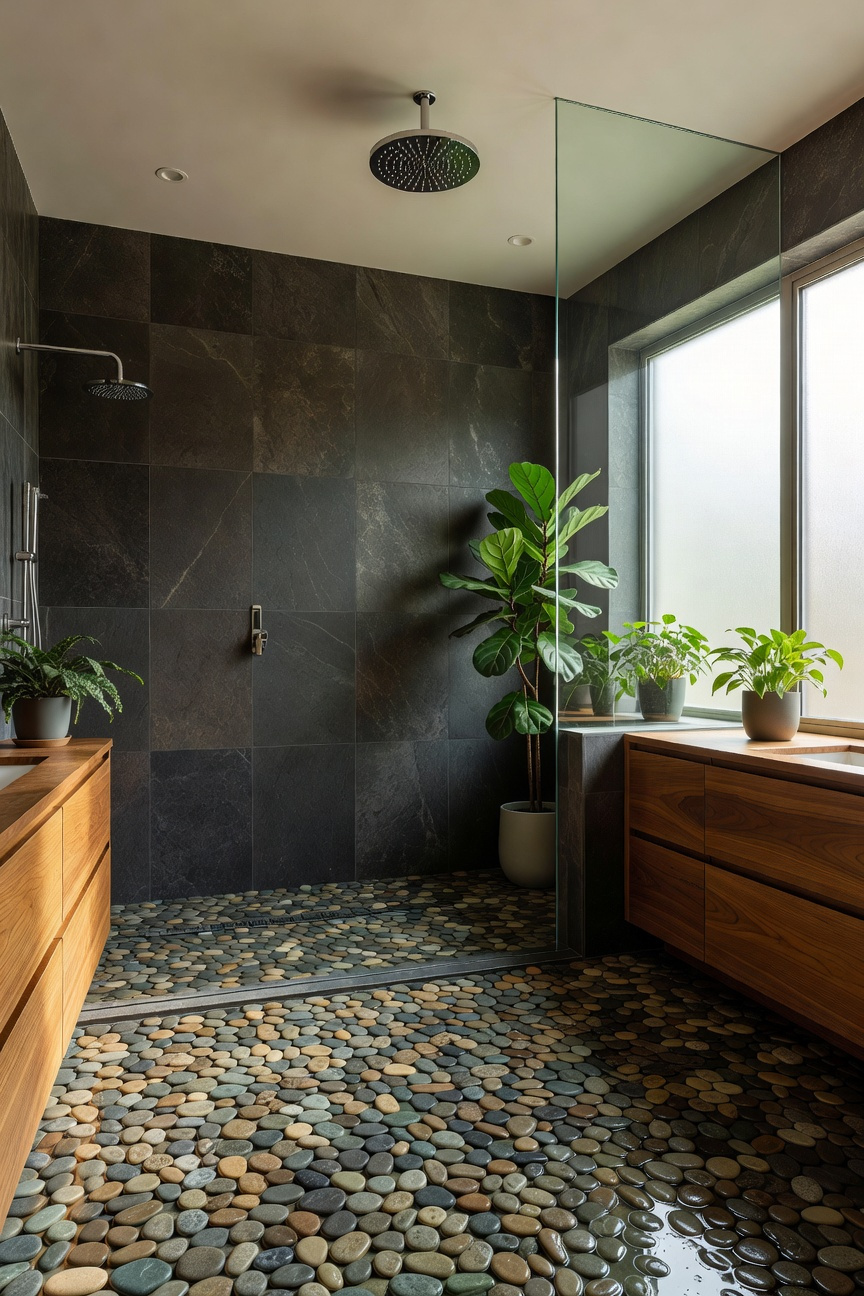
However, true ergonomic comfort depends entirely on your specific stone profile. Natural rounded pebbles offer intense sensory stimulation that invigorates the feet. Sliced pebbles, on the other hand, provide a smooth, flat surface. Thoughtful designers frequently combine both stone profiles to maximize comfort. They strategically place rounded pebbles around a comfortable landing zone of flat stones.
You gain stable footing while still enjoying a rich textural contrast. These stones also add visual weight and earthy warmth to sterile spaces. Their irregular shapes recall early Greek mosaic storytelling. Proper technical execution dictates the longevity of this beautiful natural floor.
Standard cement grout remains highly porous and frequently invites unwanted mold. Instead, modern epoxy grout creates a flawless, non-porous barrier against standing water. Expert installers employ a strict three-step sealing sandwich method for durability. They pre-seal the porous stone, apply the epoxy grout, and then post-seal the surface. This meticulous process yields a beautifully warm and lasting sanctuary.
In Scandinavian design, light is not just a utility. We actually treat illumination as a structural material. The single overhead bulb is completely rejected. That harsh fixture destroys depth and flattens room features. Our approach uses five to seven smaller lighting sources instead.
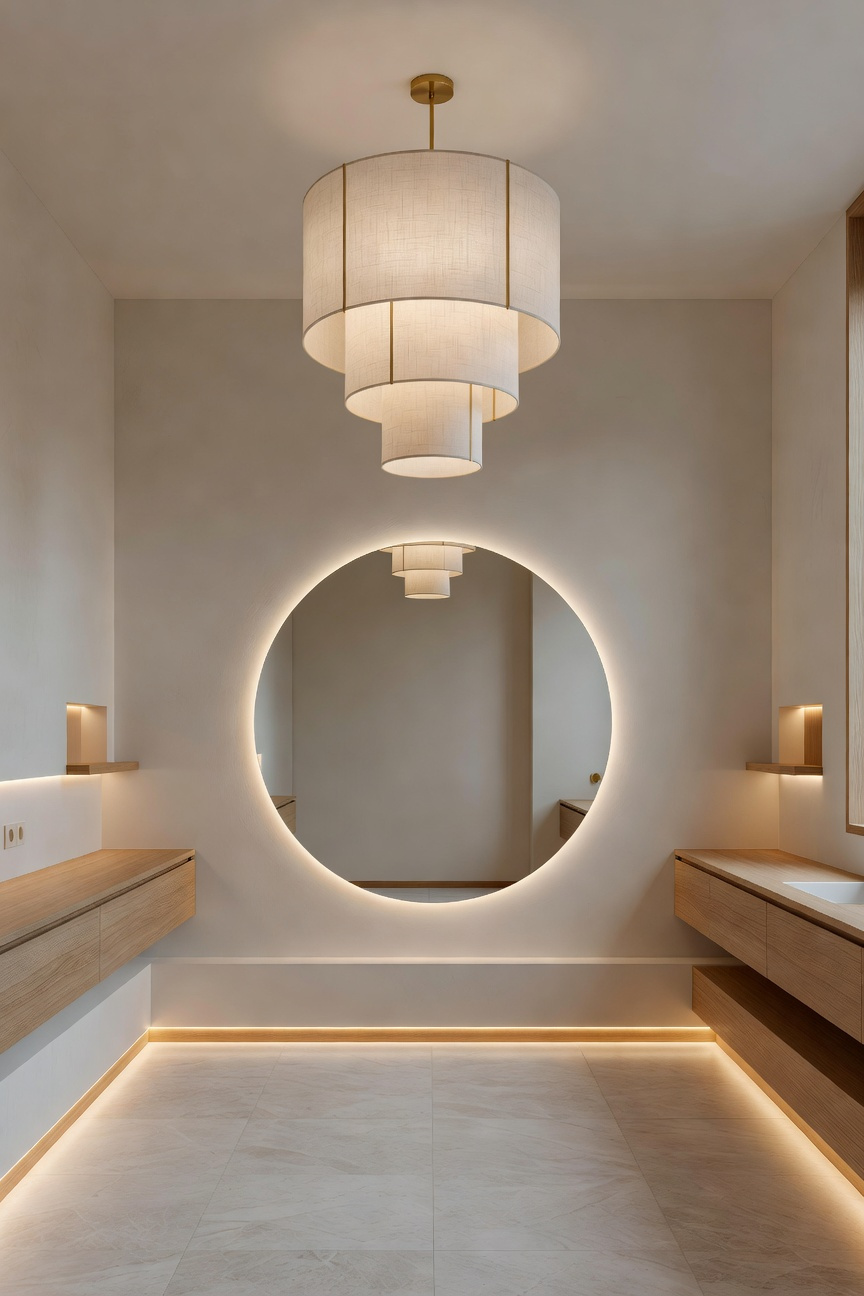
Specifically, these fixtures create soft, transitional islands of light. The eye rests comfortably within the cozy space. Layered shades provide a beautiful, shadowless logarithmic glow. Importantly, 90+ CRI bulbs ensure human skin looks naturally healthy through artisanal finishes in the glasswork.
Lighting placement alters perceived architectural dimensions significantly. Wall washing, for instance, pushes boundaries outward for visual airiness. Wall grazing highlights tactile textures brilliantly. This gives ribbed wood panels and handmade tiles actual soul.
The modern bathroom also acts as a vital circadian hub. Morning activation requires blue-rich 4000K illumination for a cellular wake-up. Evening restoration demands a completely different lighting approach. Specifically, we transition to a warm 2700K moonlight palette. Hidden LED strips provide soft rim lighting underneath floating vanities. This protects natural rest cues before deep sleep.
Artificial light wells can replace traditional architectural skylights beautifully. Deep ceiling alcoves feature tunable panels that shift naturally. Matte tiles prevent glare while bouncing this soft light. Combined with frosted glass, the illumination becomes a luminous mist.
Scandinavian design thrives on natural daylight. Harsh direct sunlight, however, can disrupt the serene atmosphere of a bathroom. Frosted glass is an essential tool for creating a warm sanctuary. These panes act as brilliant light-scattering engines. They gently redirect incoming sunlight to fill dark shadows. This creates a beautifully soft luminous volume.
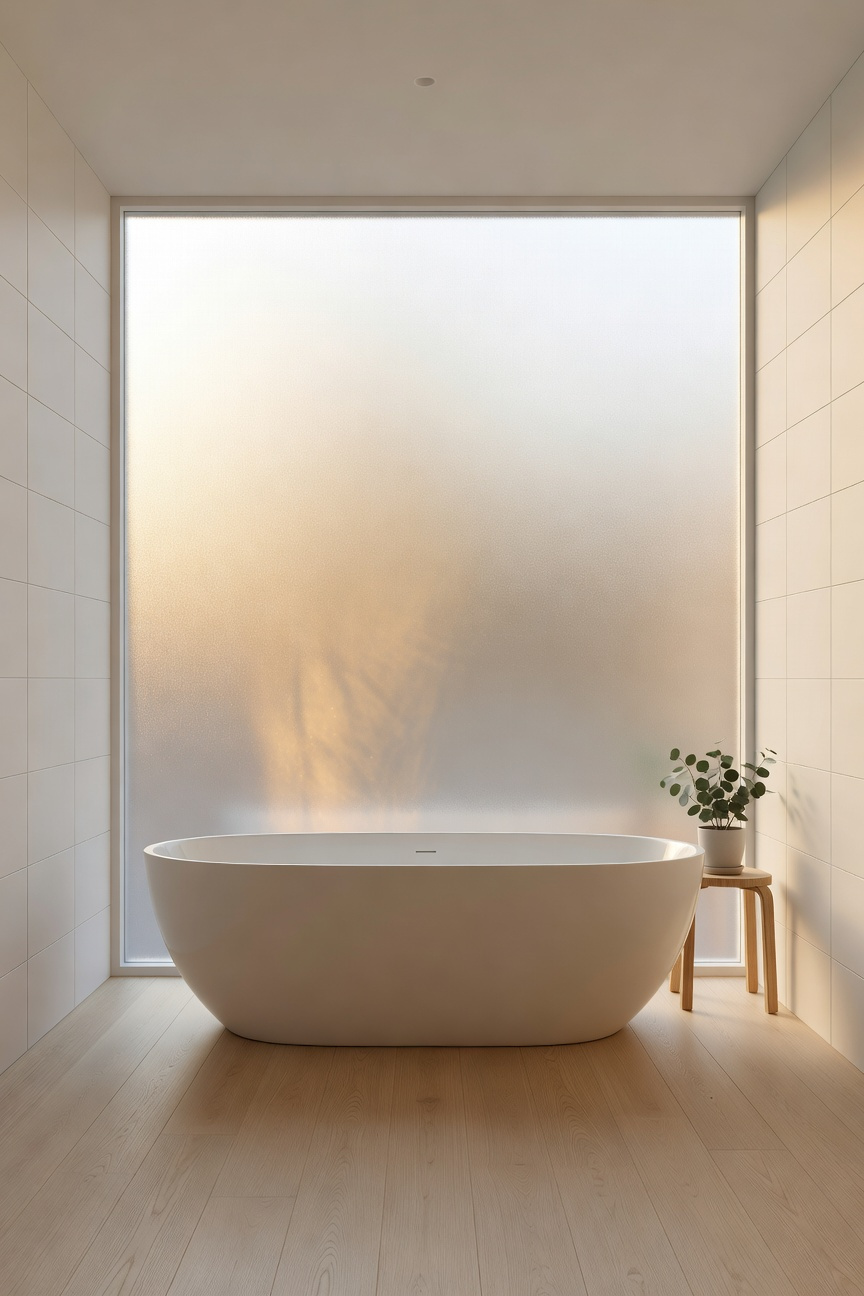
High-quality acid-etched glass is perfectly ideal for this space. It maintains an impressive ninety percent light transmission rate. Additionally, its incredibly smooth finish resists soap scum and daily moisture.
Psychologically, diffused light gently triggers healthy morning serotonin production. It also eliminates the harsh stress of blinding glare on wet surfaces. Obscured glass provides a comforting soft boundary. It protects your personal privacy while capturing the kinetic shadows of nature.
This subtle connection to the outdoors effectively lowers cortisol levels. Strategically, you should place these frosted panes in high clerestory windows. The diffused daylight will then bounce beautifully off your ceiling. The entire room is comfortably washed in a cool, even glow. Your functional bathroom effortlessly becomes a deeply restful retreat.
Traditional overhead recessed lights often cast harsh, clinical shadows across your face. Replacing them with eye-level sconces completely transforms your daily routines. Placing fixtures sixty to sixty-six inches high creates flattering cross-illumination. This gentle approach washes away the deep shadows under your eyes and chin.
Standard LEDs simply turn gray and ghostly when dimmed. Warm-dim technology, conversely, mimics the natural, soothing arc of a Scandinavian sunset. As the voltage drops, the crisp morning light shifts into a deep, amber glow. Biologically, this warm 1800K candlelight suppresses less melatonin than static blue-rich LEDs. A midnight bathroom trip becomes a soft transition rather than a cortisol spike.
To achieve this minimalist sanctuary, the fixture materials matter immensely. High-quality sconces should feature opal or frosted etched glass. This elegant glass perfectly diffuses the bulbs to eliminate harsh glare. You must also select fixtures with a Color Rendering Index above ninety. This high CRI ensures your skin looks healthy and vibrant in the mirror. By turning off aggressive overheads, the corners of your room softly recede into shadow.
Vanity lighting historically relied on bulky fixtures that cluttered the visual space. Backlit mirrors offer a much cleaner approach to modern Scandinavian design. They create visual silence by hiding electronics inside a recessed pancake box. Professionals use interlocking aluminum Z-bars to achieve a rock-solid, floating hold.
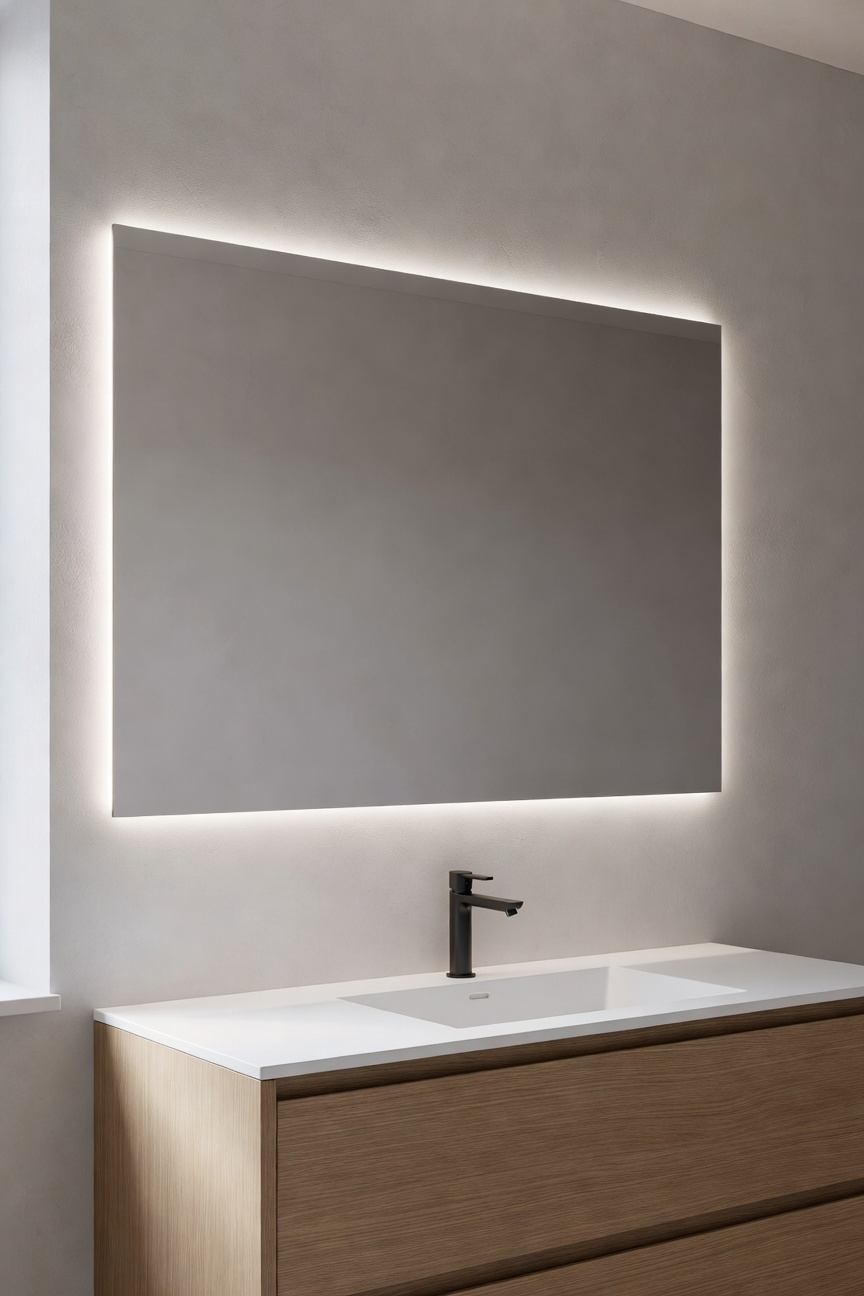
A bottom offset board ensures the glass stays perfectly parallel to the wall. This precise mounting creates a necessary half-inch air gap. Light naturally refracts within this space to form a soft, architectural halo. This glow grazes beautifully over textured surfaces like warm slate or fluted wood. However, you must leave eight inches of unobstructed wall space around the edges. Otherwise, the illumination crashes into adjacent cabinets and ruins the weightless silhouette.
This hidden lighting greatly enhances daily psychological comfort and wellness. A warm 3000K light temperature triggers a cozy, spa-like evening glow. This diffused light also fills in harsh facial shadows caused by overhead bulbs. Integrating natural textures with hidden technology transforms your bathroom into a calming sanctuary.
Adopting a “Winter Light” palette transforms a harsh bathroom into a warm, inviting sanctuary. This Scandinavian approach blends soft off-whites, pale greys, and muted sage. Nordic designers historically used these mid-tones to maximize limited winter daylight. These shades actually mimic how snow softly diffuses natural light. Unlike stark hospital white, emotive neutrals prevent harsh glare and eye strain. Utilizing an off-white subtly warms the room without darkening the space.
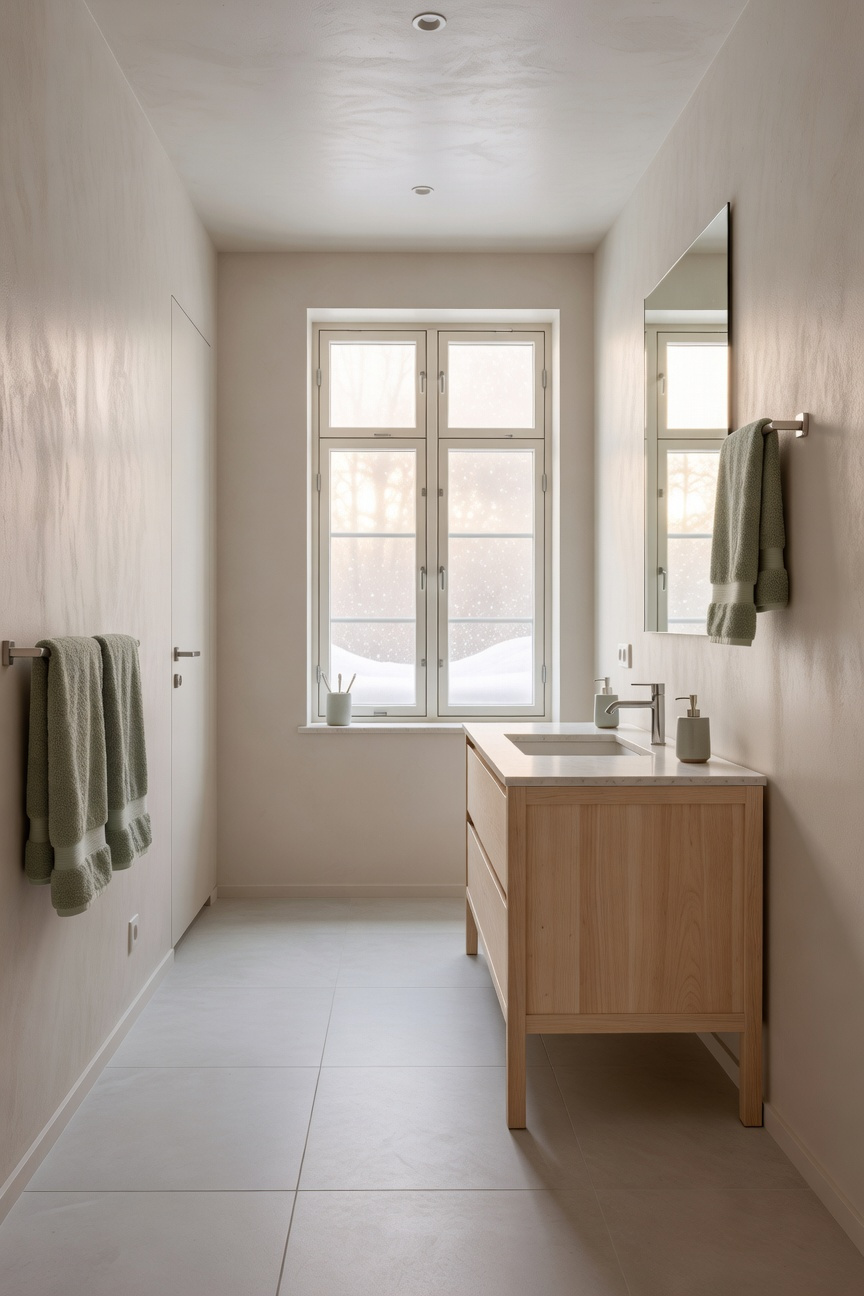
Adding muted sage effectively anchors this light-reflecting aesthetic with natural harmony. Sage responds beautifully to an optical phenomenon known as metamerism. In the morning, the green tones appear crisp and botanical under natural daylight. Warm artificial vanity bulbs then transform the room into a cozy evening cocoon. Experts recommend using high-CRI LED bulbs to keep the green pigments true.
A light palette does require tactile grounding to avoid feeling unfinished. Instead of glossy tiles, honed stone or matte porcelain beautifully diffuses light. This soft-focus texture mimics the sensory feeling of a misty morning. Pairing these earthy surfaces with brushed nickel or aged brass provides a warm glow. Psychologically, muted greens and greys serve as a stabilizing visual exhale. Applying these tones across baseboards and ceilings removes visual seams completely.
Functional minimalism represents a pivotal shift away from the sterile spaces of the past. It champions invisible utility. High-performance engineering is present but visually absent. The bathroom transforms into architecture built purely for emotion. This movement synthesizes the German Bauhaus with the Japanese concept of Ma. Spaces perform flawlessly without announcing their labor. We achieve this active silence through disappearing hardware.
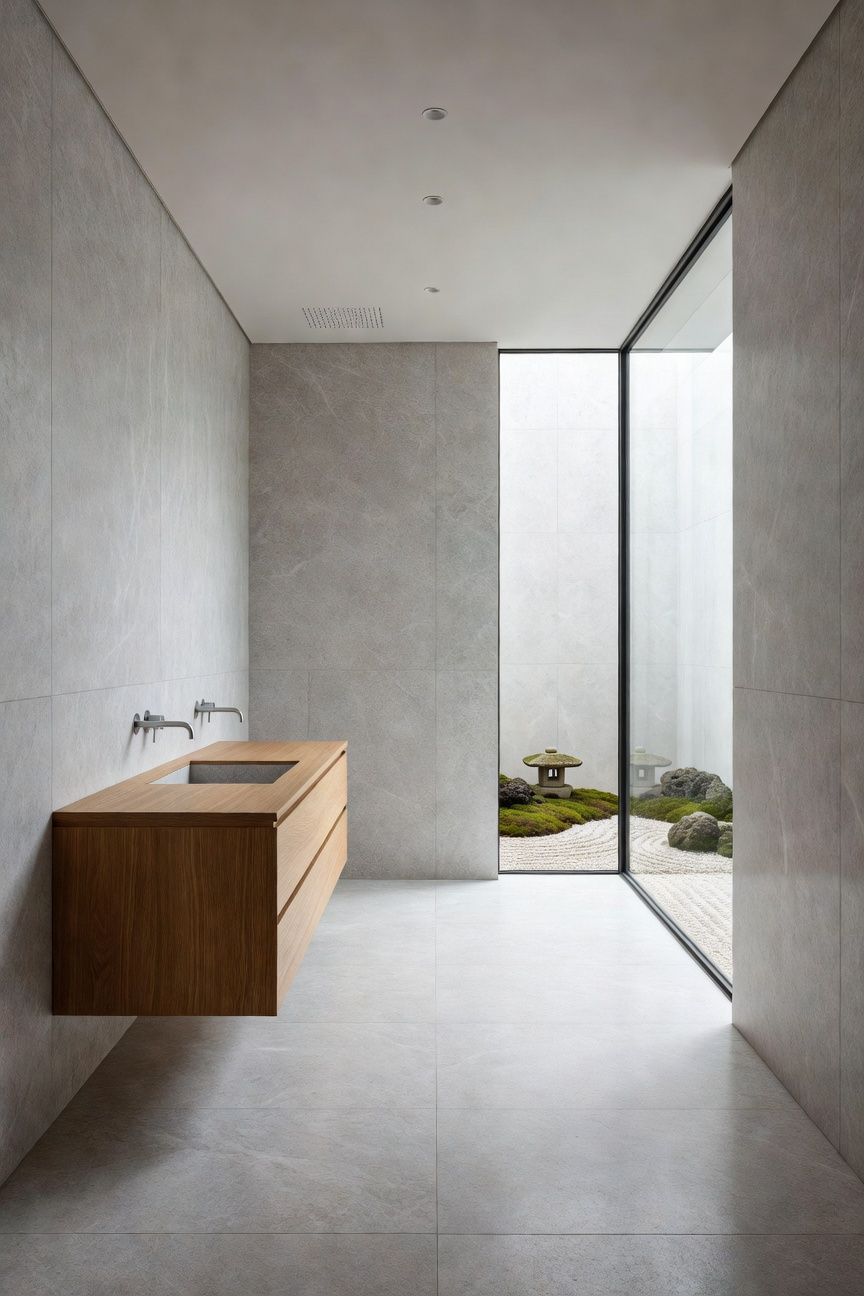
Tankless smart toilets and micro-slot drains remove visual floor breaks. The room feels vastly larger and inherently more serene. Sensory architecture replaces traditional ornamentation in these warm environments. Monolithic materials like microcement hide distracting seams completely.
We prioritize haptic interaction through living finishes and bespoke cabinetry made of aromatic Lawson cypress wood. Hidden LED channels provide a soft glow rather than harsh light. Psychologically, removing visual clutter acts as a powerful nervous system reset. Toe-kick drawers and recessed niches hide daily items perfectly. This hidden storage reduces the low-level cortisol response triggered by mess. Some professionals worry that hiding plumbing creates severe maintenance risks. However, clever serviceability ports hidden behind stone tiles solve this beautifully.
True relaxation requires a space free from visual noise in modern Scandinavian design. Visible clutter and protruding hardware can unconsciously increase stress levels. Flush-mount cabinetry offers an architectural strategy to achieve total visual silence. By integrating storage into the wall, designers embrace intentional negative space. The eye rests easily on flat, warm, and uninterrupted surfaces.
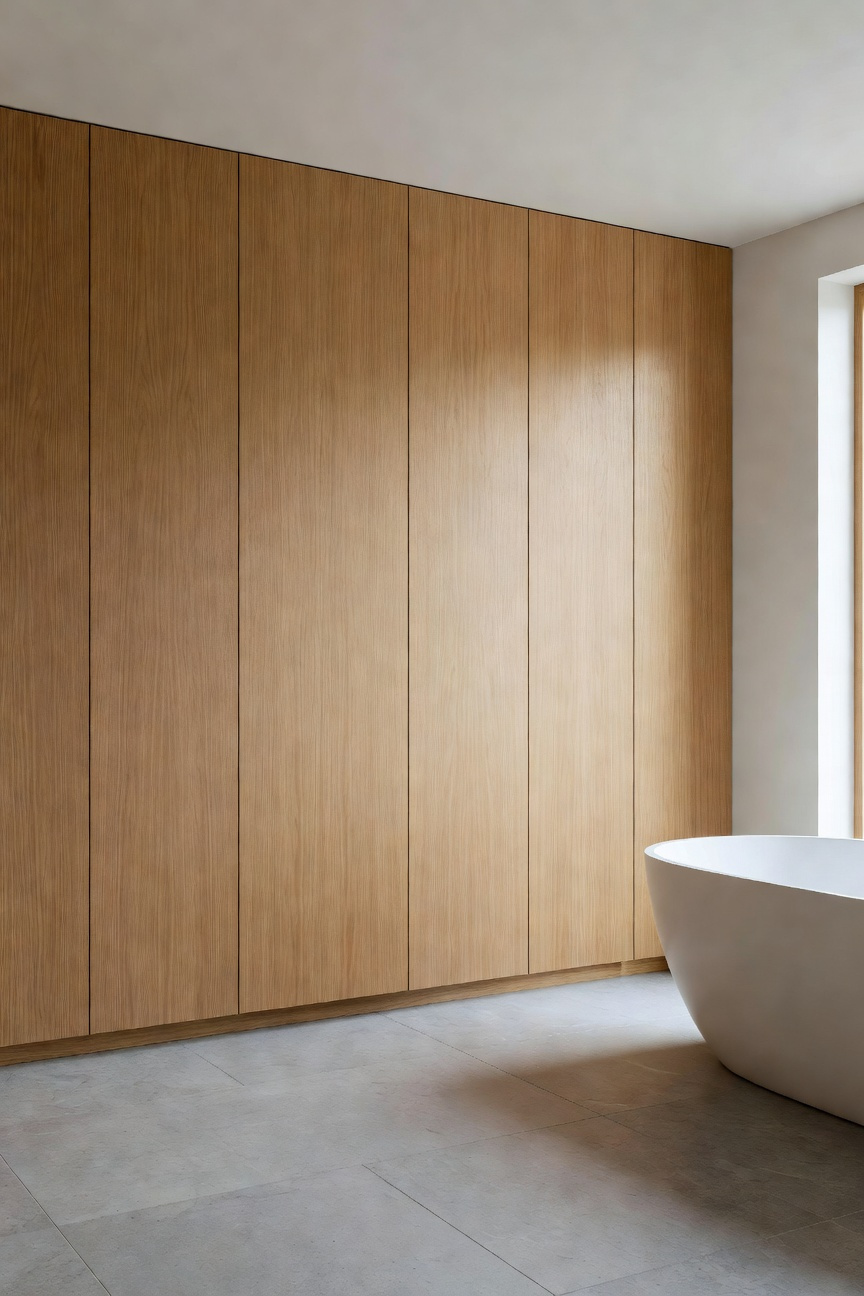
Push-to-open mechanisms replace traditional handles to enhance this seamless aesthetic. These spring-loaded latches provide effortless, hands-free utility. A user with wet hands can simply bump the drawer to open it. Modern hybrid hinges allow for a controlled, silent retraction.
Bathrooms remain extreme, humid environments. High-quality installations must account for the natural swelling of wood. Builders leave a precise three-millimeter expansion gap to prevent doors from binding. This gap creates a sharp, architectural shadow line around the frame. Premium makeovers utilize sustainable, marine-grade plywood rather than standard particle board. A catalyzed conversion varnish adds a durable moisture barrier to protect this material.
Suspending your bathroom fixtures instantly transforms a cluttered room into a curated sanctuary. Lifting the toilet and vanity alters our psychological perception of the space. The human brain calculates room size by scanning the floor. Floor-mounted units break this visual field into choppy, constrained sections.
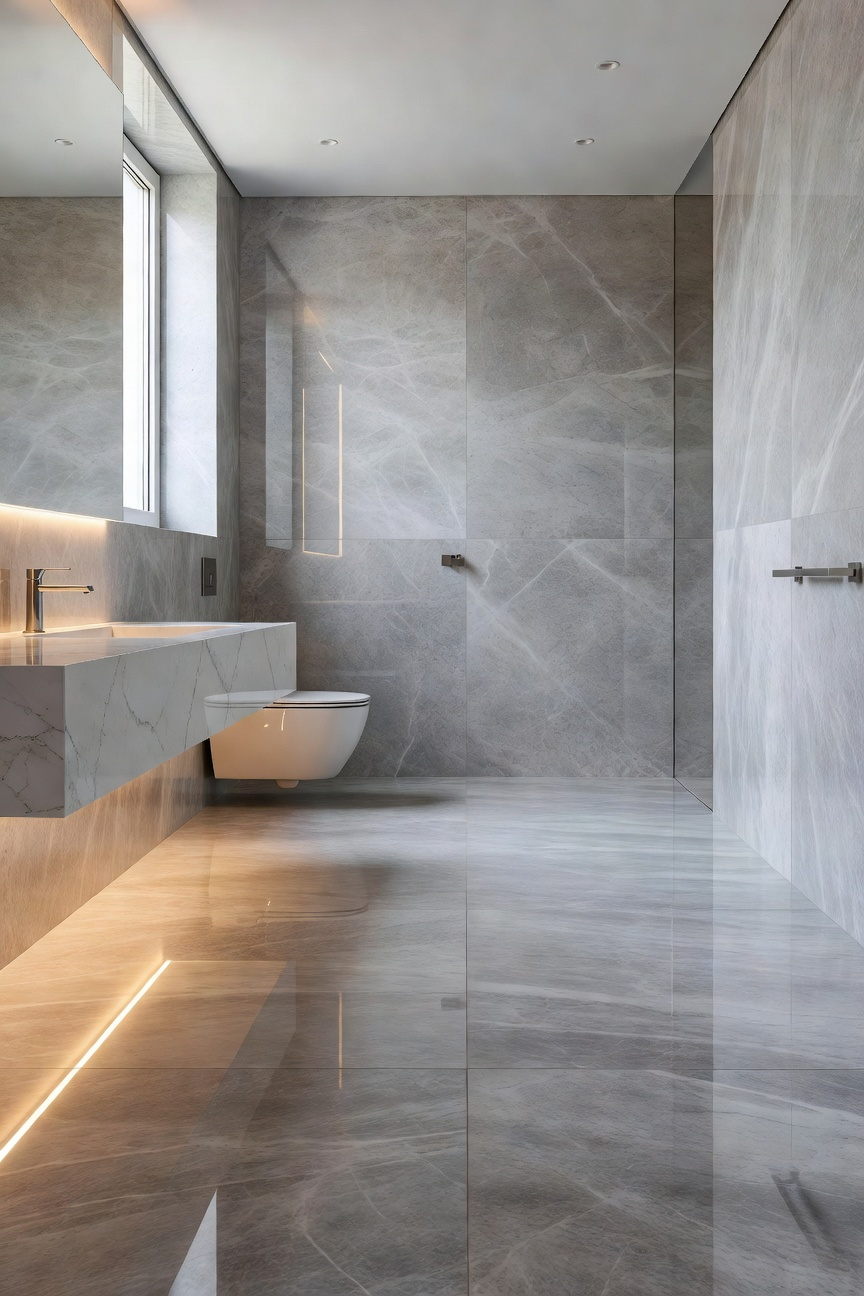
Wall-mounted fixtures allow your beautiful floor tiles to run entirely uninterrupted. This continuous sightline tricks the eye into making the square footage feel wonderfully expansive. Eliminating the heavy base allows soft light to flow freely underneath. This casts a warm halo effect that enhances the room’s airy minimalism.
Behind the drywall, a heavy-duty steel carrier system securely supports the floating elements. You never have to worry about the structural integrity of suspended porcelain. This hidden tank design also creates a beautifully muffled, whisper-quiet flush. Building a slight wall ledge for the tank offers a charming display surface. You can place organic elements like ferns or amber apothecary jars right here.
Floating fixtures revolutionize your daily sensory experience of maintaining deep cleanliness. Traditional toilets harbor hidden dust and grime within hard-to-reach porcelain curves. A suspended design allows a mop to glide effortlessly across the tile. You can also easily customize the fixture height to suit your body.
Designing a curbless walk-in wet room beautifully captures Scandinavian minimalism. Removing the shower lip erases harsh visual boundaries. This seamless approach creates an expansive flow across your floor. Wet rooms used to be cramped, purely utilitarian urban spaces. Modern designs transform them into warm spa sanctuaries, often integrating the flow found in modern bathroom inspiration articles.
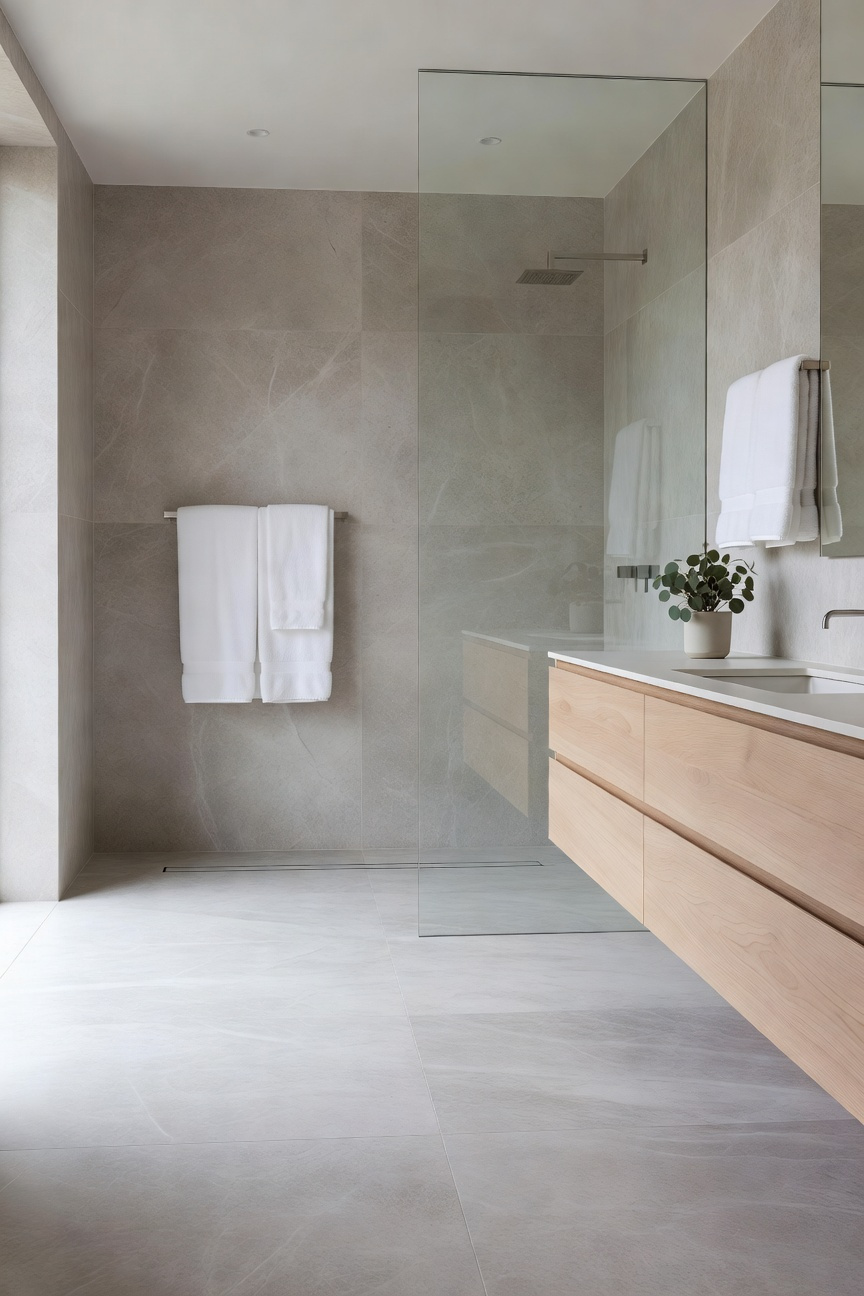
Experts rely on subtle, invisible engineering to achieve this. A gentle floor slope quietly manages drainage. Linear drains allow you to use continuous large-format tiles. This unbroken surface makes small spaces feel massive.
Steam and heat escape quickly without a glass enclosure. Radiant floor heating becomes an absolute functional necessity. It warms your bare feet and evaporates lingering moisture. Acoustic underlays dampen the sharp sounds of splashing. Built-in stone benches add organic softness and intimate comfort.
Beyond aesthetics, this curbless layout champions inclusive universal design. It supports long-term mobility without looking clinical. Highly textured tiles within the splash zone ensure safety. Behind the scenes, rigorous waterproofing protects your home’s structure. Builders completely seal the space with applied membranes. A structural capillary break prevents outward water migration.
True Scandinavian minimalism begins right behind the tile. A recessed shower niche replaces protruding, cluttered wire racks. This architectural precision eliminates harmful mold traps. Modern designers view recessed storage as smart preventative maintenance. Carving a wide horizontal notch requires proper window framing. Installing a structural header prevents future grout cracks. This horizontal stretch makes a compact shower feel incredibly expansive.
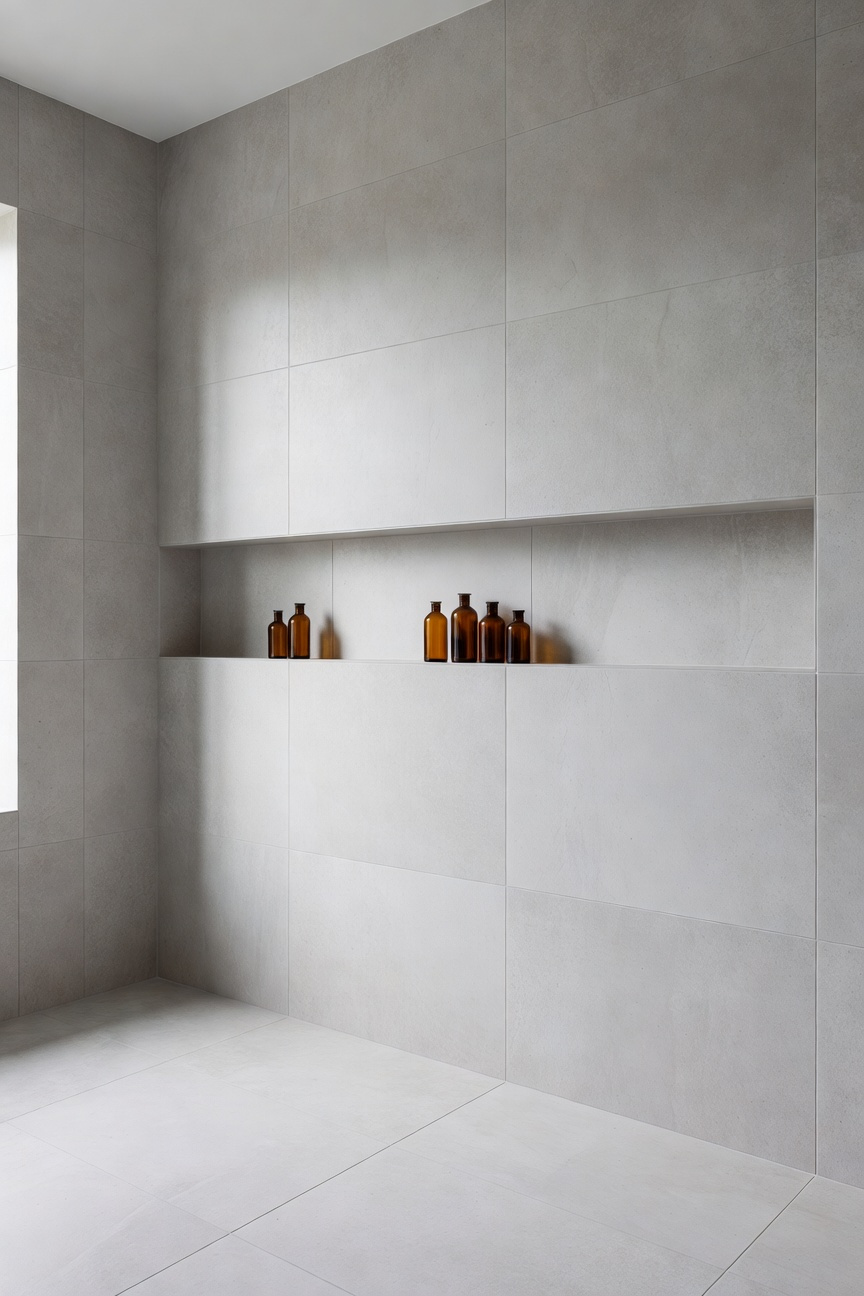
Seamless integration is essential for a calming spa atmosphere. Master tilers use mitered edges instead of plastic trims. Wrapping the stone’s natural grain creates a monolithic, sculptural look. Continuing the same large-format tile inside hides the storage. Water management remains crucial for these elegant architectural features. A slight inward slope ensures the recess self-dries perfectly.
A modern niche also offers an opportunity for layered lighting. Tucking waterproof LED strips into the top lip adds warmth. This soft wash gently highlights natural stone textures. Ergonomic visibility management keeps everyday items out of sight. Placing the recess on a pony wall hides mismatched bottles.
You must choose between two distinct design philosophies to streamline your hardware. This means selecting either unlacquered brass or matte black minimalist faucets. These finishes act as vital visual anchors in Scandinavian design. They dictate whether your space feels organic or highly precise.
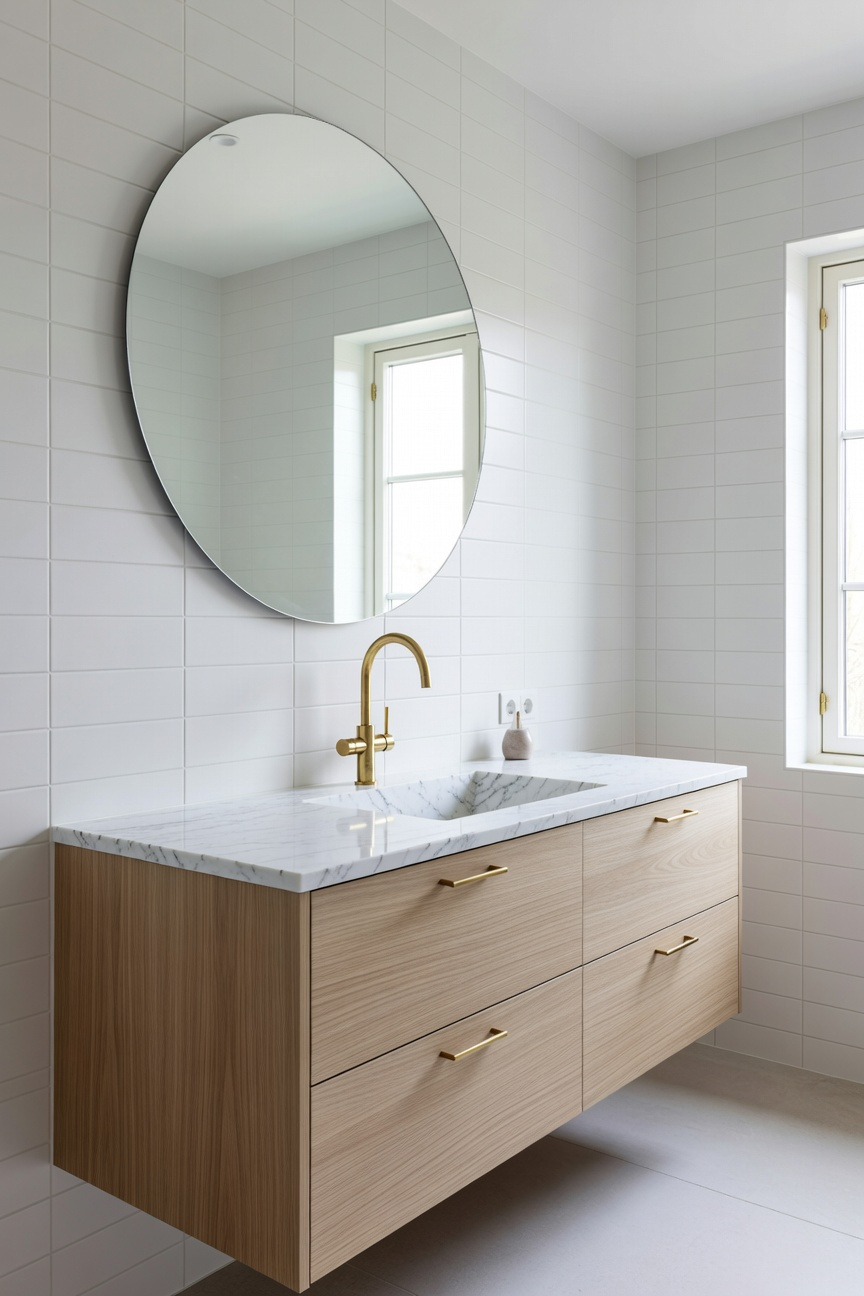
Unlacquered brass perfectly captures the essence of warm minimalism. It remains wonderfully raw and entirely uncoated. It gradually reacts to water to develop a unique patina. Experts often call it the leather of the hardware world. This sensory maturation records the history of your home. This tactile metal warms up cold porcelain surfaces beautifully. Architects consider it a sustainable choice built for generations.
Modern matte black provides a strictly static finish instead. This dark silhouette requires high-grade PVD coating to last. A molecular bond ensures the finish remains scratch-resistant. Matte black absorbs light to create a velvety, inky texture. It perfectly defines the precise lines of modern makeovers.
Designers rely on the 60-30-10 rule to unify the space. Sixty percent of the room features your primary metal. Thirty percent highlights a secondary natural wood or tile texture. Ten percent serves as a bold statement metal.
Hygge historically emerged as a Danish survival mechanism to endure dark winters. Today, it transforms a functional bathroom into a sensory spa-like sanctuary. Cold porcelain and harsh tiles actually trigger a subtle stress response biologically. A neutral, nature-inspired palette promotes cognitive ease instead. This sensory reduction activates the parasympathetic nervous system for deep relaxation.
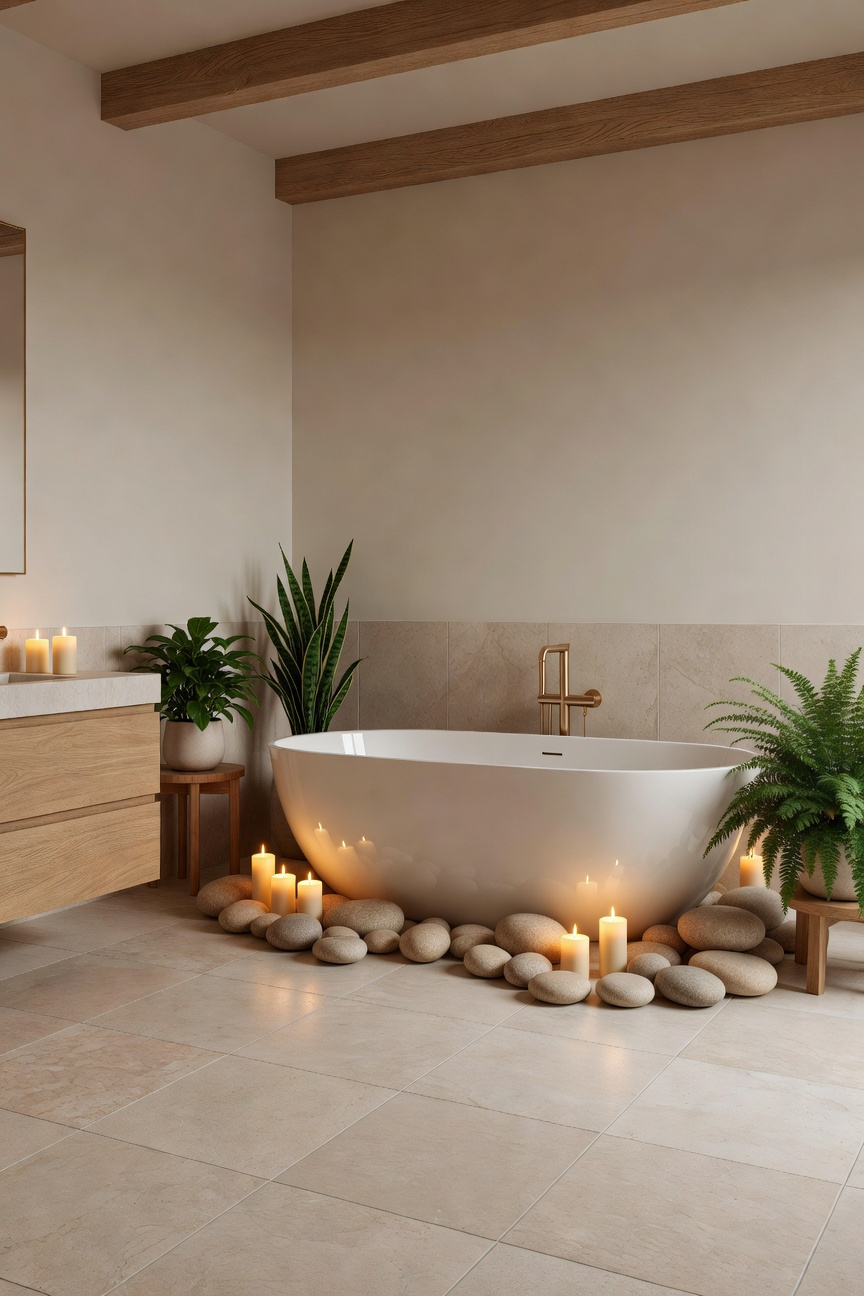
Bathroom lighting is no longer just a utility for grooming. Standard LEDs often mimic harsh, flat daylight. Dropping the color temperature to the 1800K range is essential. This warm glow mimics a comforting sunset or wood fire. Concealed LED strips create a soft halo effect along vanity mirrors.
Bathrooms often struggle with feeling inherently and physically cold. We must introduce tactile topography using materials with thermal warmth. Tropical hardwoods like Indonesian Teak possess low effusivity. They do not draw heat away from bare skin. Breathing materials like cork and unsealed lime plaster naturally regulate humidity.
Curating a modern hyggekrog requires a dedicated physical anchor. A simple teak bath bridge provides this vital ritual station. Incorporating aromas like Japanese Hinoki introduces natural phytoncides. These specific scents are clinically shown to boost immune function.
Radiant underfloor heating elevates your bathroom into a civilized sanctuary. This concept dates all the way back to ancient Roman baths. These systems prioritize thermal mass over moving air. They eliminate the uncomfortable shock of icy tile.
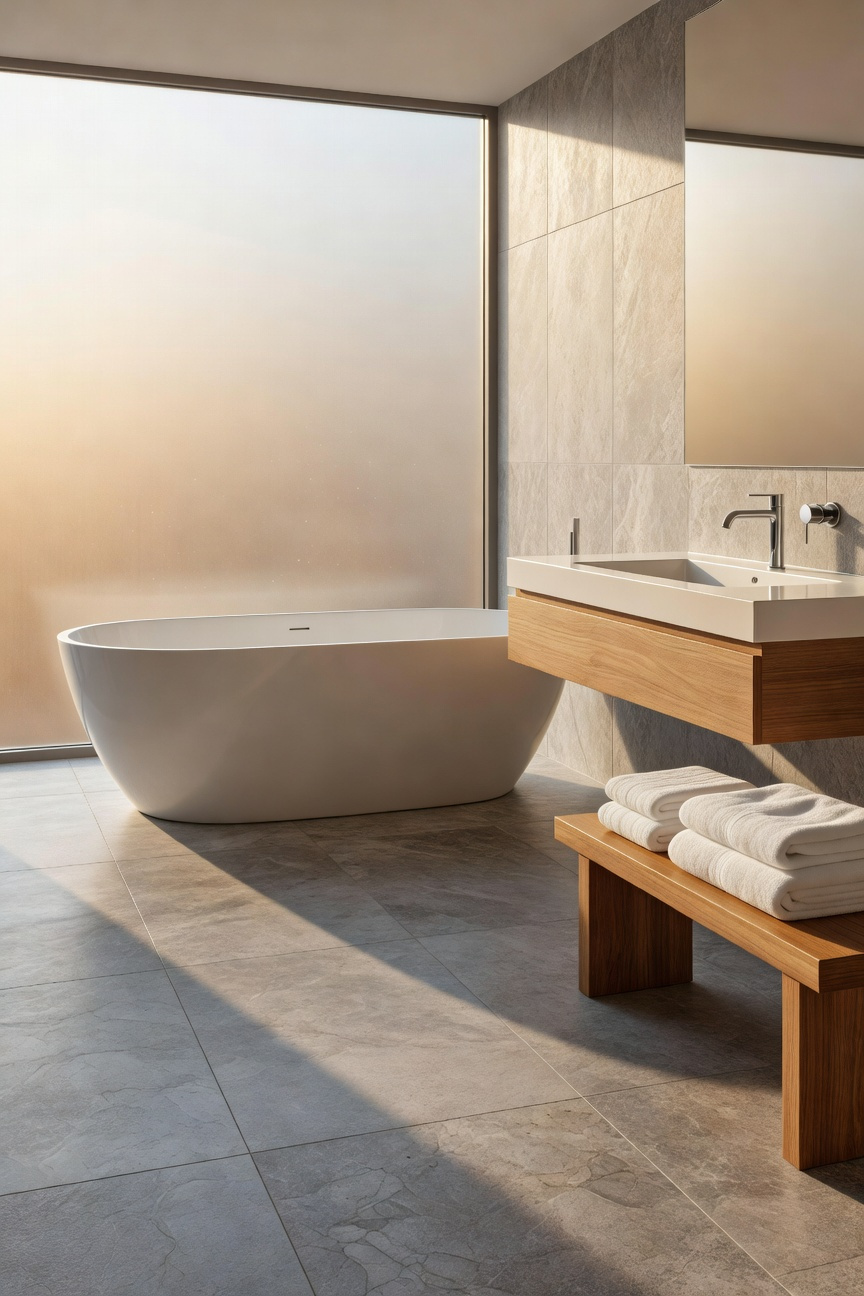
Radiant floors emit gentle, long-wave infrared radiation instead. This warmth directly targets objects and people in the room. Your body experiences comforting relaxation right out of bed. Your feet stay warm while ambient air remains crisp.
Stone and porcelain tiles are the ideal sustainable materials here. These natural elements act as a perfect thermal heat sink. Electric heating mats are incredibly thin and practical. They fit seamlessly under floors during modern bathroom renovations.
They also heat up rapidly for your programmed morning routine. Installers must carefully avoid placing mats under vanities, however. The targeted heat could damage your stored cosmetics. Eliminating blower fans drastically reduces circulating bathroom allergens.
Modern bathroom design elevates the humble towel rail into functional sculpture. Designers favor gravity-defying, geometric forms over bulky ladders. We often see this in dream bathroom ideas that prioritize artistic utility. Cantilevered horizontal bars create a minimalist floating effect. Homeowners can customize their spacing like a curated installation.
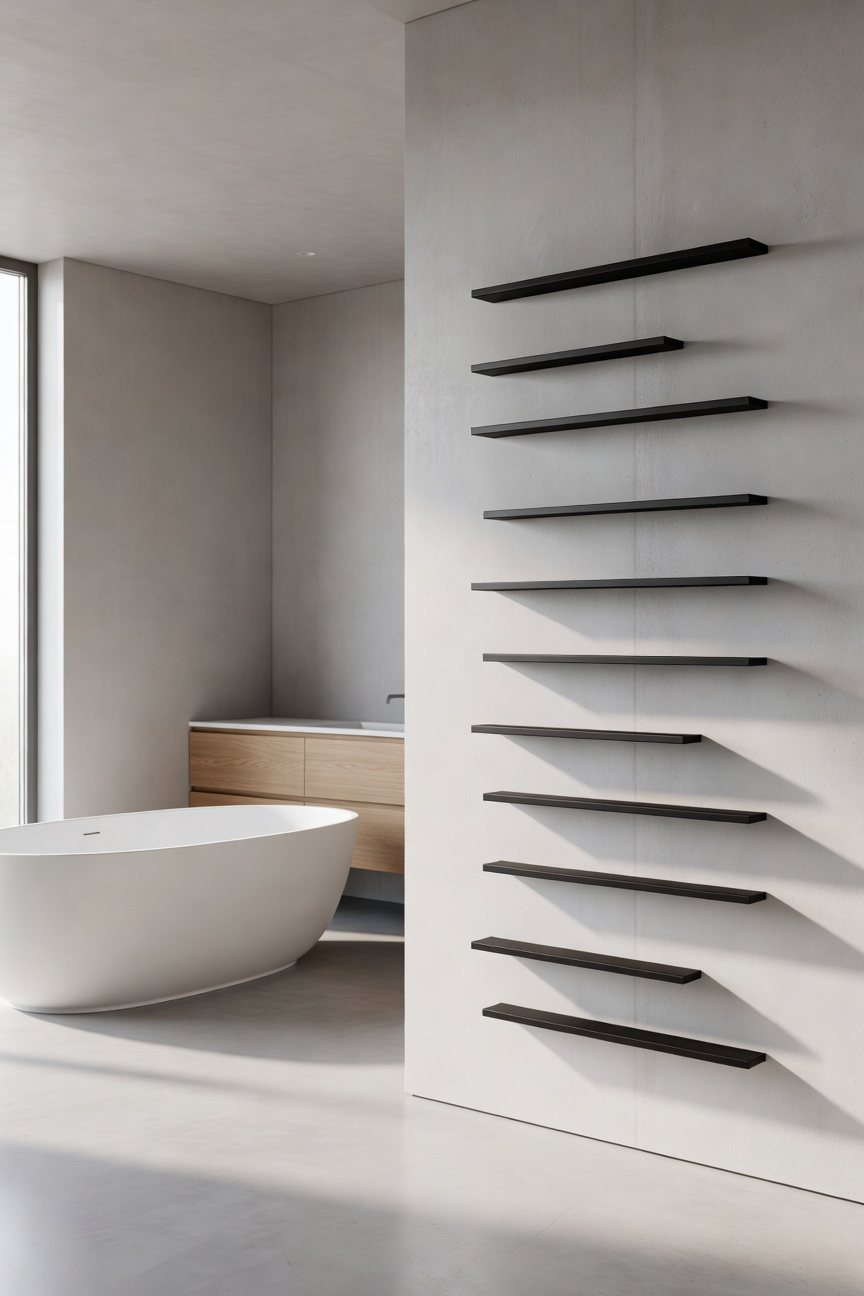
True Scandinavian comfort relies on the quality of warmth. Advanced carbon fiber technology replaces slow, bulky fluid systems. This dry element emits gentle far-infrared radiation. It actually mimics the natural warmth of sunlight. Delicate luxury fabrics receive uniform heat without scorching.
The choice of finish significantly impacts heating efficiency. Classic high-shine chrome is actually quite poor at radiating heat. Dark matte finishes or powder-coated whites boast high emissivity instead. They release nearly all their warmth directly into the room.
Careful placement turns this sculpted warmth into a daily ritual. The rail should logically sit near the shower or tub. This positioning frames drying off as a sensory closing ceremony. These sculptural pieces act as subtle ambient room heaters. They prevent cold shock when leaving the hot water.
Bathrooms often feature hard surfaces like marble, tile, and glass. These beautiful materials reflect almost all sound waves. This creates a jarring, acoustically cold atmosphere. You can soften these spaces using layered organic textiles instead.
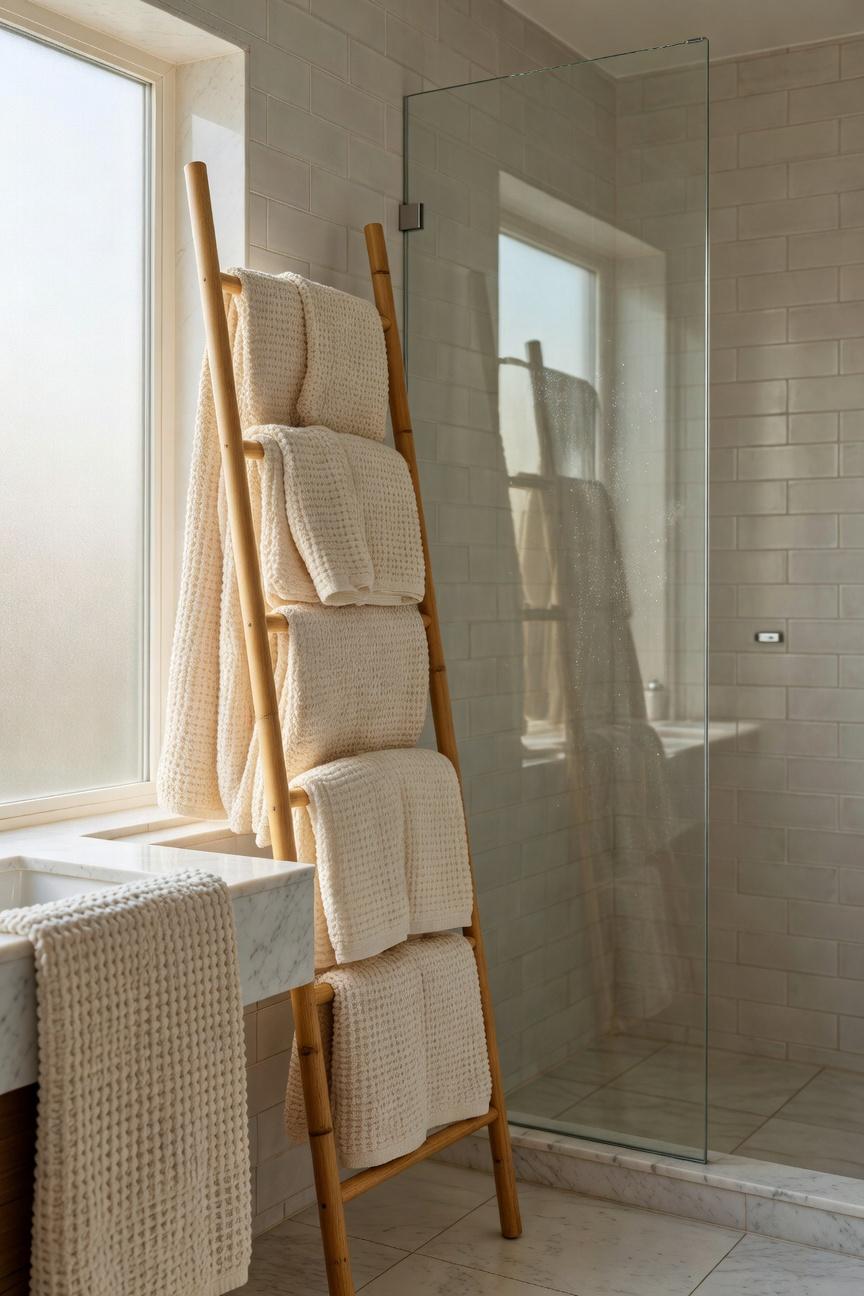
Waffle-knit cotton and linen provide warm acoustic treatments. Their three-dimensional honeycomb weave features deep, recessed valleys. This unique structure significantly increases the effective surface area. Sound waves travel deeper into these cozy textile pockets. The irregular fabric grid acts as tiny micro-baffles. Friction against the natural fibers absorbs harsh, high-frequency noises.
Thoughtfully stacking these textiles creates a mass-spring system. Hanging layered hand towels introduces pockets of dead air. These small air gaps act as secondary sound dampeners. Hanging textiles ten centimeters from the wall boosts absorption even further. Sound waves must pass through the absorbent material twice.
Choosing untreated organic fibers is crucial for acoustic stillness. Conventional chemical softeners coat fibers in a slick residue. Treated towels reflect sound rather than absorbing it. You should avoid traditional fabric softeners completely. A simple vinegar rinse keeps the natural fibers open instead.
Scandinavian design deeply embraces the natural outdoors. Bringing living elements inside creates a restorative sanctuary. Fresh eucalyptus hung behind the showerhead offers immense benefits. The hot shower steam softens the waxy plant leaves. This aerosolizes healing eucalyptol oils directly into the air. This natural thermal diffuser acts as a powerful respiratory anti-inflammatory. Lightly crushing the leaves first ensures maximum aromatic potency.
Humidity-loving potted plants provide striking visual warmth. Calatheas and ferns thrive in damp bathroom microclimates. These understory plants naturally prefer dappled light from frosted windows. Their waxy leaves beautifully trap airborne dust particles. This biological filtration makes your minimal space function noticeably better.
Consider vertical living architecture if floor space is limited. Mount a Staghorn fern on warm cedar wood. This introduces an organic texture against cold porcelain tiles. Observing these fractal plant patterns triggers soft fascination. This gentle visual rest naturally lowers your daily cortisol levels.
Remember that windowless bathrooms require proper lighting support. Install hidden full-spectrum LED lighting to sustain plant life.
You must shift the room’s purpose from a utility zone to a peaceful sanctuary. A deep freestanding soaking tub anchors this transformation perfectly. We can look to the Japanese Ofuro philosophy for inspiration. The tub is a reward for cleanliness rather than a place to wash. Separating the shower creates a pure space dedicated entirely to stillness.
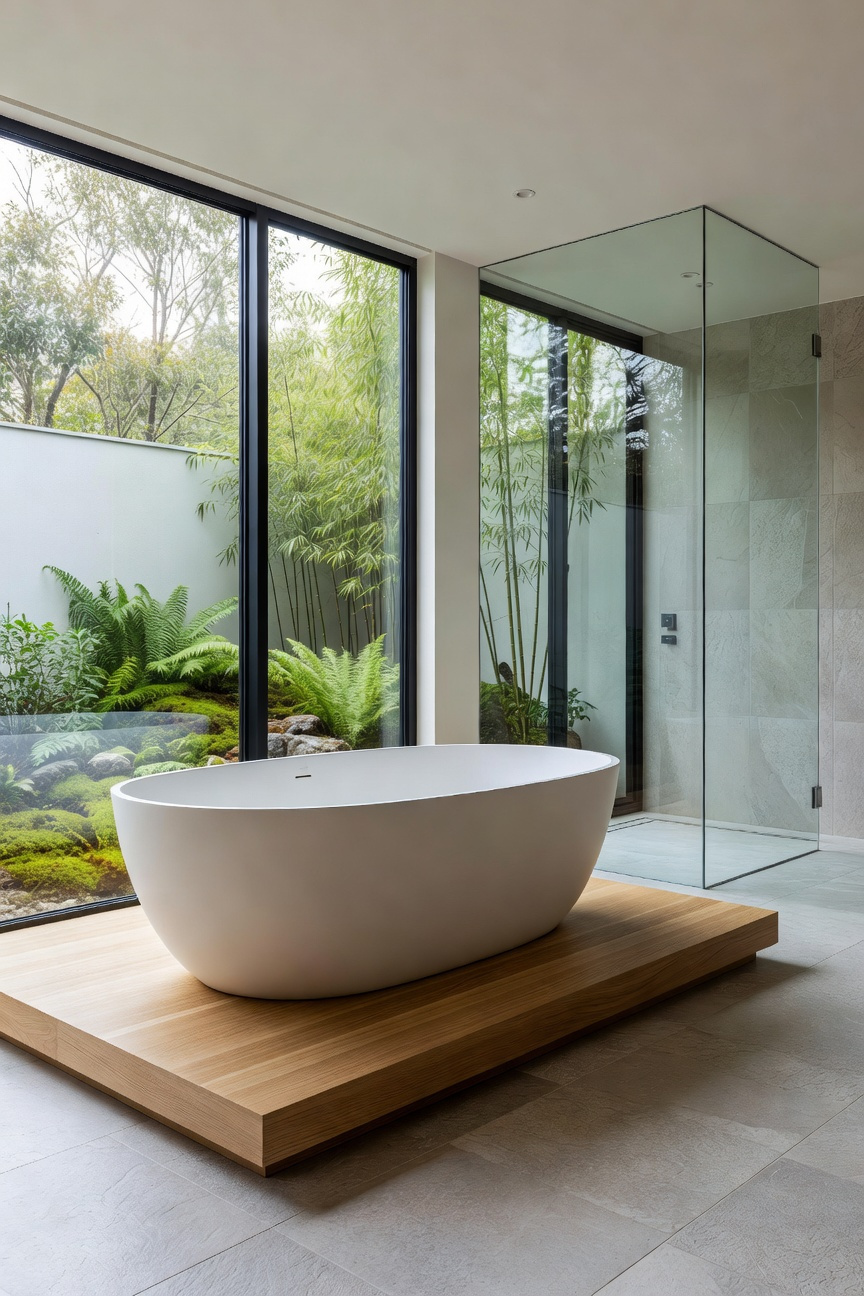
Deep immersion provides profound physical relief. Sinking into 16 to 22 inches of water securely unloads the spine. This buoyancy reduces effective body weight by up to ninety percent. Gentle hydrostatic pressure against your chest activates the parasympathetic nervous system. Your body naturally transitions from high alert to deep rest.
Sustaining this cozy stillness requires thoughtful, sustainable material choices. Stone resin offers a velvet tactile feel and exceptional heat retention. Japanese Hinoki wood releases soothing essential oils that naturally lower blood pressure. The architectural framing around the tub is equally important. Hard surfaces like glass usually create bright, echoing acoustics. Introduce moisture-resistant wood panels or thick rugs to absorb splashing sounds.
Anchoring this zone involves creating natural, biophilic sightlines. Ideally, place the tub near a window facing nature. Humidity-loving ferns provide fractal visual patterns that reduce mental fatigue. Avoid harsh overhead lighting to enforce relaxation. Use dimmable wall sconces to mimic a warm sunset instead.
This anchored space must act as a barrier to the digital world. Freestanding tubs lack wide rims, which naturally discourages setting phones nearby. Position a small wooden side table nearby rather than using a standard tub caddy. This dedicated analog zone perfectly holds a single book or fresh water. This simple choice effortlessly enforces a complete screen-free mandate.
What are the best materials for a high-end bathroom makeover? For a premium result, prioritize natural materials with high thermal mass and tactile interest. Honed limestone, Norwegian slate, and unlacquered brass are excellent choices. Incorporating Thermowood or moisture-resistant white oak adds the organic warmth essential for a sophisticated Nordic aesthetic.
How do I create a spa-like sanctuary in a modern bathroom? A spa-like atmosphere relies heavily on layered lighting and acoustic softening. Replace harsh overhead fixtures with warm-dim sconces at eye level. Use organic textiles like waffle-knit linen to dampen echoes. Integrate biophilic elements such as river rock flooring or living plants to help lower cortisol levels naturally.
What lighting is best for a Nordic-inspired bathroom? The best lighting uses multiple sources to create distinct islands of warmth. Aim for a mix of backlit mirrors, recessed LED strips for rim lighting, and high-CRI bulbs (90+) to ensure natural skin tones. Using warm-dim technology lets you transition from a crisp morning wake-up to an amber evening glow.
A bathroom redesign is a deep investment in your daily mental health. Your physical space actively dictates your internal neurochemical shifts. This room is the only sanctuary where you are truly unmasked. Natural materials and warm lighting create a vital cognitive decompression chamber.
We need to shift away from viewing this room as merely functional. The daily routines of washing become meaningful rituals of renewal within your personal spa-like sanctuary. Honest elements like solid wood ground you in the present moment.
Selecting the right bathroom makeover ideas will completely redefine your future lifestyle. Your mornings and evenings will begin to feel deeply restorative. A minimalist sanctuary naturally reduces distracting visual noise. You can face the outside world with much greater calm. Begin by auditing your current sensory environment. Remove harsh lighting for a softer warm glow. Introduce tactile textures like natural stone to elevate your daily retreat.


