Physical Address
304 North Cardinal St.
Dorchester Center, MA 02124
Physical Address
304 North Cardinal St.
Dorchester Center, MA 02124
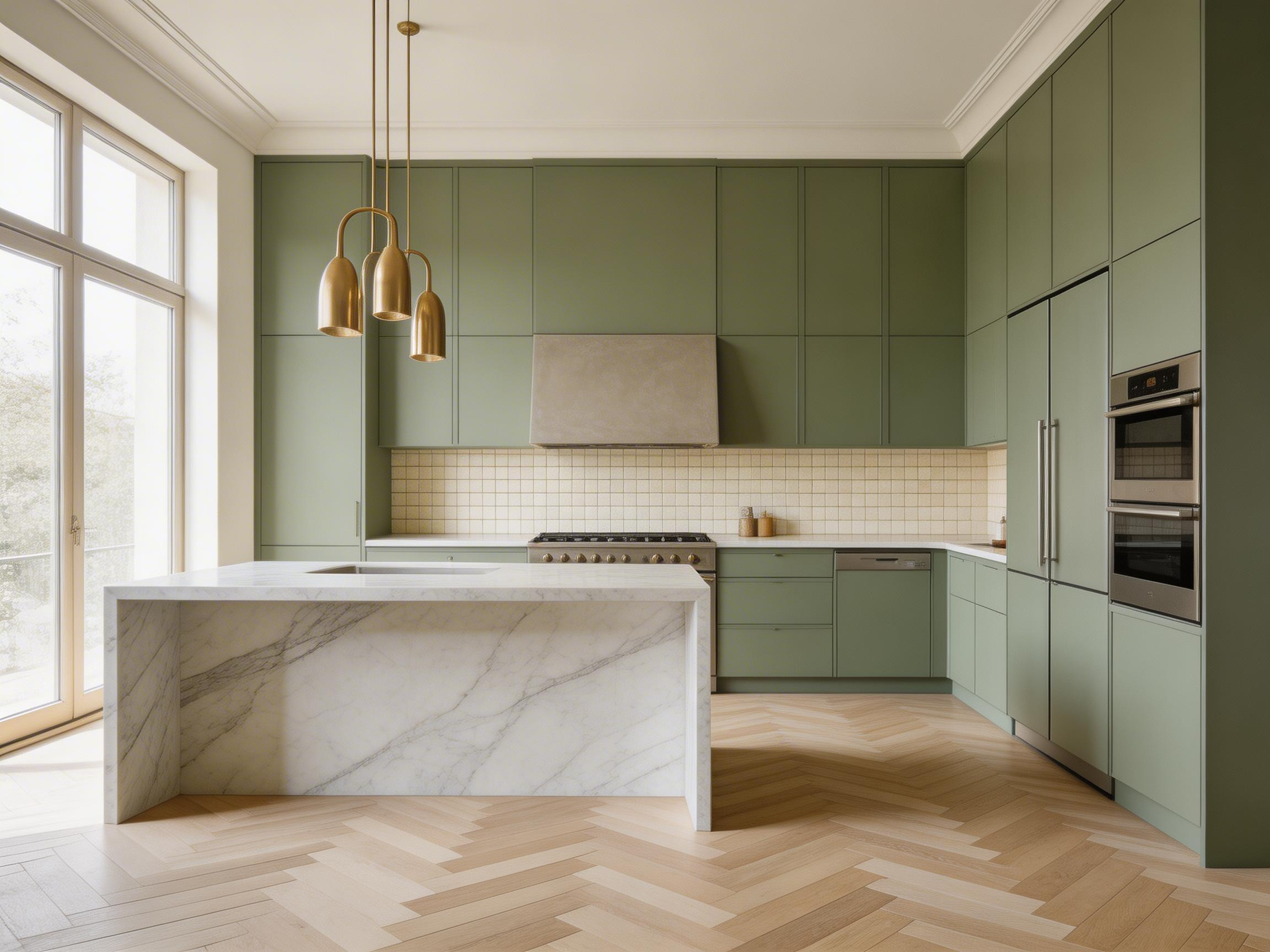
Explore 15 luxurious kitchen design ideas—marble waterfall islands, zellige tile, brass hardware, and smart integrated tech for a truly elevated home.
There is a kind of kitchen that stops you before you reach the counter. You notice it the moment you walk in — the quiet authority of natural stone, the warm glow of carefully layered light, the seamless lines where cabinets and appliances dissolve into one another. This is what luxurious kitchen design actually feels like. Not an accumulation of expensive objects, but a space considered from the floor to the ceiling, where every material earns its place.
The most satisfying luxurious kitchen designs share a Nordic truth: quality outlasts trend. A kitchen built around natural materials, excellent craftsmanship, and honest function will feel right twenty years from now. What follows is a curated selection of fifteen design moves — some structural, some purely sensory — that together define what it means to elevate a cooking space from functional to genuinely extraordinary.
The waterfall island is the defining gesture of the contemporary luxurious kitchen design. Countertop stone cascades at a 90-degree angle down both sides of the island. It meets the floor in a seamless, unbroken plane — like water frozen mid-fall. The effect is architectural and material at once.
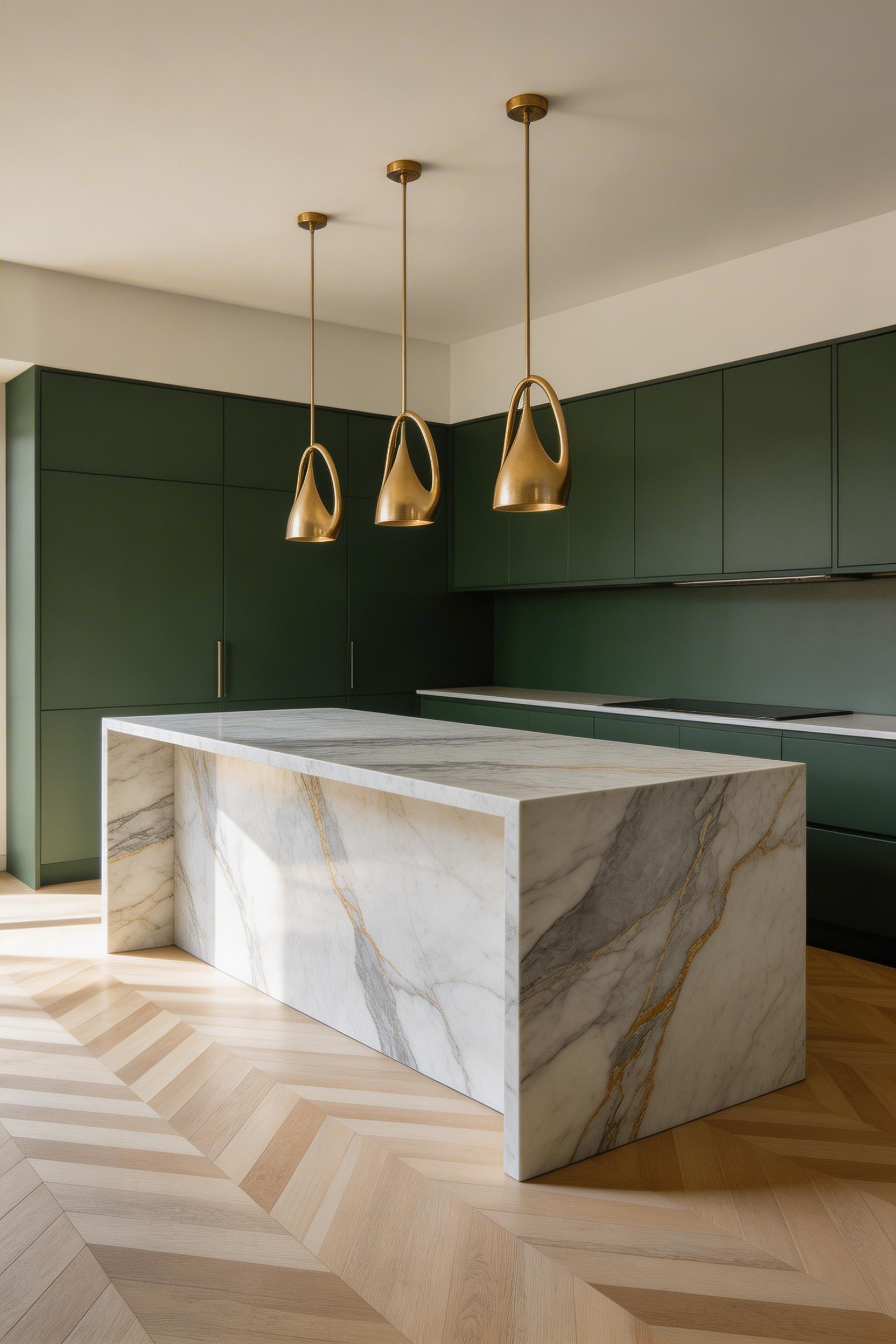
Marble remains the stone of choice for this effect because no engineered surface replicates the depth of natural veining. Calacatta, with its bold grey-gold veins on a white field, reads as dramatic and sophisticated. Statuary marble offers a cleaner, more graphic look. Carrara, softer in tone, suits kitchens that lean Scandinavian or quietly understated.
Whatever the slab, the key decision is vein-matching. The stone on the waterfall panel should align with the top, creating the illusion that it simply folds rather than ends. Marble runs approximately $85 to $200 per square foot, and each waterfall side adds $1,500 to $2,500. Full installation takes six to ten weeks from slab selection to completion — longer than a standard countertop because the mitered corner cut requires careful fabrication. Annual sealing and daily care with a soft cloth and mild soap keep it looking sharp.
For a deeper look at how the island can be structured and configured, explore these kitchen island remodeling ideas that pair beautifully with a waterfall stone top.
—
A zellige backsplash is the element that makes a luxurious kitchen feel human. Where marble is grand and cabinetry is structural, zellige is intimate — it carries the fingerprints of the hands that shaped it. Each tile is hand-molded from Moroccan clay, sun-dried, hand-cut, glazed, and kiln-fired using techniques refined over eight centuries. No two pieces are identical. That is precisely the point.
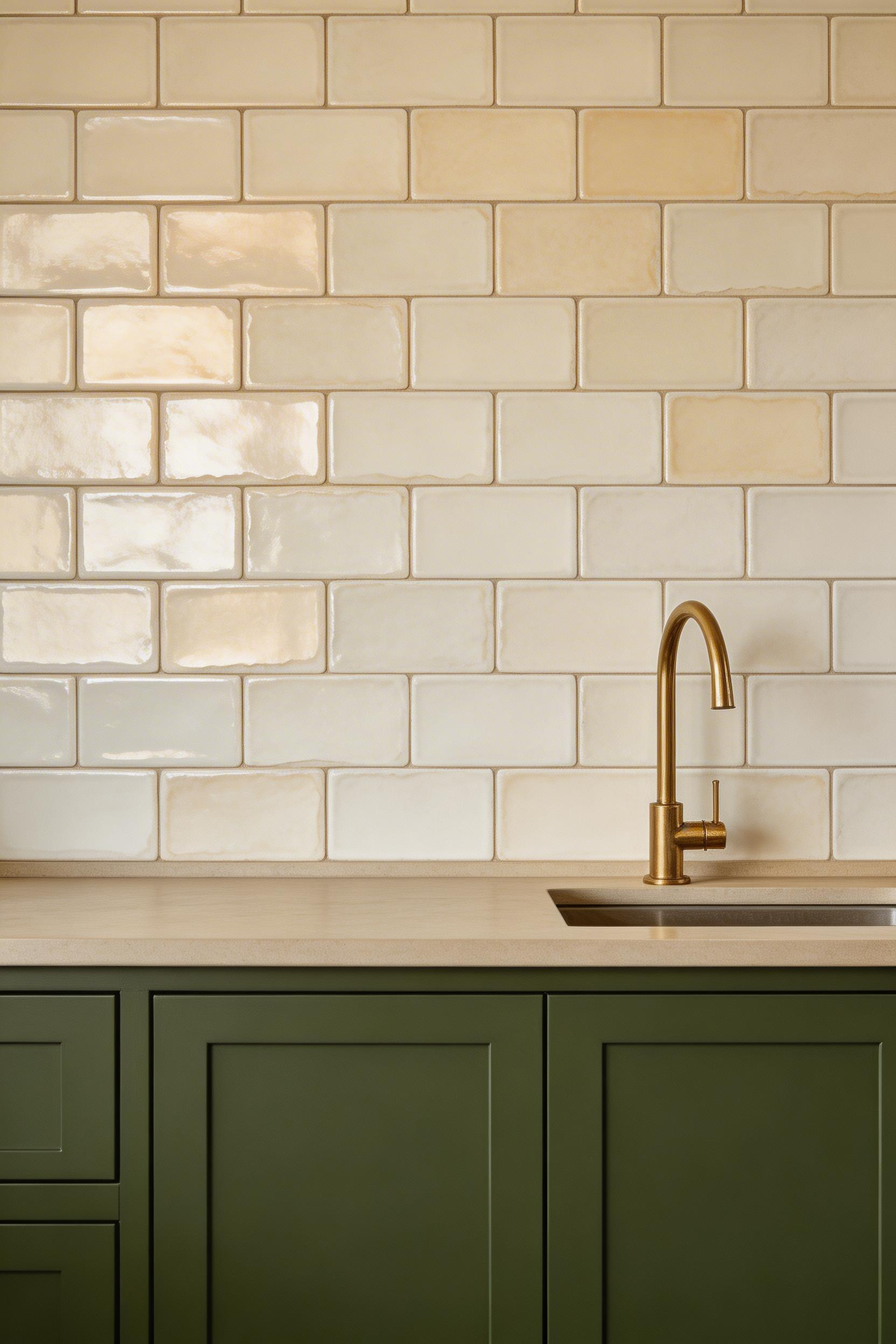
In the kitchen, zellige does something no factory tile can replicate. The slightly irregular surfaces and high-gloss glaze create tonal shifts from tile to tile, so a wall that appears a single color in direct light reveals a subtle mosaic of shadow and brilliance as the day changes. It creates movement and depth without visual noise.
For 2025 and into 2026, zellige is experiencing a significant design revival. Makers such as Cle Tile and Zia Tile produce authentic zellige in curated palettes of whites, creams, greens, terracottas, and deep jewel tones. The most common patterns for luxury kitchens are vertical stacks (contemporary and elongating), herringbone (adds dynamism above a range), and checkerboard. Pricing runs $15 to $40 or more per square foot. A tone-on-tone grout that nearly disappears lets the tile variation read as unified texture rather than a grid.
One thing zellige demands is patience during installation. The irregular sizing means each tile must be individually set, and the process takes longer than standard tile work. A skilled tile setter who has worked with handmade Moroccan tile before is worth finding. That patience is worth it — a zellige backsplash installed well holds its quality for decades and only looks better as the glaze catches the changing light over the years.
—
Hardware is the jewelry of a kitchen. In a luxurious kitchen design, choosing unlacquered brass communicates something polished chrome cannot: this space was built for living, not display.
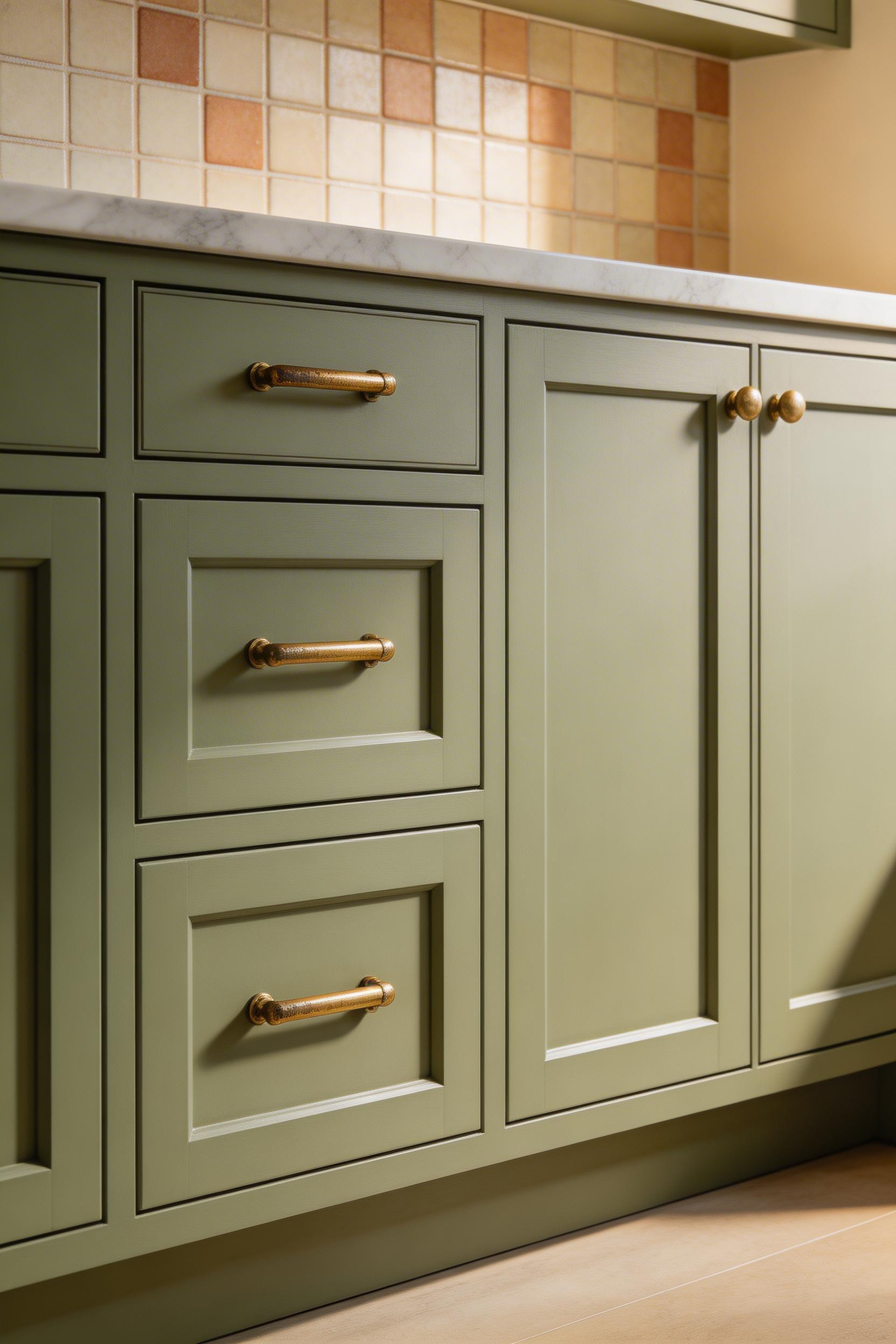
Unlacquered brass — also called living brass — is solid brass with no protective coating. Where lacquered brass is sealed in its original golden state, unlacquered brass evolves. In the first months, it has a warm, rich shine. Around the twelve-month mark, it begins patinating at the most-touched areas. By two years, the finish has deepened into something resembling antique bronze. Every kitchen develops its own version of this story.
The visual effect is one of earned richness. Unlacquered brass pairs with marble in a way that feels genuinely historical — these two materials have been used together in fine European interiors for centuries. Luxury hardware houses such as House of Rohl, Waterstone, and Rejuvenation craft pulls from solid brass throughout. The weight in the hand is immediately different from standard hardware. I’d prioritise this upgrade above most others — it changes the feel of the kitchen every single day.
Maintenance is simple: a mixture of lemon juice and baking soda restores the original bright tone when desired. Otherwise, leave it alone and let it evolve.
—
The floor of a luxurious kitchen sets the register for every other material in the room. In a space defined by stone, custom cabinetry, and artisan finishes, the floor must be substantial — not a backdrop but a participant.
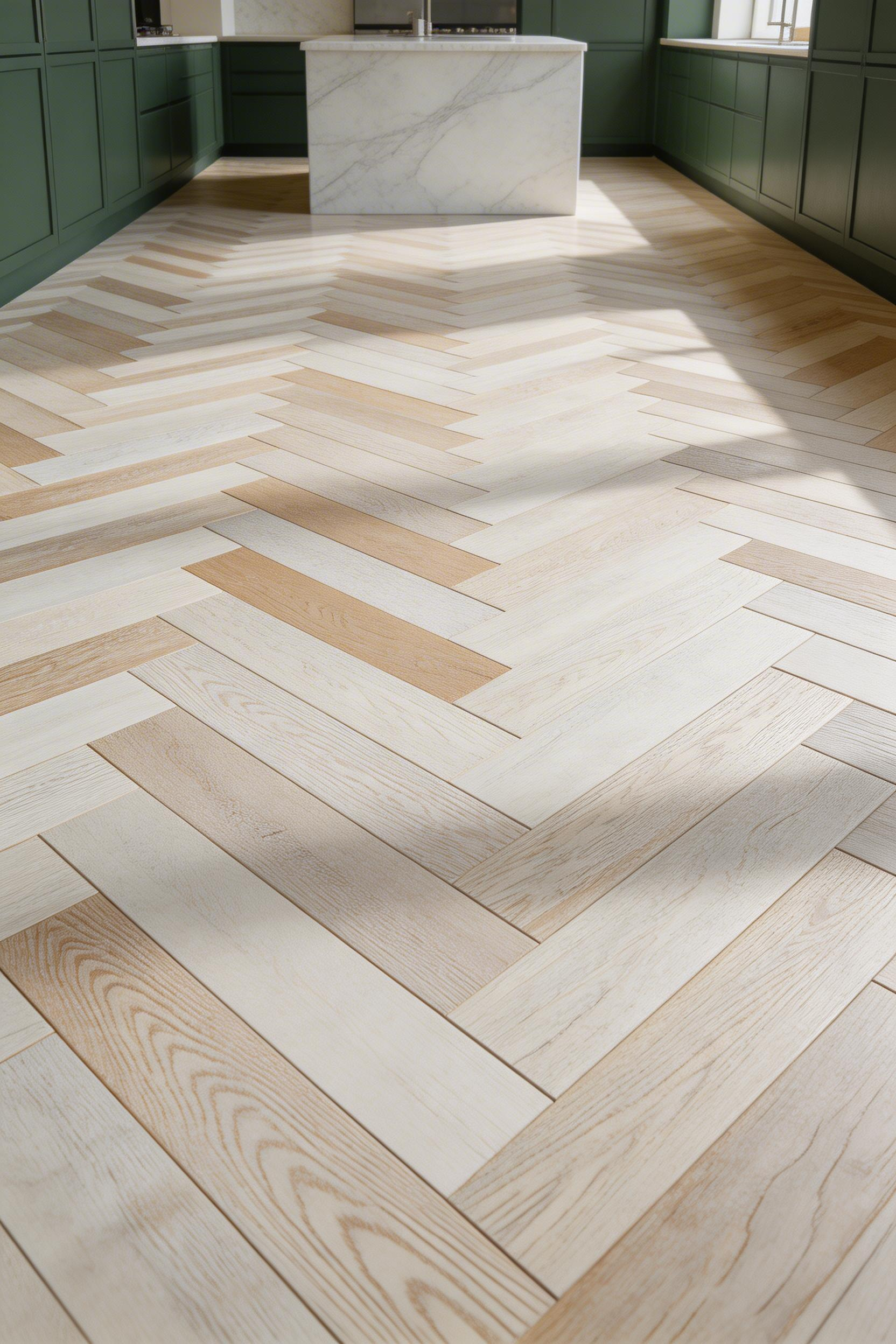
Wide-plank white oak in a herringbone pattern is among the most coveted flooring choices in high-end kitchens for 2025 and 2026. Plank width matters: boards of seven inches or wider carry a visual weight that narrower boards cannot. The herringbone pattern adds architectural complexity without competing with other surfaces. It creates dimension and movement underfoot that makes the kitchen feel considered from the ground up. Wire-brushed or lightly fumed white oak reveals natural grain and conceals everyday scratches in a way a high-gloss finish never could.
For kitchens where moisture is a higher concern, engineered hardwood is the sensible choice. The construction — a thin veneer of natural wood over a plywood core — is dimensionally stable against temperature and humidity changes. Visually, it is indistinguishable from solid wood. Large-format stone tile in marble or travertine offers the alternative for those who prefer a fully mineral palette. Warm ivory travertine or book-matched marble slabs running continuously from kitchen to adjacent living space create a luxury impression that is both timeless and genuinely impressive in scale.
The finish choice matters as much as the species. A natural oil finish breathes and can be re-oiled when needed, developing a lived-in quality over the years. A matte lacquer offers more protection and is easier to clean in a high-traffic kitchen. Either approach, in white oak or large-format stone, creates a floor that belongs in the same conversation as every other material in the kitchen.
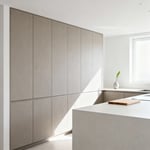
Standard upper cabinets stop short of the ceiling and leave a gap that collects dust and disrupts the vertical rhythm of the room. In a luxurious kitchen design, cabinetry runs floor to ceiling — and that single decision transforms the space. The wall becomes a unified plane. The room feels taller, more deliberate, and architecturally resolved in a way stock cabinetry cannot achieve.
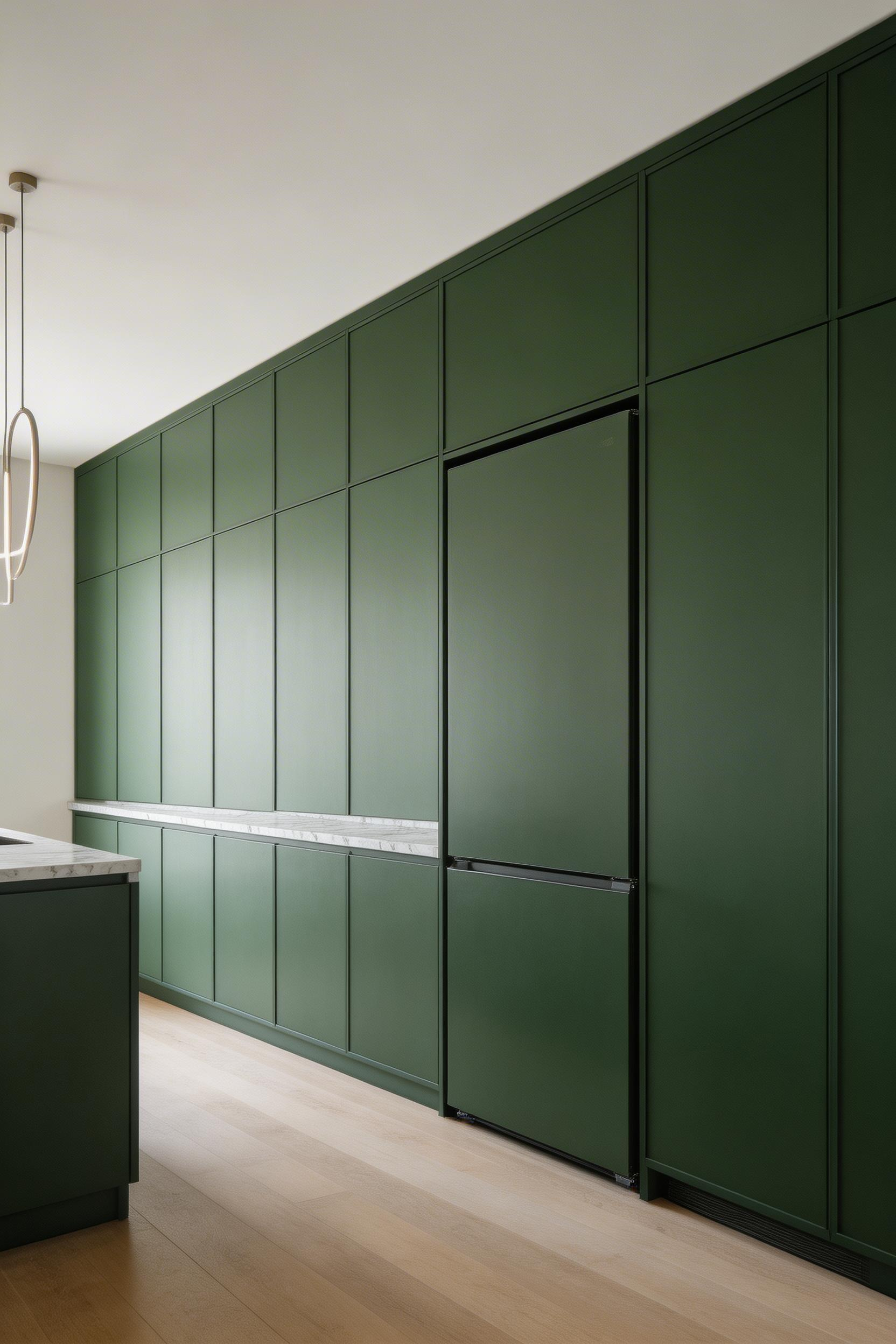
The most refined luxury kitchens in 2025 are built around slab-front doors: flat-panel, frameless, with no visible inset or rail. When paired with push-to-open magnetic catches, the result is a wall of cabinetry with no hardware at all — surfaces that open at a touch. For kitchens that prefer warmth over austerity, refined Shaker profiles with slimmer frames achieve the same vertical authority with more texture.
Color is a powerful instrument here. Deep navy, forest green, and warm charcoal grey dominate high-end kitchen builds, often paired with a contrasting upper cabinet in white or natural wood. This two-tone approach prevents the room from feeling heavy while still delivering the drama of a full-height run. Construction should be solid maple or oak frames, high-grade plywood carcasses, and soft-close Blum hardware throughout.
Browse these kitchen cabinet color ideas for Scandinavian-influenced palette inspiration that works beautifully with floor-to-ceiling runs.
—
Fluted glass — also known as reeded or ribbed glass — is the textural note that gives a kitchen depth and layering without visual heaviness. Evenly spaced vertical grooves run the length of each panel, creating a sculptural surface that catches light differently at every hour. In the morning it holds a frosted luminosity; in the evening, with warm pendant light behind it, it glows.
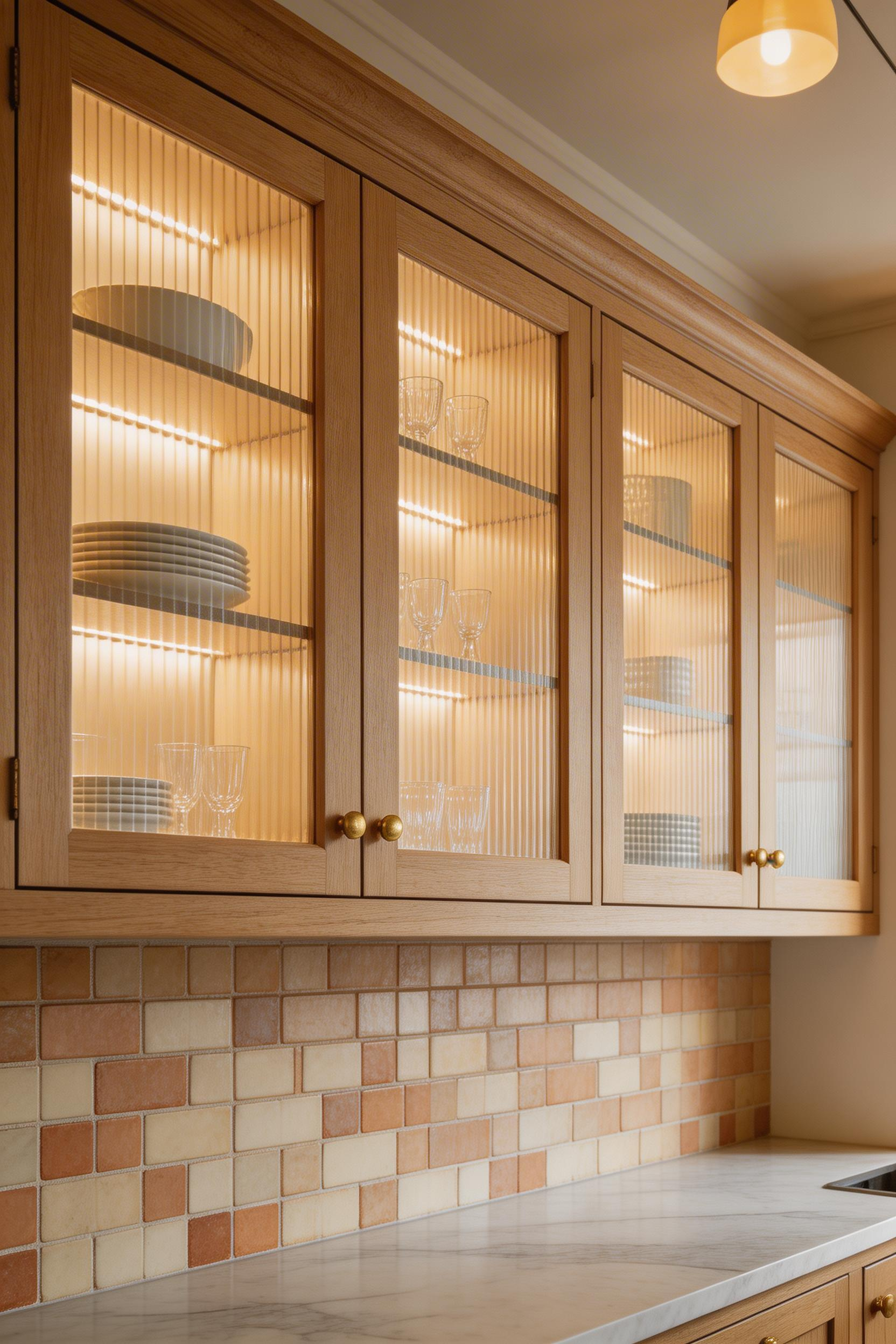
The appeal of fluted glass in a luxury kitchen is its duality. It is transparent enough to suggest cabinet contents without fully revealing them — you see shapes and colors but not labels and disorder. This means it functions as display and concealment at once, which is a sophisticated design achievement. The vertical grooves also hide fingerprints more effectively than smooth clear glass. That matters in a room used daily.
Fluted glass traces its lineage to Art Deco interiors and designers who understood that texture — rather than pattern — is the true mark of restrained luxury. Its 2025 revival is rooted in exactly this quality. It works in upper cabinets, on island fronts, and as accent elements within an otherwise solid-door run. Natural wood or brass-framed panels look particularly compelling in a Scandinavian-influenced kitchen — the warmth of the frame against the cool transparency of the glass creates a balance that feels genuinely Nordic.
—
In a luxurious kitchen design, nothing breaks the architectural rhythm more abruptly than a stainless steel refrigerator door interrupting a run of carefully chosen cabinetry. Panel-ready appliances solve exactly this problem. Designed to accept custom cabinet panels that precisely match surrounding joinery, a panel-ready refrigerator, dishwasher, or wine cooler becomes effectively invisible — a door among doors.
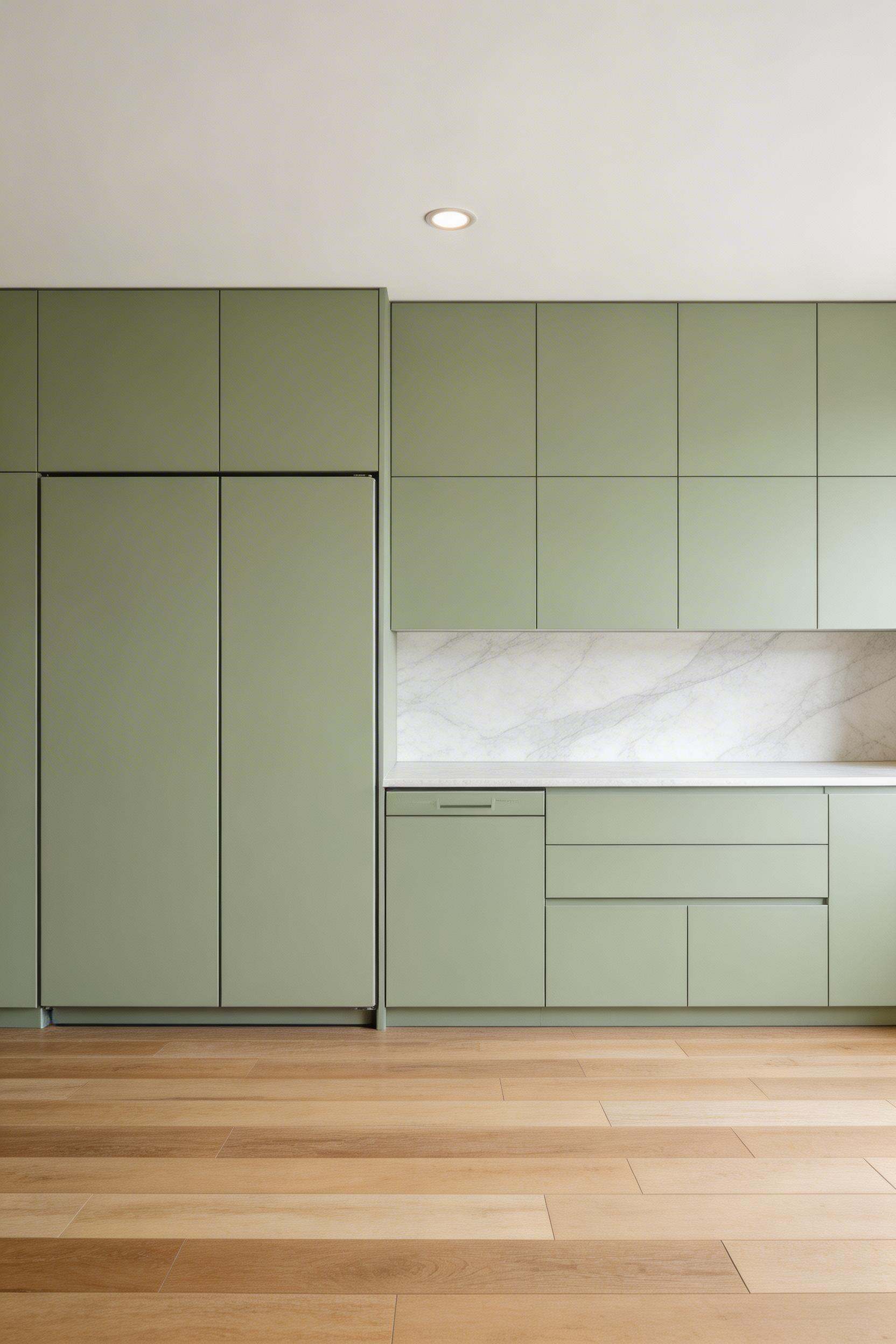
Without the visual interruption of appliance bodies, the eye moves smoothly across the room. The cabinetry reads as a single composition. The space feels less like a workspace and more like a considered interior — closer to a design gallery than a utility area. This is why panel-ready appliances have moved from trend to standard in high-end kitchen builds.
The leading panel-ready platforms in 2025 are Sub-Zero, Miele, and Fisher & Paykel. Sub-Zero’s column refrigerators and undercounter drawers accept panels from most custom cabinetry suppliers. Miele’s integrated dishwashers flush-mount to the cabinet line with no gap. For the integration to read as truly seamless, the panel must match the door profile, finish, and hardware of surrounding cabinets exactly. Specify panel-ready appliances at the very start of the cabinetry design process — never as an afterthought.
There is one practical note worth raising: panel-ready specifications add to project cost and complexity. The custom panels themselves need to be ordered through the cabinetry shop, the appliance installation requires exact tolerances, and the alignment between doors must be set with care. For a high-end kitchen build, these are manageable details. But they require a competent joiner who has worked with integrated appliances before — not every kitchen installer has the experience to get the door alignment right.
—
The hidden walk-in pantry is the ultimate expression of organized luxury in kitchen design. It is a generous dedicated storage space that keeps the main kitchen visually clear, and whose entrance is so perfectly disguised that it reads simply as another cabinet door.
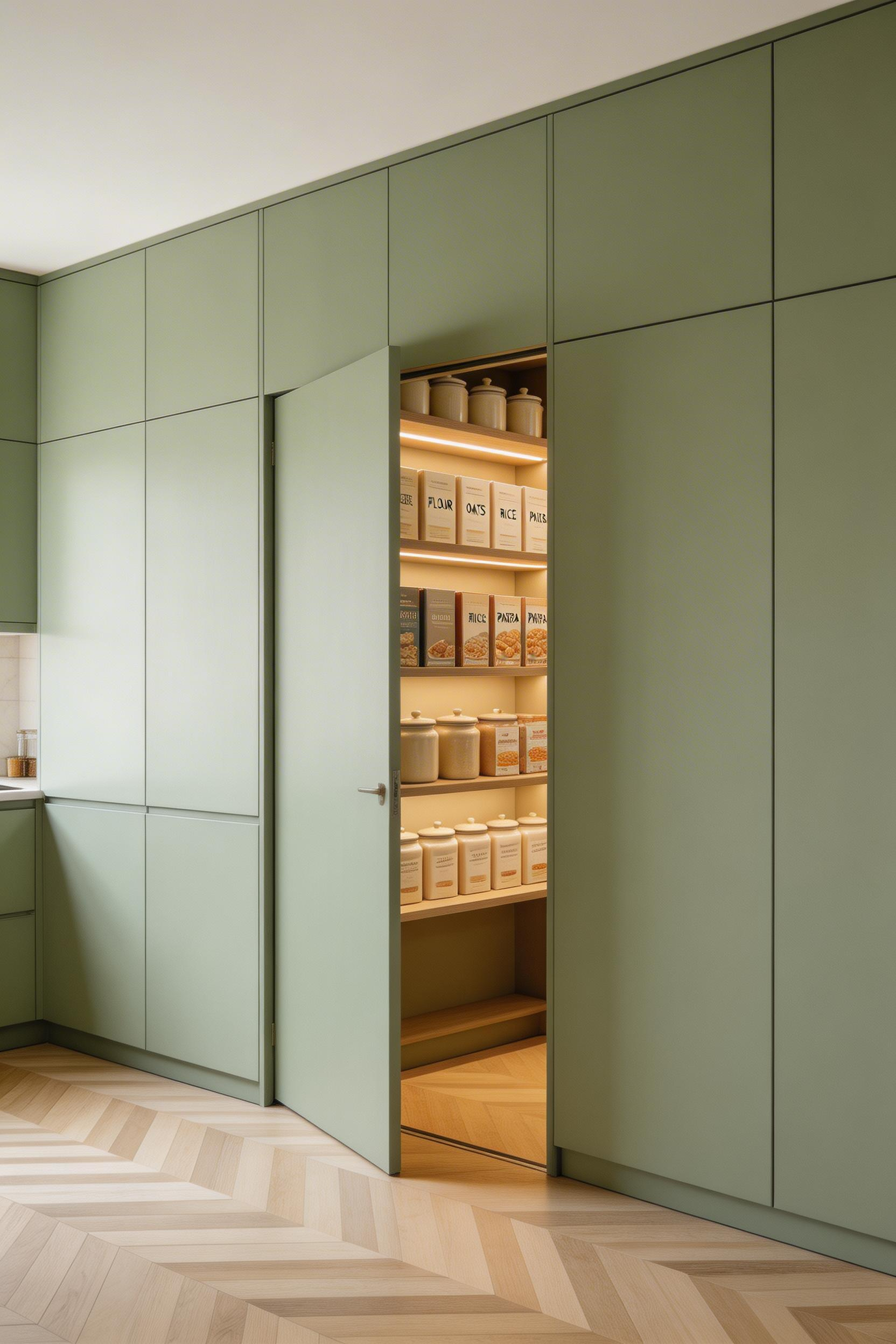
The mechanism is simple and the effect is remarkable. The pantry door is fabricated to match surrounding cabinetry in face frame, door profile, finish, and hardware. A magnetic push-to-open latch releases it without a visible handle. When closed, there is no gap, no reveal, no hinge visible — just cabinetry. Walk through that door, and the space opens into a fully fitted pantry with adjustable shelving, pull-out drawers, and dedicated zones for dry goods and small appliances. Integrated LED lighting activates the moment the door opens.
Beyond its theatrical appeal, the hidden walk-in pantry solves a genuine functional problem. In an open-concept kitchen, the visual demand for tidiness is constant. A hidden pantry removes that pressure entirely: food, appliances, and everyday supplies disappear behind a seamless wall.
Beyond its theatrical appeal, the hidden walk-in pantry also adds real estate value. It is a feature that photographs well in listing images and communicates immediately that this kitchen was built thoughtfully. Buyers who cook understand what the hidden pantry offers — and they value it accordingly.
These kitchen storage pantry ideas explore how to organize and design the interior of a walk-in pantry for maximum efficiency.
Lighting above a kitchen island does two distinct things. The first is practical: it illuminates the work surface below. The second is spatial: it draws the eye upward and anchors the island as the room’s visual center. In a luxurious kitchen design, pendants that achieve both simultaneously — functional light sources that also function as art — are among the highest-impact investments in the space.
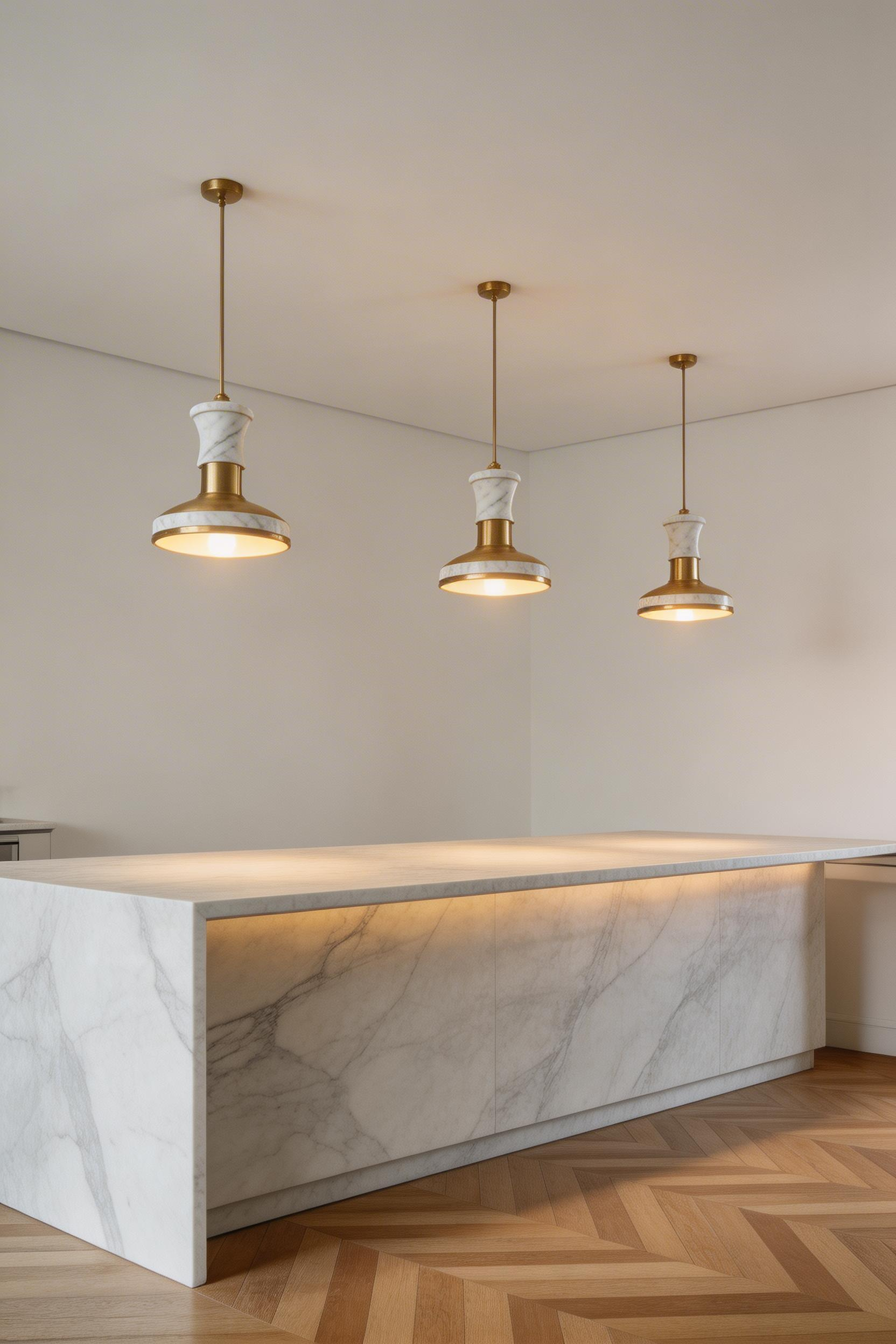
Sculptural pendant clusters are the defining lighting choice of the luxury kitchen in 2025. Rather than identical pendants in a line, a cluster varies in height, shape, and scale — three or five fixtures of related but not identical forms, suspended at different heights to create an organic composition. The result has the quality of a sculptural installation: it holds the eye and rewards attention.
Material choices favor warm metallics. Brushed brass, satin gold, and aged copper create a material connection with stone countertops and unlacquered hardware throughout the room. For scale, pendants should hang with their centers thirty to thirty-six inches above the island surface — low enough to feel intimate, high enough not to interrupt sight lines across the room.
One detail that separates a good pendant installation from a great one is the number of fixtures. Three works well above most islands. Five creates a more dramatic, jewel-like density above longer islands or in larger kitchen spaces. The odd number is important — even numbers feel symmetrical and static, while odd groupings feel organic and curated.
Explore the full spectrum of kitchen light fixtures for options that combine Scandinavian hygge principles with luxury finish quality.
—
The best-lit luxury kitchens operate on a principle of invisible architecture: the light fills the space beautifully, but the source is never seen. This is achieved through layering — three distinct types of illumination built into the kitchen structure from the outset.
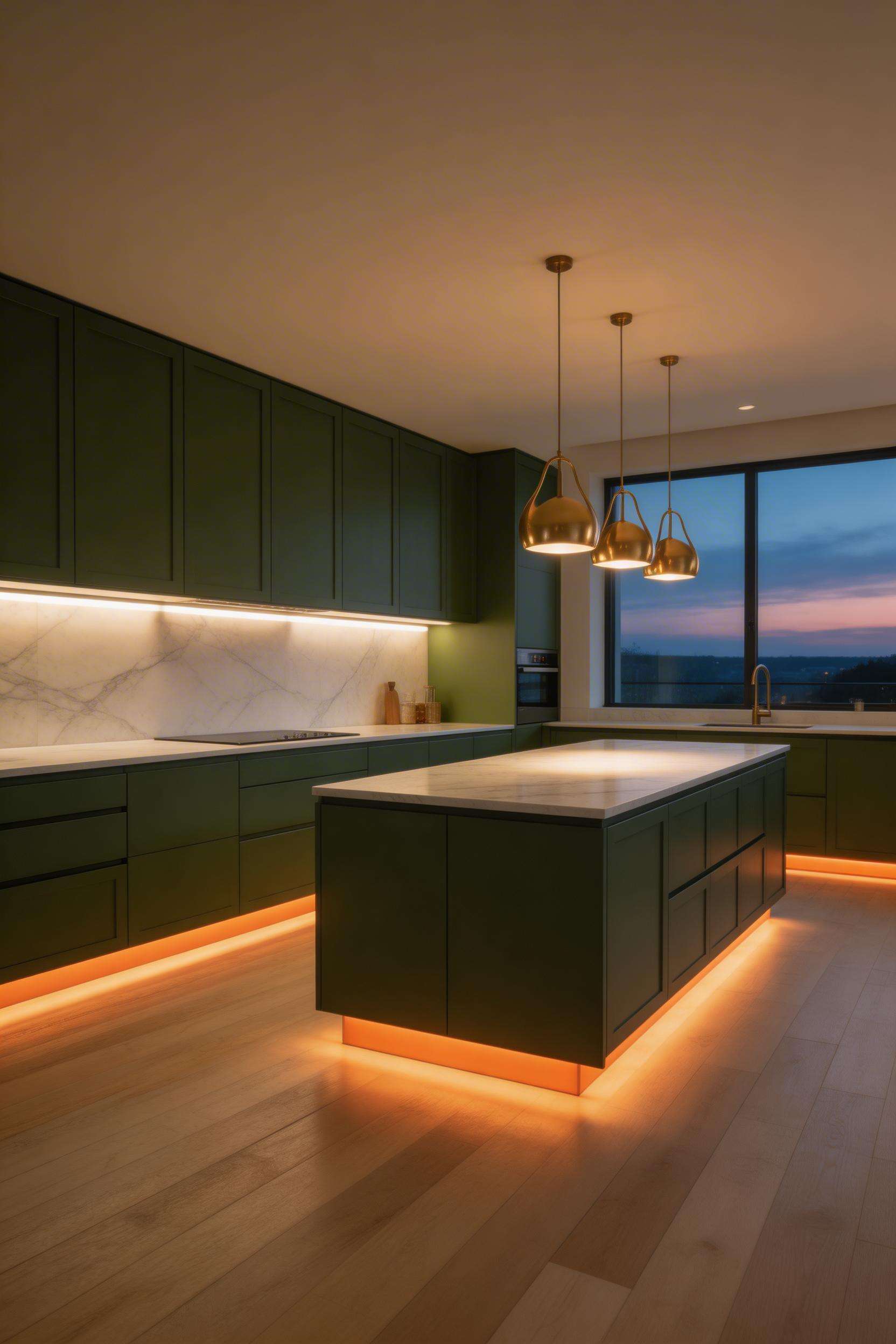
The first layer is ambient: general overhead lighting that fills the room evenly. The second layer is task lighting: under-cabinet LED strips, mounted at the front of the cabinet underside and angled slightly downward, that cast clean shadow-free light across the countertop below. This layer is non-negotiable in a working kitchen.
The third layer is the most distinctive detail in a truly luxurious kitchen design: toe-kick lighting. Warm white LED strips (3000K) concealed within the base recess of the cabinetry cast a soft glow across the floor, creating the impression that the cabinets float. It is a detail borrowed from high-end hospitality interiors, and it works because it adds warmth at a level where light is rarely expected. A motion sensor on the toe-kick circuit guides late-night kitchen visits without overhead lights. Smart dimmers on all circuits allow the kitchen to shift from a bright workspace during the day to an intimate, atmospheric environment for an evening dinner.
—
In most kitchens, the range hood ventilates and does so without drawing attention. In a luxurious kitchen design, the range hood takes an entirely different role. It becomes the room’s architectural focal point — a sculptural object that draws the eye from across the space and establishes the material tone for everything around it.
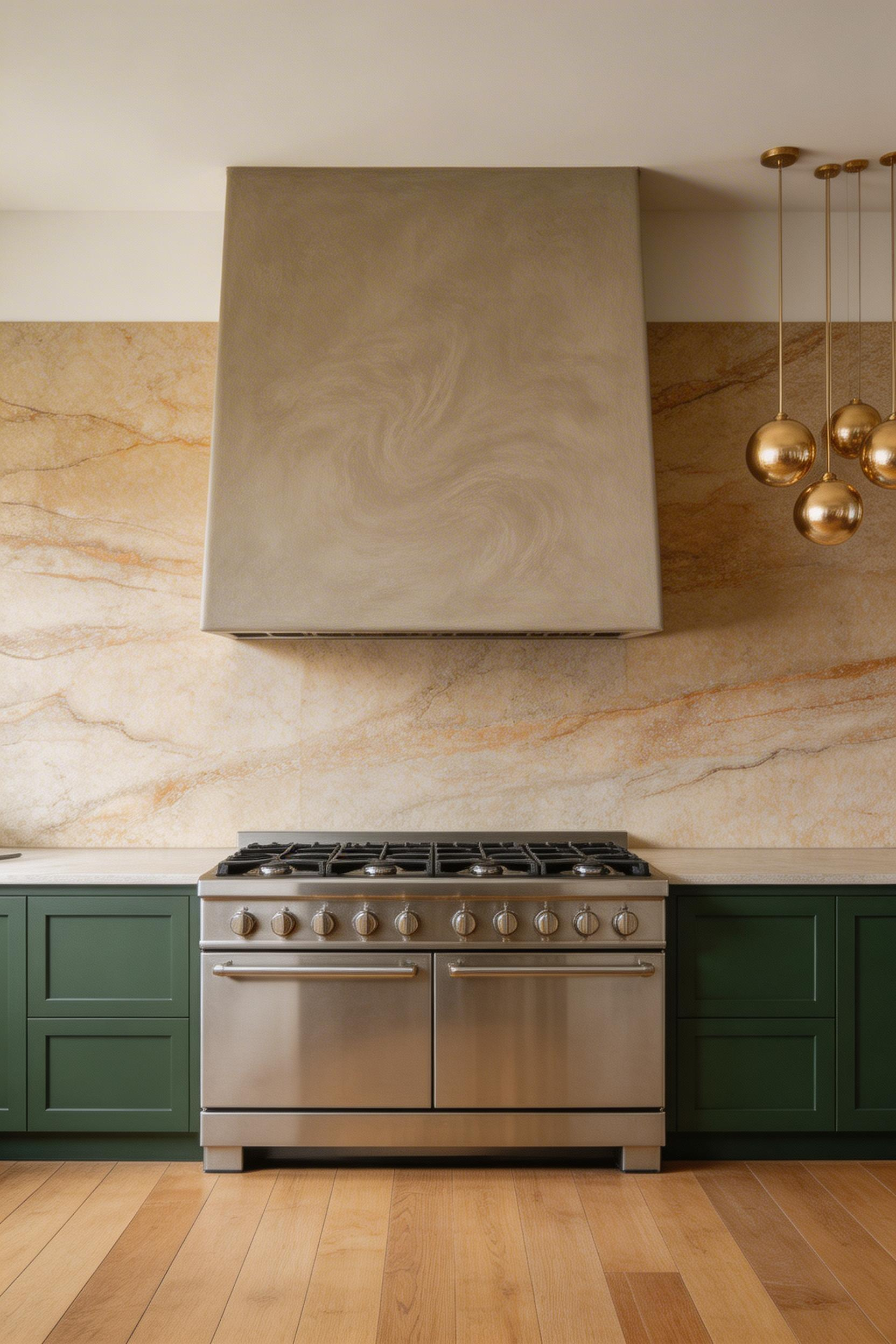
The three qualities that define a statement hood are silhouette, scale, and material. Silhouette refers to the outline of the hood body — whether it tapers to a dramatic chimney, curves softly at the base, or holds a bold rectangular mass. Scale means the hood is proportionally commanding: neither too small nor awkward, but genuinely present above the range.
In 2025 and into 2026, the dominant material for statement range hoods is Venetian plaster. Hand-applied in multiple layers and burnished to a depth-rich surface, it creates a texture that light falls across beautifully, revealing subtle movement that changes with the time of day. Color trends have moved away from bright white toward earthy tones: warm clay, greige, and pale terracotta that sit comfortably alongside natural wood cabinetry and stone counters. Stone-wrapped hoods — finished in quartzite, marble, or soapstone — represent the most architecturally ambitious direction, creating a monolithic material element that structures the entire room.
The integrated beverage station is one of the clearest expressions of what a luxurious kitchen design is about: the daily ritual, elevated. Designing a dedicated area for the morning espresso and the evening glass of wine — built into the cabinetry run, not sitting on a counter — signals that these moments of pleasure are part of the architecture of the home.
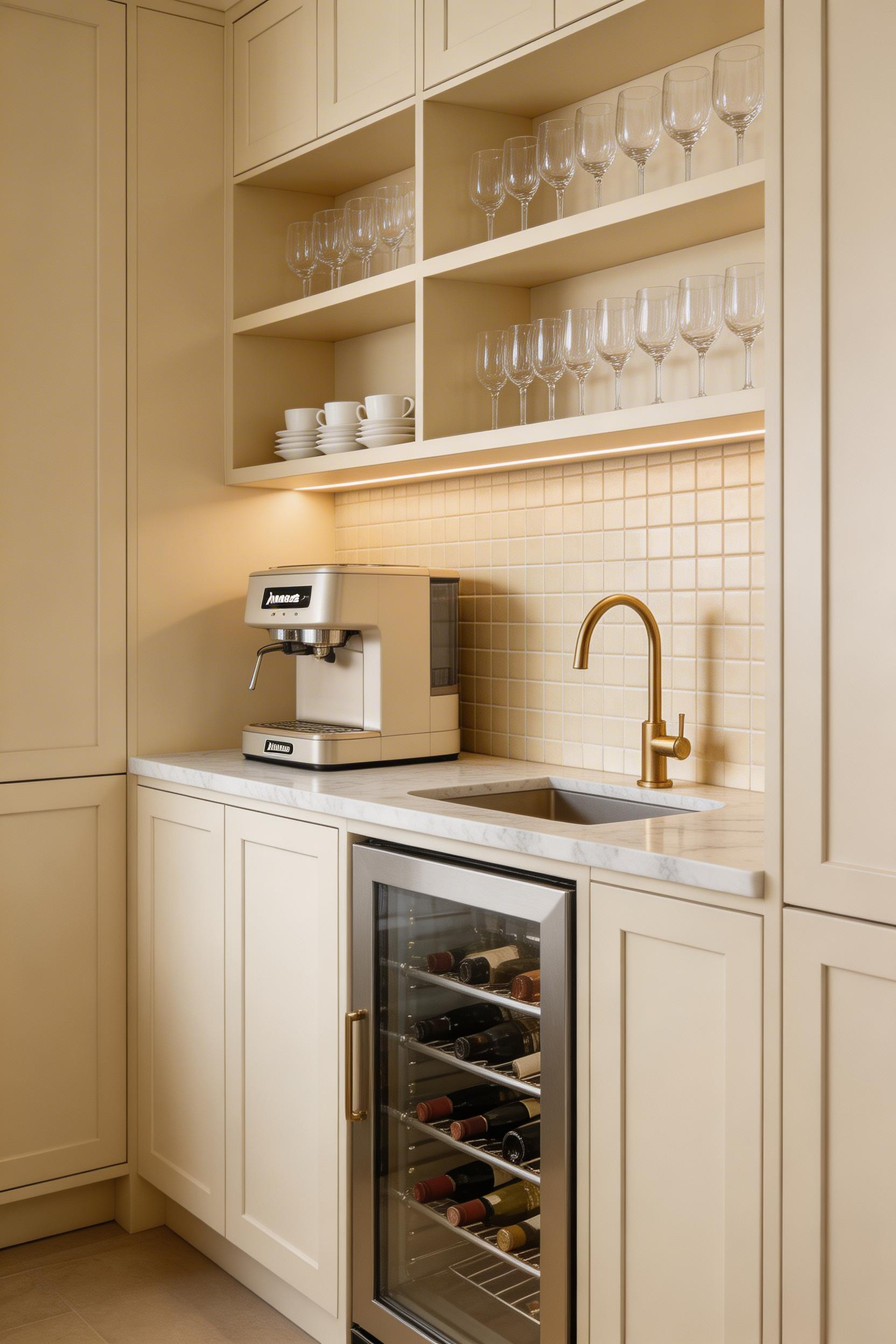
At its most refined, a luxury coffee and wine bar combines a built-in espresso machine — Miele’s integrated systems accept whole beans or Nespresso capsules — with a Sub-Zero undercounter wine refrigerator, and a small prep area in complementary stone or marble slab. The backsplash above mirrors the kitchen’s primary material, connecting the station visually to the room while giving it a contained identity. Unlacquered brass fixtures and open shelving for glassware complete the picture.
The functional logic is equally compelling. By consolidating all beverage preparation into one zone, the main countertops stay clear. The kitchen island is freed from coffee machines and wine racks and returned to its proper role as a workspace and gathering place. Guests can help themselves without interrupting the cooking. The station operates as a quiet, self-contained ritual space within the larger kitchen.
The placement of the station within the kitchen layout matters. Position it away from the main cooking zone — ideally near the entry to the kitchen or adjacent to the dining space — so guests can use it without entering the work triangle. This keeps the cook undisturbed and gives the beverage station its own sense of territory within the room.
—
Open shelving in a luxurious kitchen is not a storage decision — it is a curatorial one. The question is not what fits on the shelves but what deserves to be there: which pieces, at which heights, in which relationships to one another, create a composition that rewards attention.
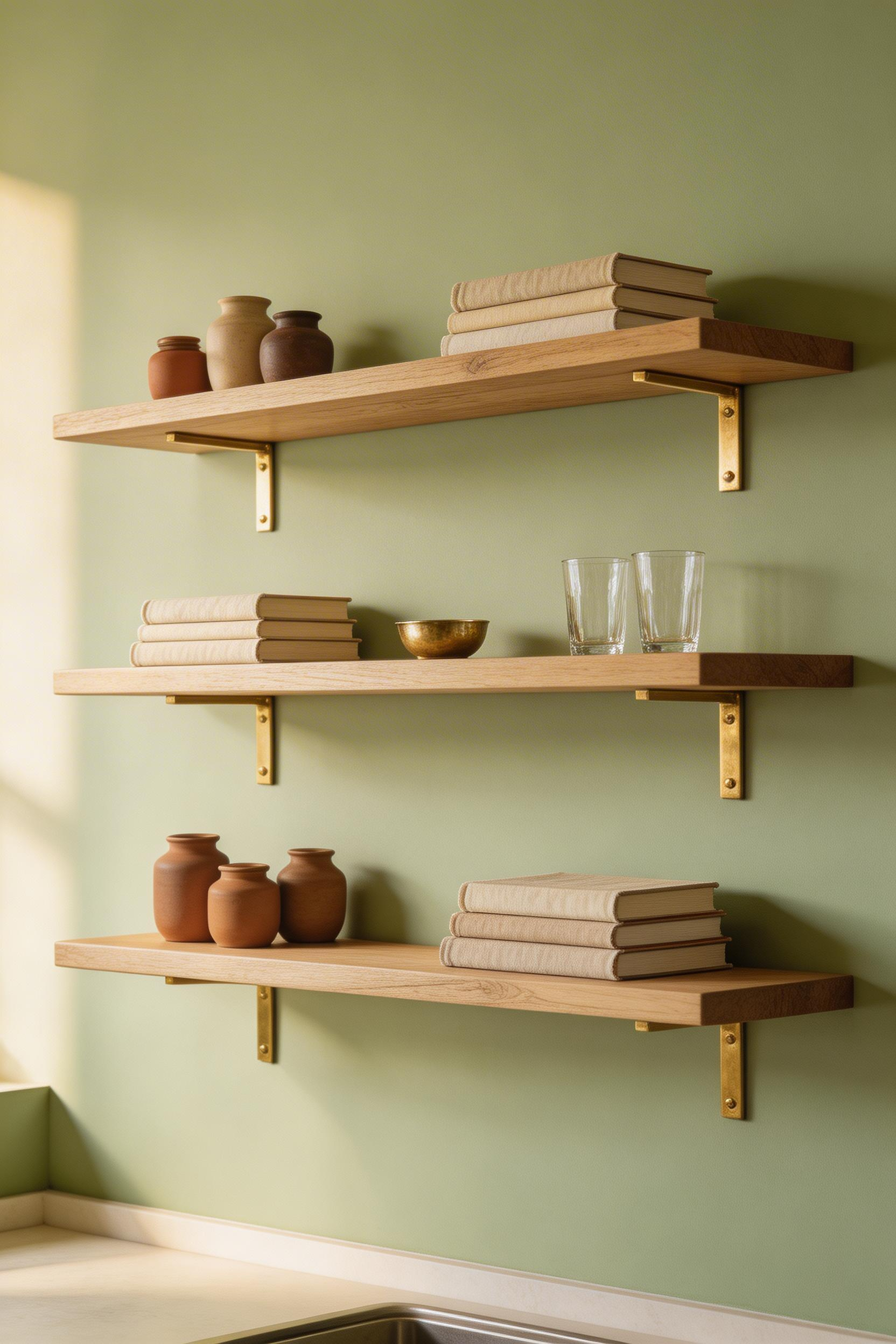
The 2025 movement toward what designers are calling bookshelf wealth — layered, lived-in shelves brimming with objects that carry meaning — applies powerfully to kitchen open shelving. Artisanal ceramics from small-batch makers, hand-thrown pottery in soft earth tones, vintage glassware, and a few linen-bound cookbooks create a display that feels personal rather than staged. The shelving itself should be bespoke: floating shelves in natural oiled oak, supported by unlacquered brass library brackets.
The editorial principle is simple. Every object must earn its place. This means editing ruthlessly — the impulse to fill every inch is the enemy of the curated look. Leave space. Let groups breathe. Work in odd-number arrangements — groups of three and five — and vary the height within each group so that the eye moves across the shelf. The goal is a wall that looks as if it grew organically into exactly this arrangement, which requires more deliberate thought than almost anything else in the kitchen.
—
The apron-front sink — its bold white fireclay face exposed at the front of the cabinet run — is one of the oldest luxury elements in the Western kitchen. It was present in the great estate kitchens of eighteenth-century England, and it remains compelling today for the same reason: it is a form that is unambiguously generous, deeply practical, and visually decisive.
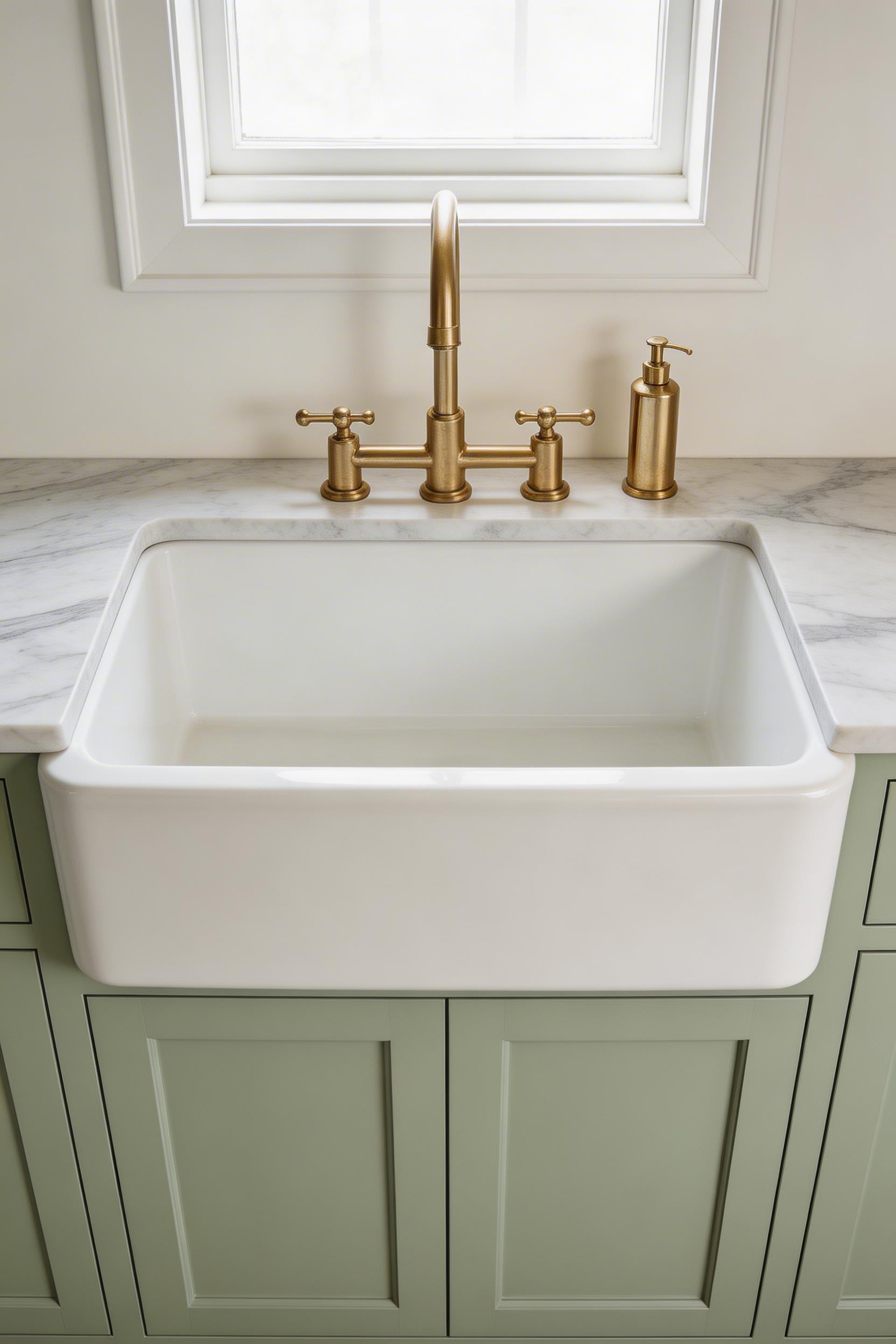
Specify fireclay at thirty-three to thirty-six inches in a single bowl configuration. Fireclay is kiln-fired at temperatures exceeding 2300°F, producing a non-porous ceramic that resists scratching, staining, and heat. Luxury options from Waterworks (the Clayburn collection), Ruvati (handcrafted in Italy), and KRAUS (the Turino series) are among the finest available. The thirty-six inch bowl accommodates full baking sheets, roasting pans, and the largest stock pots with ease — a practical luxury that reveals itself every time a large piece of cookware needs cleaning.
The faucet paired with an apron-front sink shapes the entire impression of the fixture. An unlacquered brass bridge faucet — two-handled, arched, with a bridge connecting handles and spout — brings the historical register of the apron sink forward beautifully. Whatever the choice, the faucet should be substantial. It should feel as heavy in the hand as it looks on the counter.
Explore the world of modern kitchen sinks for an in-depth look at fireclay, composite, and integrated workstation options.
—
The final layer of a truly luxurious kitchen design is invisible. It operates beneath every seamless cabinet panel, within the walls of the perfectly proportioned range, and in the quiet intelligence of a refrigerator that monitors its own temperature and alerts you to any change. Smart kitchen technology in 2025 is not about gadgetry. It is about removing friction — making every interaction smoother and more aligned with how a thoughtful household actually lives.
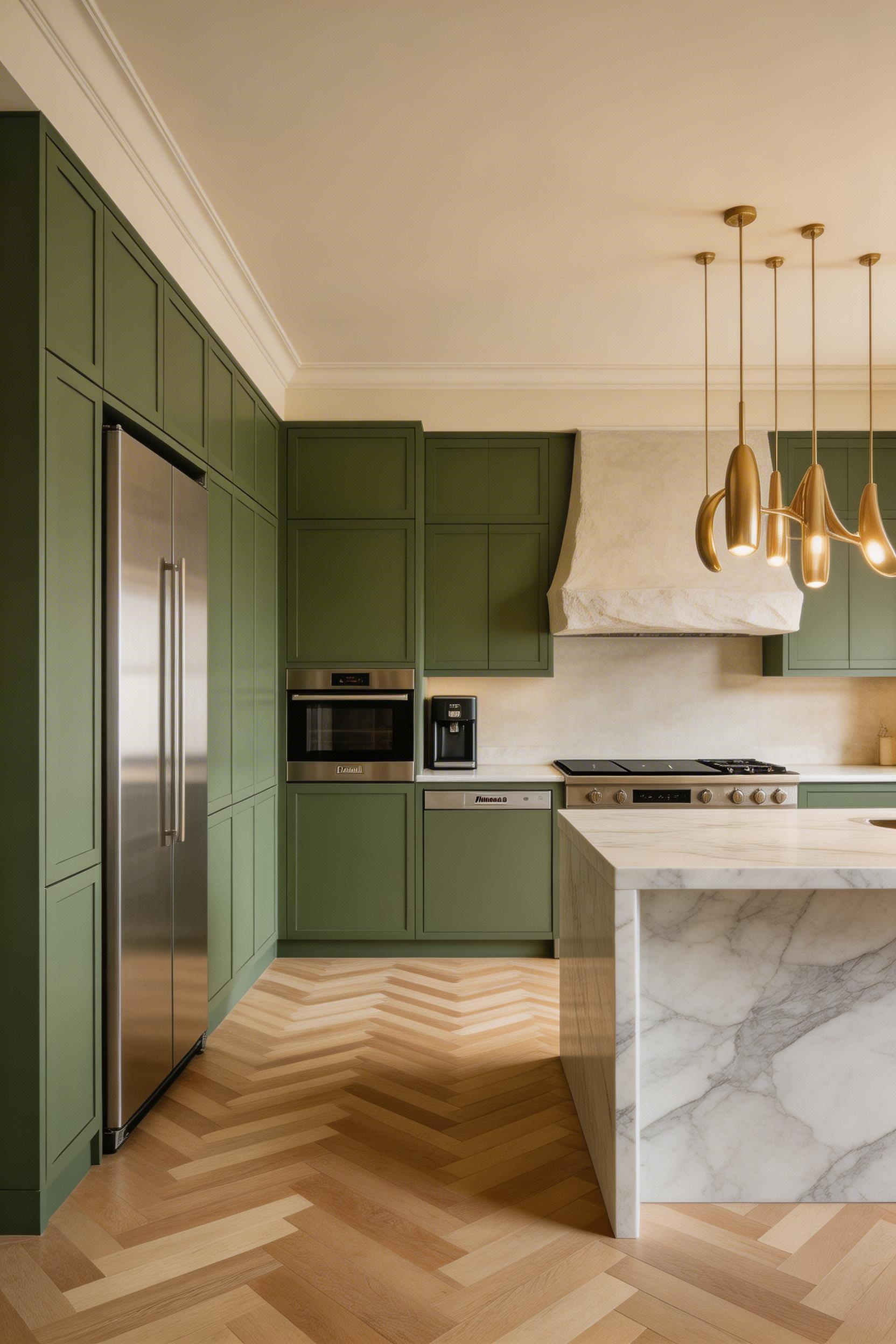
The benchmarks are set by three brands. Miele’s integrated suite — ovens, refrigerators, dishwashers, and coffee systems — connects through the Miele@Home app for remote control and maintenance alerts. Miele’s Dialog Oven detects the molecular structure of food and adjusts its cooking accordingly, eliminating the risk of overcooking. Sub-Zero’s column refrigerators bring dual refrigeration systems — separate compressors for refrigerator and freezer sections — combined with air purification and smart sensors that react to temperature fluctuations and restocking. Wolf ranges bring professional-grade precision with smart connectivity compatible with Alexa and Google Home.
Critically, all of these systems are available in panel-ready configurations. The technology is entirely present; the technology is entirely invisible. Specify smart kitchen integration at the design stage alongside the cabinetry, not retrofitted. This ensures controls are accessible, cables are fully concealed, and the seamless visual quality of the room holds from every angle. For the fuller picture of what this level of integration involves, the luxury kitchen renovation guide covers specification decisions in depth.
—
A luxurious kitchen design is less a collection of expensive elements and more the product of a consistent design intelligence applied from foundation to finish. The marble waterfall island earns its drama because the flooring beneath it is honest and warm. The zellige backsplash resonates because the cabinetry around it is precise and quiet. The concealed LED layers make the whole room breathe because they are treated as architecture rather than decoration.
What connects all fifteen of these ideas is the Nordic principle at the core of the finest Scandinavian interiors: real luxury lies not in excess but in quality. In materials that tell the truth about what they are. Craftsmanship that reveals itself slowly over years of use. In spaces that feel equally right for a quiet Tuesday morning coffee and a long Saturday dinner with people you love. That is what a truly luxurious kitchen design can be — and it is worth building slowly, deliberately, and well.