Physical Address
304 North Cardinal St.
Dorchester Center, MA 02124
Physical Address
304 North Cardinal St.
Dorchester Center, MA 02124
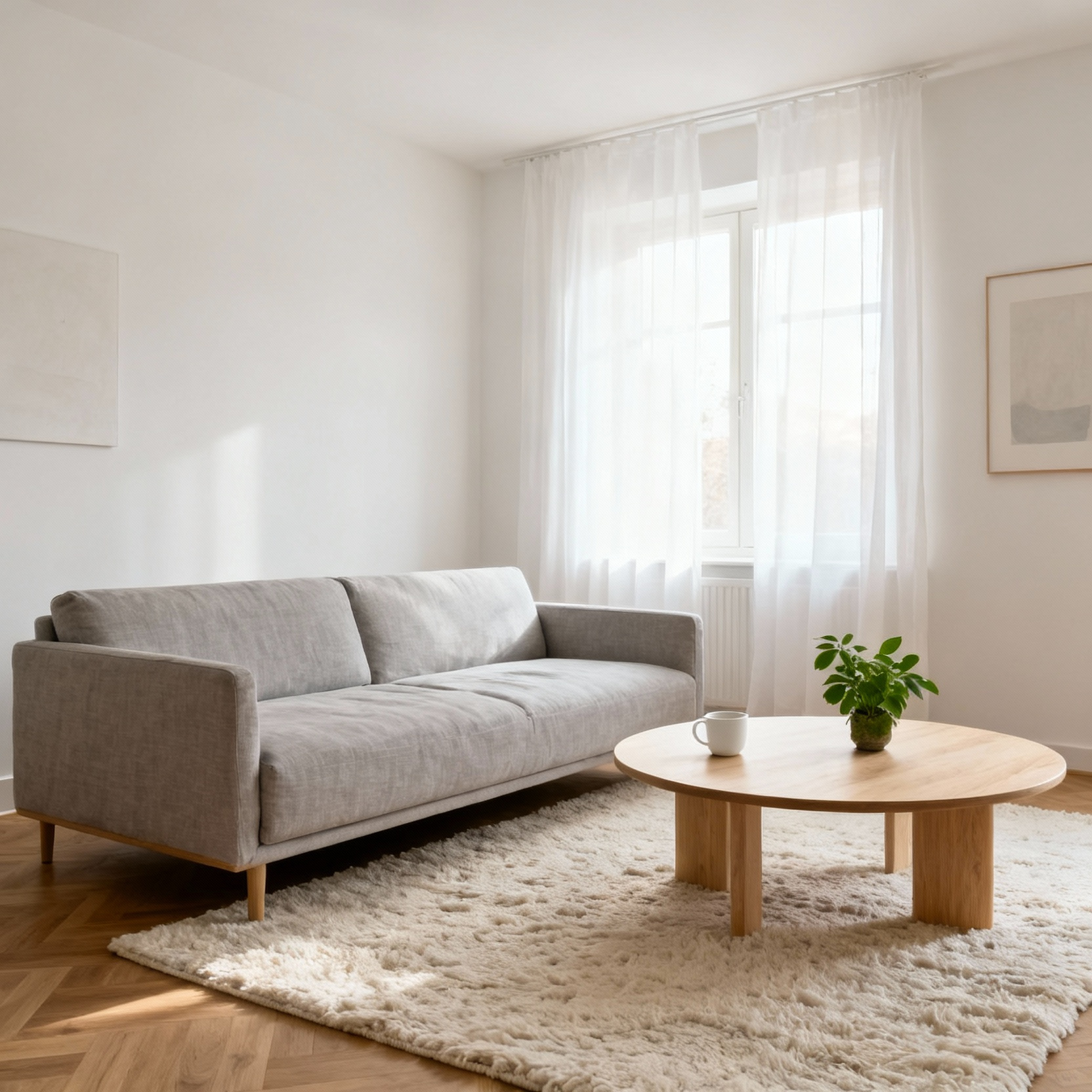
Transform your space into a luxurious sanctuary. Explore 16 expert living room design ideas focused on neuroaesthetics, biophilia, and tactile quality. Start designing your haven.
Historically, the home’s primary gathering space acted as a formal parlor. It often sacrificed personal comfort for the sake of public presentation. However, the modern era demands better. For discerning homeowners seeking meaningful aesthetics, generating exceptional living room design ideas is a deliberate philosophical evolution. We are moving away from stiff formality. Instead, we lean toward a casual, restorative atmosphere. True design excellence today must focus on the resident’s life, rather than the visitor’s gaze.
Experts in neuroaesthetics argue that your environment is a direct extension of your mind. In fact, research consistently shows that a disorganized space creates measurable cognitive stress. Conversely, intentional, warm minimalism fosters a deep sense of stability. Gentle architectural flow and soft shapes can actively reduce feelings of anxiety. Therefore, your furniture layout and material choices act as critical tools for self-regulation. The room effectively evolves from a static physical area into a dynamic emotional anchor.
This guide reveals strategies to engineer this crucial state of mind within your home. We explore using tactile textiles, like wool and velvet, to positively engage the senses. Next, we identify how maximizing natural light chemically boosts mood through serotonin release. We also examine how biophilic elements create a subconscious, soothing link to nature. Ultimately, you will cultivate a living room that balances functionality with profound mental well-being.
At its core, the Swedish philosophy of *Lagom* translates to “just the right amount.” Historically, this concept likely stems from the Viking phrase *laget om*. This referred to sharing a horn so everyone received a fair share. Today, *Lagom* rejects both excess and scarcity in favor of perfect balance. In a living room, this creates a functional, uncluttered sanctuary. Every design element must serve a distinct, meaningful purpose.
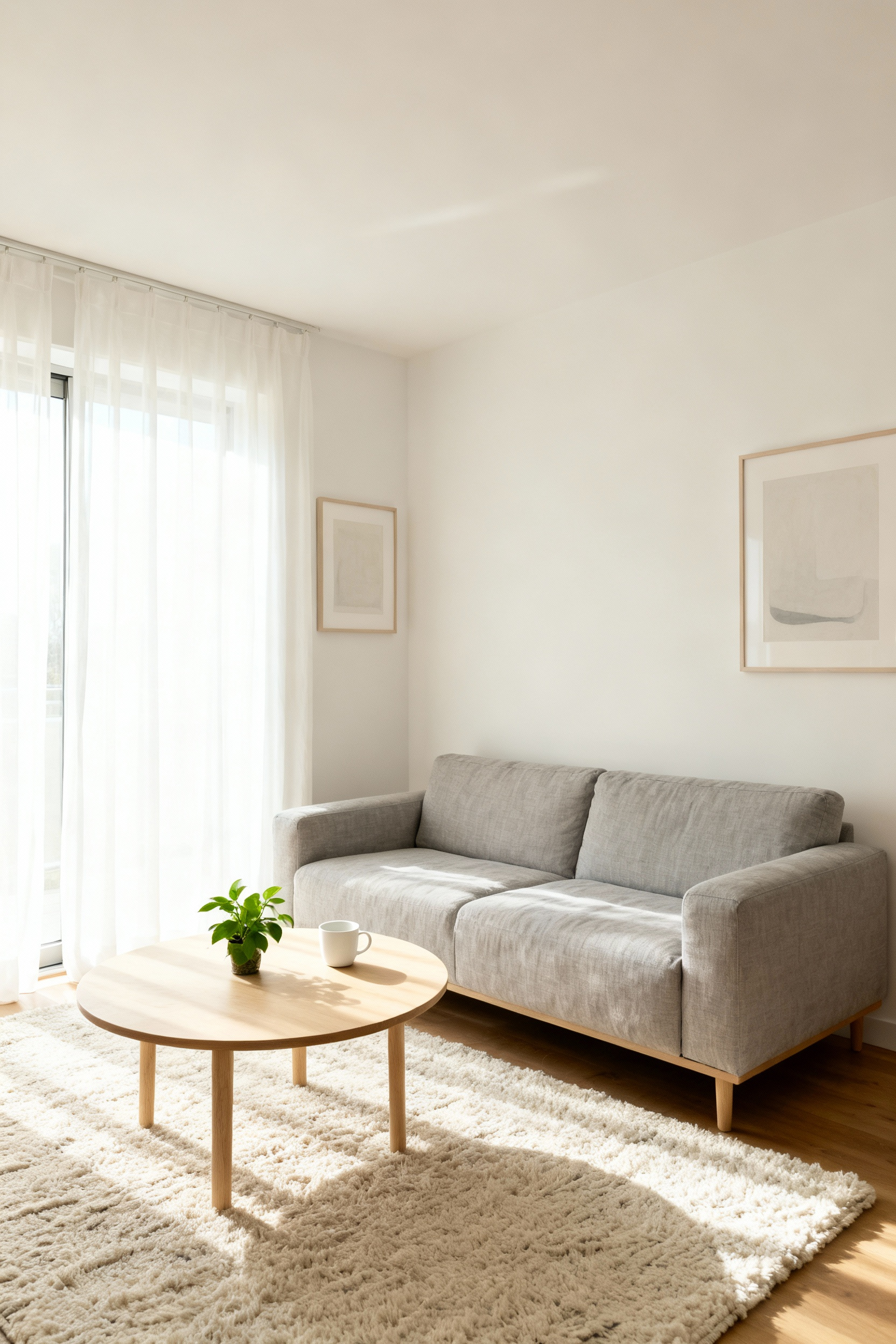
This balance is vital regarding light. In Scandinavia, light acts as a survival tool. specifically, long, dark winters demand we maximize every available ray of sunshine. To achieve this, avoid heavy, light-blocking drapes. Instead, use sheer fabrics that allow light to enter freely. Walls painted in crisp whites or soft grays reflect this precious resource. Thus, the room feels brighter and naturally expansive.
However, when daylight fades, artificial lighting must take over gently. This requires a layered approach to avoid harsh, sterile brightness. Blend floor lamps with sconces to banish dark corners. Technically, you should select warm white bulbs between 2700K and 3000K. These specific bulbs mimic the comforting, golden glow of candlelight. High Color Rendering Index (CRI) bulbs ensure natural textures look authentic. Ultimately, this tailored illumination fosters deep, restorative relaxation.
Lagom is not merely a rigid design style. Instead, this Swedish philosophy creates a psychological sweet spot between stark minimalism and cluttered excess. At its core, a Lagom living room prioritizes purposeful functionality over fleeting decorative themes. Every piece of furniture must serve a distinct function or bring genuine joy.
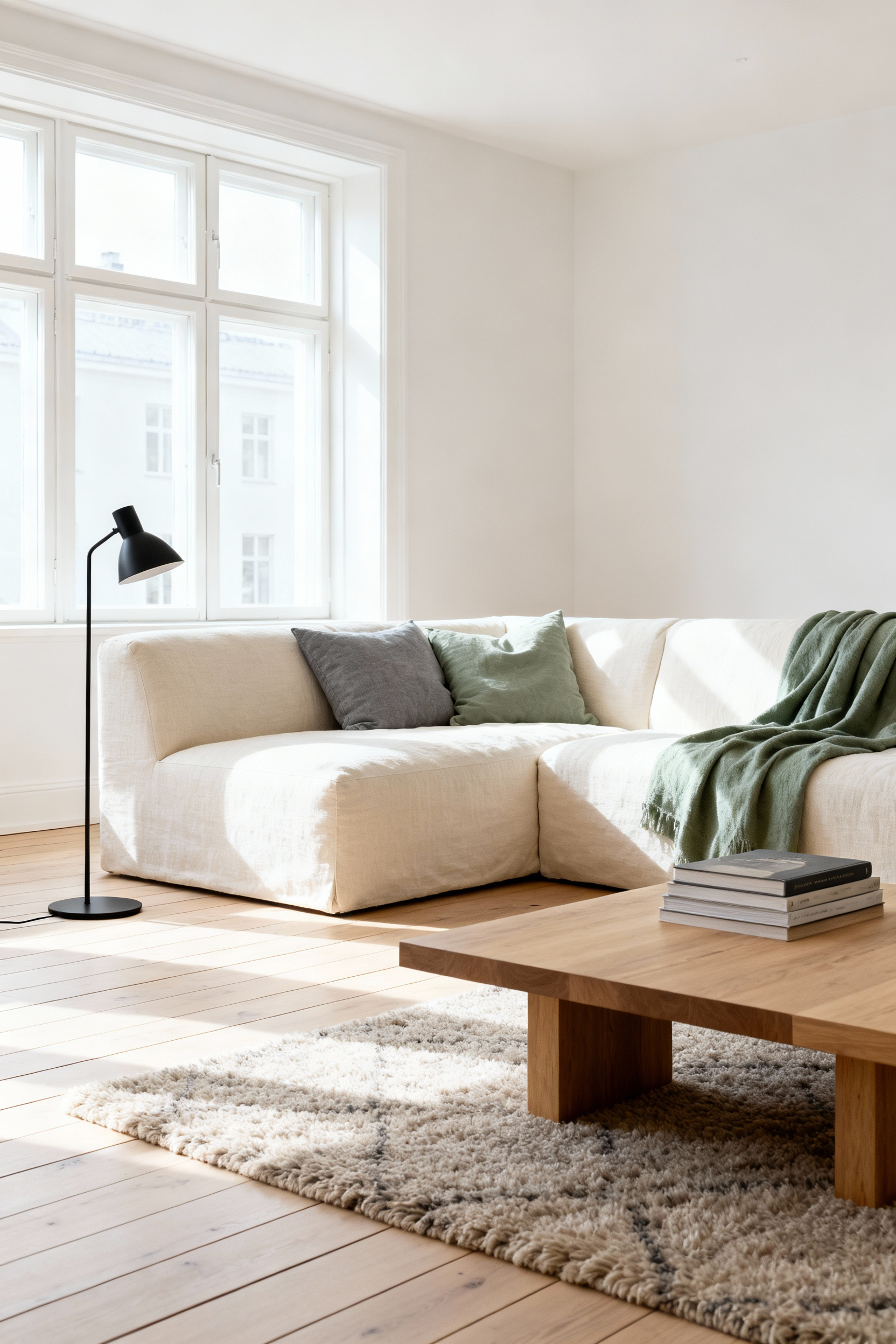
Rather than buying disposable items, invest in timeless, durable quality. This commitment to longevity aligns deeply with sustainability. Visually, this balance relies on a quiet, restorative color palette. Soft neutrals and pale grays act as a calming foundation to reduce emotional tension.
However, to prevent this simplicity from feeling cold, you must incorporate tactile warmth. Layer honest materials like rough linen, wool, and light oak. Indeed, these textures reflect natural light to create an organic, welcoming atmosphere. Finally, adopt a strict “meaning over mass” rule for your decor. Unlike strict minimalism, Lagom encourages displaying a few cherished objects with history. Use hidden storage to tuck away practical items. The goal is a manageable space that feels authentically lived-in, not staged.
The Nordic approach to lighting is not merely aesthetic. In fact, it acts as a survival strategy against long, dark winters. Initially, the focus rests on amplifying every available photon during the day. Interiors effectively function as massive reflectors. Therefore, we utilize pale wall colors to bounce light rather than absorb it. Placing mirrors directly opposite windows effectively pulls daylight deeper into the room.
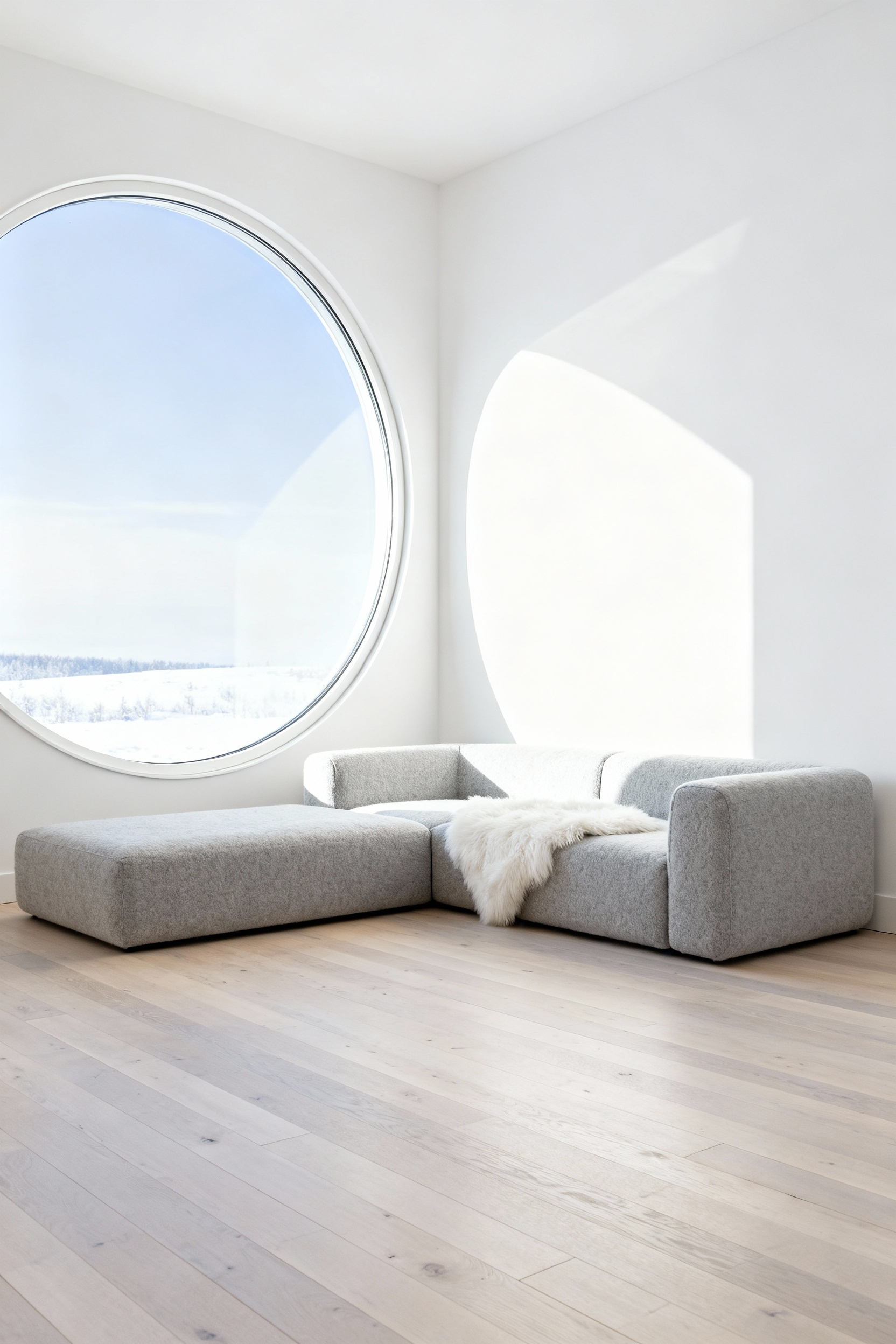
Keeping windows unobstructed is vital. Instead of heavy drapes, choose sheer linen materials. Consequently, natural light filters in freely while still offering privacy. However, once the sun sets, the philosophy shifts from harvesting light to curating it. We avoid relying on a single, harsh overhead source. Rather, we employ “layered luminosity” to create soft, distinct zones.
Combine ambient pendants with focused reading lamps. Crucially, the quality of this artificial light is paramount. We prioritize warmth over sheer intensity. Select bulbs around 2700 Kelvin or lower to mimic a calming sunset. Even lower temperatures, like the flicker of a candle, act as an essential extension of this warmth. Using dimmers allows you to adjust this glow. This ensures the space feels cozy rather than clinical.
For decades, the “gallery white” aesthetic dominated modern interiors. However, this pristine look often feels sterile in residential settings. Historically, white paints were actually softer creams or ivories. Conversely, modern titanium dioxide pigments create a harsh, artificial brightness. Many homeowners find these stark walls highlight flaws and lack emotional warmth.
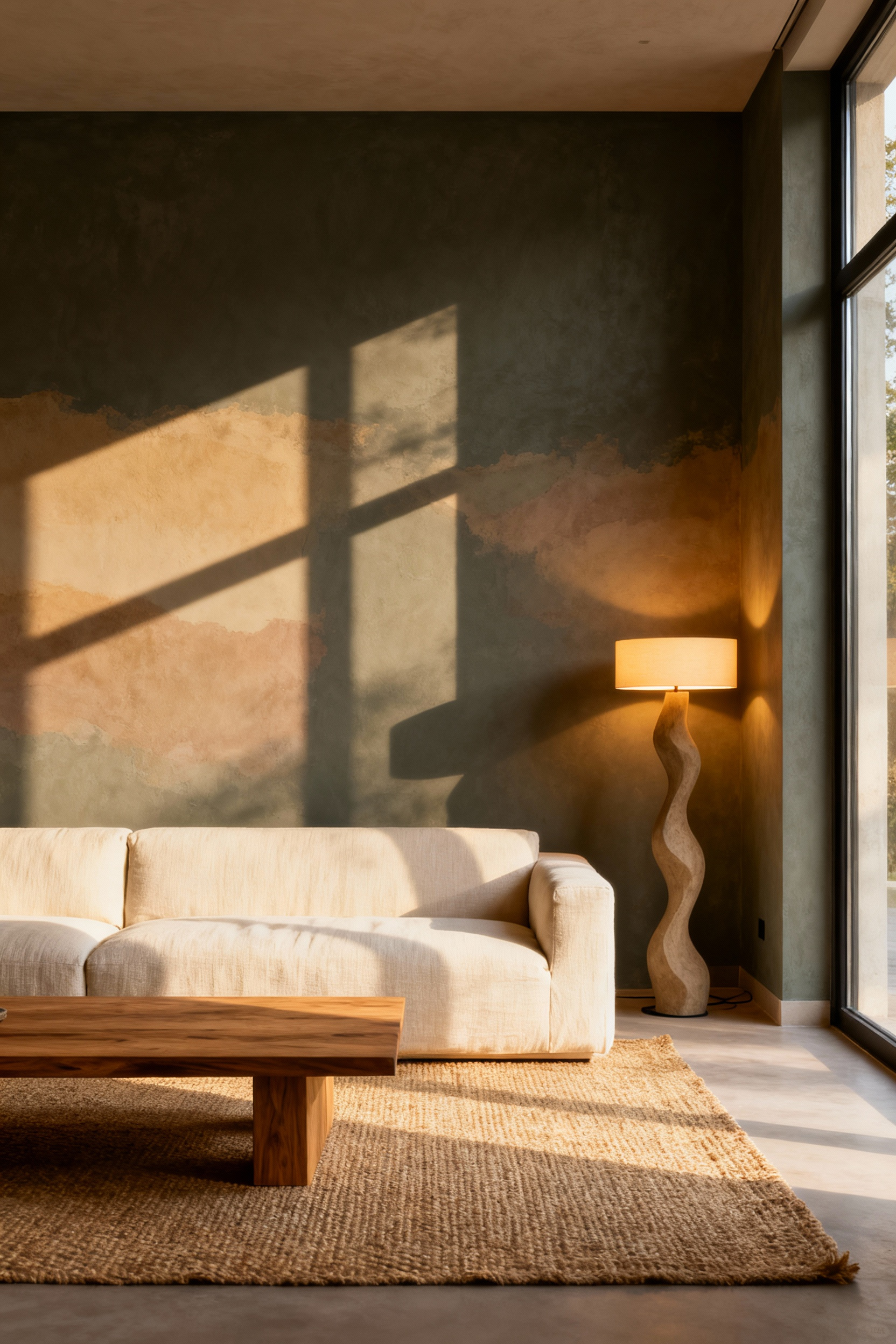
Fortunately, a cultural shift toward “dirty neutrals” is emerging. Designers are embracing colors that feel grounded and real. This is where greige becomes essential. Technically, greige acts as a chameleon within the neutral palette. It expertly balances cool gray with warm beige. This combination introduces subtle yellow or red undertones. Therefore, it counteracts the gloomy, blue cast common in low-light rooms. A warmer greige brings necessary life to north-facing spaces.
Beyond color mechanics, these soft sand tones enhance texture. They serve as a sophisticated, serene foil for natural materials. Rich wood, stone, and textured linen look deeper against a warm backdrop. Ultimately, this palette fosters a welcoming atmosphere. It encourages conversation rather than demanding sterile perfection. Greige offers a “clean” look that remains deeply comforting.
Pushing furniture to the perimeter is a common reflex to maximize floor space. However, this “wall-hugging” tendency often backfires psychologically. It creates a flat, “shoebox” effect that lacks visual dimension. Consequently, the center of the room feels empty and awkward, resembling a waiting room. By floating your sofa, you introduce essential negative space. Even a gap of twenty centimeters allows the eye to travel behind the piece. The brain perceives visual depth, making the room feel more expansive, not smaller.
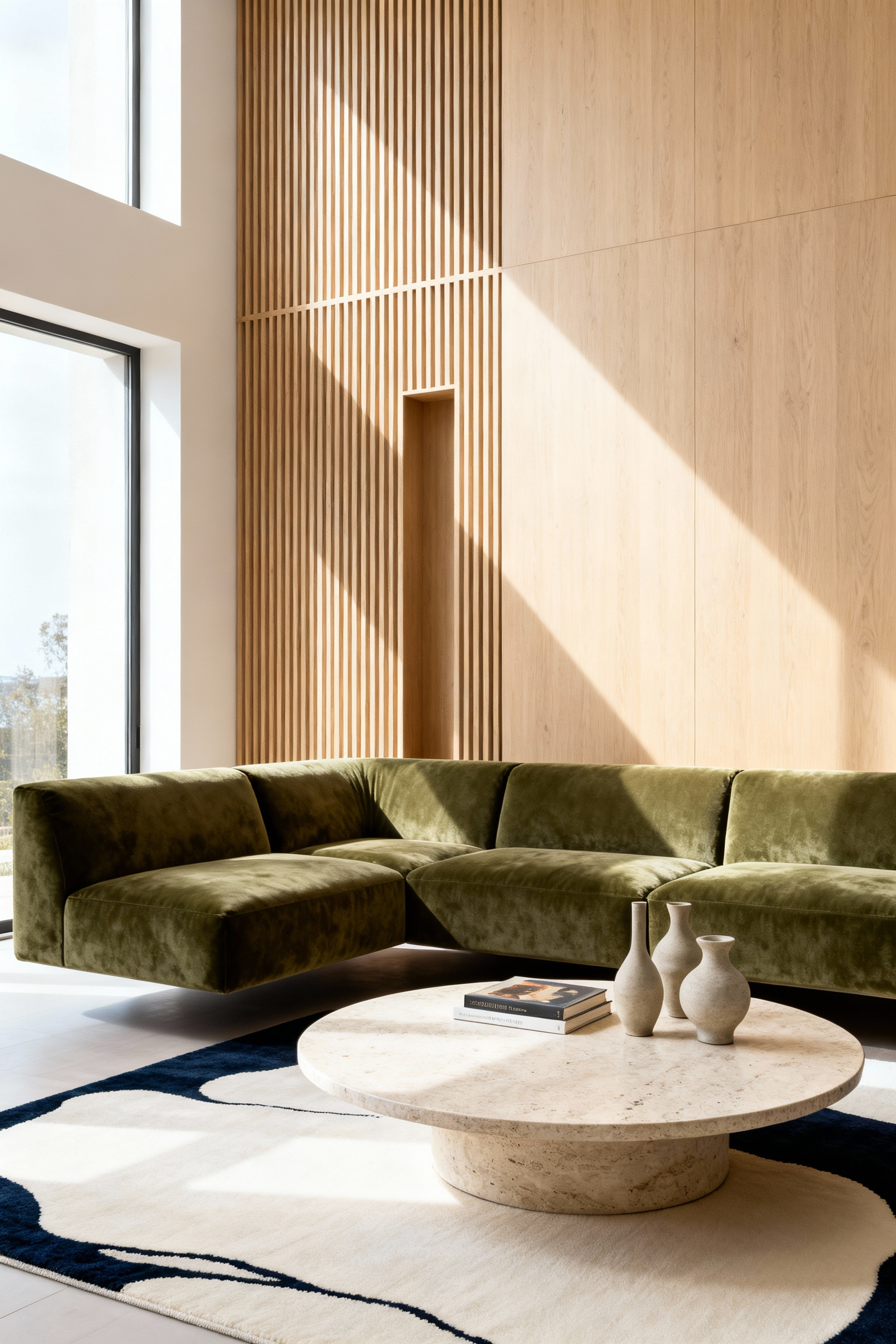
Furthermore, we must consider the principles of proxemics. Ideally, a comfortable conversation zone spans only seven to ten feet. Yet, perimeter seating often forces distances of twelve feet or more. As a result, interactions shift from intimate to “public.” You end up projecting your voice across a cavernous gap to be heard. Conversely, a floating arrangement draws the group inward. This creates a cozy, contained circle that encourages natural, low-volume dialogue.
This layout also serves a functional architectural purpose. In open-concept spaces, a floating sofa acts as a silent, low-profile divider. It clearly separates living zones from dining areas without building physical walls. Moreover, it establishes intuitive traffic patterns. Research suggests that obstructed navigation paths can spike cortisol levels. Clear circulation routes around a central anchor reduce subconscious stress. Floating your furniture transforms a static, flat room into a dynamic, breathable environment.
Integrating natural textures satisfies a deep human need for connection. This approach utilizes biophilic design to foster psychological well-being. In a busy modern world, organic elements act as a necessary grounding force. Materials like raw timber or slate transform a room into a restorative sanctuary. By engaging the senses, the home becomes a place of genuine relaxation.
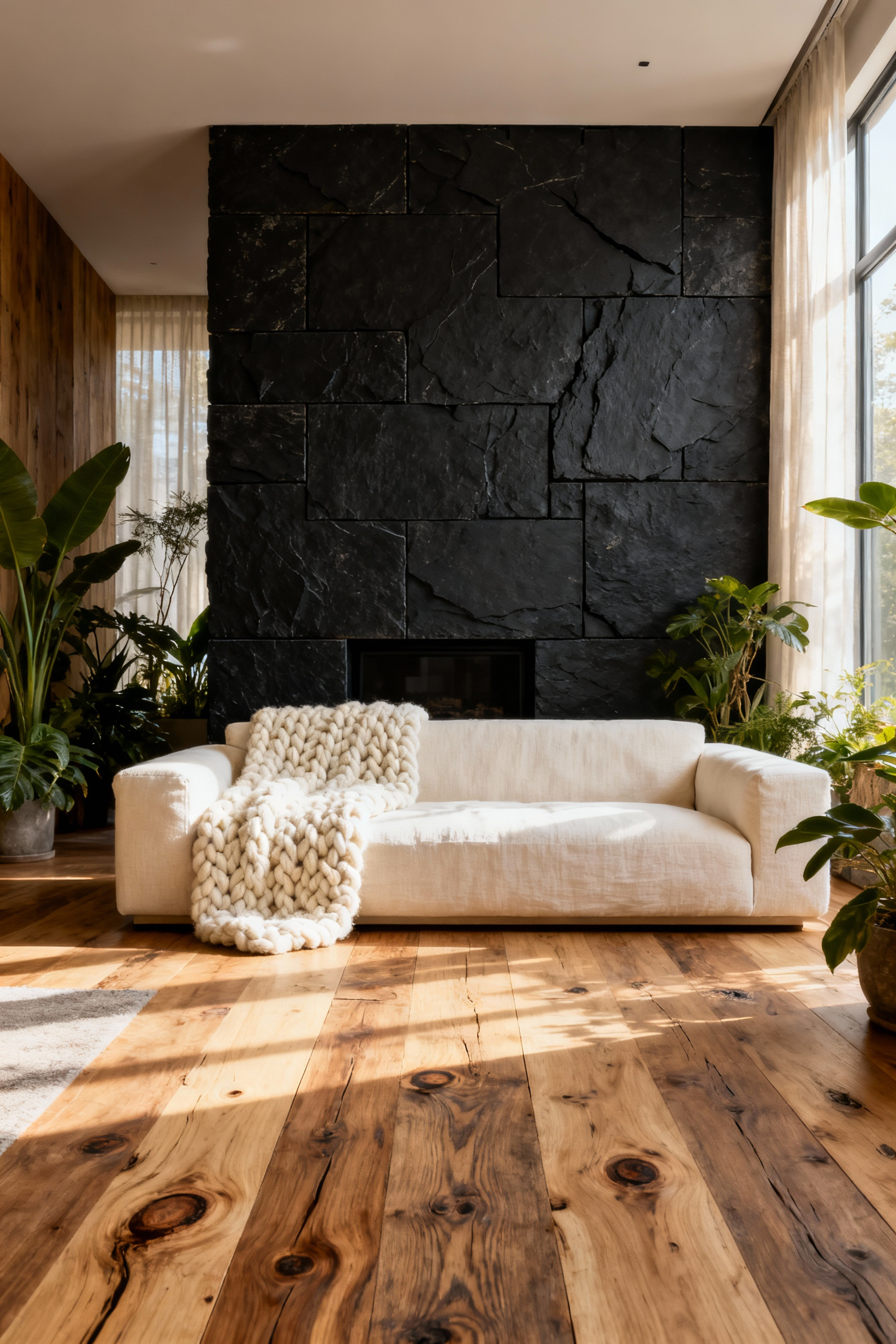
Beyond mental health, texture provides essential visual depth. A neutral Scandinavian palette risks becoming monotonous without tactile variation. Therefore, effective design relies on strategic juxtaposition to create interest. Imagine the tactile contrast of a cool, polished marble hearth. Pair that hardness with the warmth of a deep-pile wool rug. This dialogue between hard and soft surfaces invites touch and interaction. Varying these elements helps define zones in open-plan spaces.
Natural materials offer an enduring narrative through age. Unlike synthetic options, reclaimed wood and leather develop a unique, rich patina. The coarse grain of old timber tells a visible story. Thus, these imperfections impart a sense of authentic character to the room. Favoring nature over plasticity ensures the living space feels truly lived-in.
True Scandinavian design relies on texture to build warmth within a minimalist framework. You must master the “tactile hierarchy” to avoid creating a sterile atmosphere. First, establish raw linen as your honest, grounding foundation. Inherently, this material offers a cool, crisp hand-feel that effectively anchors the room. Its characteristic “slubs” and natural wrinkles celebrate organic imperfection. Utilize linen for large, structural elements like curtains or substantial area rugs.
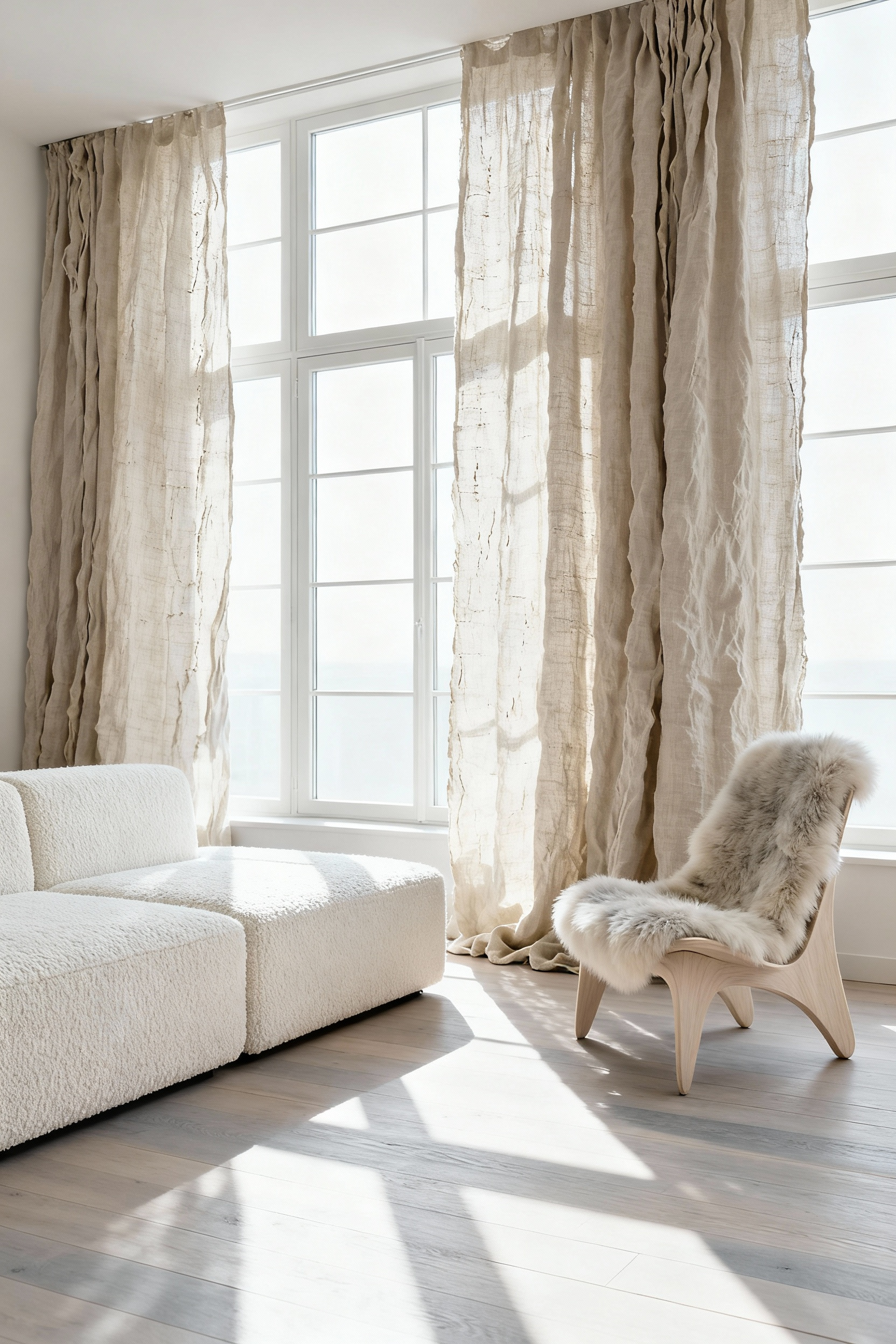
Next, introduce bouclé as the soft, volumetric connector. Visually, its looped yarns create a nubby, cloud-like surface that invites touch. This mid-layer adds necessary physical depth and acoustic absorption to the space. Consequently, a bouclé sofa bridges the gap between flat, cool linen and shaggier accents.
Finally, apply sheepskin as the intimate apex of comfort. This high-pile material offers the ultimate sensory indulgence. Naturally, the fibers contain lanolin, providing a soothing, hyper-textured softness. Place sheepskin throws or cushions where the body needs concentrated warmth. This purposeful progression from cool to cocooning creates deep visual interest without relying on bold colors.
To truly ground a Scandinavian living room, look first to the floor. Untreated oak serves as a powerful anchor. Its raw composition offers a visceral, necessary connection to nature. Rich in tannins, this wood ages beautifully over time. In fact, it develops a warm, honey-toned patina through natural oxidation. Unlike lacquered surfaces, untreated oak retains “tactile honesty.” The coarse grain feels real and reliable underfoot.
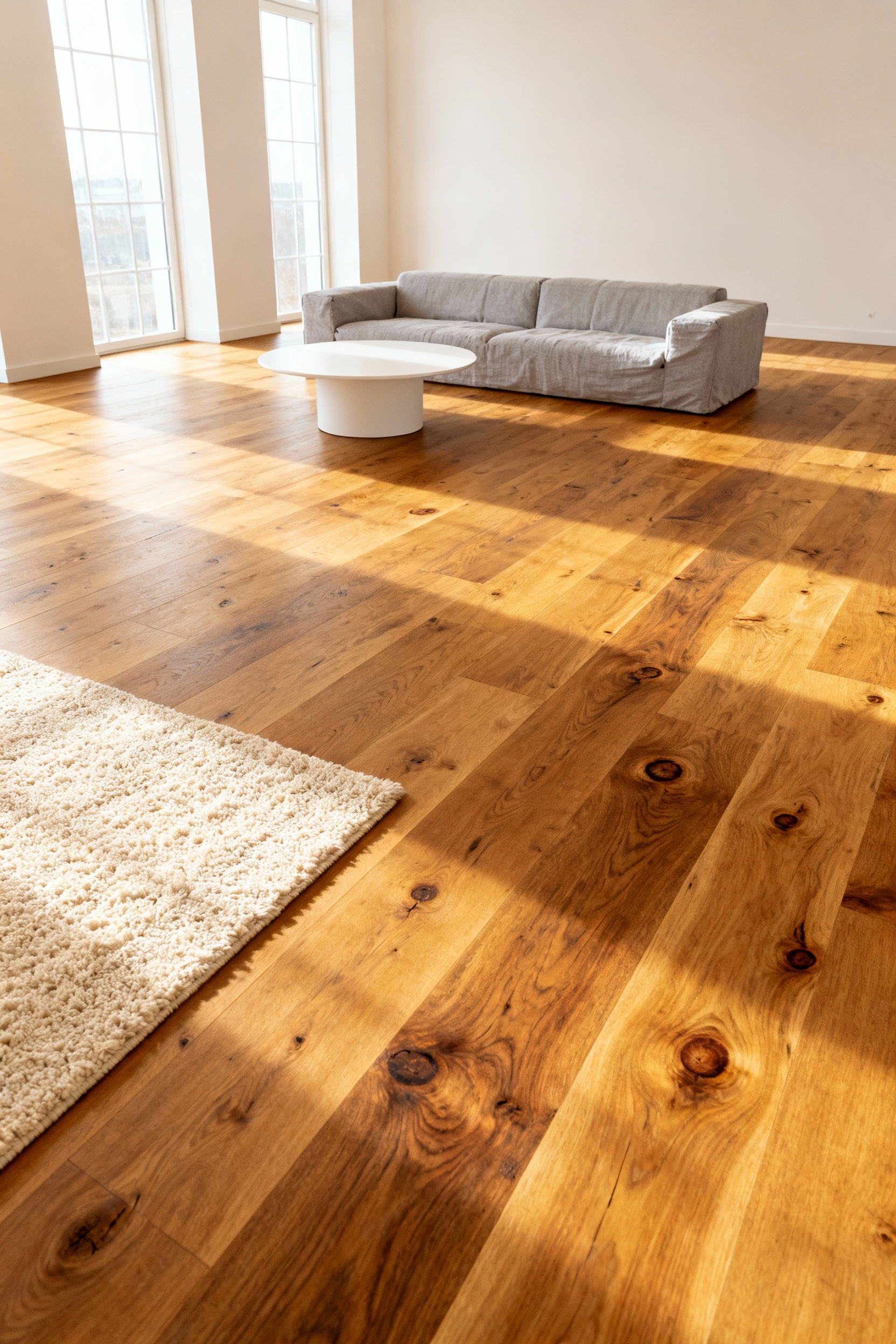
However, a room needs balance to avoid feeling too heavy. This is where blonde ash plays a crucial role. Naturally lighter, ash acts as a visual “blank canvas.” Therefore, it amplifies natural light, making the space feel airy. The interplay of grain patterns creates sophisticated depth. Oak boasts a dramatic, swirling personality. Conversely, ash offers a cleaner, straighter grain. This juxtaposition prevents the design from looking flat.
To execute this correctly, assign specific roles to each wood. Use oak for dominant elements like wide-plank flooring. Then, introduce ash through refined, delicate furniture pieces. For instance, a slender coffee table allows the lighter wood to “float.” Ultimately, this tension creates a warm, minimalist harmony.
Integrating large-scale flora moves beyond simple decoration to become a valid architectural component. In fact, a substantial indoor tree acts as a “structural mimic” for psychological wellbeing. This approach taps into the evolutionary concept of “Prospect and Refuge.” A towering Ficus or olive tree provides a vertical anchor similar to a column. Simultaneously, the high canopy creates a sense of overhead shelter. This natural architecture defines cozy sub-zones without requiring rigid walls. It filters light softly, keeping the room open yet psychologically secure.
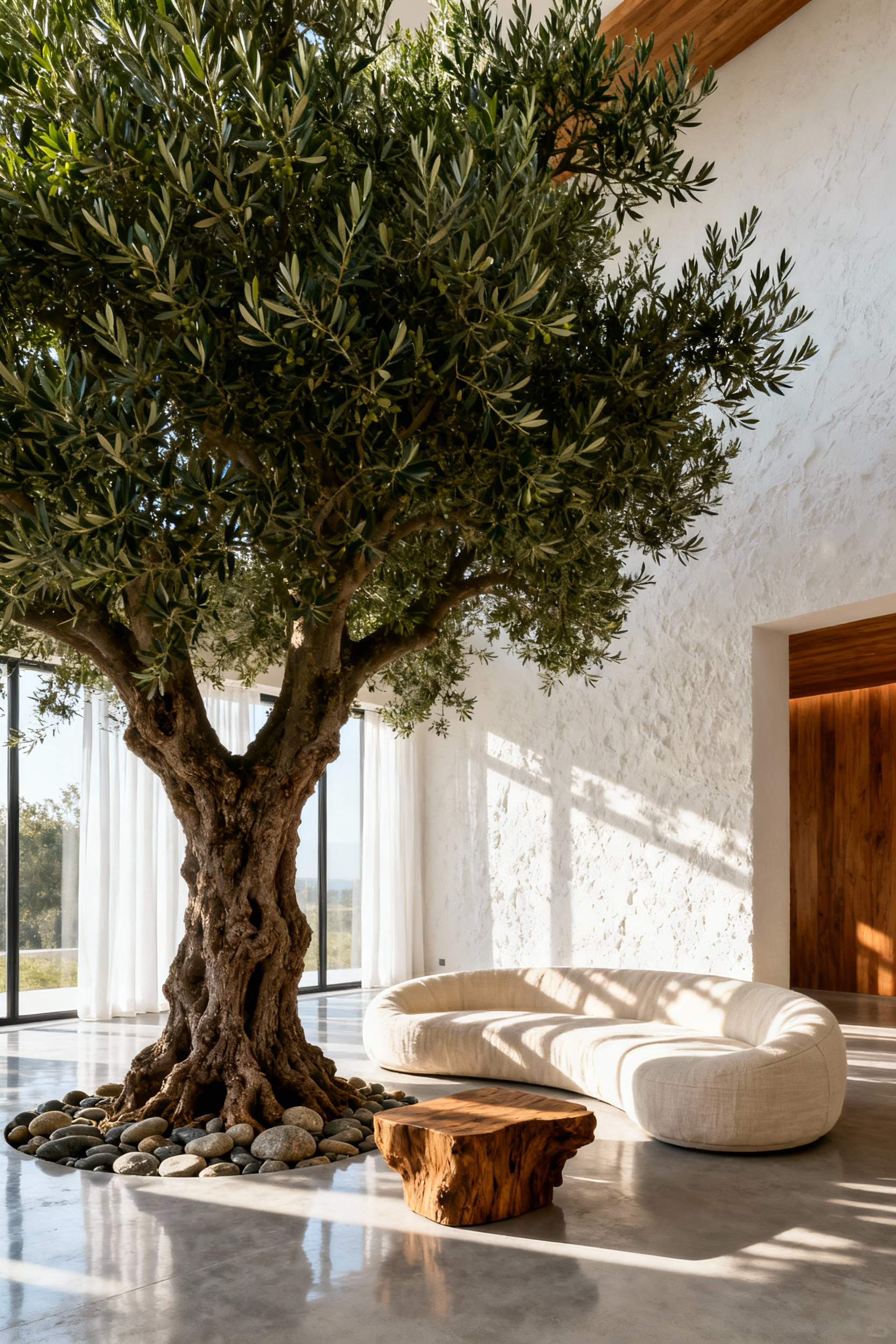
Achieving this effortless look requires significant hidden engineering. The structural element is not the plant itself, but the support system beneath it. Therefore, architects often utilize integrated planter systems rather than movable pots. Typically, these are lined concrete tubs built directly into the foundation. Because wet soil is incredibly heavy, the floor slab must be reinforced to bear the load. Robust drainage systems are essential to prevent root damage to the building.
This design strategy mirrors historical traditions like the Moorish *Riad* or Roman *Peristyle*. In those settings, the central garden was the home’s structural and spiritual core. Similarly, modern design uses the tree to replace the cold structural column. It connects the ground floor to the ceiling with organic texture. This transforms a standard living room into a breathing, tranquil sanctuary.
True sustainability in living room design prioritizes longevity over disposability. This philosophy rejects the transient nature of fast furniture. Often, mass-produced items last merely one to five years before failing. Consequently, over 12 million tons of furniture end up in U.S. landfills annually. In contrast, heirloom-quality pieces act as a significant carbon sink. Simply reusing a quality item eliminates up to 97% of associated carbon emissions.
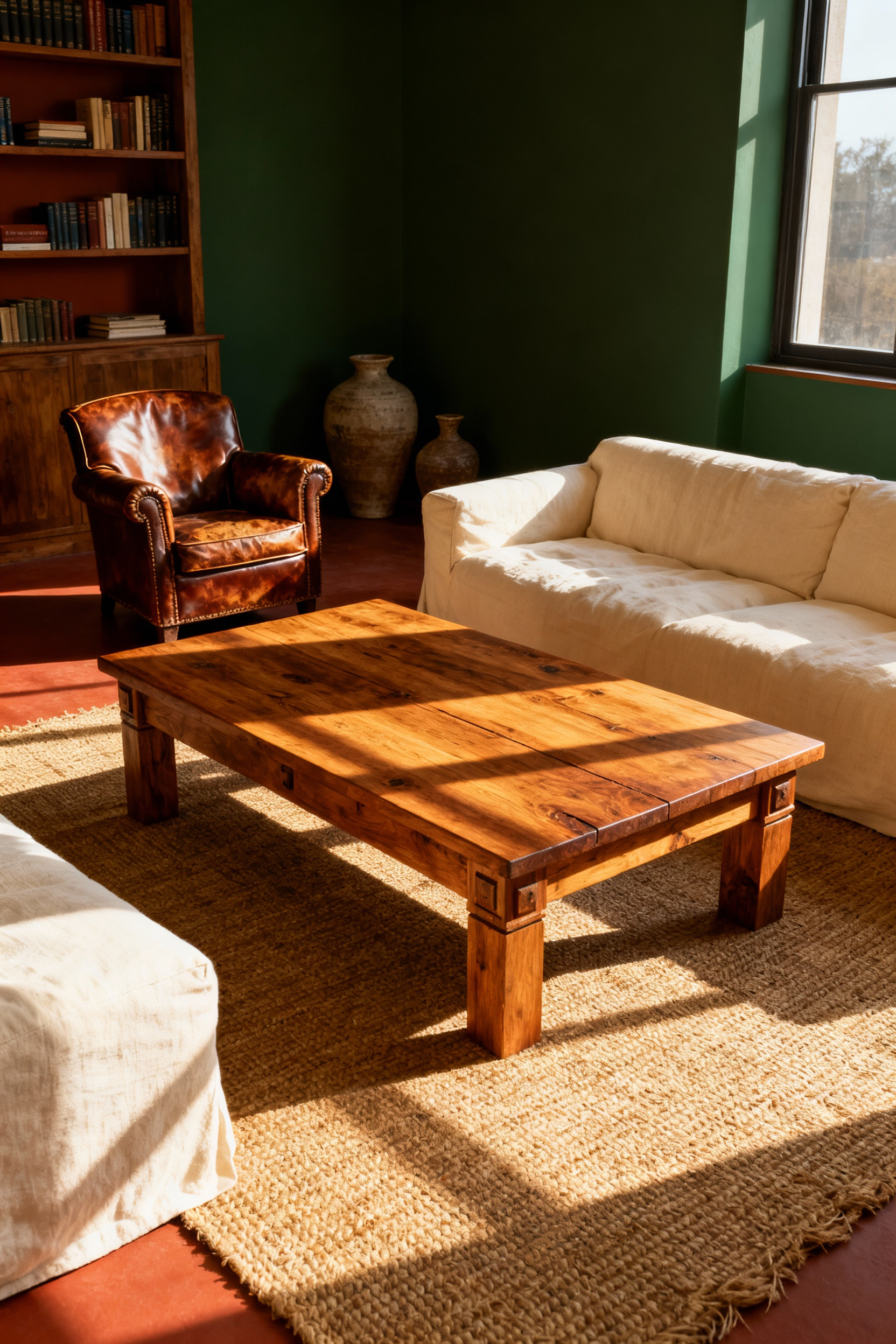
Furthermore, the material difference dictates your home’s health. Cheap alternatives rely on particleboard held together by toxic adhesives. Unfortunately, these composites off-gas Volatile Organic Compounds (VOCs), such as formaldehyde, into your indoor air. Heirloom furniture utilizes solid hardwoods and superior joinery techniques like the mortise and tenon. These pieces offer structural integrity and repairability that laminate surfaces simply cannot match.
Finally, consider the sensory impact on your space. A solid wood drawer closes with a distinct, deep thud. This “acoustic signature of quality” adds a layer of warmth to a minimalist aesthetic. Natural wood develops a rich, tactile patina over time. Purchasing heirloom quality is an investment in permanence, transforming an object into a cherished family artifact.
Historically, the living room functioned as a formal, static parlor. It was reserved primarily for impressive display. However, contemporary design prioritizes daily living over rigid formality. The modern living room must serve as a dynamic, multi-functional hub. This fundamental shift places a premium on intuitive circulation.
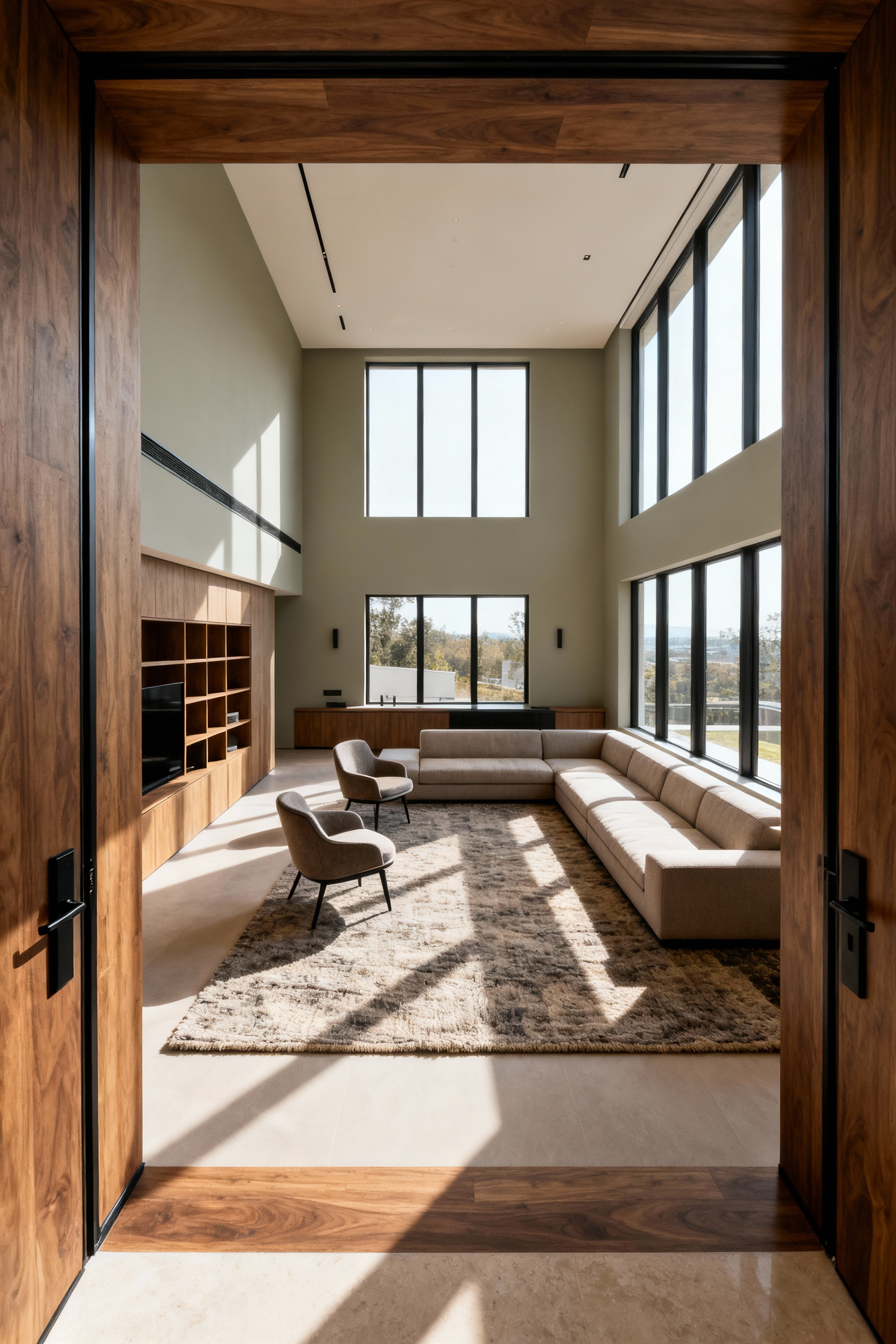
Flow is more than physical convenience; it is psychological. Poorly designed pathways actually create “low-level stress.” Specifically, having to squeeze past furniture induces subconscious anxiety. Conversely, smooth, unobstructed movement fosters a deep sense of calm. Ideally, a home “lives better” when navigation feels predictable and natural.
To achieve this, apply the “floating furniture” technique. Instead of pushing sofas strictly against walls, pull them inward. This placement creates a dedicated traffic lane behind the seating. Movement flows around the conversation zone, not through it. Anchor these floating groups with a substantial area rug. Ensure the front legs of all primary seating sit on the textile. This simple visual cue defines the functional zone, transforming a scattered room into a cohesive sanctuary.
In Scandinavian culture, *fika* represents far more than a simple coffee break. Rather, it serves as a mandatory ritual to slow down and appreciate the moment. Designing a “Fika Corner” requires a philosophy that acts as an antithesis to digital distractions. This dedicated zone encourages disconnecting from technology to foster genuine, face-to-face connection. The design must promote intimacy through deliberate isolation from the main living area.
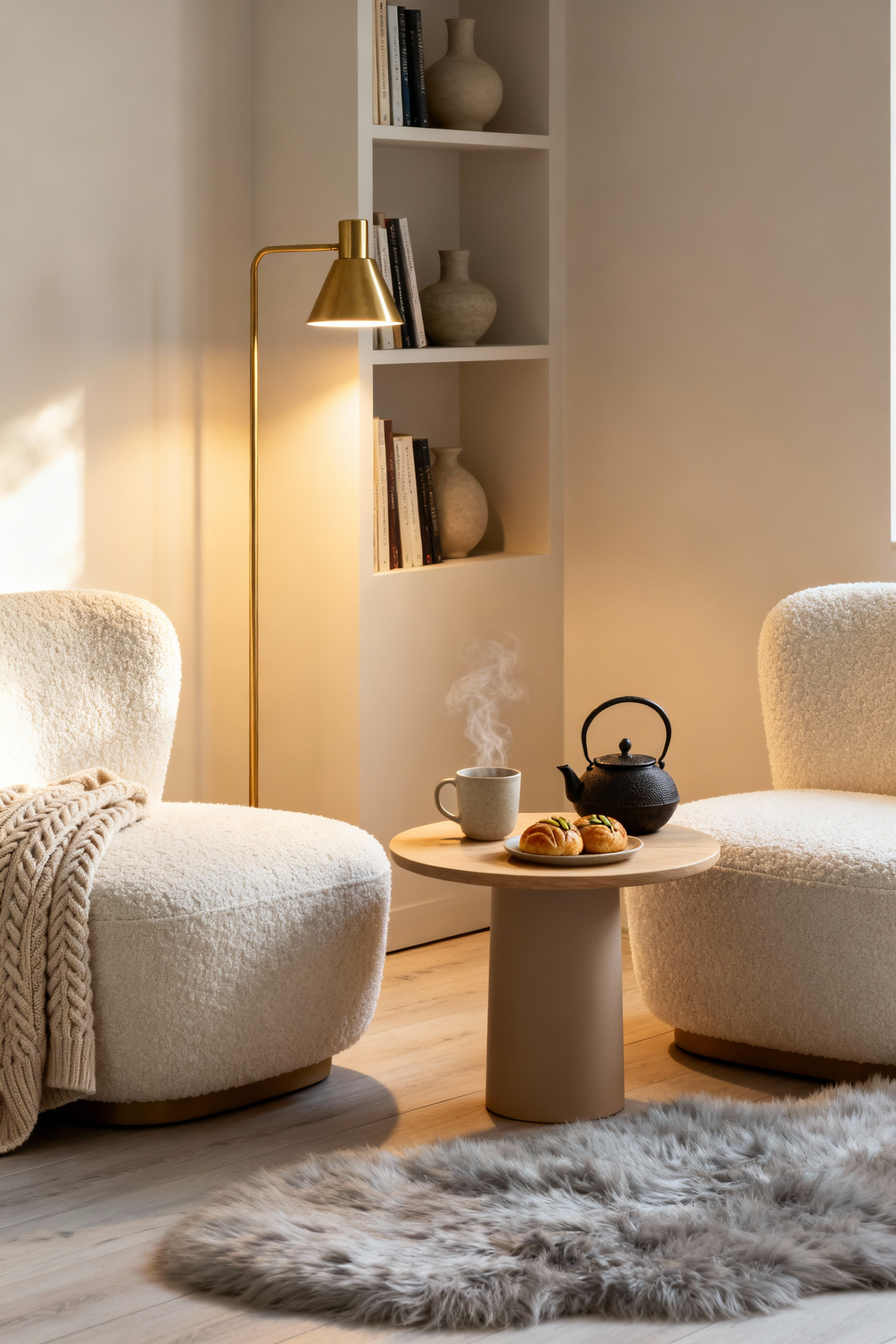
To achieve this, the spatial arrangement should prioritize a smaller, personal scale. Utilize a small, round bistro table instead of a sprawling surface. Pair this with two comfortable chairs to force physical proximity. Interestingly, this setup mirrors the social intent of the mid-century “conversation pit.” The furniture arrangement prevents isolation and sparks conversation without the interference of a television.
The atmosphere must engage the senses to fully evoke *hygge*. Position this sanctuary near a window to maximize mood-boosting natural light. Layer the area with tactile elements like warm wood, soft stone, and plush handwoven textiles. Moreover, consider removing wall clocks from this zone to eliminate time pressures. Finally, the lingering aroma of fresh coffee completes the experience, transforming a simple corner into a retreat for mindfulness.
True luxury lies in the balance between utility and visual silence. Historically, furniture design celebrated this duality through pieces like the English *secrétaire*. These cabinets featured hidden compartments and complex levers to secure valuables. Today, we adapt this ingenuity to combat the stress of modern living.
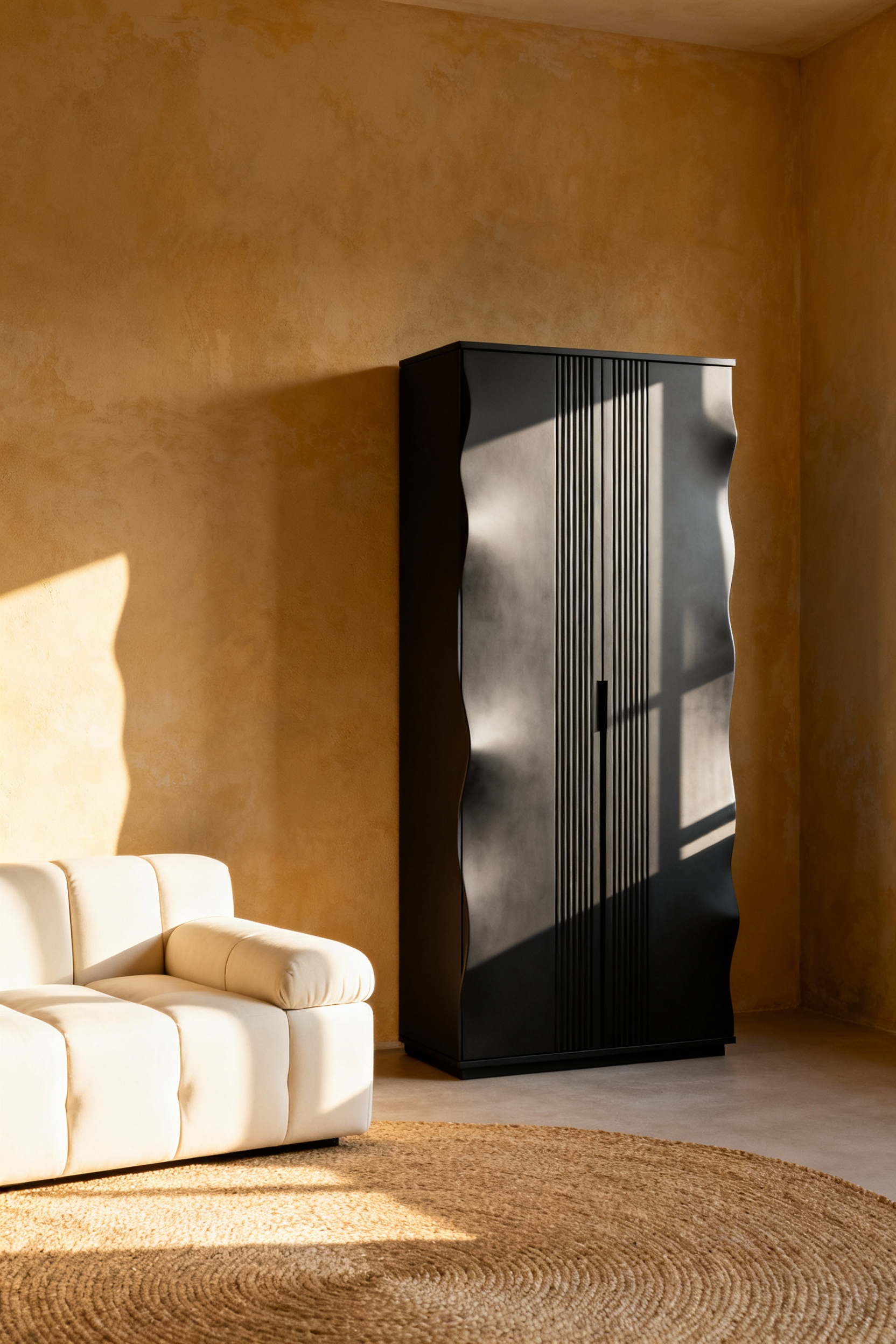
Research indicates that physical clutter directly increases cognitive burden. Therefore, sculptural storage functions as a necessary “visual anchor” for mental well-being. By disguising utility within art, you effectively reduce visual noise. Consequently, the room feels like a sanctuary of stillness rather than a crowded storage space.
Contemporary designers achieve this through monolithic or biomorphic forms. A cabinet might feature sweeping, organic curves instead of sharp corners. Furthermore, visible hardware often disappears completely. Push-latch mechanisms replace handles, allowing the piece to read as a continuous, tactile surface.
The object dictates the room’s flow. Instead of a bulky box, a wall-anchored unit acts as a sleek architectural plane. Thus, your living room gains the sophisticated atmosphere of a curated gallery. You achieve essential functionality without sacrificing the clean, breathable nature of the space.
In an age of constant digital distraction, the conversation circle is a radical design choice. Historically, this concept mirrors the mid-century “conversation pit,” which prioritized spatial democracy. Today, we achieve this warmth by explicitly floating furniture away from the walls. Arrange your seating in a U-shape or symmetrical face-to-face layout. This choreography shifts the room’s focus from the television to the people within it.
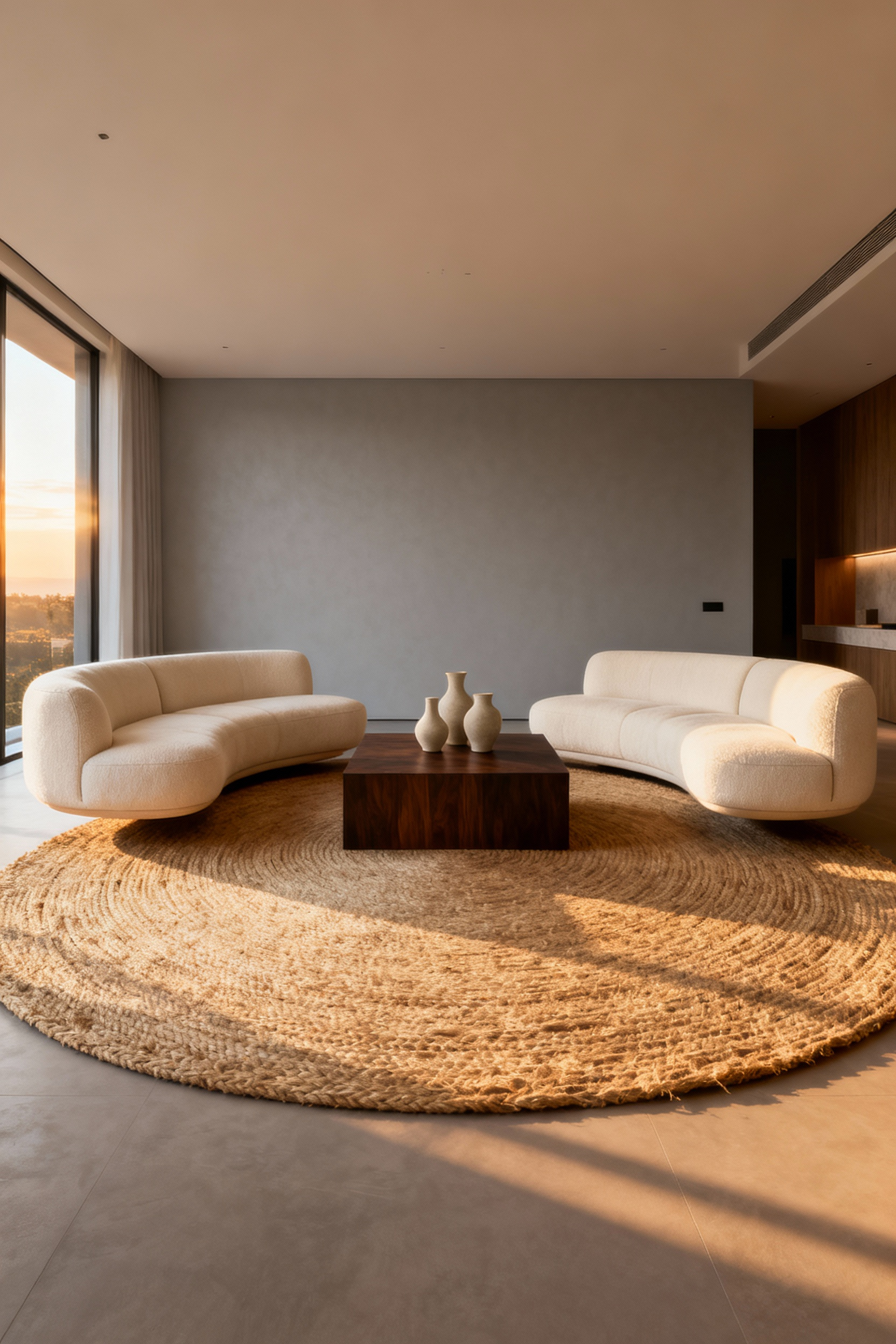
The success of this arrangement relies heavily on proximity. According to design psychology, the optimal distance for comfortable dialogue is between four and eight feet. This specific range fosters intimacy, allowing for soft-spoken conversation without physical strain. Conversely, separating furniture by more than nine feet creates an awkward, formal “shouting distance.” You must pull distinct pieces closer together to bridge the emotional gap.
The center of this circle requires a strong functional anchor. Typically, a low, textured coffee table serves this purpose perfectly. Place it approximately 16 to 18 inches from the sofa to ensure drinks are within reach. This thoughtful spacing prioritizes human connection over screen time, creating a truly restorative sanctuary.
True comfort requires harmonizing three distinct light sources: functional, foundational, and primal. The design challenge lies in resolving the tension between engineered static light and the natural flame. To begin, your ambient light must be calibrated to mimic a candle’s sensory profile. Select warm bulbs with a temperature between 2700K and 3000K. The dimmer switch serves as the essential bridge between these elements. By lowering this ambient hum, you prevent electric light from washing out the candle’s subtle, golden tones.
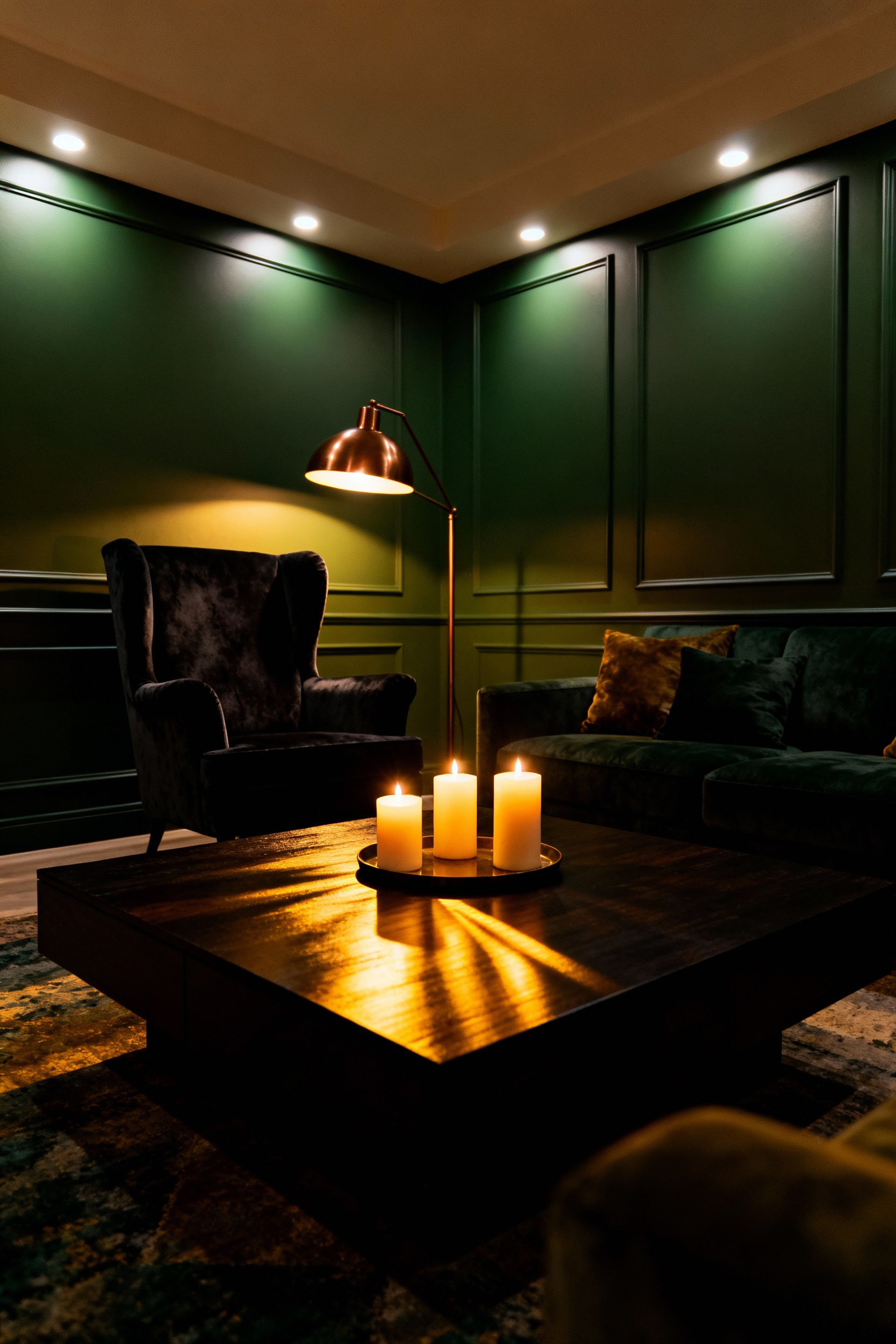
Next, treat task lighting as a sculptural element rather than a flat wash. Focused lamps should create intentional pools of brightness to reduce eye strain without flooding the room. This creates a *chiaroscuro* effect, using strong contrasts between light and dark to add spatial depth. A common error is placing all sources at the same eye level. Instead, distribute them vertically, keeping candlelight low on coffee tables to encourage intimacy.
Finally, view the candle itself as an emotional anchor. Unlike static electricity, a flame’s flickering glow introduces a natural rhythm that reduces tension. The simple act of lighting a candle signals a ritual pause. It shifts the room from a workspace to a sanctuary for connection.
A living room is not merely a passive assembly of walls. Rather, it serves as an active, miniature universe. Consequently, the space should mirror your inner world and memories. This approach favors enduring design over fleeting trends. A soulful room rejects the sterile showroom look. Instead, it embraces signs of daily life. Therefore, we value items that feel authentic and lived-in.
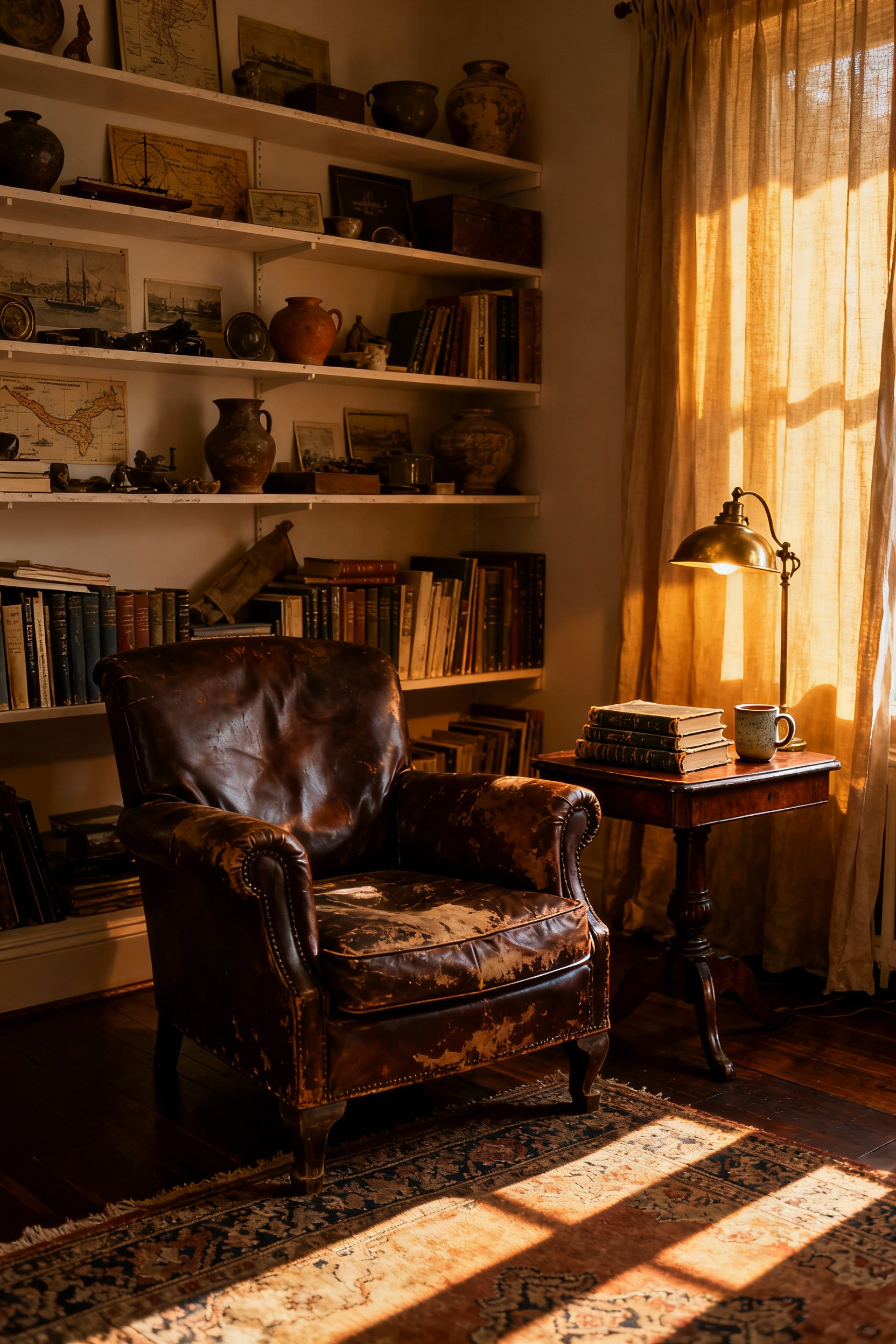
Creating atmosphere requires a technical orchestration of stimuli. This holistic concept is known as Sensory Design. Specifically, it engages all five senses to evoke emotion. Tactile materials like raw wood invite physical interaction. Similarly, natural textures like linen soften over time. These elements promote a grounding, comfortable experience. Attention to acoustics and scent enhances this effect. Thus, the room becomes a sanctuary for well-being.
Your material choices define the room’s philosophy. Consider the Japanese concept of Wabi-Sabi. It appreciates imperfection and raw, untreated textures. It emphasizes the honest beauty of wear and tear. Conversely, the Danish concept of Hygge focuses on cozy conviviality. This style utilizes plush fabrics and warm lighting. It aims to create a soft, protective retreat. You must intentionally select materials that suit your desired lifestyle.
The Japanese concept of Wabi-Sabi offers a profound counter-narrative to modern perfectionism. Fundamentally, this philosophy embraces the beauty found in transience and natural imperfection. Unlike mass-produced decor, Wabi-Sabi ceramics celebrate intentional asymmetry and roughness. Items like hand-turned bowls often feature uneven surfaces or unglazed finishes. These distinct markers speak to the collaboration between the artist and the clay.
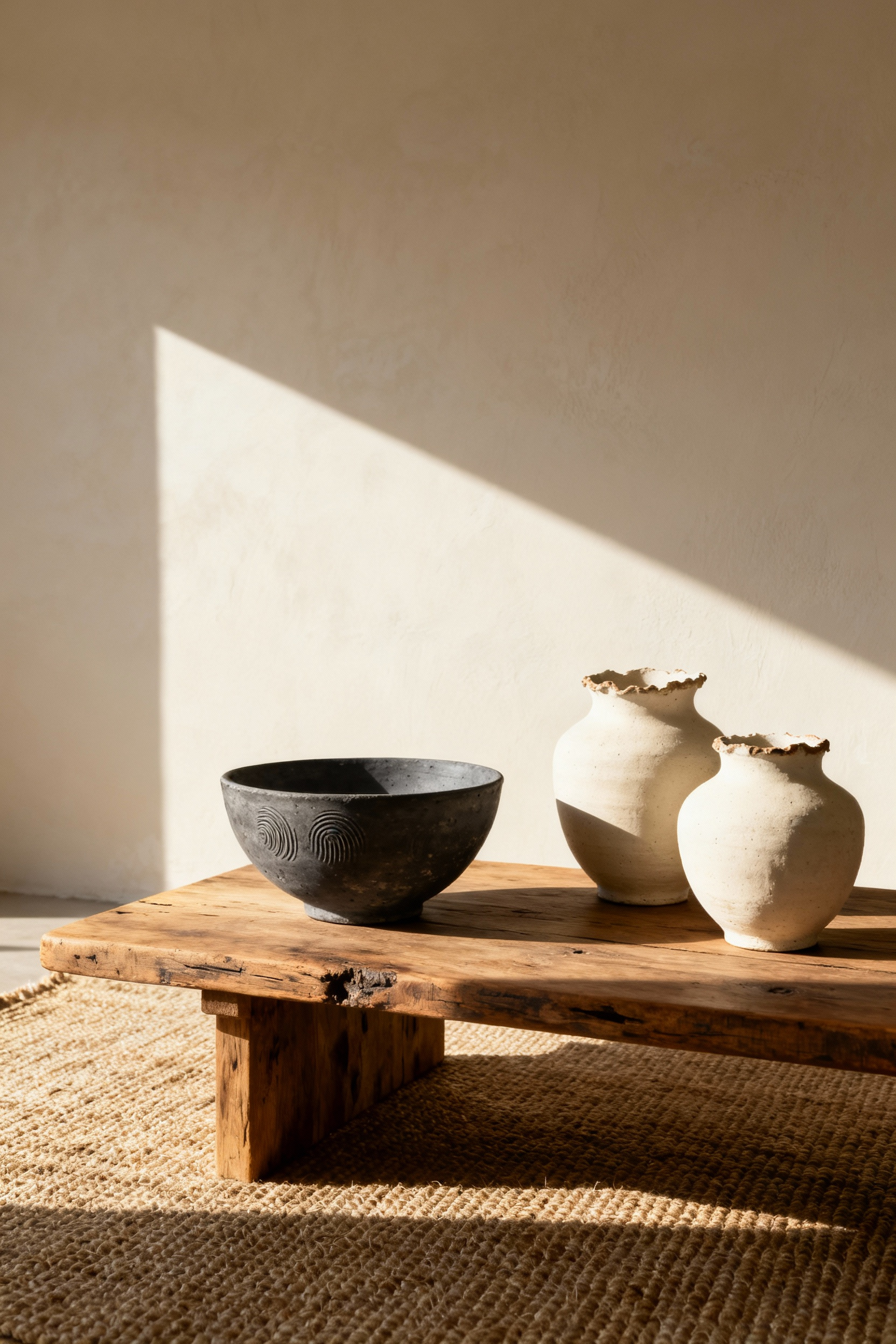
This aesthetic views damage as a significant part of an object’s history. For instance, the art of *Kintsugi* repairs broken pottery with gold lacquer. Rather than discarding a cracked vase, this technique transforms flaws into beautiful assets. Additionally, natural materials like stone and clay develop a unique patina over time. As a result, the object’s beauty deepens through years of daily touch and use.
Integrating these handcrafted elements fosters a grounding sense of acceptance in the home. In fact, choosing durable, evolving pieces aligns perfectly with sustainable design principles. Living with imperfect objects encourages mindfulness and reduces the stress of maintaining a flawless space.
Truly functional design treats the home as a dynamic organism. Specifically, “Seasonal Elasticity” aligns your living space with the changing external environment. This practice goes far beyond simple aesthetic updates. Historically, heavy textiles served as critical mechanical insulation against harsh winter drafts. Therefore, swapping fabrics remains a practical, necessary response to nature’s shifts.
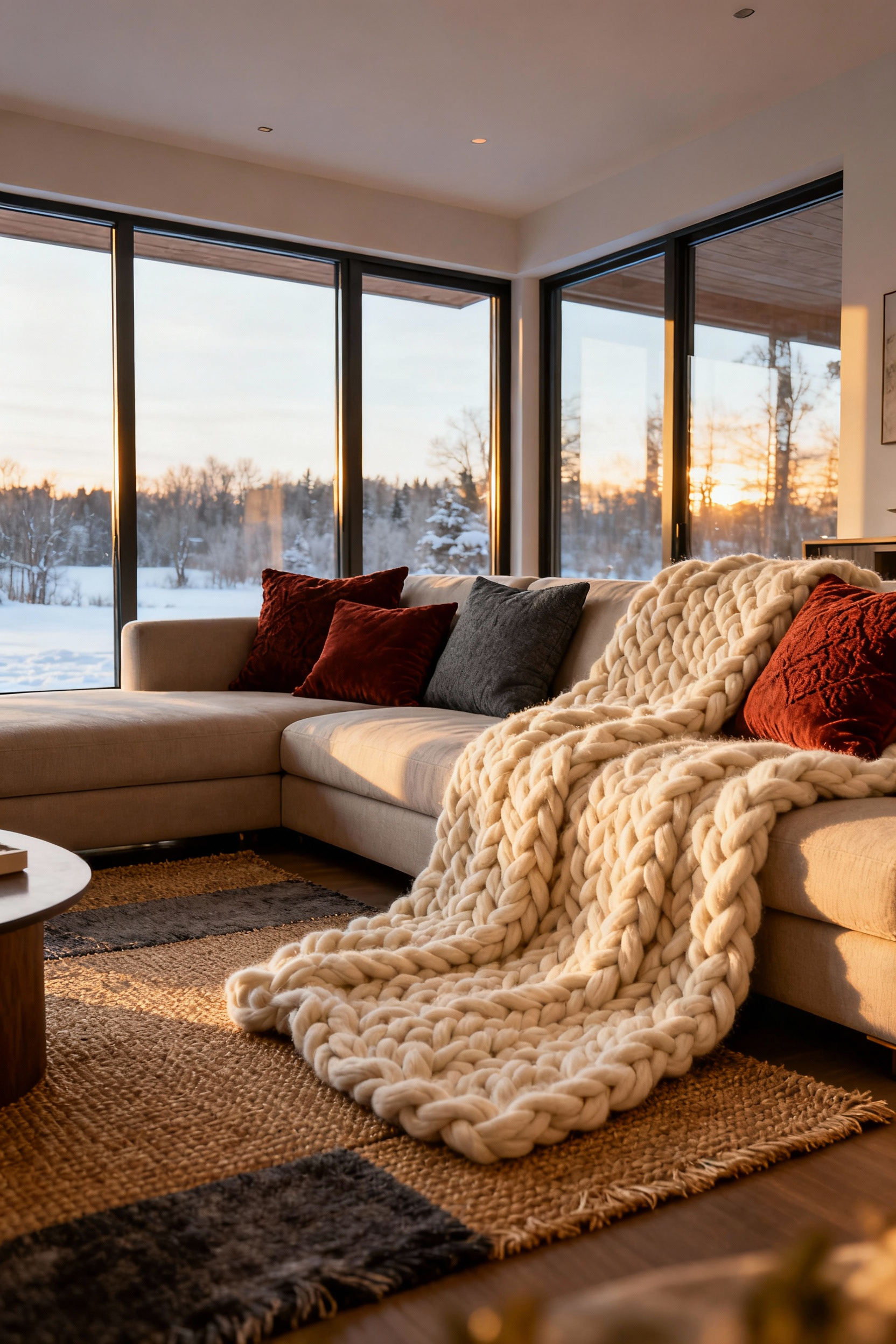
In colder months, you must prioritize thermal regulation. Introduce heavy wool, velvet, or mohair into the living room. These dense materials physically trap heat and block cold air near windows. Furthermore, they dampen sound, creating a “mellow hum” that feels psychologically protective. Conversely, the arrival of spring demands breathability. Replace heavy drapes with crisp linen or percale. These lightweight fabrics promote air circulation and maximize natural light.
This cyclical process offers a psychological reset. It mirrors the Japanese tradition of *koromogae*, transforming a chore into a mindful act of renewal. By continually adjusting your home’s sensory profile, you effectively combat decor fatigue. This approach fosters a deep, sustainable harmony between your interior sanctuary and the natural world.
A true living room transcends simple decoration; instead, it acts as a living autobiography. Consequently, the space should feel naturally evolved rather than purchased in a single transaction. Research indicates that personalized decor significantly impacts mental well-being by creating a sense of belonging. Thoughtful curation creates a sanctuary that actively reduces stress. Physical books offer a unique, analog pleasure in an increasingly digital world. The tactile weight of paper anchors us to the present moment. These elements function as emotional anchors, connecting you to your personal history.
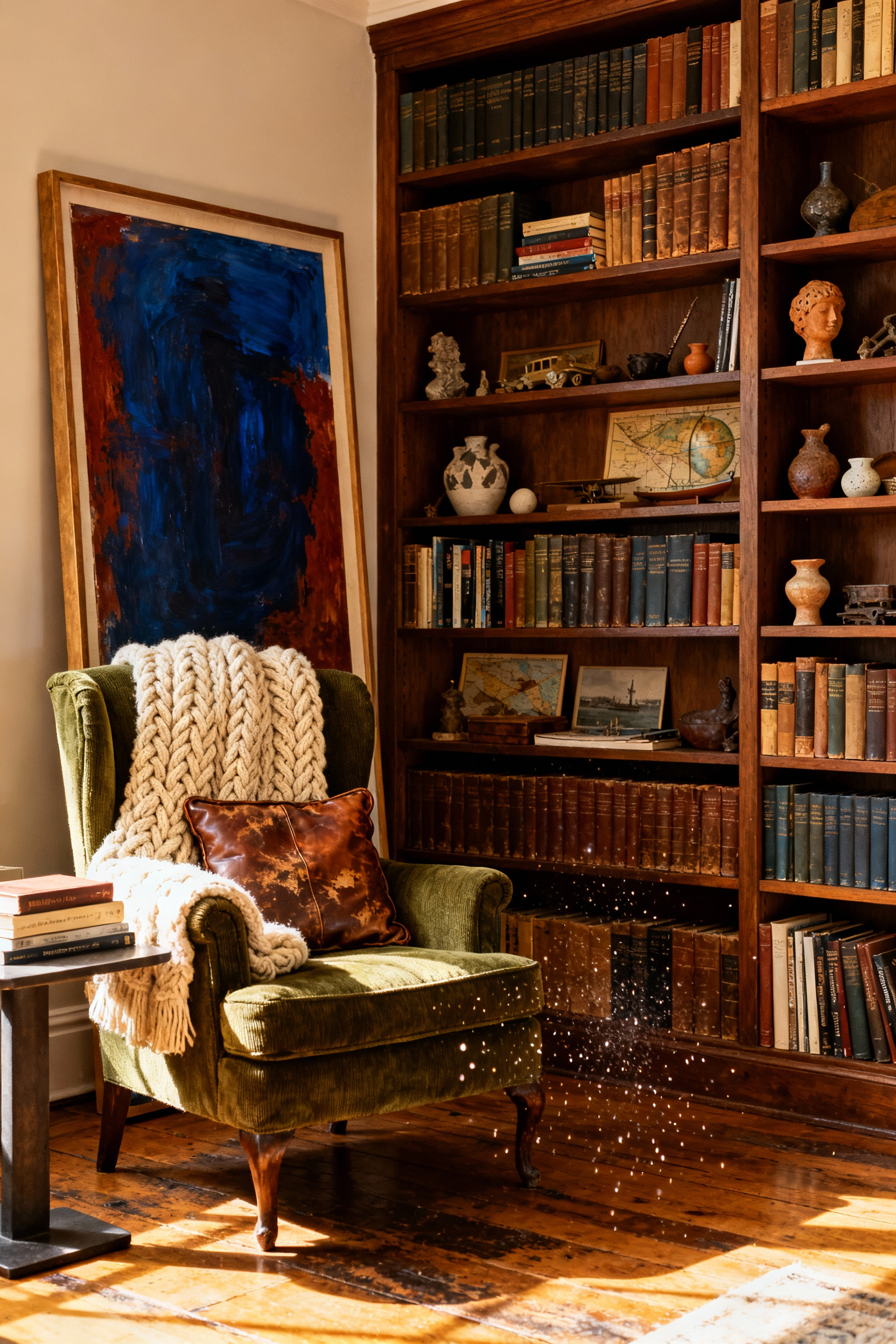
However, curation requires balance to avoid clutter. Experts emphasize that a compelling room must use “dynamic storage” strategies. Practically, this involves rotating your collection based on current interests. Avoid static trends like color-coded bookshelves. Instead, group titles by theme or passion to reflect your actual intellectual journey. This approach encourages intellectual rediscovery rather than serving as mere visual background. Placing favorite reads at eye level acts as a behavioral cue. Functionality and aesthetics must work in tandem to support your daily habits.
Similarly, art should serve as your room’s aesthetic compass. Let a favorite piece lead the entire design process as the primary focal point. By utilizing textiles, color, and texture, you can significantly elevate your living room styling. This strategy ensures the space feels intentional and cohesive. Finally, position large pieces to draw the eye immediately. By doing so, you transform the room into a deeply personal landscape.
True design excellence transcends surface-level decoration. Instead, it fosters a deep, sustained sense of emotional well-being. The living room becomes a vital tool for daily mental health. Specifically, incorporating biophilic elements like raw wood or stone reduces stress measurably. These natural touches ground us, offering a respite from digital fatigue.
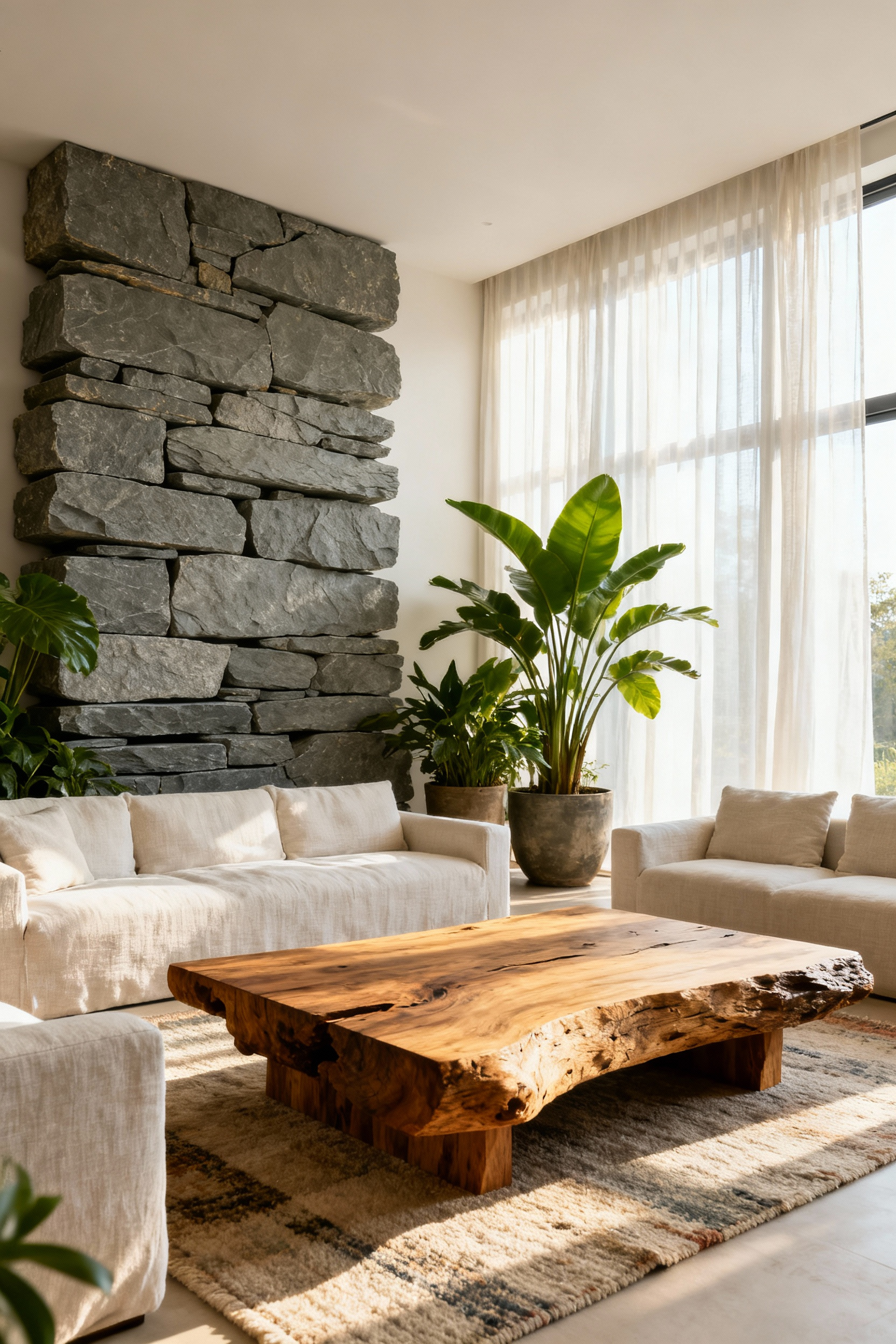
Lighting choices directly influence your body’s natural rhythms. By maximizing daylight, you actively boost serotonin levels. Conversely, layering warm, dimmable lights in the evening signals the brain to rest. Functionality is essential for peace of mind. Clutter creates a heavy psychological load. Thus, smart storage solutions transform anxiety into clarity, creating a minimalist calm.
The layout effectively shapes your relationships. Arranging furniture to facilitate conversation, rather than screen time, nurtures human connection. Finally, contentment is a deeply tactile experience. Soft materials like wool or linen provide necessary sensory grounding. Neuroaesthetics suggests that curved furniture feels safer than sharp angles. This aligns with the Danish concept of *hygge*. These intentional living room design ideas turn a house into a restorative sanctuary, guaranteeing deep, sustainable contentment.
A luxurious look in a small space relies on quality over quantity, adopting the Lagom principle. Focus on large, single pieces of heirloom quality furniture rather than many small, busy items. Use the “floating furniture” technique by pulling seating 4-6 inches from the walls to create visual depth. Finally, use mirrors strategically opposite windows to amplify natural light and expand the perceived size of the room.
The prevailing trend for 2026 is the integration of Neuroaesthetics—designing for mental well-being. This involves a shift away from cold minimalism toward warm, tactile neutrality. Key elements include curved furniture (which is psychologically safer than sharp angles), layered natural textures (bouclé, raw linen), and the use of warm greige paint tones instead of stark white.
The optimal arrangement is the “Conversation Circle” or U-shape, where seating is explicitly turned inward, rather than facing a screen. Crucially, position the primary pieces (sofas, armchairs) close enough so that the distance between seated individuals is between four and eight feet. This range facilitates natural, intimate dialogue without forcing participants to raise their voices.
“`json
“`