Physical Address
304 North Cardinal St.
Dorchester Center, MA 02124
Physical Address
304 North Cardinal St.
Dorchester Center, MA 02124
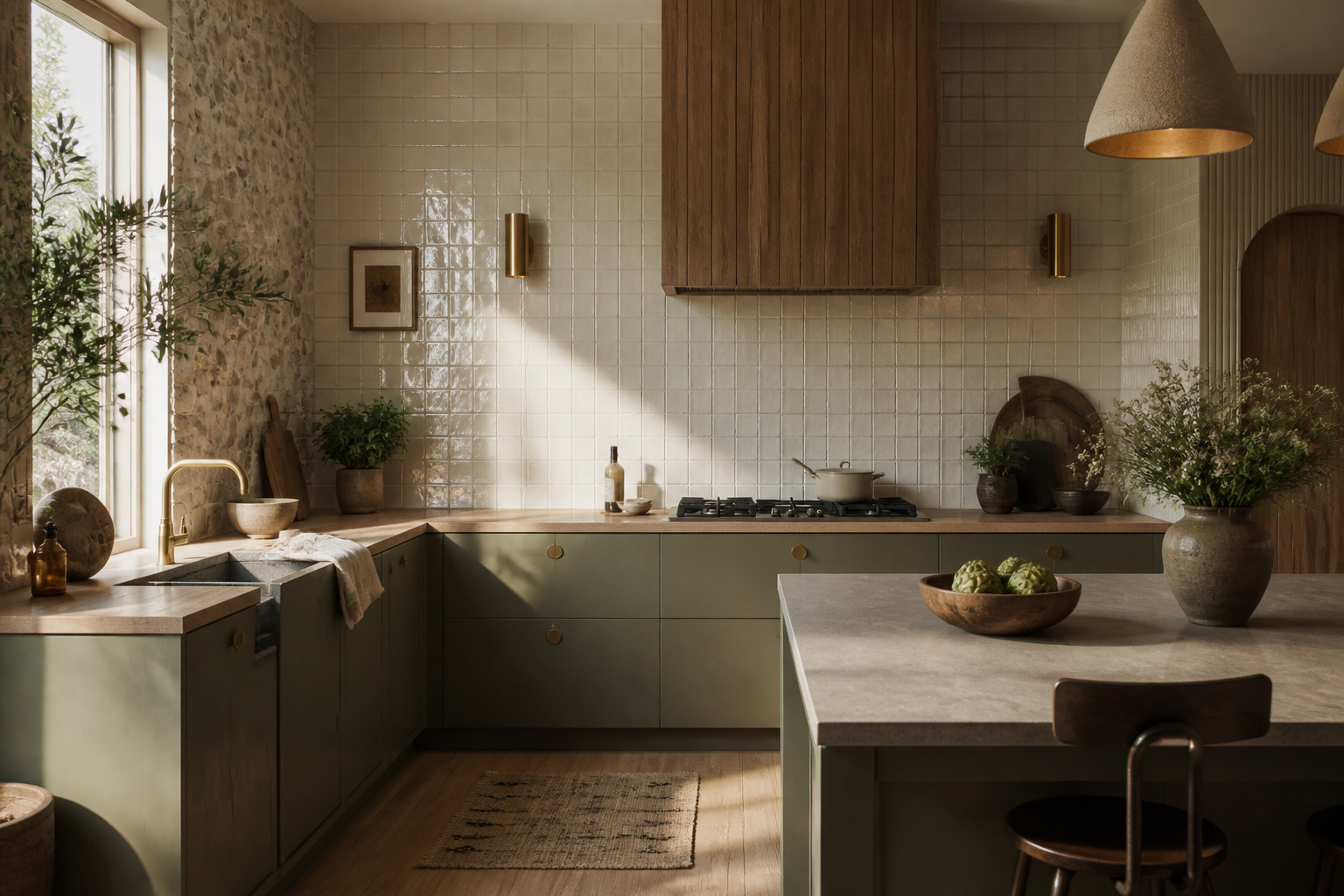
Discover 18 kitchen backsplash trends redefining modern kitchens — zellige tile, bold checkerboard, micro-cement, and more design ideas for 2025.
The backsplash used to be an afterthought. A practical necessity you chose quickly and tried not to think about. That era is over. Today’s kitchen backsplash trends have pushed this surface from supporting role to the most expressive design decision in the entire kitchen — the place where character, material philosophy, and personal taste become visible in a way that furniture and paint simply cannot match.
After years of reviewing kitchen projects through a Nordic design lens, I’ve noticed that the kitchen backsplash trends with real staying power are rarely the most obvious ones. The kitchens that feel genuinely considered — the ones people still want to be in ten years after the renovation — tend to make decisions here that prioritise material quality and texture over novelty. That’s the perspective guiding this list. Some of these directions are quiet and considered; others are deliberately bold. Whether your kitchen is compact and Nordic in spirit or large enough to absorb a maximalist statement, there’s a kitchen backsplash trend here worth looking at carefully.
There is something disarming about a wall surface that is visibly imperfect and yet undeniably beautiful. Zellige tile — Moroccan handmade ceramic refined over eight centuries — achieves exactly this. Each piece is individually glazed, which means no two tiles share the same colour depth or surface sheen. The slight warping, the chipped edges, the way light catches differently at every angle across the surface: these are not manufacturing defects. They are the point.
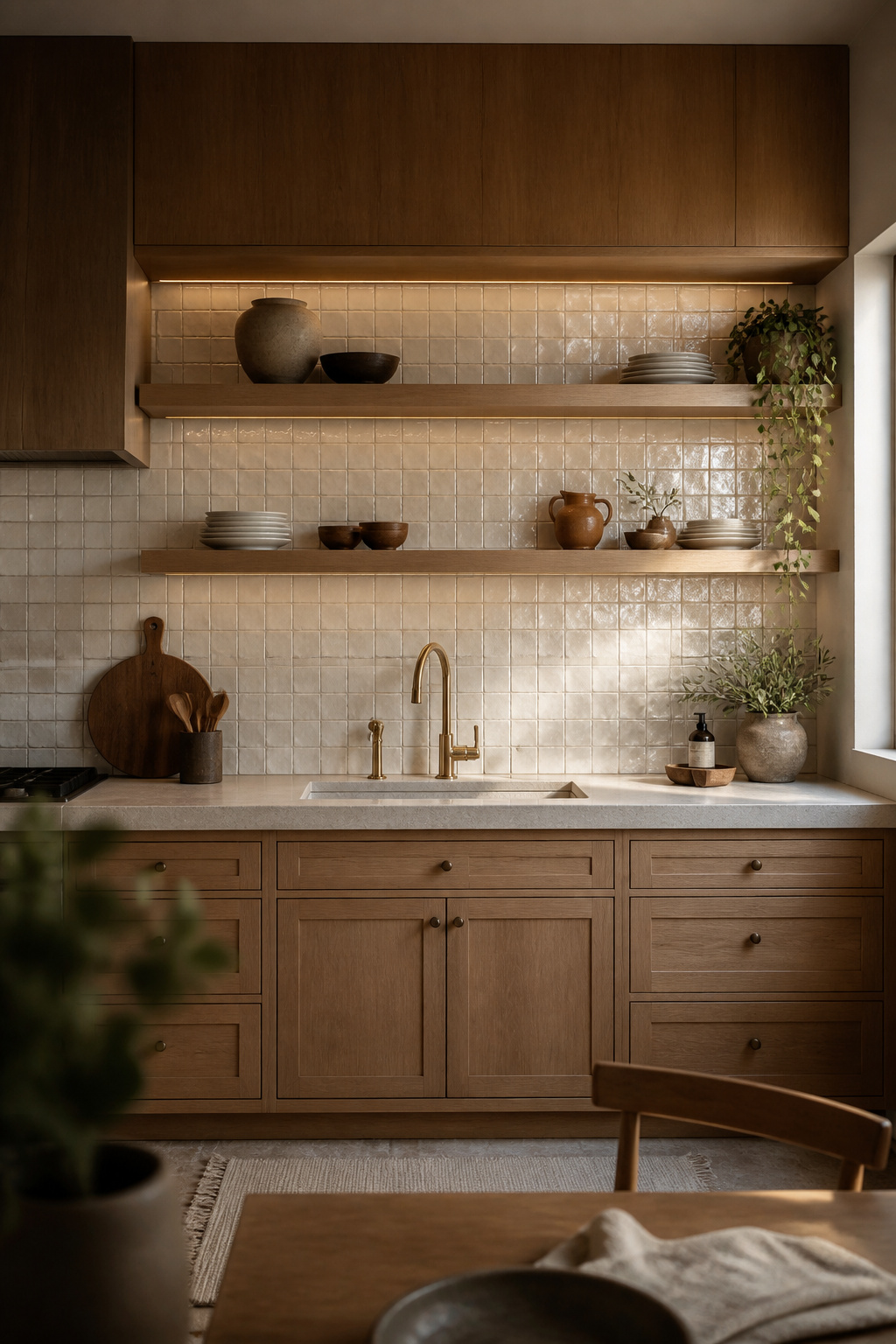
In a kitchen context, this variation creates what you might call a living wall. The backsplash shifts subtly throughout the day as natural light changes, and under evening kitchen lighting the glaze picks up warmth in a way no machine-made tile can replicate. For those who’ve grown weary of tile that looks identical in every home, zellige is a compelling alternative. Good kitchen backsplash design principles always point toward surfaces that reward close attention — and zellige delivers precisely that.
Authentic Moroccan zellige runs $20–$40+ per square foot; ceramic lookalikes from suppliers like Tile Club start around $10.70/sq ft and deliver much of the visual character with more consistency. Installation requires flexible adhesive and patience — the surface variation means trowel-bed thickness needs constant adjustment. Colour choices: warm off-whites and cream glazes are the most versatile and age best. Deep teal and midnight blue make a more dramatic statement. In all cases, use tone-on-tone grout — contrasting grout fights the natural variation rather than letting the tile surface speak.
The appeal of this kitchen backsplash trend is the appeal of the opposite of the 2010s kitchen: instead of high gloss and hard surfaces, a chalky, layered texture that seems to have arrived from somewhere with more history. Limewash paint — the genuine product, not the imitation — creates visible brush strokes and shifting surface depth that reads completely differently in morning light versus artificial evening warmth.
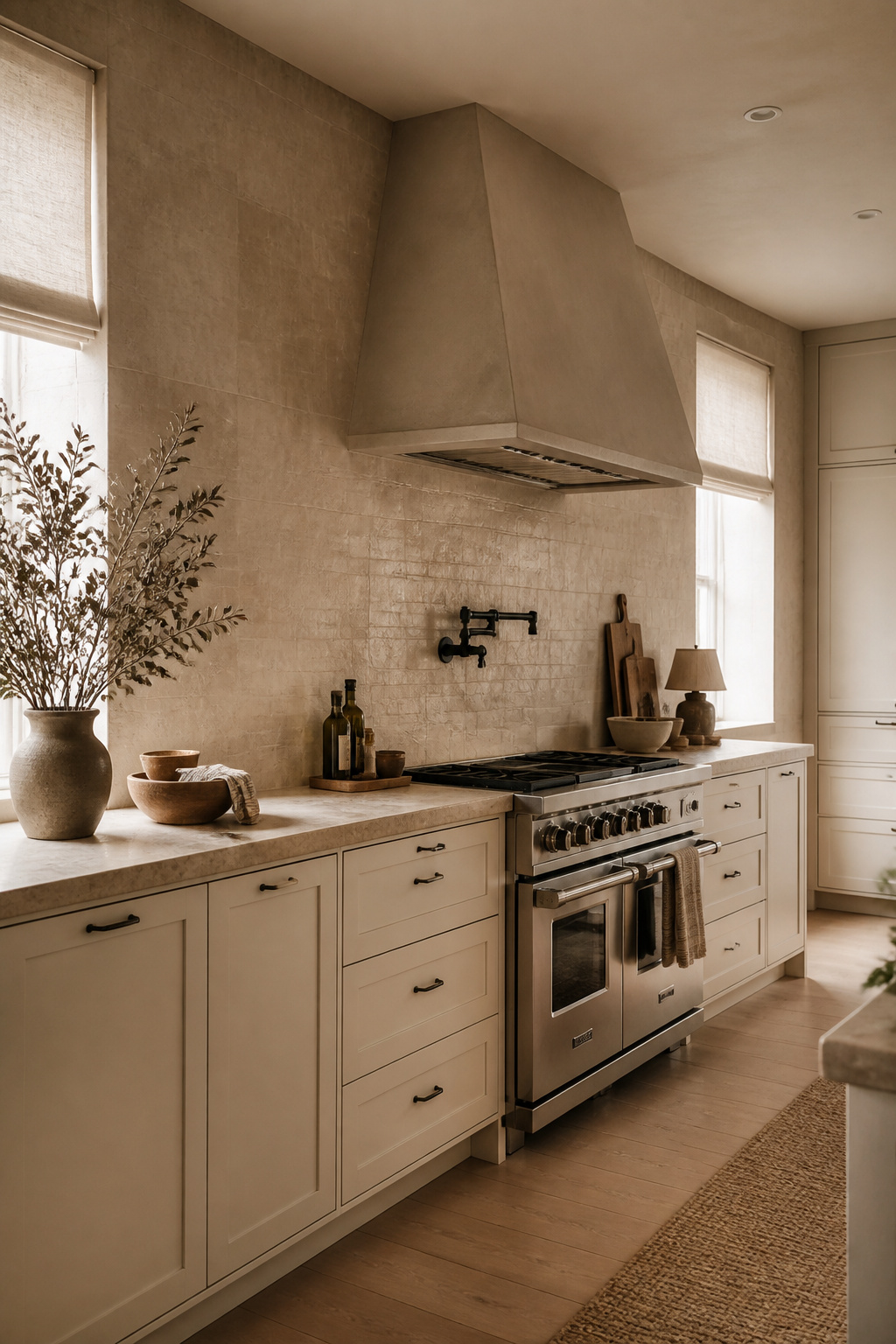
Brands like Bauwerk Colour and J.H. Wall Paints produce the most reliable results, with Bauwerk offering nearly 400 colours and specific guidance for kitchen use. Their guidance includes one important boundary: limewash paint should not go directly behind the hob. Grease vapour and heat penetrate the finish, and the result after a year of cooking looks nothing like the original application. Use ceramic plaster-effect tile in the actual splash zone — matte, chalk-surface ceramics that wipe clean like any glazed tile while maintaining the aesthetic entirely.
For a renter-friendly version, peel-and-stick limewash backsplash sheets from Etsy suppliers are water-resistant, removable, and significantly cheaper than ceramic. They lack the material weight of genuine tile, but for a rental kitchen they’re a practical solution. One maintenance advantage genuine limewash paint has over almost every other wall finish: when it needs refreshing, there’s no prep required — a 15-minute brush coat is all it takes.
The appeal of fluted tile is that it adds texture without adding pattern. The vertical grooves running across the tile face create shadow lines that shift throughout the day as light direction changes, giving the wall movement and life without any obvious design feature competing with the rest of the kitchen. This is texture in the service of everything around it, not texture demanding attention for itself.
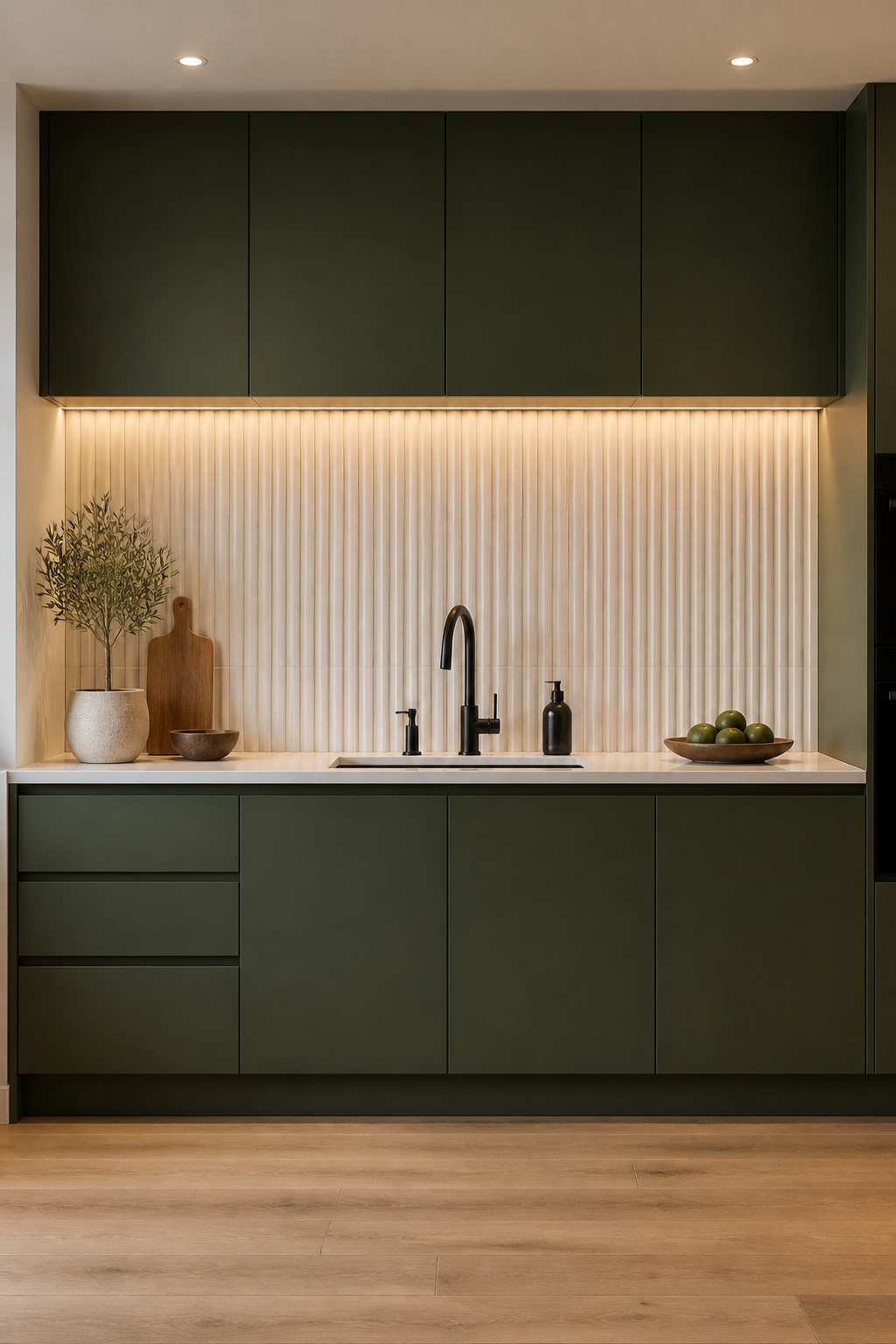
Fluted tile is available in ceramic and porcelain across a useful range of sizes: 3×12 inches for a fine, reeded finish; 12×24 for a more architectural plank character; and large-format panels up to 15.75×47.25 inches for a wall surface with almost no visible grout. Orientation matters significantly. Vertical installation draws the eye upward — useful in kitchens with lower ceilings. Horizontal installation extends the wall and can make a narrow kitchen feel wider. Most designers default to vertical.
The combination appearing most consistently across professionally designed kitchens right now is fluted tile in warm white or greige against dark navy or forest green cabinetry. The texture reads clearly against dark grounds, giving the kitchen a layered quality a flat tile cannot match. For modern kitchen backsplash ideas that deliver texture rather than pattern, fluted tile is consistently the most versatile answer. One practical note: avoid high-gloss finishes in the fluted format directly behind the hob. The grooves trap cooking grease and the shine amplifies the problem.
After a decade of cool grey, marble-white, and concrete-toned kitchens, terracotta is the correction the design world needed. It is warm in a way that is genuinely non-negotiable — you cannot make terracotta cold, and right now that is precisely its appeal. The burnt-orange and clay tones pair instinctively with white oak, sage green, warm brass hardware, and cream plaster walls — all the materials appearing together in the most thoughtfully designed kitchens of 2026.
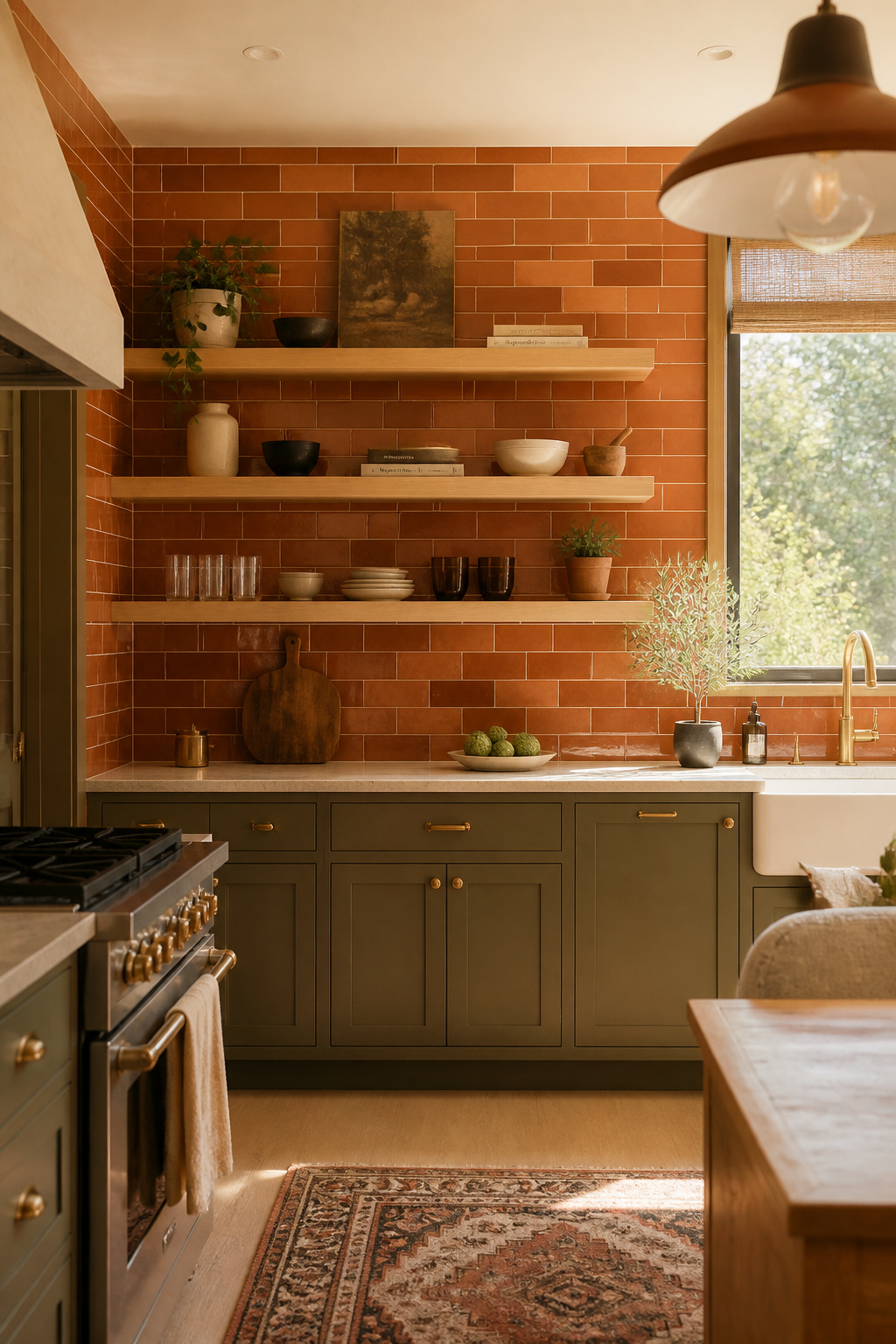
Terracotta tile comes in enough formats to avoid the Mediterranean-restaurant read the material once triggered: hexagon, arabesque, 2×8 subway, and square formats all carry the warmth but in contemporary shapes. The glazed version is the practical choice for backsplash use — waterproof and stain-resistant from installation, with no additional sealing required. Unglazed terracotta has a richer, more organic colour variation, but it requires a penetrating sealer before installation and resealing every 3–5 years. For a busy kitchen backsplash, glazed is the sensible choice.
The most common pairing mistake is combining terracotta tile with cool-toned stainless steel hardware and chrome fixtures. The material temperature mismatch looks unresolved and takes the warmth out of the very element you added for warmth. This kitchen backsplash trend rewards fully committing to a warm palette across every material choice — hardware, cabinetry, countertop — rather than mixing temperatures.
The full slab backsplash is the architectural choice: the countertop stone continues upward as a vertical panel, eliminating the tile grid entirely and creating a kitchen surface that reads as a single, continuous material from benchtop to upper cabinet. It is the most minimal possible approach, and also among the most expensive.
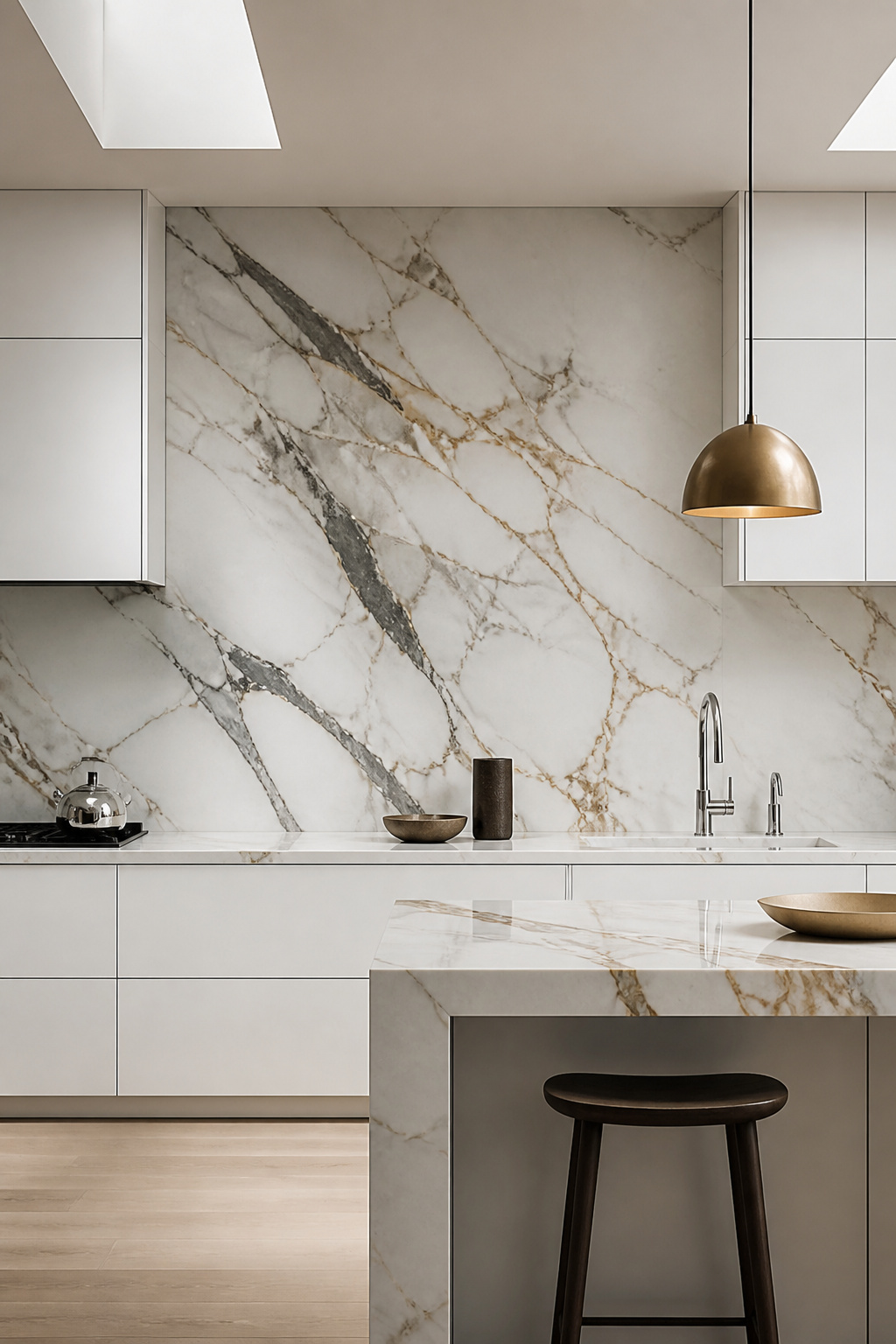
Stone slabs with dramatic veining — Calacatta marble, bookmatched quartzite, Dekton with movement — look spectacular when the pattern flows from horizontal to vertical. For kitchen countertop decor ideas that extend naturally into backsplash design, the slab continuation is the most cohesive possible result. Sintered stone (Dekton, Lapitec) is the most kitchen-appropriate slab material: zero porosity, heat-resistant to 300°C, scratch-resistant, no sealing required. Natural marble is the most beautiful but the most demanding — it requires sealing, etches with acidic substances, and is not a low-maintenance surface.
Budget reality: full slab backsplash installation runs $70–$180 per square foot depending on material, with an average kitchen running $4,500–$7,000 for the backsplash section alone. This is not a DIY project — slab cutting requires professional fabricators with water-jet equipment. Seaming, where wall width exceeds the slab dimension, is inevitable in many kitchens; a skilled fabricator can match the veining so the seam is very nearly invisible.
Japandi design does not ask for dramatic gestures. The philosophy — born from the overlap between Japanese wabi-sabi and Scandinavian hygge — is about restraint, natural material, and a fundamental comfort with imperfection. In a kitchen backsplash, this translates to tile that feels genuinely artless: not simply neutral, but material choices that carry the trace of their making.
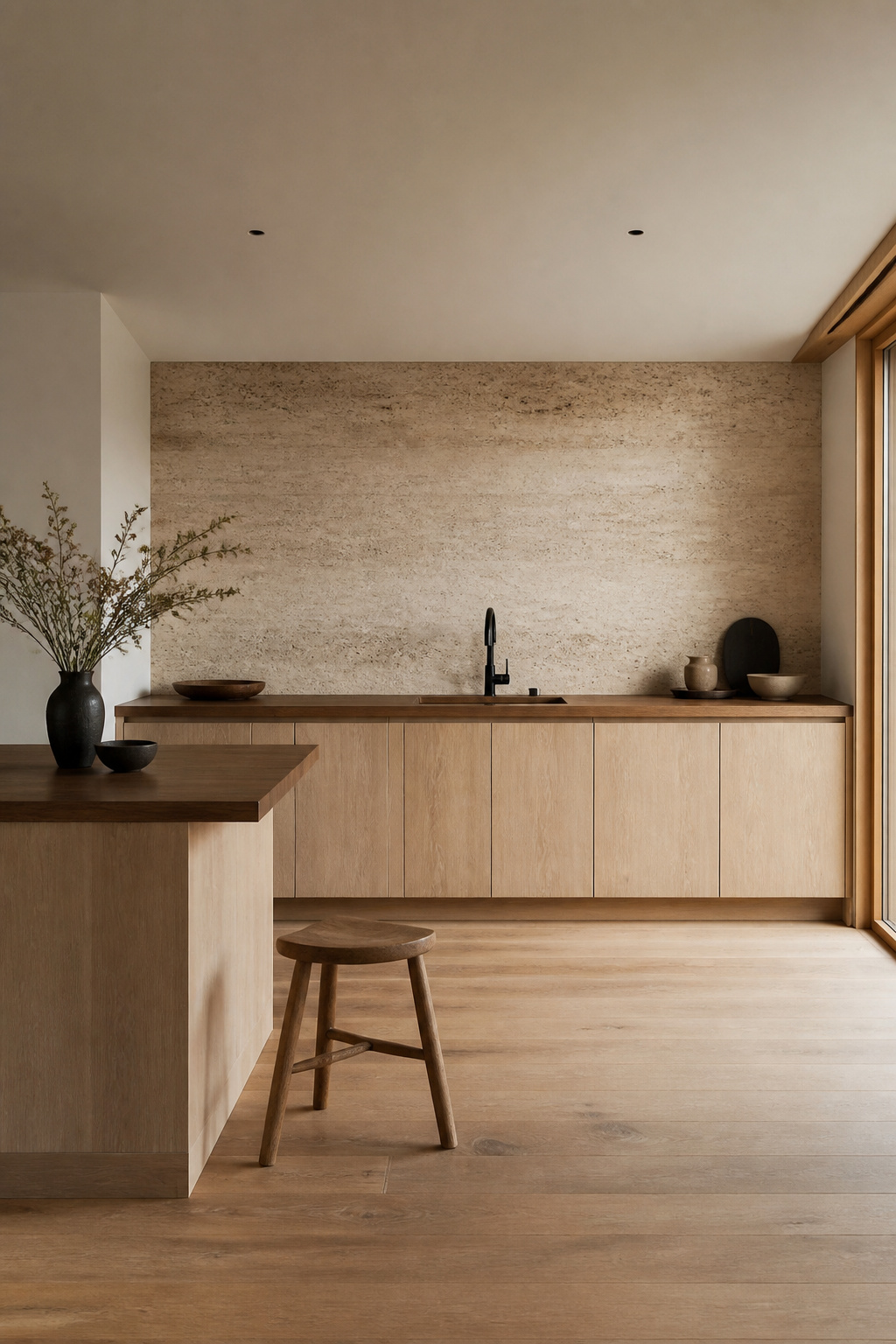
Travertine in a honed or matte finish is one of the most faithful Japandi tile materials: its unfilled pores, fossil inclusions, and tonal variation are a form of wabi-sabi frozen in stone. Handformed stoneware ceramics in sand, taupe, or celadon — glazes that suggest rather than shout — carry the same philosophy. Cream-glazed zellige with its handmade variation lands naturally here too. The colour palette throughout should stay in one temperature register: all warm tones (honey oak, travertine, brass) or all cool tones (slate, grey ceramic, matte black hardware). Temperature mixing is the most common error in kitchens attempting the Japandi direction.
For context across the full kitchen, Nordic kitchen makeover ideas consistently return to the same principle: it is material quality that carries the design, not the number of elements. A Japandi kitchen with a travertine backsplash, handle-less cabinetry, and a single rattan bar stool communicates more considered restraint than the same space dressed with twelve decorative objects.
The standard 3×6 inch subway tile is not obsolete — but it is being surpassed. The formats gaining ground now are 2×8, 4×12, 3×9, and 2×10 inches: proportions that carry the same fundamental rectangle but in dimensions that feel genuinely contemporary. Fewer grout lines, stretched proportions, and a surface that reads longer and more architectural — this kitchen backsplash trend has moved the whole category forward.
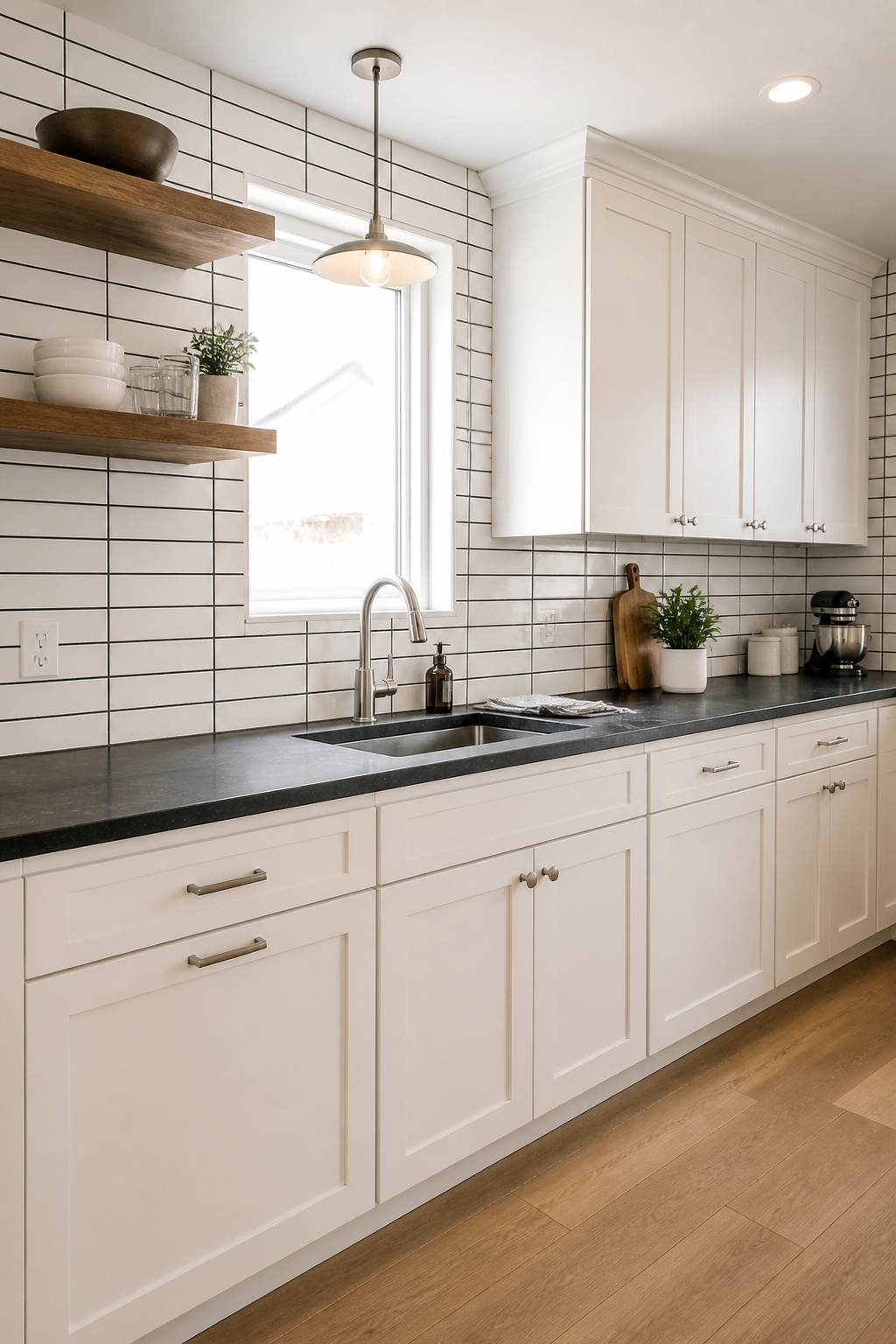
Pattern laying has expanded along with the format. Elongated subway in a stacked configuration is strongly contemporary — every grout line is horizontal and the wall reads as courses rather than a brick pattern. Herringbone with a 4×12 tile becomes dramatically graphic. Vertical bond — tiles set portrait rather than landscape — creates height and a rhythm unlike anything the traditional subway achieves.
The real news, though, is grout colour. Charcoal or black grout with white elongated subway is the most significant design shift in this tile category for decades — it transforms the pattern from a quiet background into a graphic statement. For kitchen design ideas that use relatively affordable tile to make a strong impression, dark grout with a long-format white subway is the most efficient technique available. Tone-on-tone grout (white on white) pushes in the opposite direction, creating a near-seamless surface where the tile pattern almost disappears.
There is no algorithmic version of a kitchen with handpainted tiles. This kitchen backsplash trend trades perfection for presence — the maker’s hand is visible in every piece, in the slight variation between adjacent tiles, in the brush stroke direction, in the occasional glaze drip that any quality control process would catch and a skilled ceramicist lets stay. These are the details that make a backsplash look collected rather than installed.
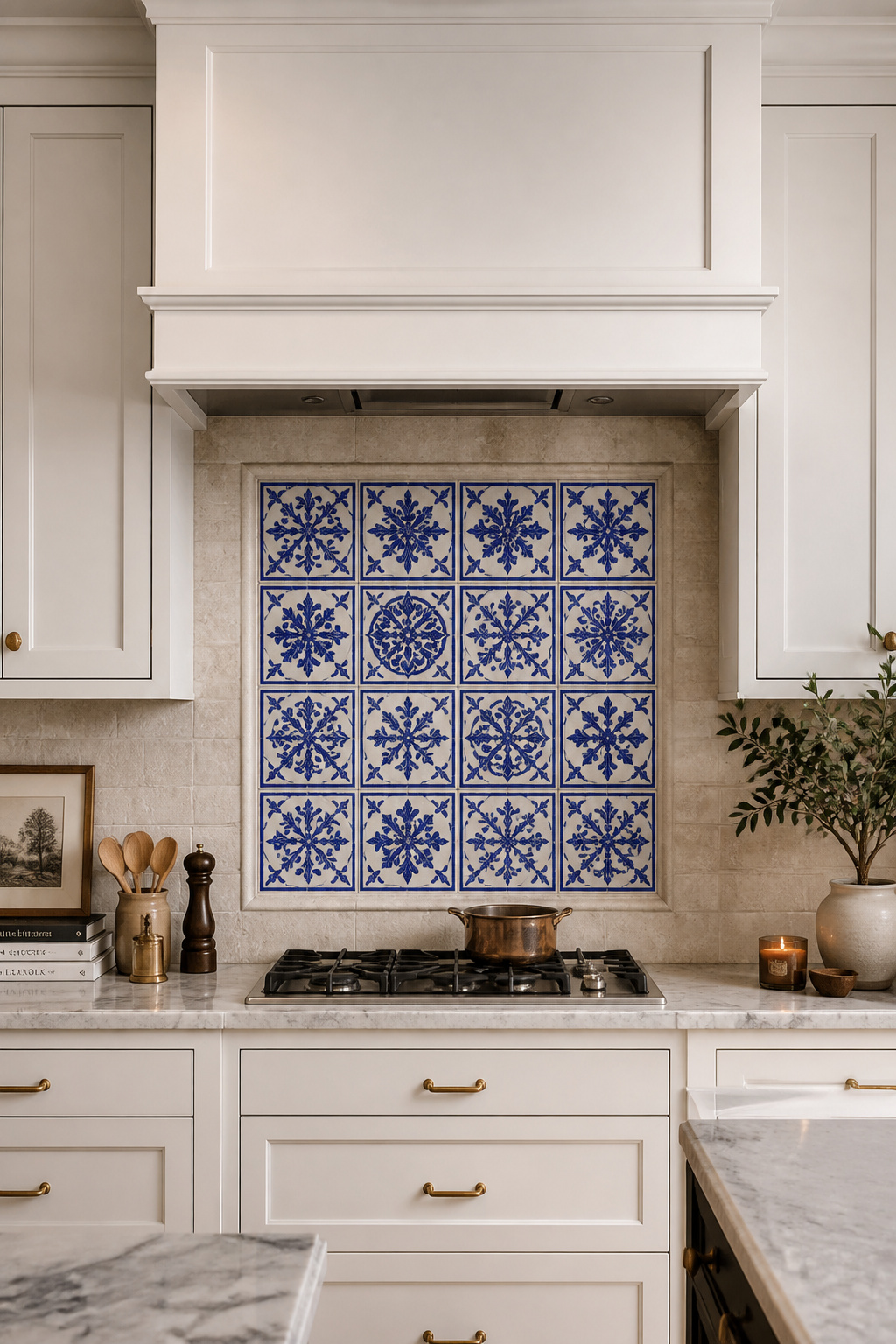
Portuguese azulejo — the blue-and-white tin-glazed earthenware tradition with six centuries of history — and Mexican talavera — polychrome painted pottery tile in cobalt, terracotta, yellow, and green — are the two dominant craft traditions currently driving this direction. Portuguese azulejo panels are available through Lisbon-based Etsy studios ranging from $80–$250 for a framed panel piece; standard 4×4 Mexican talavera from importers like La Fuente Imports and Rustico Tile & Stone starts around $3–$5 per tile.
The most resolved approach to artisan tile in a small or medium kitchen is the accent panel rather than wall-to-wall coverage: a focused arrangement of 12–20 tiles behind the hob, framed by plain limestone or cream subway on all sides. The artisan tile becomes artwork. Applied across every wall it becomes overwhelming. One design note: azulejo and talavera should not be combined unless the colour temperature is identical throughout — all blue-and-white, or all earth-tone polychrome.
Metal backsplashes began in commercial kitchens because professional chefs needed surfaces that were heat-resistant, non-porous, and fast to clean. Residential design has arrived at the same logic and found that the aesthetic — precise, industrial, warm when the finish is right — works well beyond the restaurant context. As kitchen backsplash trends go, this one has professional heritage behind it.
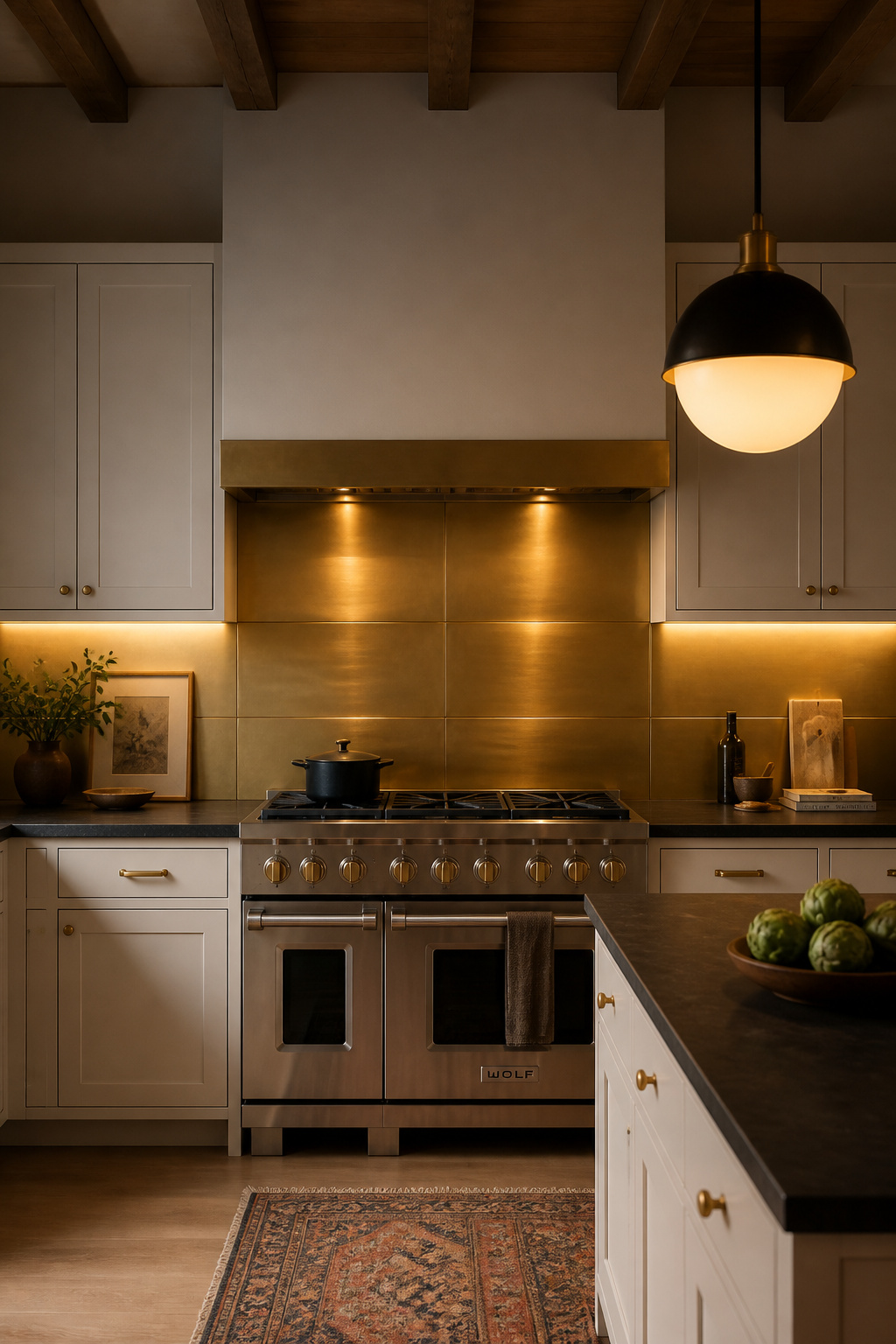
Brushed brass is the most residential-feeling metal option: warm, considered, and currently aligned with the broader return to warm-toned hardware across kitchen design. Patinated or aged copper brings the most character but also the most maintenance commitment: unlacquered copper develops a verdigris over time, and this living quality either makes the kitchen feel richer each year or becomes a source of regret. Brushed or satin stainless is the most practical — it makes no pretence of being warm, but in a kitchen with sufficient natural light it reads industrial-chic rather than clinical.
All three materials require non-acidic cleaning and soft cloths — never abrasive pads. Stainless and aluminium do not need sealing; copper and brass benefit from a clear protective sealant to slow unintended oxidation. For a family kitchen where fingerprints are a daily reality, brushed finishes hide them significantly better than polished.
Leaf, branch, and botanical patterns are replacing the geometric repeats that dominated kitchen tile for the last decade. The shift reflects a broader design movement: homes that incorporate natural forms and visual connections to the living world. This kitchen backsplash trend is biophilic design in its most direct expression — bringing the garden to the wall.
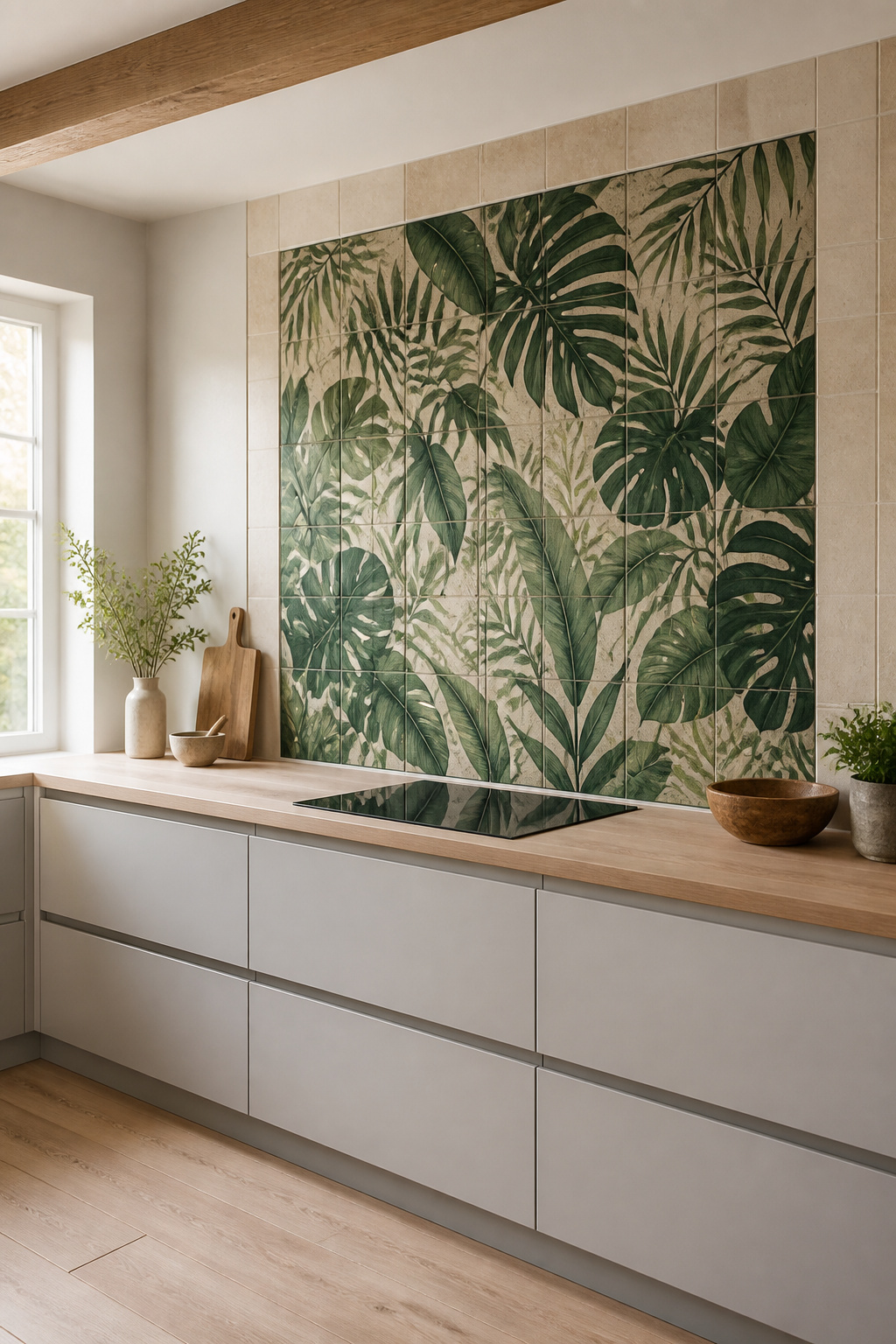
The two best-known examples driving the direction currently are Morris & Co.’s Hawkdale Willow tile and Annie Selke’s Botanical Tile from The Tile Shop — the latter is a ceramic that reads almost like tropical wallpaper, rich in leaf forms and organic movement. Green tones dominate botanical tile in 2026: soft sage to deep forest, with the natural pattern making the colour feel grounded rather than aggressive.
The distinction between hand-screen-printed and digitally printed botanical tile matters at close range. Hand-screen printing applies each colour through a separate screen, creating slight registration variation and layered depth you can almost feel. Digital printing delivers photographic precision but is inherently flat in a way that premium tile buyers notice. Placement strategy: botanical tile needs quiet surroundings. Use it as a defined panel behind the hob surrounded by plain complementary tile, or as a full feature wall behind handle-less cabinets with nothing competing.
Three-dimensional tile is not a new idea — relief-pressed ceramics have been produced since the Arts and Crafts movement — but the current interest is more sophisticated than its predecessors. Today’s 3D tile tends toward geometric precision or gently sculpted wave forms rather than the decorative figurative relief of earlier periods. As kitchen backsplash trends go, this one rewards investment in your lighting design as much as the tile itself.
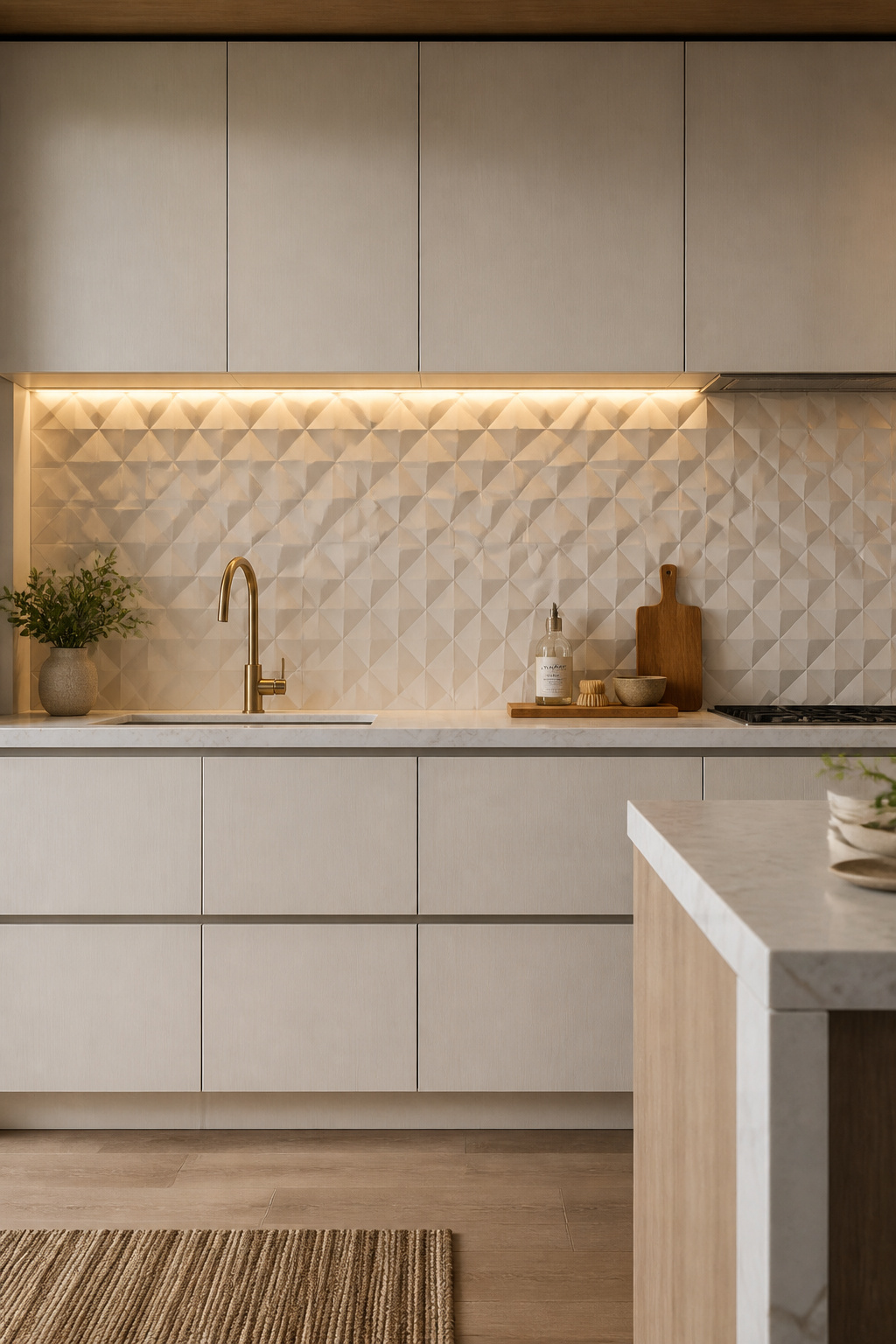
There are three main tile families. Geometric relief: precise pressed forms — diamonds, chevrons, fan shapes — that create a pattern visible only in light and shadow. Carved clay: handformed tiles worked before firing, more organic and slightly unique across each piece. Undulating wave surfaces: tiles whose faces flow in gentle curves that at scale create a wall that seems, almost, to breathe.
This is the key practical point with relief tile: directional lighting is not optional, it is the mechanism by which the tile works. Under-cabinet strip lighting aimed at the backsplash at a low angle creates the shadow play that makes geometric relief dramatic. Flat overhead lighting with no directional component flattens the surface entirely — the tile reads as little more than bumpy. If your kitchen lighting plan does not include under-cabinet task lights, relief tile in a matte finish will largely disappoint.
Micro-cement is not tile. It is an applied surface finish — a blend of cement, polymers, and mineral pigment — that creates a continuous, grout-free kitchen backsplash in 2–3 mm of total thickness. The practical value for renovation projects is significant: micro-cement can be applied directly over existing tile, eliminating the cost and disruption of demolition. Among kitchen backsplash trends moving away from tile entirely, this is the most technically resolved option.
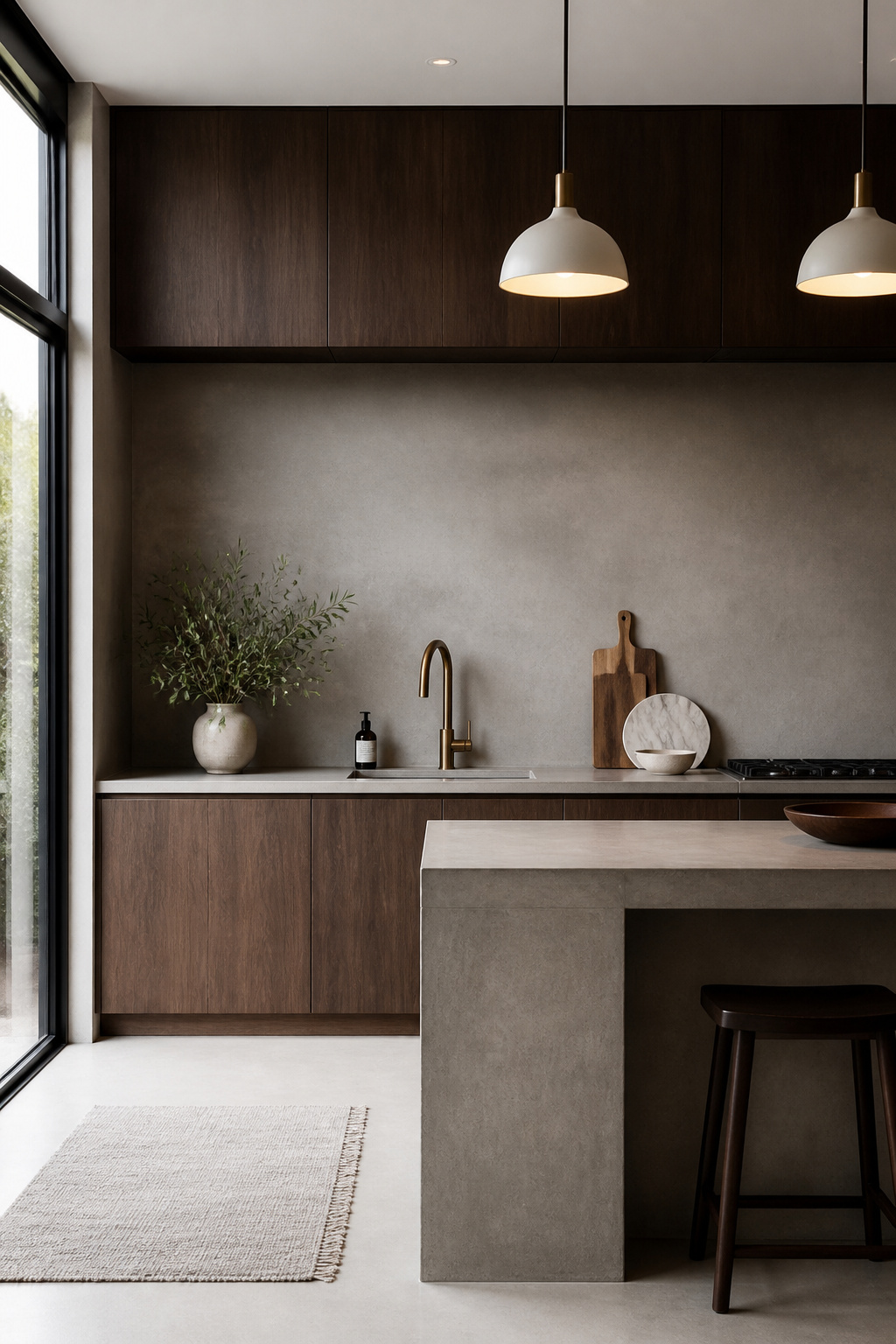
The aesthetic result is a seamless backsplash that behaves architecturally rather than decoratively. The surface can be worked smooth for a near-concrete finish or left with visible trowel marks for an artisanal quality. Cost runs approximately $10–$25 per square foot installed — often less than complex tile installations at $35+ per square foot.
The critical variable is the applicator. Micro-cement applied unevenly is very difficult to fix after the fact — choosing an experienced specialist is not optional. Sealing is equally non-negotiable: use two-component polyurethane or epoxy resin, not acrylic. The polyurethane seal resists heat, grease, and moisture well; acrylic degrades under kitchen conditions within months. A properly sealed micro-cement backsplash will last 20+ years and needs resealing approximately every 3–5 years under normal kitchen use.
The checkerboard is back, and it has arrived with considerably more design range than its black-and-white origins suggest. Contemporary checkerboard as a kitchen backsplash trend is appearing in sage and cream, terracotta and off-white, navy and natural, lava grey and pale pink — the graphic clarity of the pattern carrying through to colour combinations that no 1950s diner ever considered.
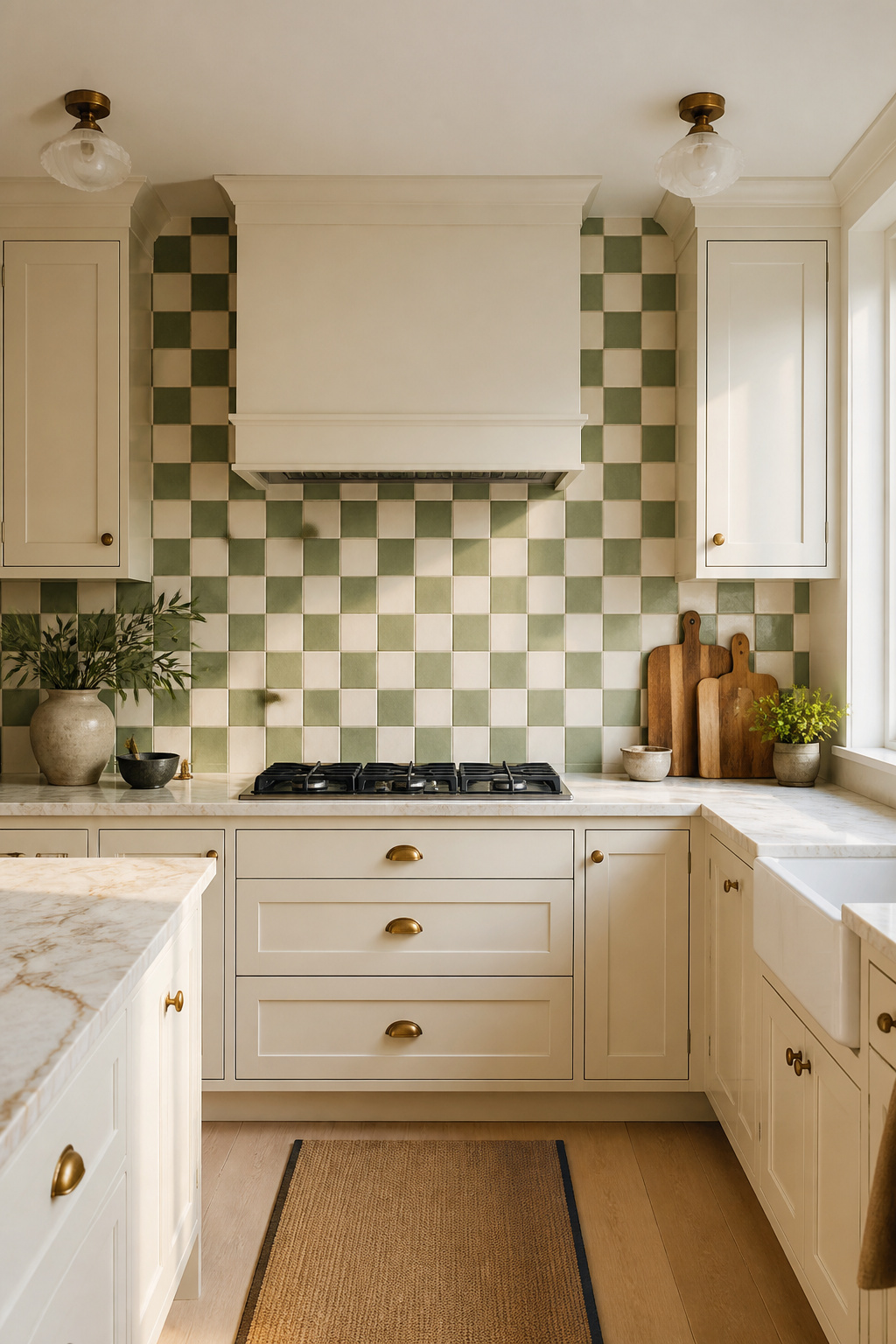
The case for checkerboard is simple: it is a decisive, graphic choice in a period when kitchen design has sometimes defaulted to the safely neutral. Sage-and-cream checker has the warmth of a Tuscan kitchen without the thematic commitment; navy-and-natural is sophisticated enough for a kitchen-dining room where the tile will be visible from the sofa.
Scale is the most consequential decision. A 1-inch mosaic checker reads as a texture at normal kitchen distance — the pattern only becomes clear when you’re close to the surface. A 4-inch statement checker is clearly graphic at any distance and needs a kitchen with visual breathing room to work. The most common error is using a large-format checker in a narrow galley kitchen: the pattern tightens the space rather than enlivening it. General guidance: scale the checker to the kitchen’s footprint.
Natural stone mosaic brings something to the kitchen that manufactured tile cannot credibly replicate: genuine randomness. River pebble, marble chip offcuts, shell mosaic — each material carries the mark of its origin in a way that is visible in every variation across the surface. The result reads as genuinely organic rather than designed.
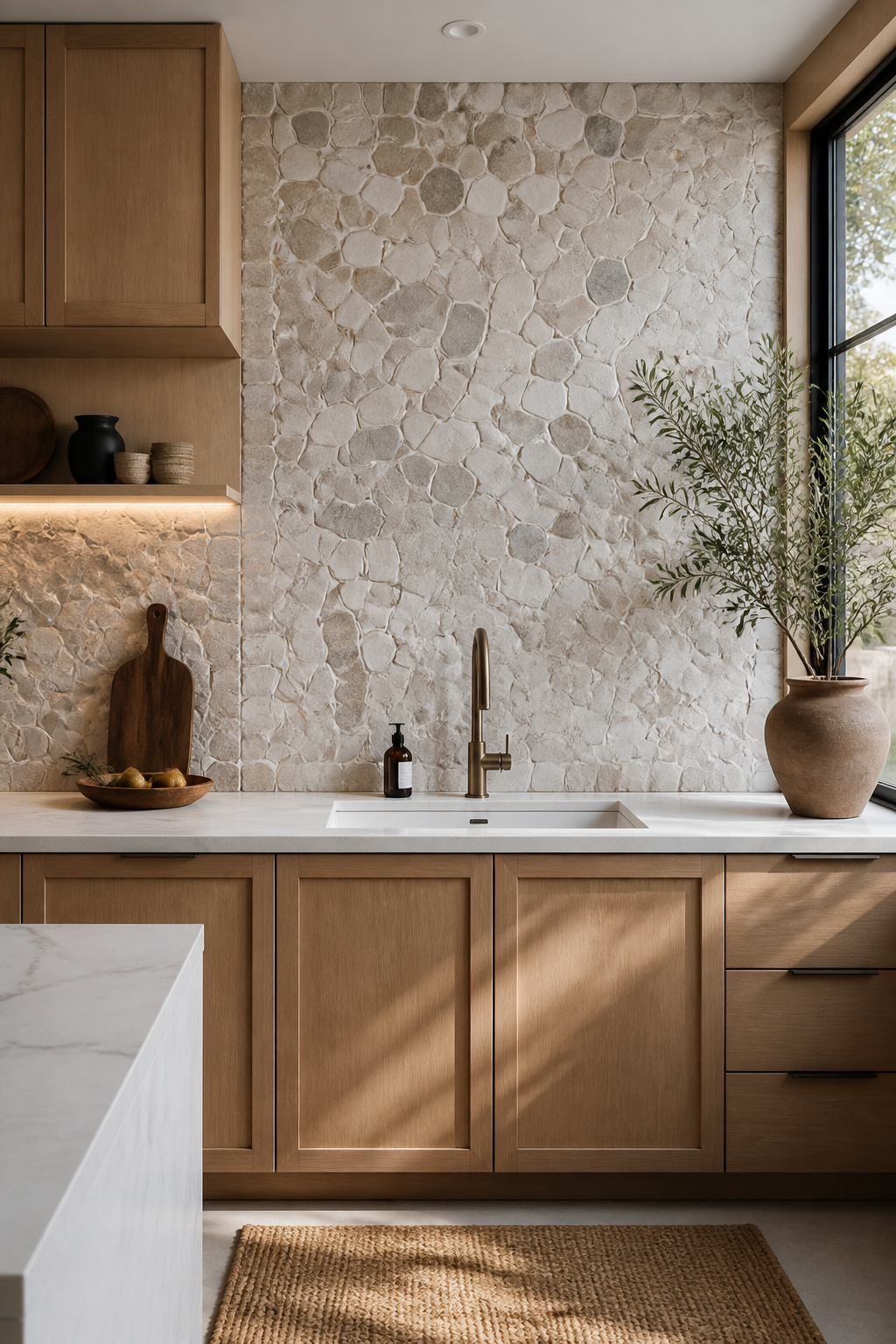
River pebble mosaic is the most nature-immediate of the three: rounded forms in natural grey, brown, and taupe that recall a riverbed or stone beach. Smaller pebbles (1–2 cm) work better for backsplash than the large-format versions more common in shower floors. Marble chip offcut mosaic uses irregular pieces of marble waste set randomly — the veining runs at different angles across each chip, creating tonal complexity that no uniform marble tile can match.
The sealing commitment is non-negotiable in a kitchen. All natural stone mosaic requires penetrating sealer before installation, and annual resealing thereafter — cooking vapour and grease work into unsealed stone in ways that no amount of later sealing can fully reverse. Also, avoid the 1x1cm glass tile on mesh backing that became ubiquitous in 2000s kitchens. Irregular piece sizes, natural materials, and random setting styles read as considered design rather than a remnant of a different era.
A monochromatic kitchen — backsplash, cabinetry, and sometimes countertop all within the same colour family — makes a different kind of argument than a contrasting backsplash does. Rather than treating the kitchen backsplash trend as an accent, this approach subsumes the surface into the kitchen’s overall architectural character. The space becomes the design object, not any individual component within it.
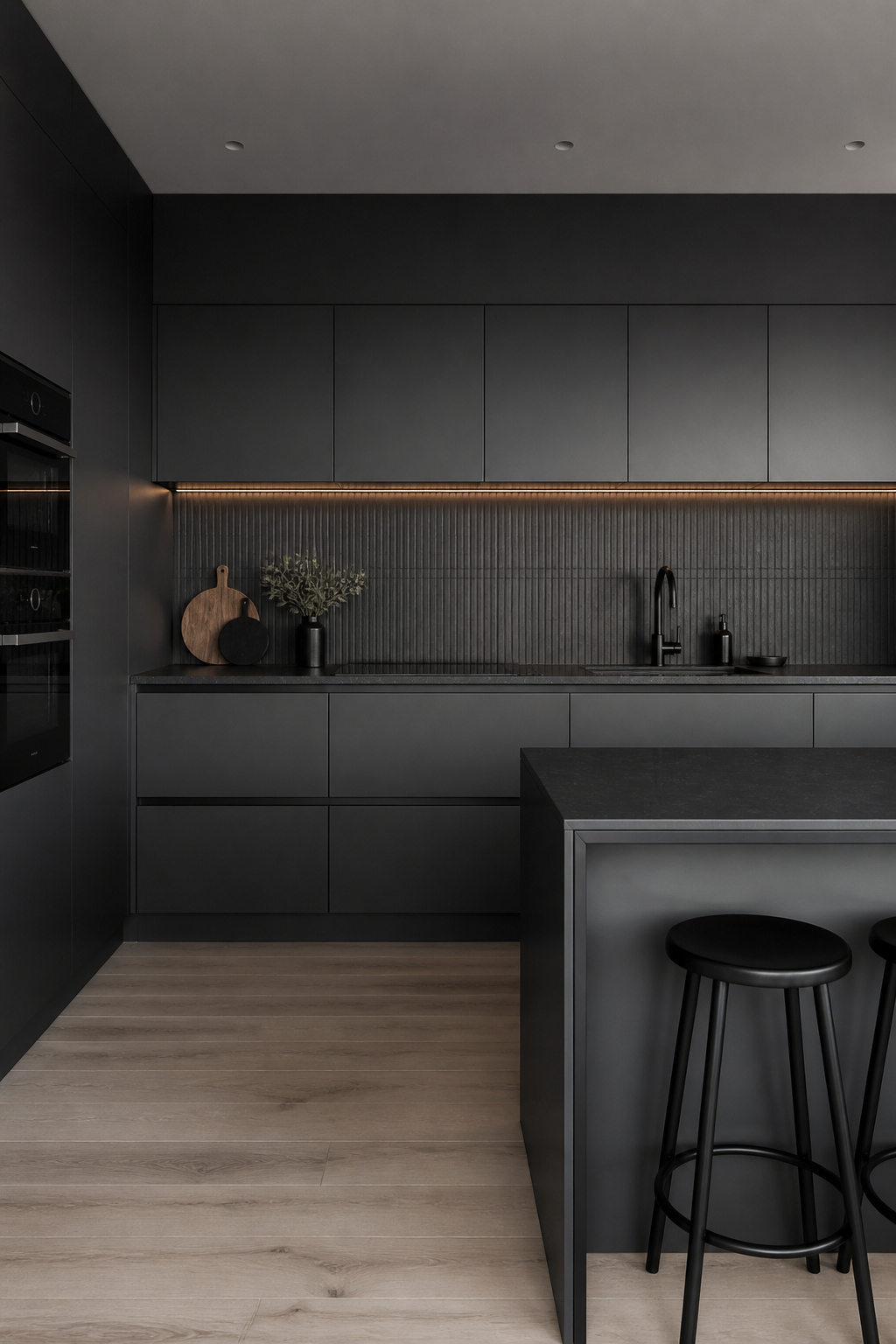
This approach works across spatial scales. Small kitchens gain apparent depth: when all surfaces share a tone, the boundaries of the space become less defined. Large, open-plan kitchens gain containment and definition — the monochromatic palette gives the kitchen zone its own coherent identity.
Sage green is the most adopted monochromatic palette of 2026: sage cabinets with sage zellige or ceramic tile backsplash reads across a wide range of kitchen styles from contemporary to transitional. Dark neutrals — charcoal, very deep forest green, near-black navy — are gaining as an alternative to the dominant white kitchen; a matte charcoal tile backsplash behind dark cabinetry creates a kitchen that feels exceptionally resolved. The technique that makes monochromatic design work is texture variation: matte cabinet fronts with glossy ceramic tile backsplash, or flat cabinetry with fluted tile in the same colour. The sheen or profile difference reads clearly even when the colour matches precisely.
The kitchen wall is no longer tile-mandatory. Designers are treating the backsplash zone as a design surface on which different materials can appear in different zones — and natural fibre panels are among the more unexpected arrivals in this space. This kitchen backsplash trend moves away from ceramics entirely in favour of warmth and tactility.
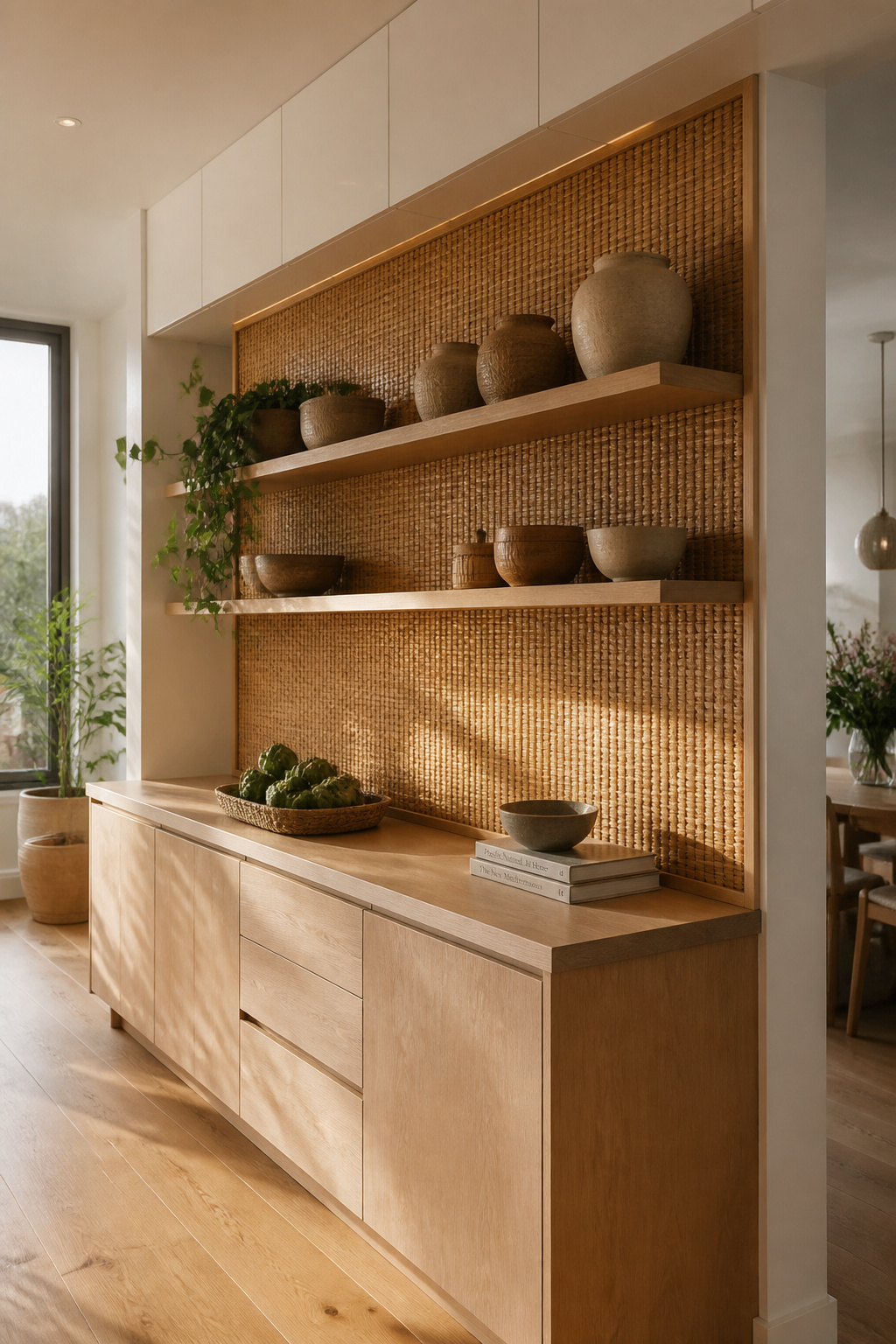
Rattan weave panels, rush matting, and seagrass panels bring warmth and tactility in a way that ceramic simply cannot. Against lacquered or painted cabinetry, the natural imprecision of woven fibre provides exactly the organic material note that polished kitchen surfaces lack.
The location rules are non-negotiable. Natural fibre panels must never be installed directly behind the hob or cooktop — this is a fire risk, not an aesthetic concern. Maintain a minimum 600mm clearance from any heat source. Moisture zones directly above the sink are also unsuitable. Safe installation zones include the flanking wall beside the hob (not behind it), the wall between upper cabinets and countertop on a non-cooking wall, and the wall space between the top of upper cabinets and the ceiling. Used within these limits, natural fibre brings a material warmth that no other backsplash category matches.
Not every design philosophy starts from restraint, and not every kitchen should. Maximalist tile — geometric abstracts, Memphis-inspired pattern collisions, high-contrast colour fields — is experiencing a genuine creative moment in 2026, and the kitchens embracing it make a refreshing case that commitment and boldness are valid design positions.
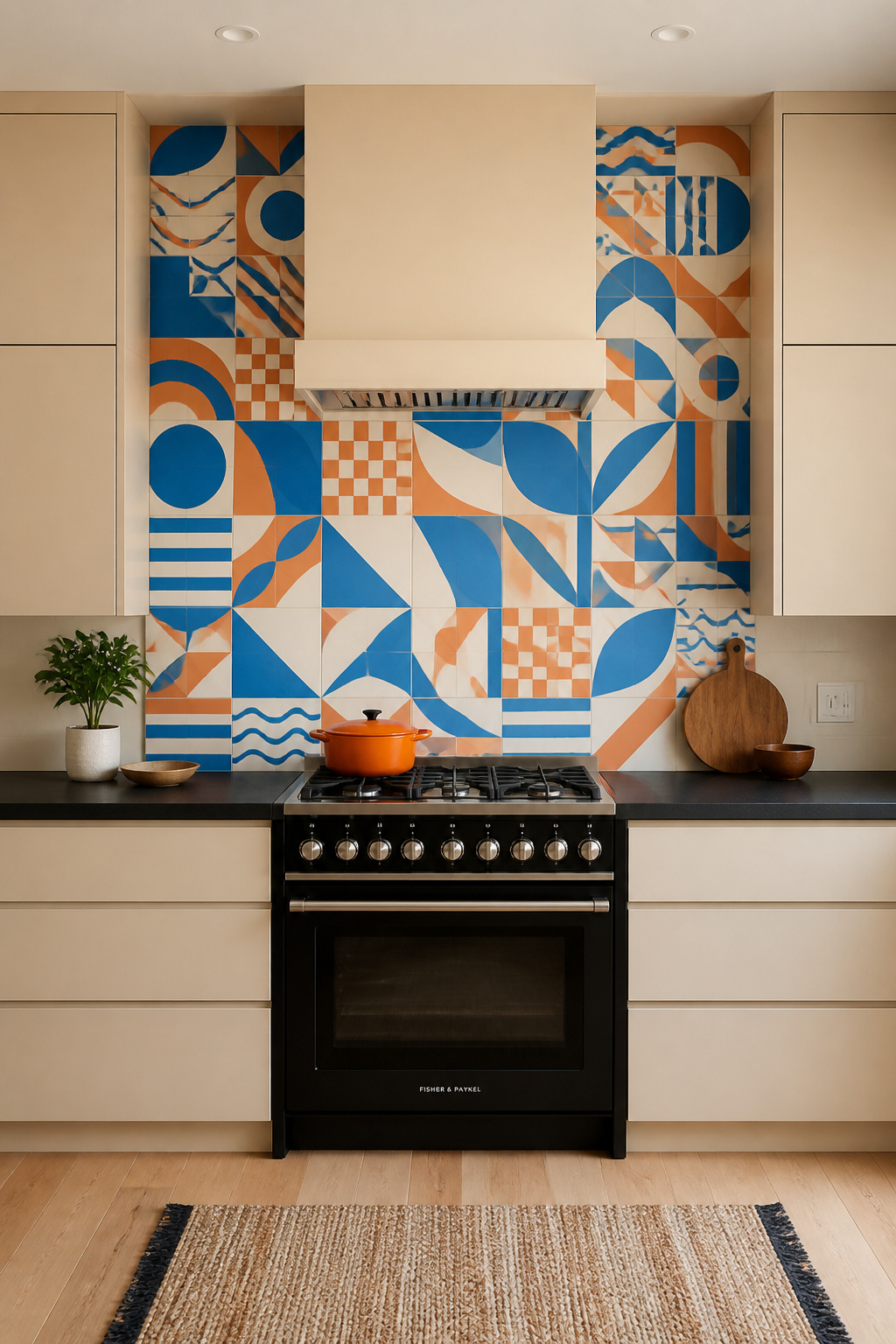
The Memphis Revival influence is most specific: the squiggles, primary colour blocks, and pattern layering that Ettore Sottsass and the Memphis Group originated in 1981 Milan are appearing in tile form from producers including Bisazza, Popham Design, and MOSA. These are not cheap — premium graphic tile starts around $40–$80 per square foot — but the design specificity means the kitchen cannot be confused with anyone else’s.
The discipline that makes maximalist tile work is containment. One wall, one focused surface — typically the wall behind the range or hob. All other kitchen surfaces must be deliberately quiet: flat-fronted handle-less cabinetry, one-material countertop with no movement or pattern, matte black hardware that recedes rather than adding another visual element. Pull one of the tile’s secondary colours at very low saturation for the cabinet colour — this creates connection between the elements without the cabinetry competing with the backsplash. The most common maximalist tile error is adding patterned countertop, open shelving with many displayed objects, and a patterned floor simultaneously. The result is exhausting rather than exhilarating.
Salvage tile carries something new tile will never have: a previous life. The glaze worn unevenly from decades of use, the slight colour drift from an earlier firing batch, the occasional hairline crack repaired by someone in a different century — these details make a reclaimed tile kitchen genuinely unrepeatable in a way that even the most expensive bespoke new tile cannot achieve. As sustainable kitchen backsplash trends go, this one has both environmental and aesthetic cases behind it.
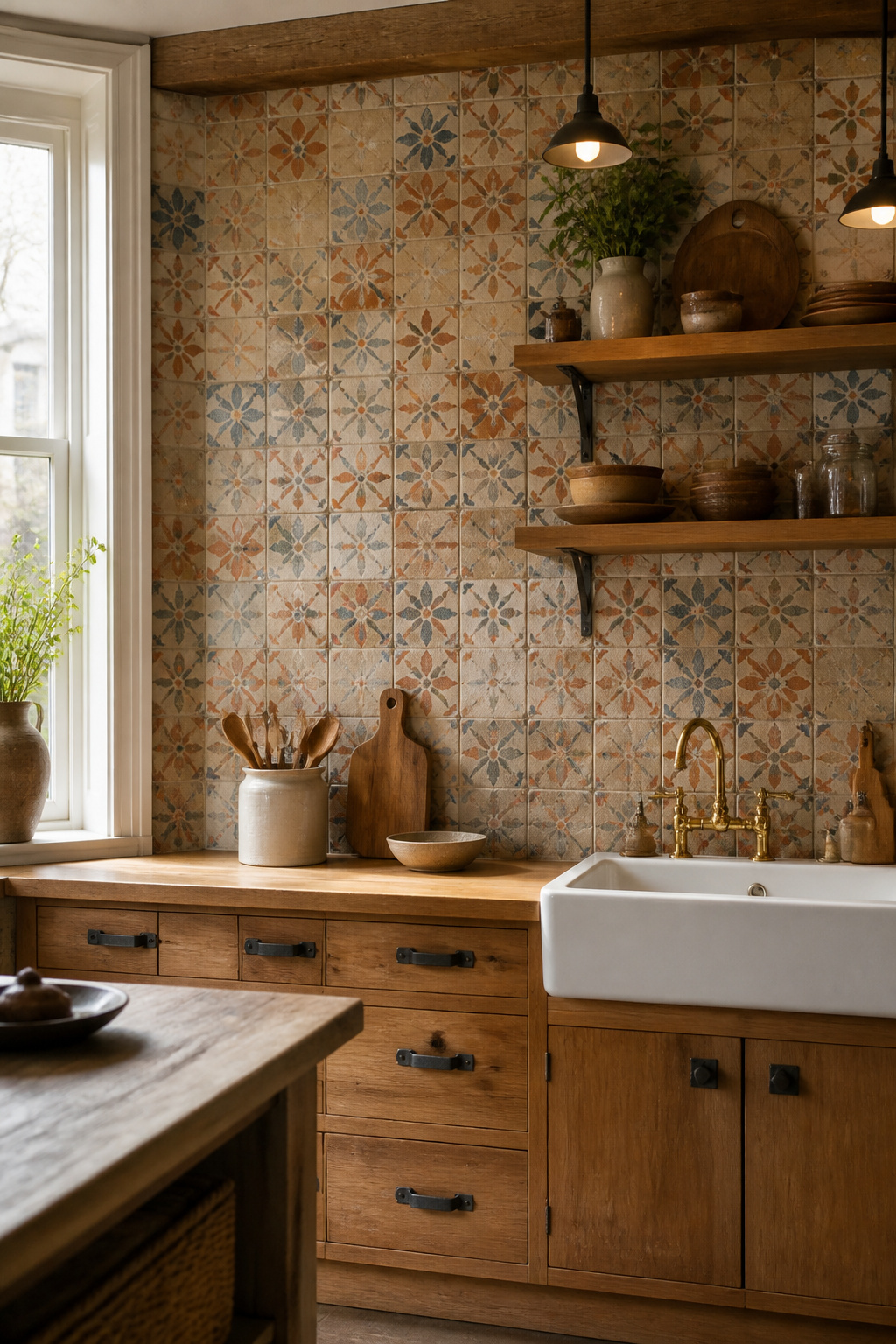
The sourcing landscape for salvage tile is better developed than many people realise. Bert & May (UK, ships internationally) focuses on European architectural salvage. Olde Good Things in the US carries wide architectural salvage stock including Trent, Minton, and Rookwood mosaics pulled from Victorian and Edwardian buildings. Recycling the Past stocks Belgian tiles, encaustic floor tiles, and various glazed wall tiles. Regional architectural salvage yards are worth visiting in person — online listings rarely convey the true colour range, condition, or texture of old tile accurately.
For kitchen renovation design tips that prioritise environmental impact alongside visual character, reclaimed tile is the strongest single choice available. Quantity calculation needs adjustment: apply a 25% overage allowance rather than the standard 10–15% used for new tile. Irregular sizes create more cutting waste, and older tile is often more brittle. When mixing salvage with new tile, match grout colour across both materials to create cohesion — the grout reading is more unifying than trying to match glaze tone exactly.
Eighteen directions is a useful survey of what the current kitchen backsplash trends cover — but it is also potentially overwhelming when you are trying to make a single decision for your own kitchen. The most productive narrowing questions are practical rather than aesthetic.
If your kitchen sees serious daily cooking, the backsplash material must be non-porous and fast to clean without maintenance complexity: sealed micro-cement, glazed ceramic, sintered stone, or brushed stainless all qualify. Unsealed natural stone, actual limewash paint behind the hob, and rattan panels in cooking zones do not. Budget matters: micro-cement and long-format ceramic subway tile offer strong design value in the $10–$25 per square foot range; zellige, slab, and premium graphic tile represent the $40+ tier. Kitchen scale influences pattern selection: bold checker and maximalist graphic tile need visual breathing room — in a compact kitchen, textural choices like zellige, fluted tile, or relief ceramic create interest without spatial pressure.
Having narrowed to two or three directions from today’s kitchen backsplash trends, order physical samples before committing to anything. Almost every major tile supplier offers them for $2–$10 per tile, credited against your order. Live with the sample in the actual space for at least three days — placed against your cabinet door and countertop material, checked in morning light, afternoon sun, and artificial evening light. Tile colours change significantly across these conditions. The backsplash is the surface you will look at most in your kitchen. It deserves that consideration before you order.