Physical Address
304 North Cardinal St.
Dorchester Center, MA 02124
Physical Address
304 North Cardinal St.
Dorchester Center, MA 02124
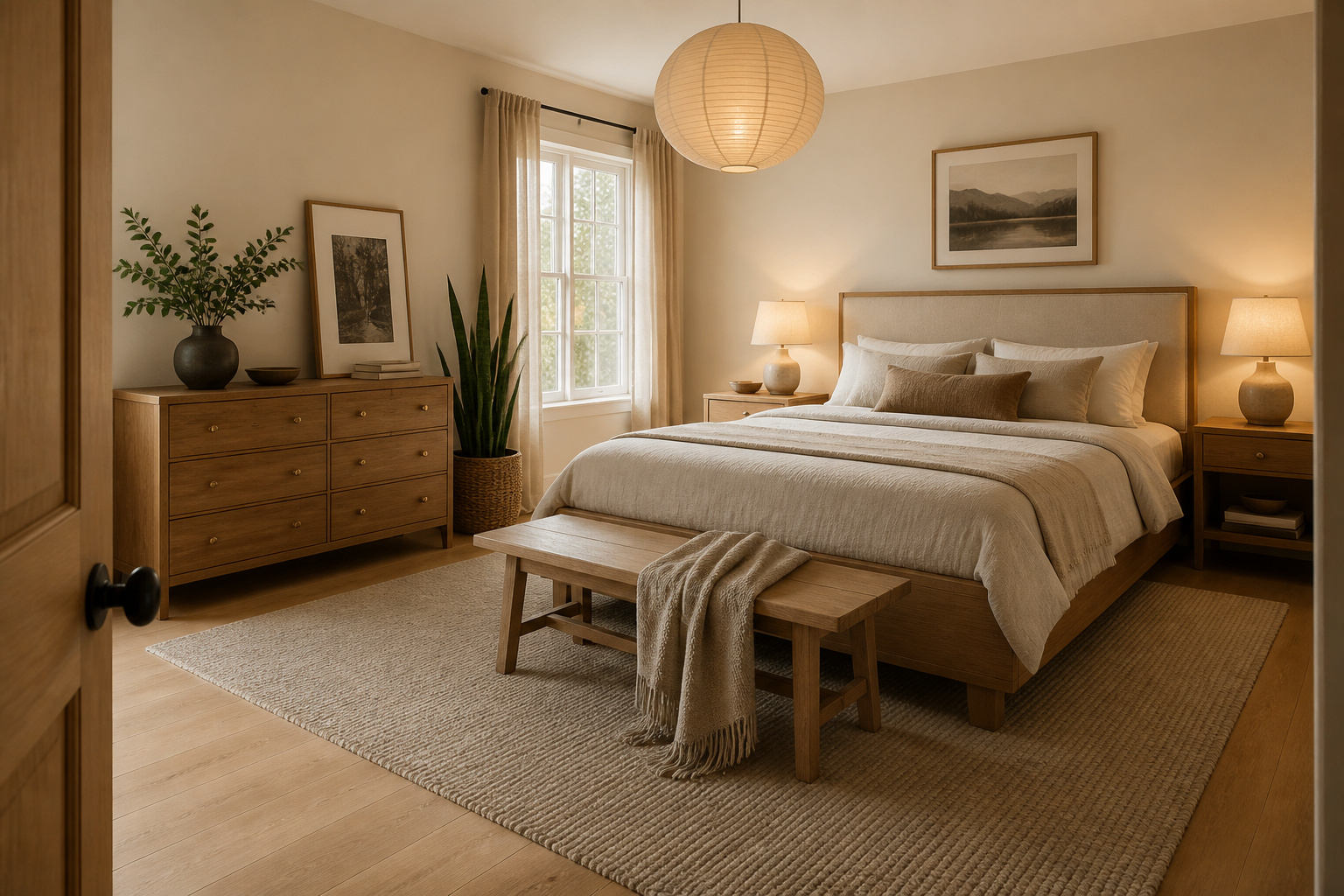
Bedroom furniture decorating ideas inspired by Nordic design — 17 practical approaches for natural materials, hygge atmosphere, and a room that feels right.
There’s a bedroom I visited years ago in a farmhouse outside Gothenburg that I still think about. Nothing in it was expensive — a plain oak bed frame, a second-hand dresser with slightly different-toned legs, a knitted throw folded at the foot. But the moment you stepped inside, you felt the room wanted you to be there. Settled. Considered. Right.
I’ve spent over a decade working with Nordic interiors and that feeling is never accidental. It comes from understanding the relationships between pieces. How they talk to each other, how they talk to the light, how they give the room space to breathe. Bedroom furniture decorating, done well, is less about adding and more about understanding.
These 17 ideas cover everything from the decisions that anchor the space to the small styling moves that tie it all together. All are grounded in the principles that make Scandinavian bedrooms the most restorative places in a home.
The first and most consequential decision in bedroom furniture decorating is the bed frame. The bed occupies 30 to 50% of floor space and is the unavoidable first thing the eye finds from the doorway. Get it right and every other decision becomes easier.
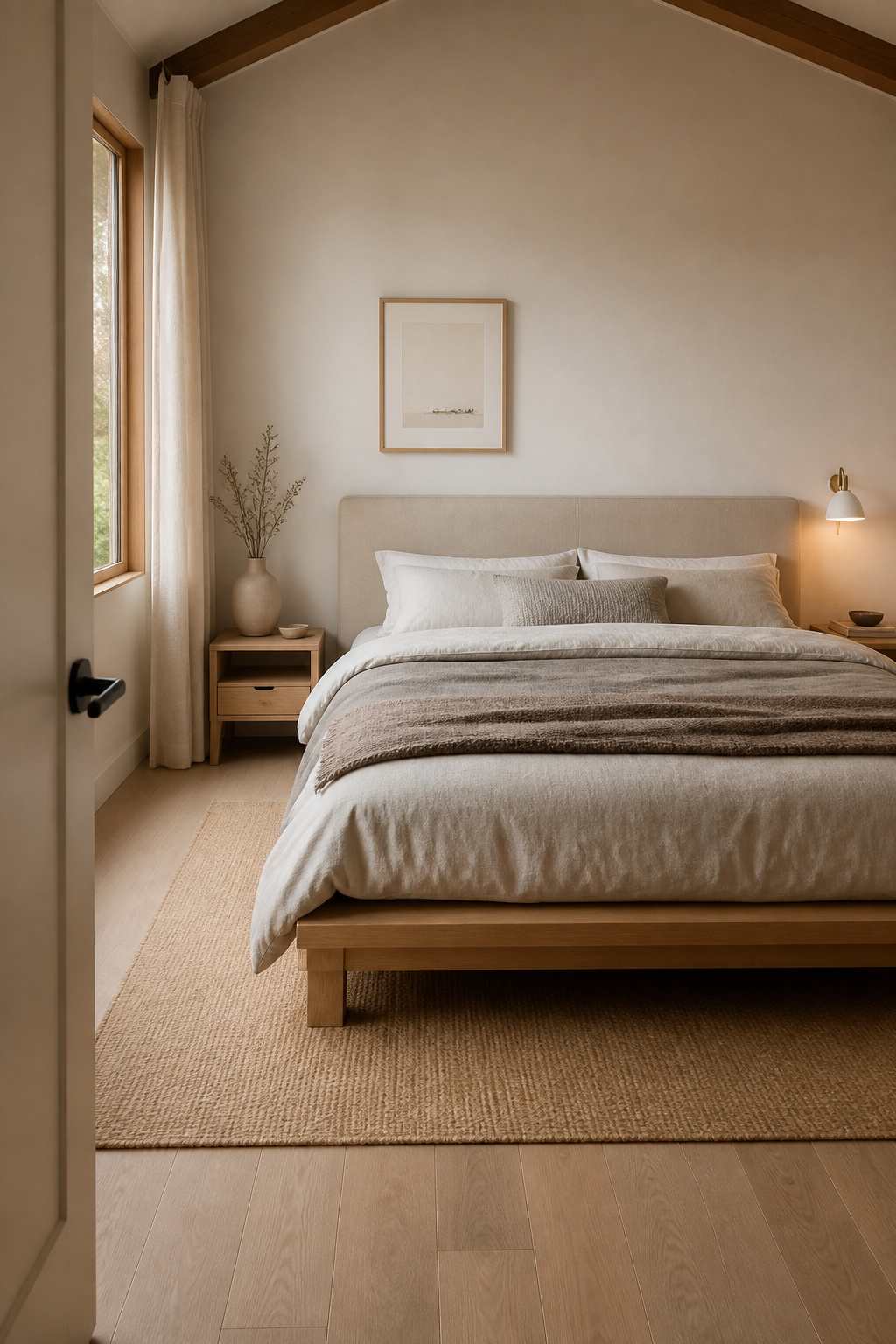
Solid hardwood frames — oak, walnut, maple — are typically joinery-constructed, which means they’re still standing in forty years when cheaper alternatives are long gone. Platform beds with solid wood slats sit lower than traditional frames, giving a grounded Nordic quality that pairs with most contemporary aesthetics.
Headboard height matters: low headboards under 40 inches suit rooms with standard 8-foot ceilings. Taller statement headboards (48 to 60 inches) work in rooms with 9-foot or higher ceilings — below that, they can feel oppressive. Upholstered linen or boucle headboards add acoustic softness that bare wood cannot, making the bedroom feel quieter than it is.
One thing to confirm before buying: mattress height. A frame that looks proportional in a catalogue may look entirely different once your specific mattress — and possibly a topper — sits on it. Measure first.
Research in environmental psychology confirms something Scandinavian designers have long known: natural wood in a bedroom measurably lowers blood pressure and heart rate. It also creates a perception of warmth and reduces stress markers in the people living with it. For bedroom furniture decorating with natural wood, the practical threshold matters.
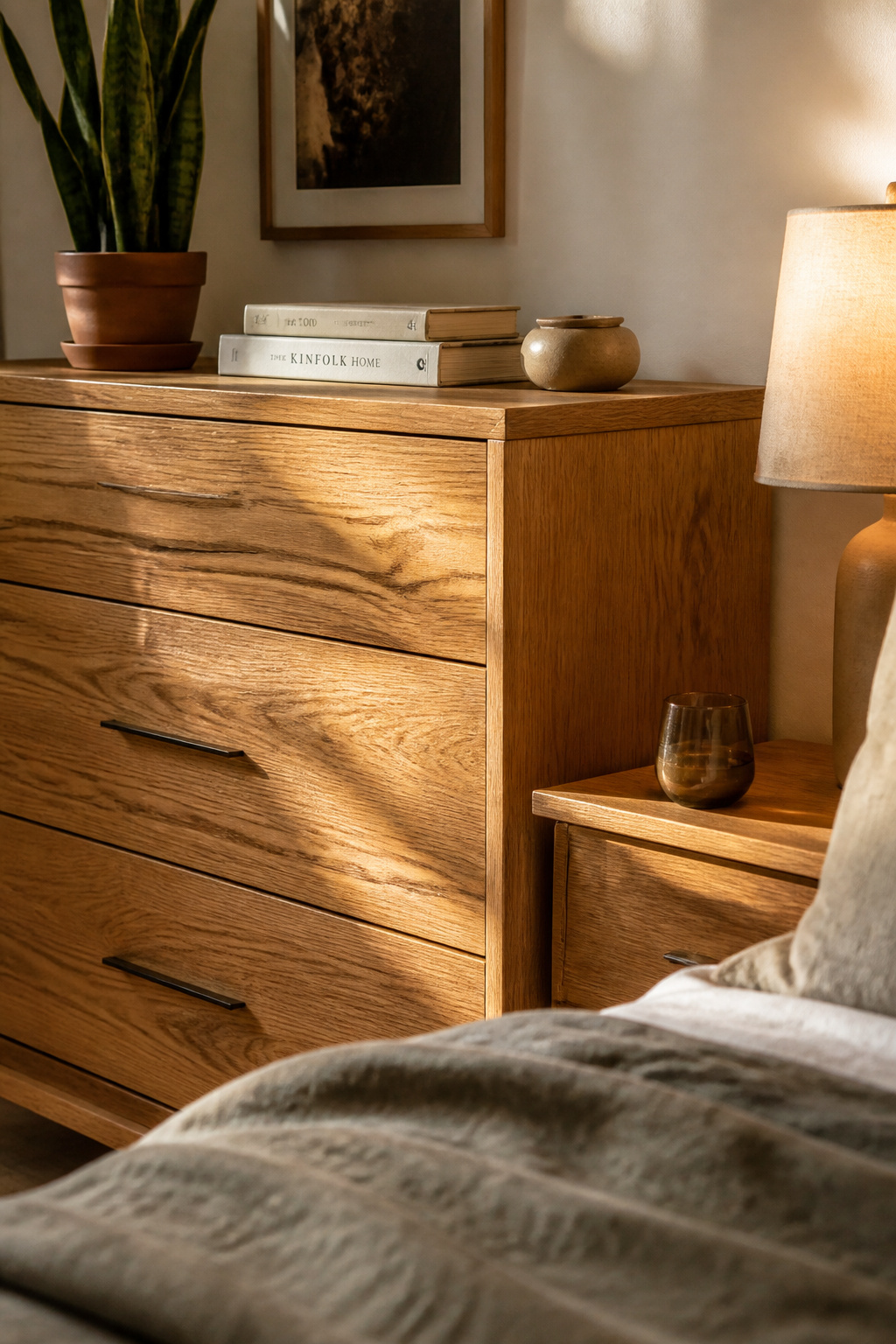
University of Washington research suggests a minimum of 15% visible natural materials to produce measurable wellbeing effects, with benefits peaking at 40 to 45%. In practice, a solid wood bed frame, nightstand, and timber floor gets you there without filling every corner.
The choice of species shapes the room’s character. Pine and ash are pale and reflective — they suit north-facing bedrooms with limited light. Oak sits in the middle: warm without heaviness, with a pronounced grain that provides visual interest up close. Walnut is the most dramatic — a rich reddish-brown that grounds a room beautifully in well-lit spaces but can feel heavy in darker ones.
Mixing species is fine — and often more interesting than a single species throughout — provided you align undertones. Warm woods (walnut, golden oak) want warm companions; cool-toned woods (ash, bleached beech) work best together. For more on mixing tones in practice, these natural and rustic bedroom ideas show different wood palettes creating atmosphere.
The North has always understood textiles as functional first. In Swedish, Danish, and Finnish homes, the difference between a linen duvet and a wool throw is not decorative — it’s thermal and seasonal. That functional thinking produces something aesthetically compelling: bedding that looks right because it is right.
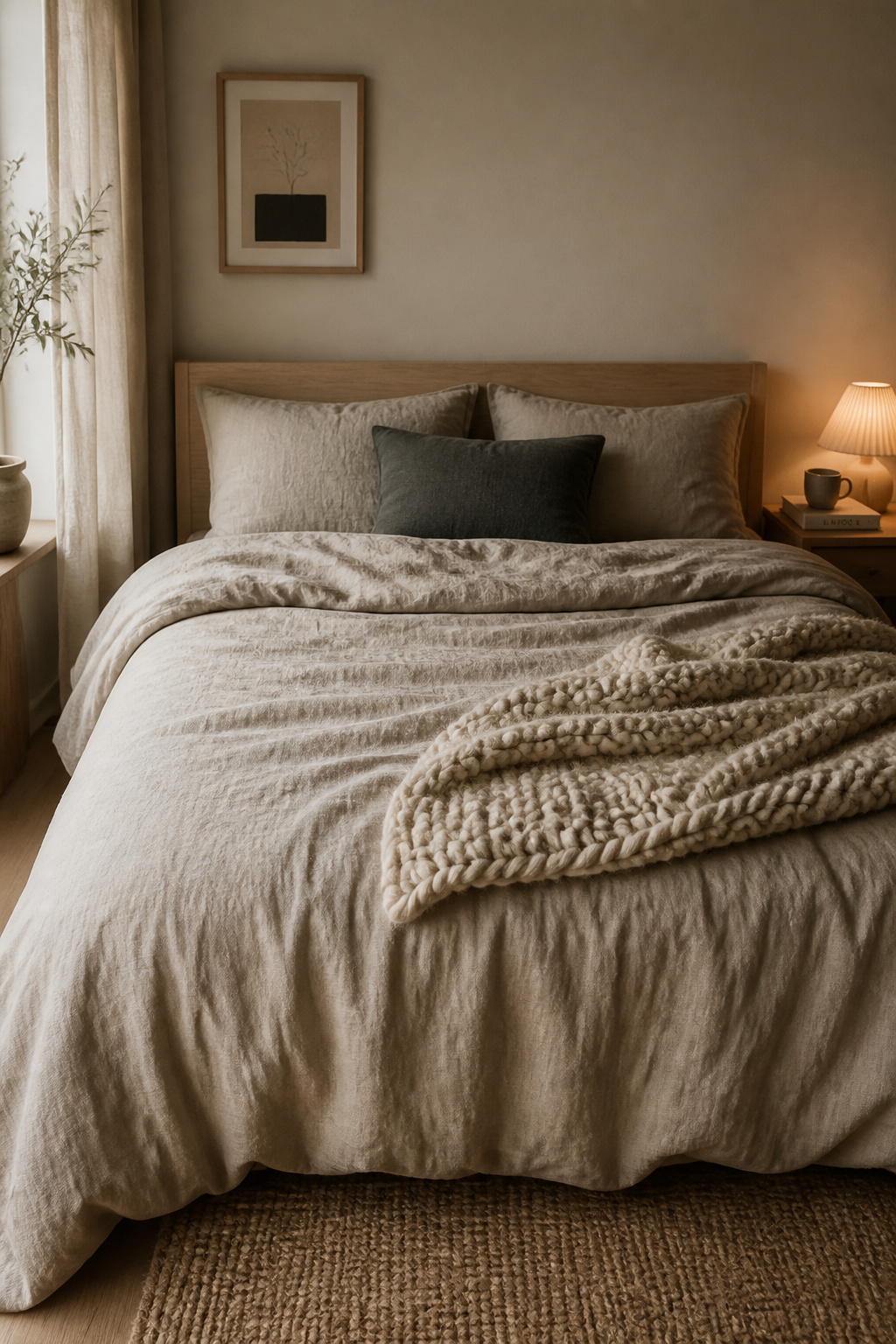
Belgian linen is the Nordic benchmark. It softens with every wash, breathes in summer, and insulates in winter. It wrinkles — which the Scandinavians consider a feature, not a fault. Merino wool throws in 200 to 400gsm add visual texture that polyester alternatives cannot replicate. These hygge-inspired cozy bedroom decorations show exactly how natural textiles translate into warmth and depth.
Limit the bed to two or three cushions maximum — one euro square, one standard, one accent. Beyond three and it starts to feel like a hotel turndown service. Vary texture more than colour: a smooth linen duvet with a chunky knit throw and a flat-weave cushion achieves depth through material contrast without introducing competing palettes.
For seasonal storage: fold textiles in breathable cotton bags with cedar blocks. Vacuum compression bags destroy natural fibres over time — a small mistake with significant long-term cost.
In bedroom furniture decorating, the nightstand is the most personal piece of furniture in the room. It’s the last thing you see before sleep and the first thing you reach for in the morning — which makes it worth thinking about carefully.
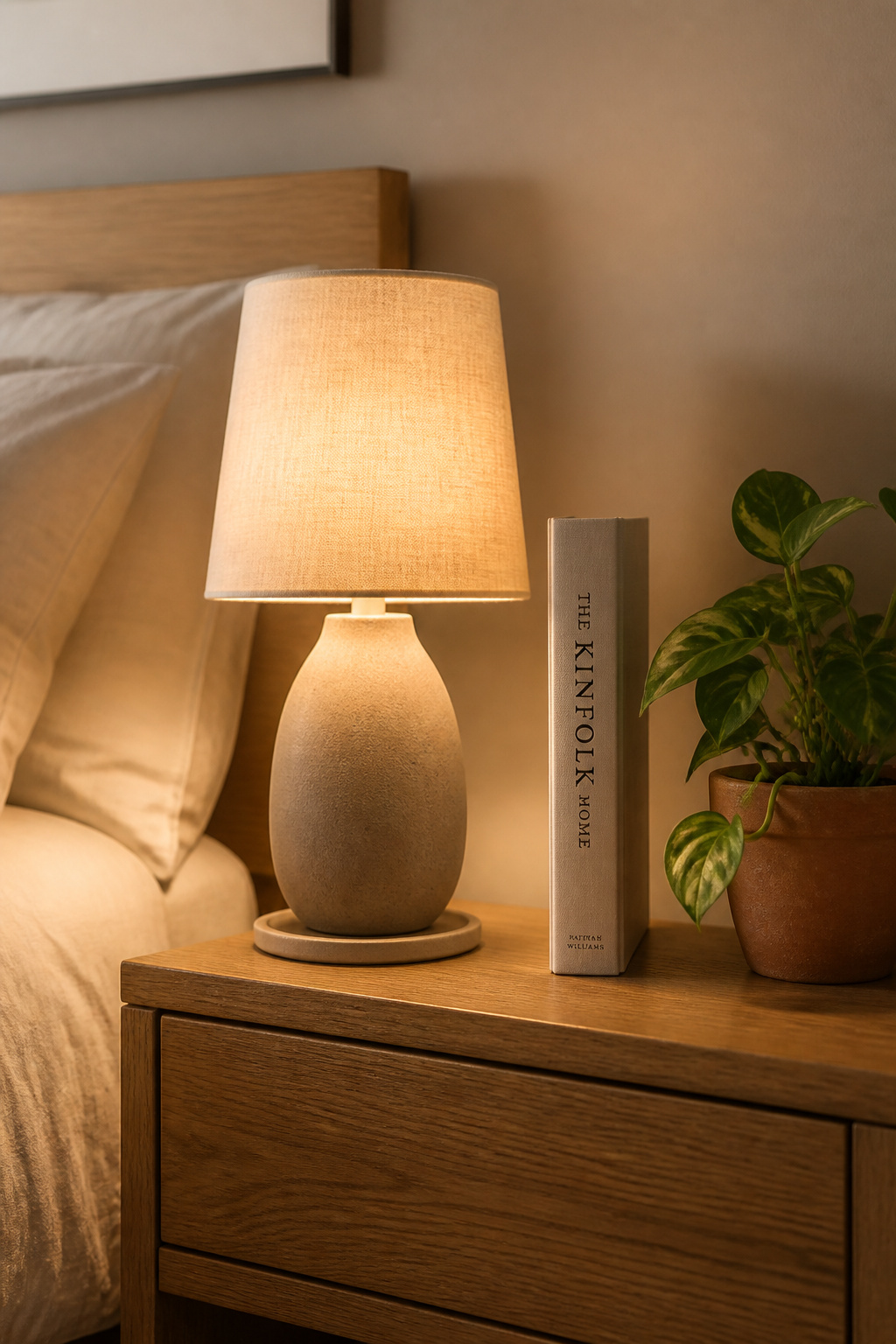
Standard nightstand height is 23 to 28 inches, pairing with most mattresses at 24 to 25 inches from the floor. The nightstand surface should be level with or 1 to 2 inches above the mattress — this makes reaching across feel natural rather than effortful. Platform beds with thick mattresses can push the required nightstand height to 28 to 32 inches; check this measurement before buying.
For the lamp: total height from floor to the bottom of the shade should be around 58 to 64 inches. If your nightstand is 24 inches, a lamp with 28 to 30 inches total height hits the right zone. The lamp width should not exceed one-third the surface width.
On the surface: limit it to three objects. The lamp, one book or small stack, and one personal item — a plant, a ceramic, a glass of water. Beyond three objects and the nightstand stops saying something about you and starts just holding things.
A dresser is the room’s largest horizontal surface — larger than any nightstand, often larger than the window sill. Most people fill dresser tops with things that needed somewhere to go. The better approach is to treat the surface as a composition.
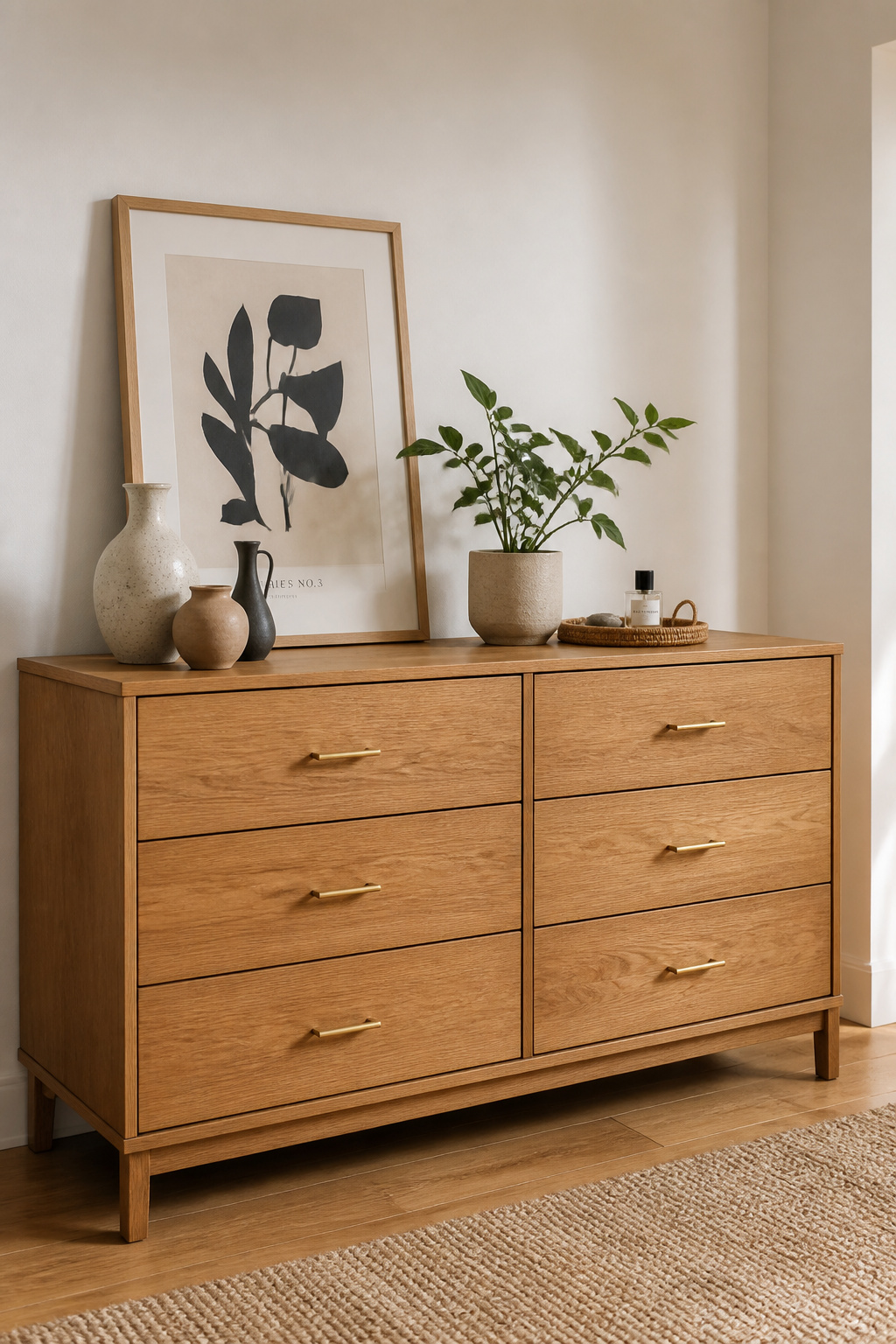
Quality construction matters before any styling. Open each drawer slowly: dovetail joints (the interlocking finger joints you can see at drawer corners) indicate furniture built to last. Stapled or glued joints are a sign of lower-grade construction that will loosen under daily use. These aren’t minor details — they’re the difference between furniture that lasts a decade and furniture that lasts four.
Start with an anchor object: a large leaned print, a mirror, or three ceramics at staggered heights. This gives the dresser a visual centre. Layer by height: a tall element (lamp, vase), a medium element (plant, candle cluster), and a small anchoring element (tray, single sculptural object).
A rattan or ceramic tray is worth its space on almost any dresser. It corrals the functional items (perfume, jewellery, loose change) and makes them look deliberately placed rather than deposited. When using a mirror above, the bottom edge should sit 4 to 6 inches above the dresser surface. The mirror width should be no more than two-thirds the dresser’s width.
One of the most counterintuitive lessons in bedroom furniture decorating is that furniture against walls makes rooms feel smaller, not larger. The instinct makes sense — it frees the floor, creates clear paths, and feels tidy. Interior designers almost universally recommend the opposite.
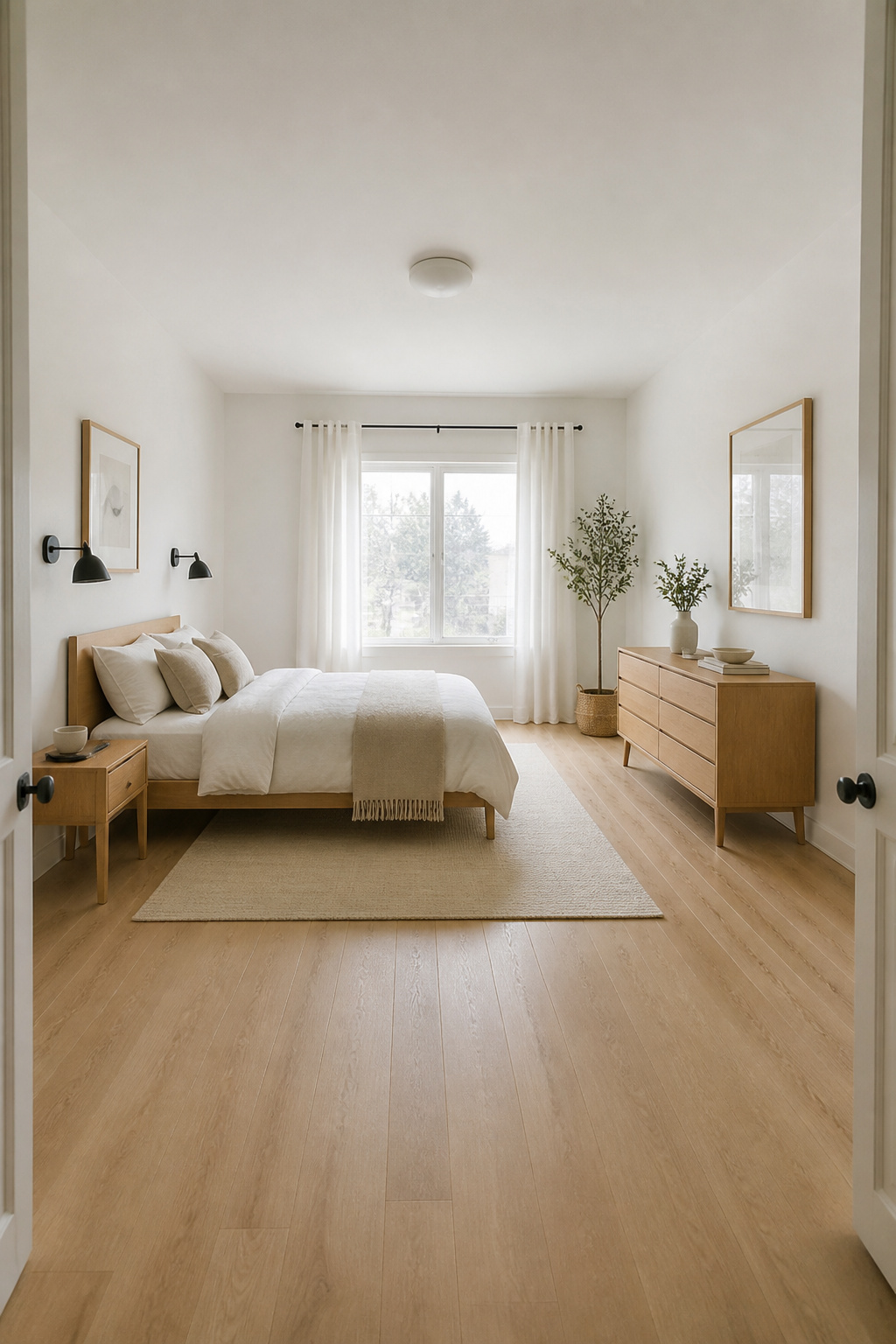
Furniture touching walls does three things that work against a bedroom. It creates a perimeter effect where every piece lines the edges, leaving a void in the centre that feels purposeless. It makes the furniture look installed rather than placed. And practically, it picks up scuff marks and blocks air circulation against the external wall — a consideration that matters for moisture in bedrooms.
Floating furniture, even 4 to 6 inches, changes this. The bed pulled away from the headboard wall sits as an object in space. The dresser pulled 4 inches forward lets drawers open fully without catching the baseboard.
Professional clearance standards: 18 to 24 inches of walkway on the sides of the bed you walk around. In smaller bedrooms, maintain the minimum clearances even if it means floating the dresser only marginally — the effect is cumulative and worth preserving.
The most convincing bedrooms are rarely matched sets. A bed frame, two nightstands, and a dresser from the same collection has a hotel uniformity — complete but inert. What gives a room life is the evidence of selection: pieces chosen individually because they were the right proportion, the right quality, the right wood.
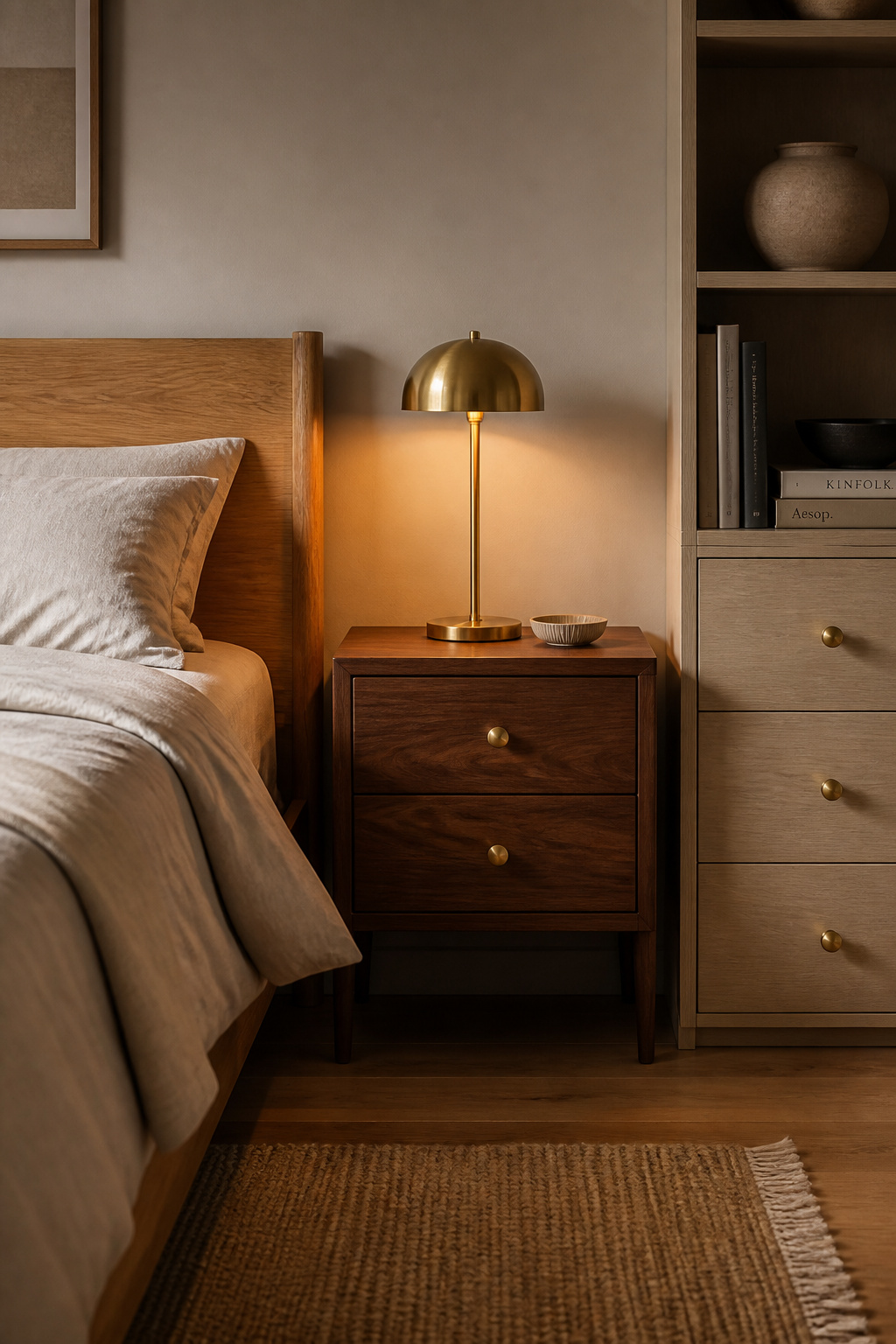
The professional standard for mixing wood tones is no more than three distinct tones per space, each with enough room to be distinct. The key variable is undertone: warm-toned woods (walnut, golden oak) pair well together; cool-toned woods (grey ash, bleached beech) pair well together. Where rooms go wrong is mixing warm and cool undertones without resolution.
Distribute tones throughout the room rather than clustering. If you have a dark walnut dresser and a light oak bed frame, the nightstands — in a medium oak or painted finish — move the eye around.
Metal hardware is the thread that ties mixed pieces together. Brass works best with warm woods — walnut, golden oak, teak. Brushed black is more forgiving: it works with both warm and cool woods and reads as contemporary Nordic. Brushed nickel suits the cooler Scandinavian palette — pale ash, birch, white-painted pieces. Keep one metal finish consistent throughout the room.
There’s a useful distinction in Danish that doesn’t translate directly: the difference between *hygge* objects and decoration. *Hygge* objects add to the warmth of a space because they have story or function. Decoration fills surfaces. The bedroom furniture decorating that lasts is the kind built from the first category.
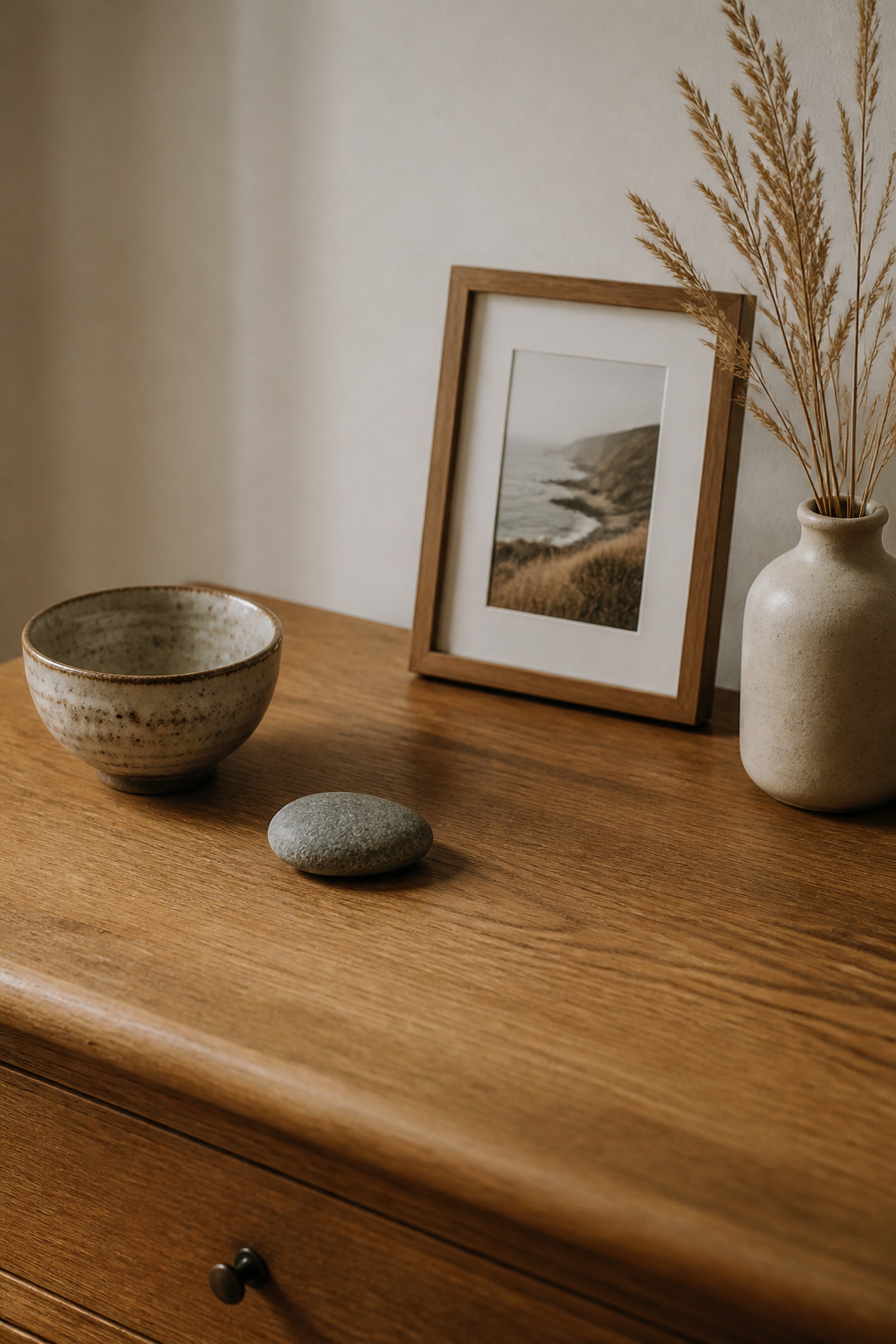
Most bedroom furniture surfaces accumulate rather than collect. Objects land and stay because removing them creates a decision nobody makes. The test from Scandinavian interiors is clean: if you removed the object and didn’t notice for a week, it wasn’t contributing — take it out.
What earns its place: objects with function (lamp, book, water carafe), objects with emotional meaning, or objects with genuine aesthetic presence. Emotional meaning means a photograph from somewhere that mattered, a ceramic made by a friend, something inherited. These romantic bedroom ideas rooted in hygge illustrate how meaningful objects create atmosphere that goes beyond surface decoration.
Environmental psychology research shows people stop noticing objects in their environment within weeks of placing them. Rotation restores attention. Store off-season objects wrapped in linen in a single box so the swap feels like opening something rather than completing a chore.
A foot-of-bed bench is, in bedroom furniture decorating, the piece with the highest visual impact relative to its cost — and the one that smaller budgets consistently skip. The effect is difficult to describe until you’ve seen a bedroom with one and then without. The bench completes the sleeping zone, gives the bed a visual base, and creates a landing spot that keeps clothes off the duvet.
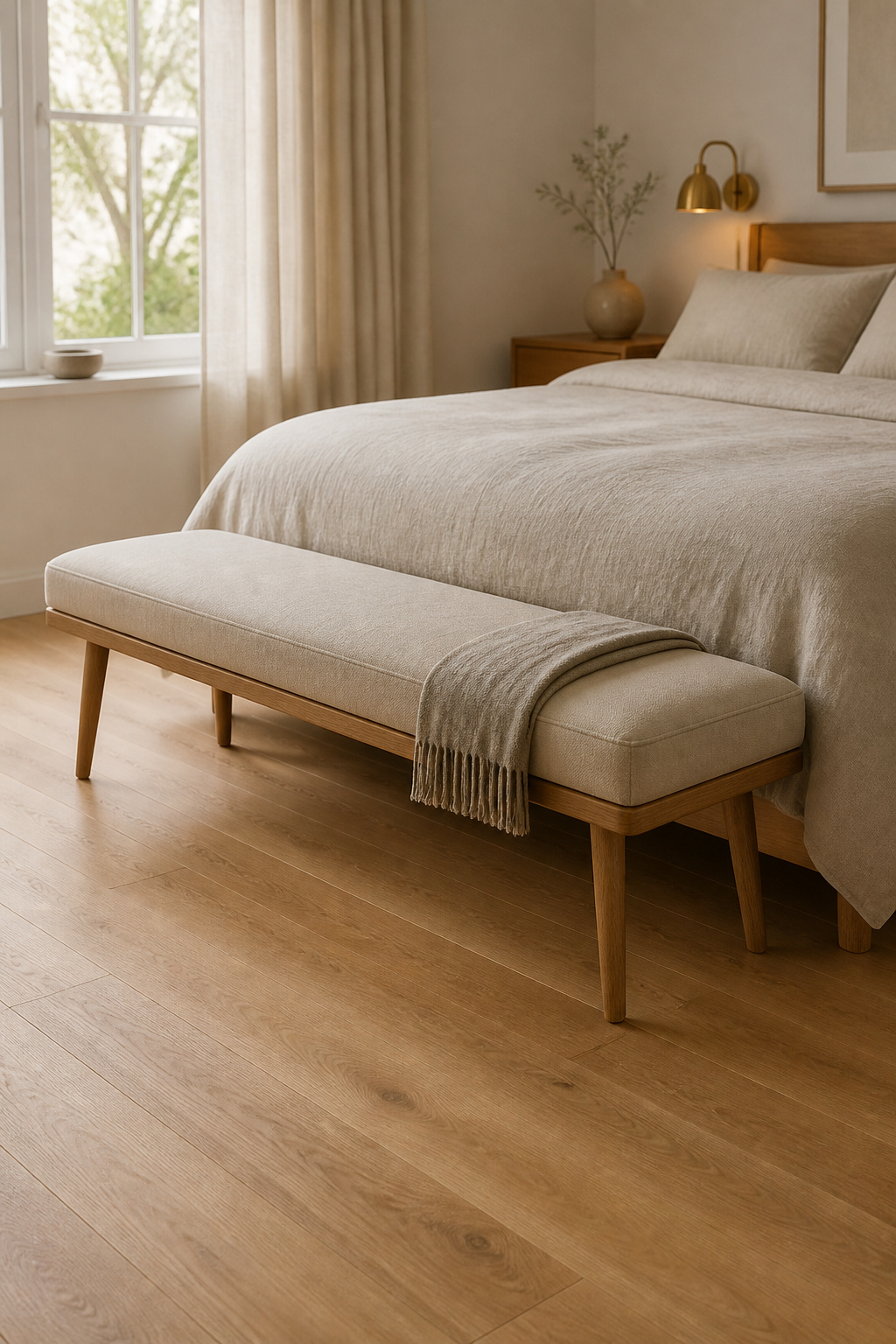
Proportions matter more than style here. The bench should be approximately two-thirds the width of the bed — for a queen (153cm wide), that’s 100 to 110cm; for a king (193cm), 120 to 135cm. A bench the same width as the bed looks grafted on; two-thirds reads as deliberate.
Height should sit at approximately 18 inches, roughly level with or slightly below the mattress top. For a Nordic bedroom, slender tapered oak or walnut legs suit the aesthetic better than heavy block legs — they let the floor breathe visually beneath the bench. Leave at least 45 to 60cm of clear floor between the bed foot and the bench.
And for the practical reality: a single folded throw draped over one end gives the bench a purpose that deters clothes from accumulating on the rest of the surface. Works better than any storage basket.
Plants earn their place in bedroom furniture decorating not just for visual reasons. The same biophilic mechanism that makes natural wood calming — the nervous system’s recognition of living material — applies to living plants. The right plants, placed in relation to furniture, add contrast and movement that fabric and wood alone cannot provide.
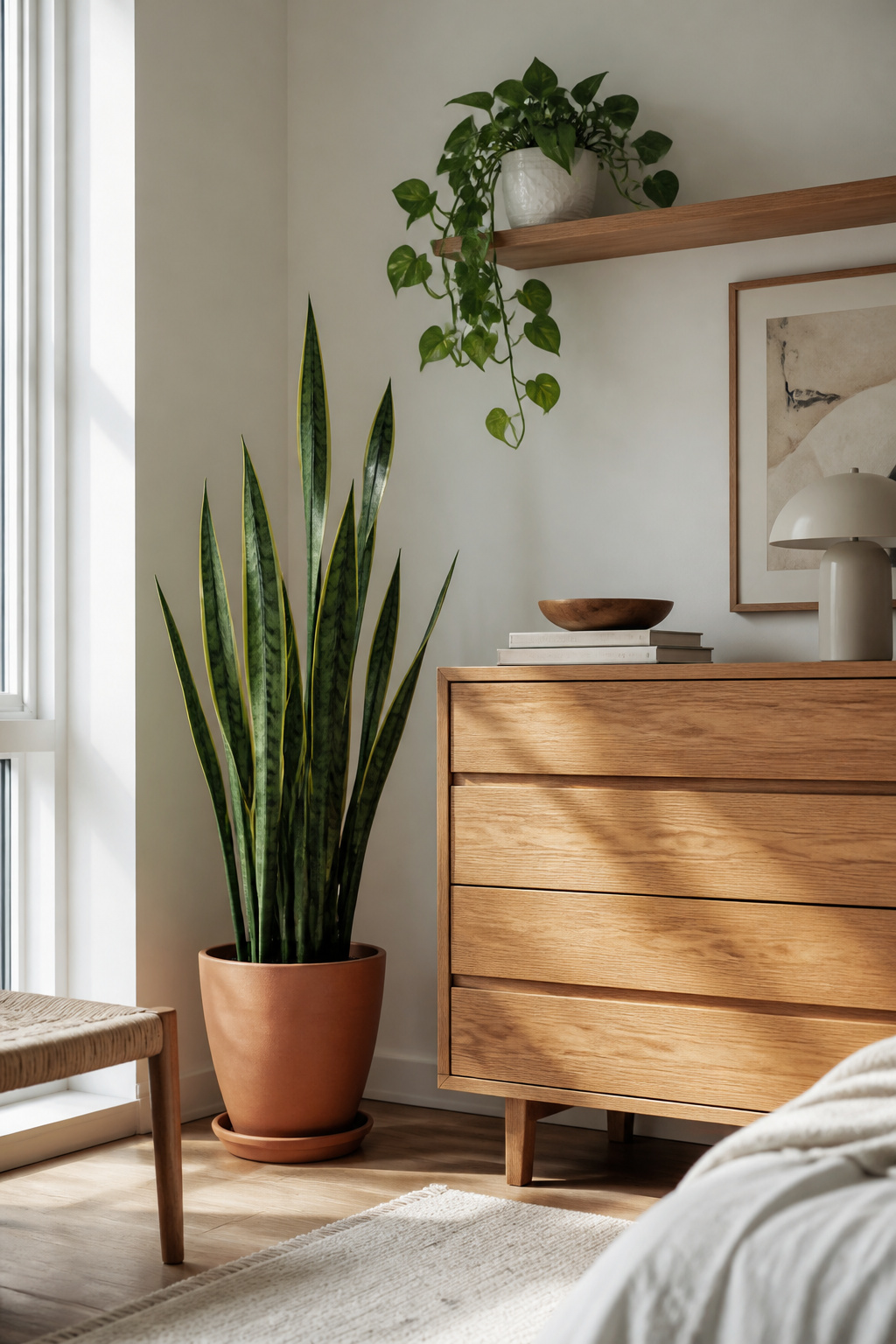
The three most reliable bedroom plants are snake plant (Sansevieria), pothos (Epipremnum aureum), and ZZ plant (Zamioculcas zamiifolia). Snake plants store water in their thick leaves and survive on near-neglect. Water only when the soil has fully dried out — typically every three to six weeks in bedroom conditions. Pothos trails beautifully from a high shelf and handles the indirect light most bedrooms offer. ZZ plants survive on near-darkness and fluorescent light alone.
Plant form matters for how it sits with furniture. Upright architectural plants (snake plant) suit placement beside or behind a piece, creating vertical contrast to horizontal furniture lines. Trailing plants work best on open shelves or the top of a tall wardrobe. Small rounded plants (ZZ, peace lily) sit within dresser or nightstand compositions rather than dominating them. For planters: terracotta is warm-toned, natural, and absorbs moisture to help prevent overwatering. White ceramic is the neutral choice — it recedes and lets the plant speak.
Small bedrooms have one specific design problem: filling the floor with smaller furniture in the hope that smaller scale feels less crowded. It’s almost always the wrong approach. Professional designers consistently report that one well-proportioned large piece reads as more intentional than three smaller pieces filling the same footprint.
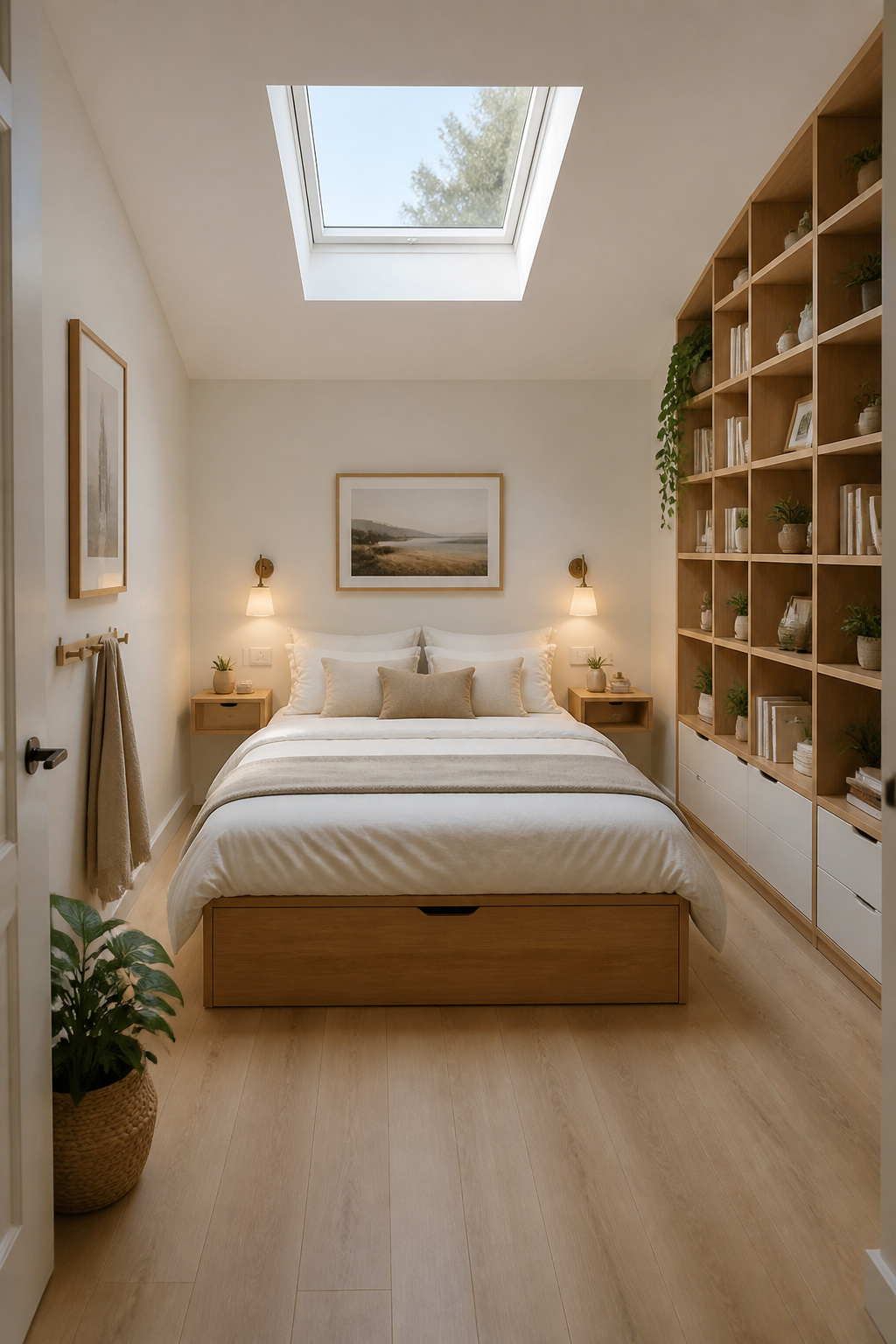
The most impactful single investment in a small bedroom is an ottoman storage bed — a bed with hydraulic lift storage beneath the mattress. In a room under 10 to 12 square metres, this is the highest-return furniture choice available. For the bedside: wall-mounted floating nightstands require no floor space and leave the floor visually uninterrupted. These Nordic-inspired small bedroom ideas show how Scandinavian designers handle tight footprints without sacrificing atmosphere.
The counterintuitive scale principle: correctly sized furniture — even generous pieces — makes small rooms feel more resolved. A full-size bed in a small room looks considered; a small single bed dwarfed by empty floor space looks provisional. The key ratio is for the bed to occupy 50 to 60% of the floor space, with the remaining 40 to 50% as clear walkway.
Vertical space is the most reliably wasted dimension in small bedrooms. Floor-to-ceiling shelving draws the eye upward, makes ceilings feel taller, and exploits storage area that horizontal furniture cannot reach. Wall-mounted shelves at 20 to 25cm depth work as nightstands, book storage, or display surfaces without touching the floor.
The most considered bedroom furniture decorating choices are rarely the most symmetrical. The matched bedroom — two identical nightstands flanking a centred bed, matching lamps — is the safe choice. Also the least interesting. Scandinavian interiors use balance rather than symmetry, which is a more nuanced and more rewarding approach.
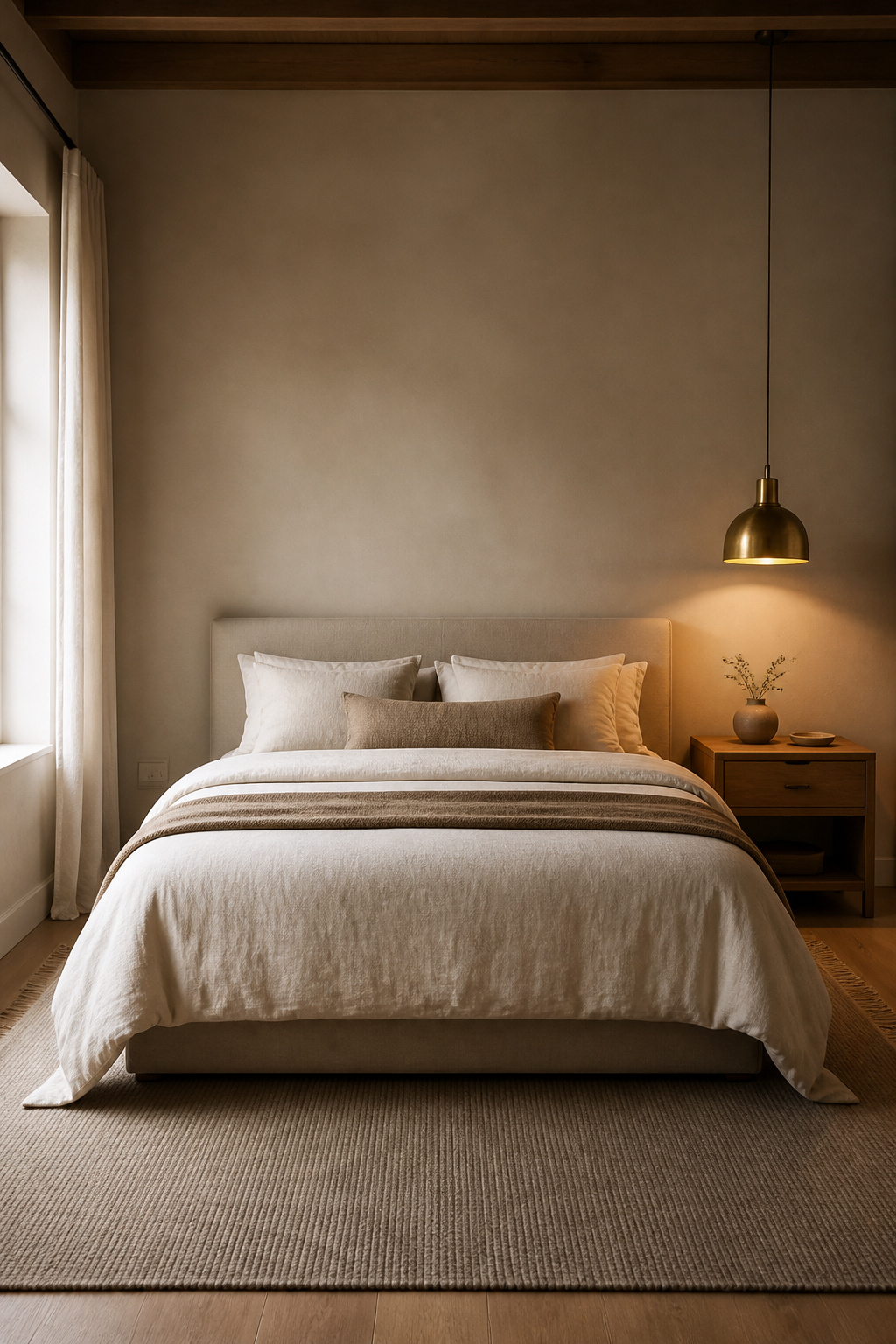
Visual balance means that elements on either side of the bed have similar visual weight without being identical. Different nightstands at the same height create balance through consistency of scale while offering variety through form. A tall lamp on one side and a lower lamp with a larger shade can achieve equilibrium if the shade size compensates for the height difference.
The most underused move in bedroom decorating is the single nightstand. Rather than two cramped token pieces, use one generous well-styled nightstand on the side closest to the door. A proper piece with real presence leaves the opposite side of the bed to breathe. A single nightstand that is genuinely interesting is more compelling than two matching ones that are merely adequate.
When you go asymmetrical, the tell of intentionality is whether contrasting elements are resolved. Accidental asymmetry has visible gaps where symmetry was planned but not achieved. Intentional asymmetry has consistent scale and different-but-resolved objects. A piece of art on one nightstand compensates for the absence of its counterpart. Mismatched lamps of similar heights create balance; a trailing plant on one side echoes the weight of a ceramic cluster on the other.
Lighting is the dimension of bedroom furniture decorating most people address last — and it affects every other decision. A single overhead ceiling light is the enemy of a good bedroom. It casts downward shadows that flatten furniture textures and eliminates warm evening atmosphere. The result is a room that feels like a place to get dressed, not to rest.
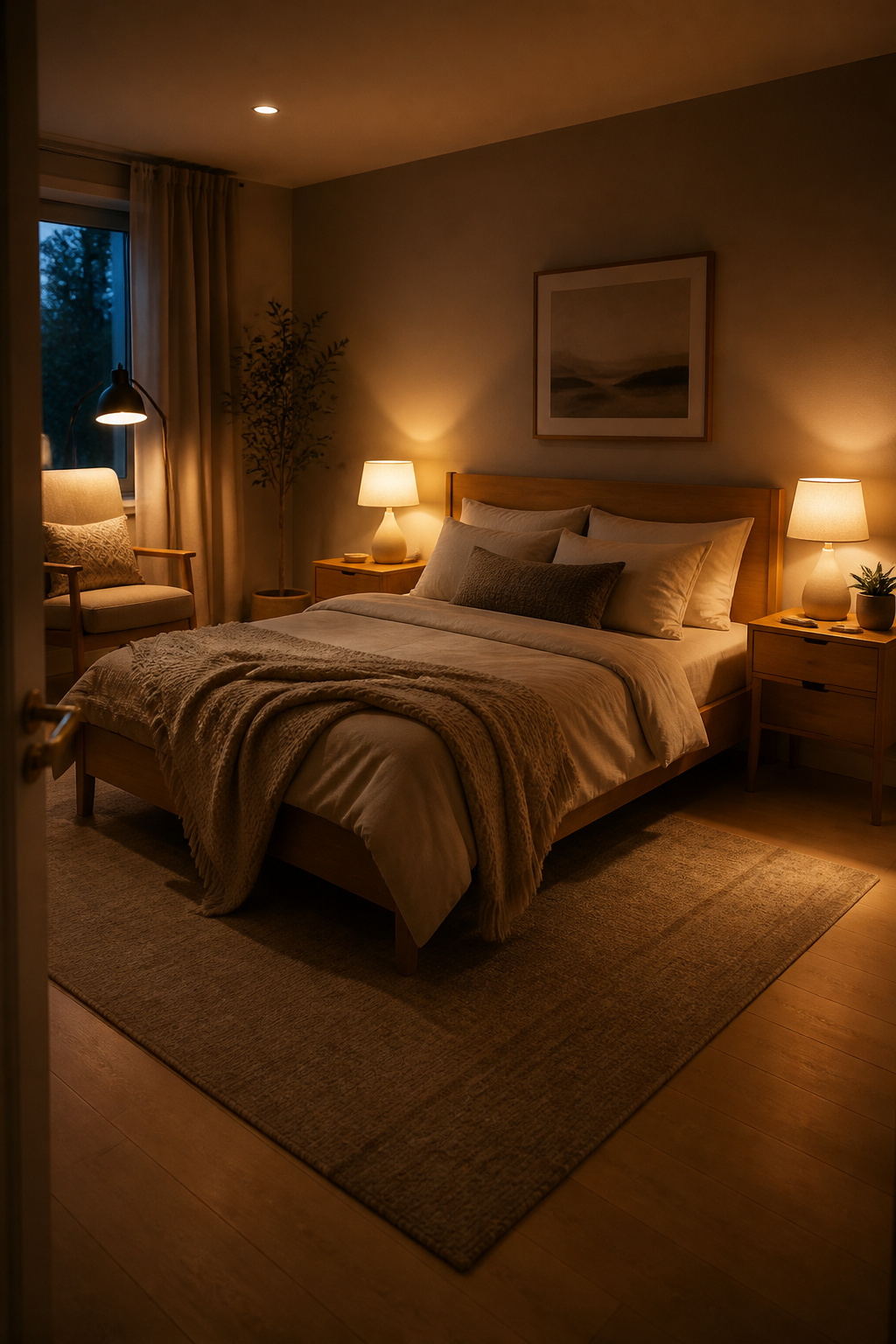
Layered lighting is the solution. Use an overhead ambient dimmed low for evenings (brighter for dressing), a bedside task light for reading, and optionally a floor lamp in the corner for depth. This mirrors how Scandinavian homes manage the long dark winters — multiple low-level warm light sources that create atmosphere at any hour.
Bedside pendant lights hung from the ceiling free up the nightstand surface entirely and look more deliberate than table lamps. Standard placement: the bottom of the pendant at approximately 60 to 65cm above the nightstand surface. Table lamps are easier to reposition and add visual mass to the bedside composition.
Light temperature is the variable most people overlook. For bedrooms, 2700K (warm white, with an amber-yellow quality) is the Scandinavian standard. It enriches warm woods — walnut deepens, golden oak glows, brass hardware comes alive. Research consistently shows that light above 3000K in a bedroom actively suppresses melatonin production. For all bedroom fixtures, stay within 2700 to 3000K. If buying bulbs, specify 2700K for atmosphere and 3000K only for the overhead where clarity matters.
An open shelf in a bedroom makes a commitment. Unlike a wardrobe, everything on it is visible — which means it has to be worth looking at. The discipline this demands is exactly what makes well-styled open shelving so compelling: it is proof that the room has been thought about.
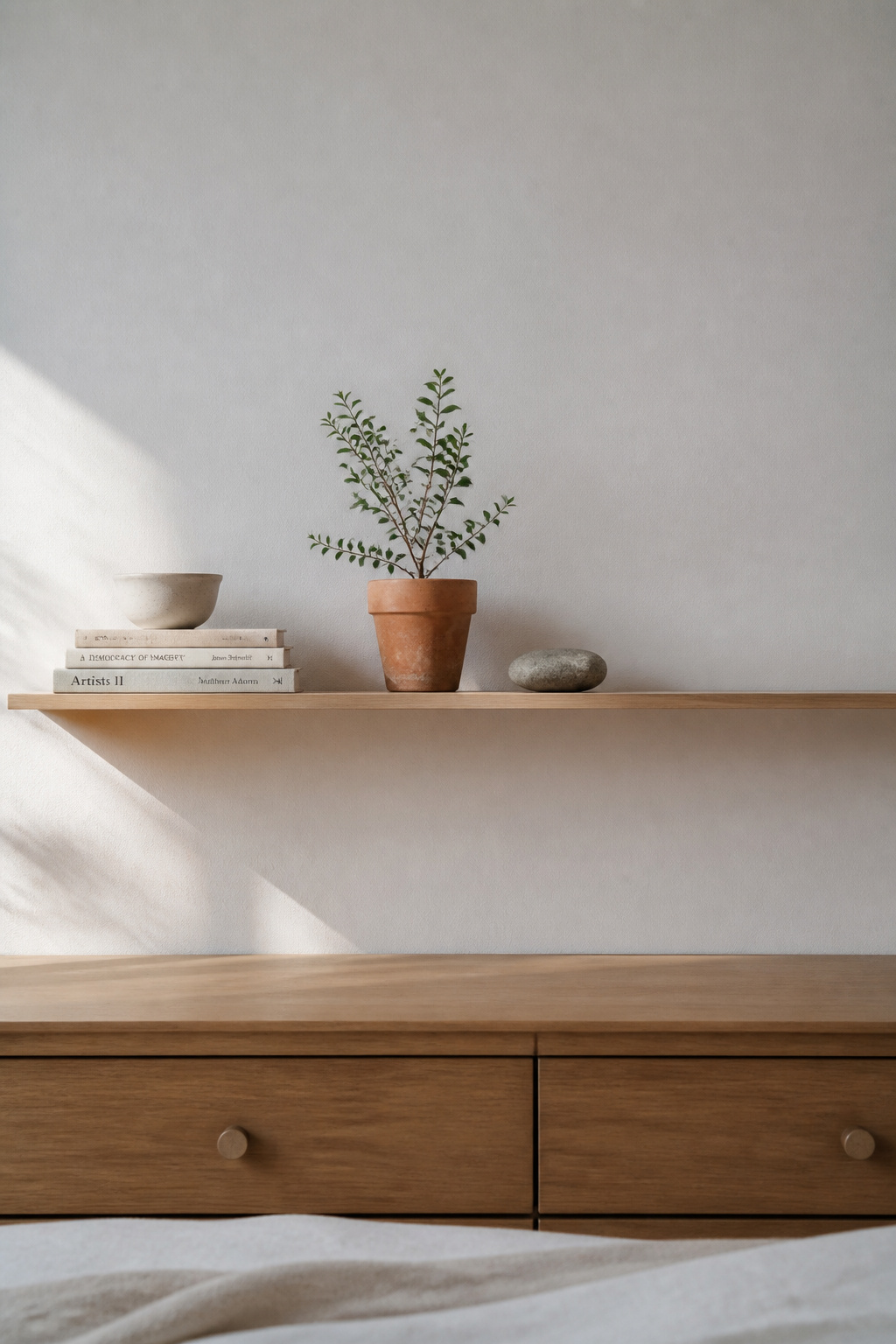
The Scandinavian approach to open shelving follows two principles. First: five objects per shelf level is the professional stylist’s maximum. Not eight, not twelve — five. Less is also fine. More starts to read as storage rather than display, and the line between a styled shelf and a cluttered one is crossed exactly there. Second: group in odd numbers. Odd groupings take longer for the brain to process because there’s no obvious pattern, which causes the eye to linger and creates more interest than even groupings.
Negative space is not wasted space. The 30 to 40% empty rule applies: no more than 60 to 70% of any shelf surface should be filled, with the rest left deliberately bare. An overcrowded shelf is harder to style out of than an underfilled one — when in doubt, take something away.
What lives on a well-curated bedroom shelf: books (arranged by colour or a small curated selection spine-out), plants in terracotta or white ceramic, one or two objects with meaning. The gap between them is as important as the objects. Each needs room to exist on its own terms.
A fully matched bedroom suite — bed frame, nightstands, dresser, wardrobe from the same collection — is complete but impersonal. It lacks the evidence of taste that comes from selecting individual pieces because they were the right form, the right scale, the right material. Mixing eras creates the impression of a room collected over time, which is more interesting because it’s more honest.
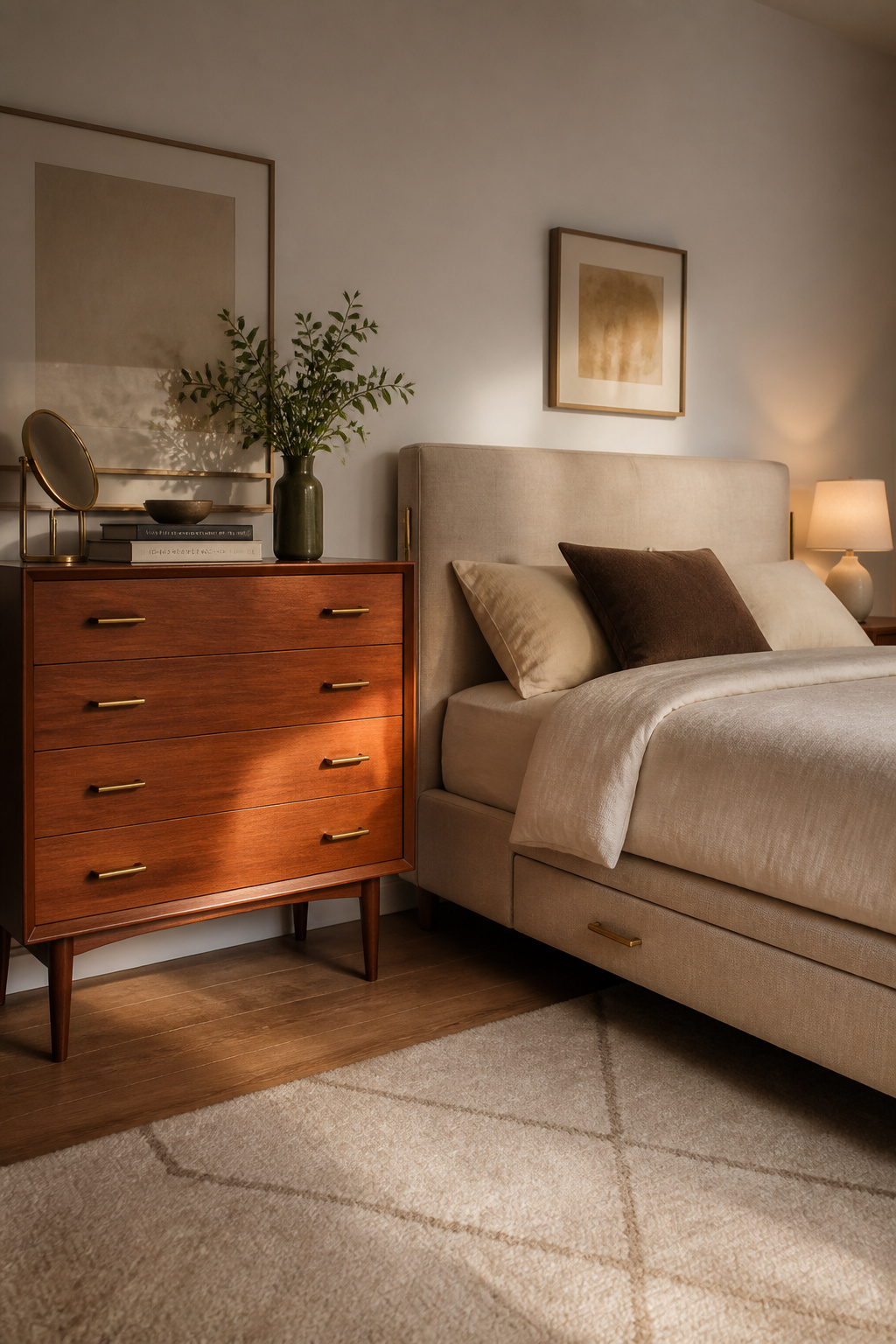
Danish mid-century furniture is the most natural fit for contemporary Nordic bedrooms. The 1950s through 1970s produced teak and rosewood pieces with the same design DNA as modern Scandinavian minimalism: functional forms, natural materials, restraint. You can find plenty of starting points for the search in these soulful vintage bedroom ideas that demonstrate how vintage pieces hold their own alongside contemporary design.
When buying second-hand, check three things first. Drawer construction: dovetail joints at the drawer corners indicate quality joinery — open the drawer and look at the corner where two pieces meet. If you see interlocking finger joints, it’s well made. Open and close each drawer slowly — quality pieces glide smoothly even after fifty years. And push gently on all four corners of the piece: solid hardwood does not flex; particleboard does.
The mixing rule: one shared quality between vintage and contemporary pieces — either the same wood tone or the same hardware finish — is enough to create cohesion.
In bedroom furniture decorating, the rug is the single piece that defines the arrangement around it — and the one where people most consistently go wrong. Almost always in the direction of too small. A rug that sits only under the bed without extending to the nightstands looks like an afterthought. A correctly sized rug makes the entire furniture arrangement feel planned.
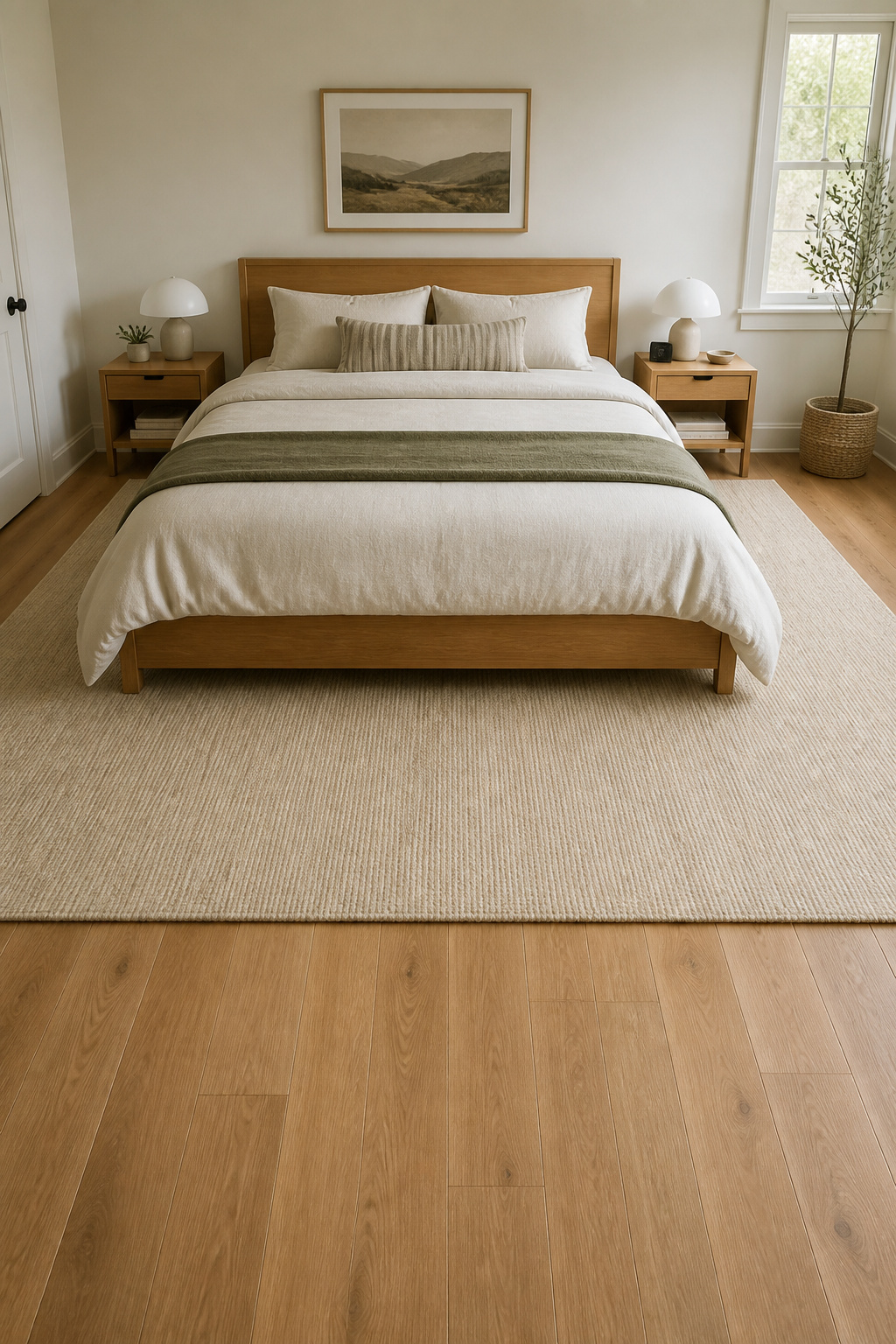
The sizing formula is straightforward: allow two feet on each of the three exposed sides of the bed — the two sides you walk around and the foot. For a queen bed, this means an 8×10 rug; for a king, a 9×12. If in any doubt, go larger rather than smaller. A too-large rug in a plainer material always looks more considered than a too-small rug in a better material.
For a Nordic bedroom, wool is the Scandinavian standard — durable, warm underfoot in cold weather, and resilient under furniture legs when moved periodically. Cotton flatweaves are the practical alternative: machine washable in most sizes, hypoallergenic, and available in the muted palette (oat, warm grey, sage) that reads as genuinely Nordic. Jute and sisal are more textural but can feel rough underfoot — better suited to rustic or coastal aesthetics than pure Scandinavian.
Professional rug placement: slide the rug approximately two-thirds under the bed, stopping just before the nightstands. This creates a defined landing zone at the foot and both sides while anchoring the bed as the centrepiece of the composition.
The wardrobe is often the bedroom’s most practical and least considered piece of furniture. It holds most of what you own in daily life. But few people think carefully about whether the type of storage they have suits the way they actually live.
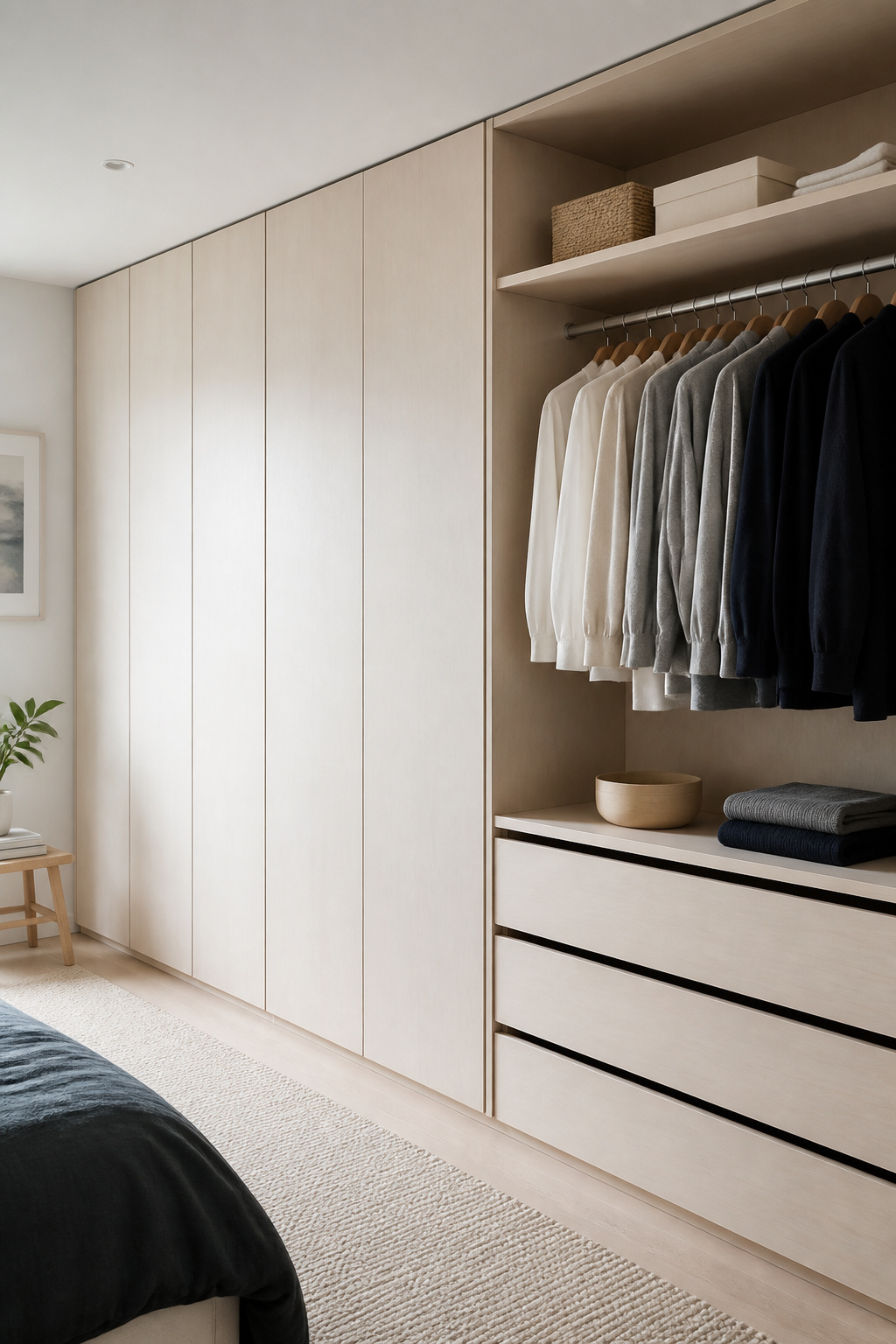
Open wardrobe systems — clothes visible on rails, accessories on shelves — put the capsule wardrobe concept into immediate practice. When everything you own is visible, excess is apparent and editing becomes habitual. IKEA’s NORDKISA in bamboo (47 inches wide, 73 inches tall) offers an accessible entry point. It has a natural material, an open rail with optional sliding door, and proportions that suit most bedrooms.
Fitted wardrobes built into the wall maximise space efficiency above almost any other storage approach. The Nordic signature for fitted wardrobes is push-to-open hardware or very slim integrated handles — this keeps the wardrobe wall visually flat and seamless. Birch, ash, and pine are the material defaults, their pale tones keeping the bedroom bright.
Mirror-fronted wardrobe doors double the apparent size of the room and reflect light — a significant benefit in north-facing bedrooms. Solid panel doors (matte white or soft grey are the Nordic defaults) keep the room visually calm. Doorless open rails are the most dynamic option. For more ideas on structuring bedroom storage, these thoughtful bedroom storage solutions cover the full range of approaches seriously.
The room I described at the beginning — the farmhouse bedroom outside Gothenburg — didn’t start out looking that way. The person who lived there told me she had spent several years buying things and then slowly removing them, until what remained was only what genuinely worked. That editing process, she said, was the design.
Before any bedroom furniture decorating project, spend a week with everything removed from the surfaces. Live with the stripped-back room. Notice what you reach for and where, what’s missing from daily routine, where friction appears in the morning and evening. These friction points are the genuine needs that new furniture should address. The place with no storage, where clothes land on the floor. The side of the bed with no light.
The order of operations matters more than most people realise. Start with the bed frame and mattress — they anchor everything and should receive the largest share of any budget. Add the rug next, to define the zone. Establish the lighting before any other styling, because light determines how every surface will read. Then storage, then nightstands, then a bench or accent piece if the room calls for one. Style the objects last. Wait until the room has been lived in for a few weeks, and you understand what it actually needs — not what you assumed it did.
The bedroom you’re building doesn’t have to look like a Nordic farmhouse. It has to feel right to you — settled, considered, a room that wants you there. Start with what genuinely earns its place, remove what doesn’t, and let that process become the design.